Enamel-Safe Actives: What Buyers Order and Why
4 أكتوبر 2026
A sourcing-level breakdown of enamel safe whitening formulas B2B — PAP, hydroxyapatite, regulatory pressure points, and how to verify supplier claims in 2026.
The Active Ingredient Pivot: Enamel Safe Whitening Formulas B2B in 2026
Professional buyers sourcing take-home whitening kits in 2026 are working from a different specification than they were three years ago. The question is no longer simply "what peroxide concentration?" It is "which active delivers acceptable whitening with a defensible sensitivity and enamel-safety profile?" That recalculation is driving measurable movement toward phthalimidoperoxycaproic acid (PAP) and biomimetic hydroxyapatite as primary or co-active ingredients across clinic, spa, and DTC channels — and it is reshaping how buyers evaluate enamel safe whitening formulas B2B at every stage of the sourcing process.
What Enamel-Safe Actually Means at the Formulation Level
Enamel safety is not a single variable. At the formulation level, it covers at least three distinct concerns: abrasion index, mineral loss during bleaching, and post-treatment remineralization capacity. Buyers who conflate these risk approving a formula that scores well on one metric while underperforming on another.
Abrasion is the most straightforward to evaluate. Products that rely on mechanical action to remove surface stain carry a Relative Dentin Abrasivity (RDA) value that accredited laboratories can measure. A 2026 study published in the Journal of Prosthodontic Research found that whitening toothpaste containing nano-hydroxyapatite produced substantial short-term color change without significantly increasing surface roughness in tested restorative materials — a meaningful data point for buyers supplying patients with crowns, veneers, or composite restorations. [5]
Mineral support during bleaching is less discussed but increasingly factored into formulation briefs. Research published in the Dental Research Journal (2023) demonstrated that adding nano-bioactive glass to hydrogen peroxide increased superficial enamel calcium and phosphorus content without significantly changing whitening outcomes compared to peroxide alone. [3] That finding supports the case for mineral-adjunct strategies — not as a marketing claim, but as a measurable protective mechanism buyers can request documentation for.
Post-treatment remineralization is where hydroxyapatite carries the strongest clinical backing. A 2023 systematic review published in Biomimetics identified hydroxyapatite as the most extensively studied calcium-phosphate active for caries prevention, sensitivity reduction, erosion protection, and whitening — covering the full spectrum of outcomes buyers need to substantiate across clinic and retail channels. [4]
PAP: From Premium Option to Baseline Specification
PAP oxidizes chromophores without releasing free radicals at the same rate as hydrogen peroxide — the mechanism most frequently cited when formulators argue for reduced pulpal irritation and lower sensitivity incidence. For a dental clinic owner stocking take-home maintenance kits, or a wellness brand building a private-label line, that mechanism translates directly into fewer post-use complaints and stronger repeat purchase rates.
The regulatory environment is accelerating this shift. EU cosmetic regulations cap hydrogen peroxide in consumer whitening products at 0.1%, with concentrations up to 6% restricted to dental professionals. Because PAP is classified as a cosmetic active rather than a bleaching agent in most jurisdictions, EU-facing product lines are moving to PAP-based formulas as a compliance strategy, not just a positioning one.
Buyers who once treated PAP as a premium-tier differentiation are now treating it as a baseline specification when evaluating enamel safe whitening formulas B2B. That shift has practical consequences for supplier selection: formulators who cannot supply PAP-based systems with documented stability and efficacy data are no longer competitive in this segment.
Regulatory Pressure Points Shaping What Buyers Can Actually Sell
Regulatory constraints are not uniform across markets, and that asymmetry directly shapes purchasing decisions. In the United States, the ADA distinguishes clearly between surface-stain removal and intrinsic bleaching claims, and requires appropriate substantiation for each. Whitening packaging must communicate accurately whether the benefit comes from removing extrinsic stains or changing intrinsic tooth color. [7] Buyers building DTC brands or supplying retail pharmacy channels need to resolve that distinction before approving label copy — a claim substantiated for a peroxide-based product may not hold for a PAP-only formula, and vice versa.
ISO 11609 governs toothpaste composition and labeling internationally. CE marking applies to LED devices sold in the EU. FDA 510(k) pathways become relevant if a device carries therapeutic claims in the US market. Buyers sourcing complete kits need to confirm which certifications apply to each component and which markets they are targeting before committing to a formula or device specification — not after the packaging is printed.
LED Devices as a Paired Purchase: Sourcing Kits, Not Components
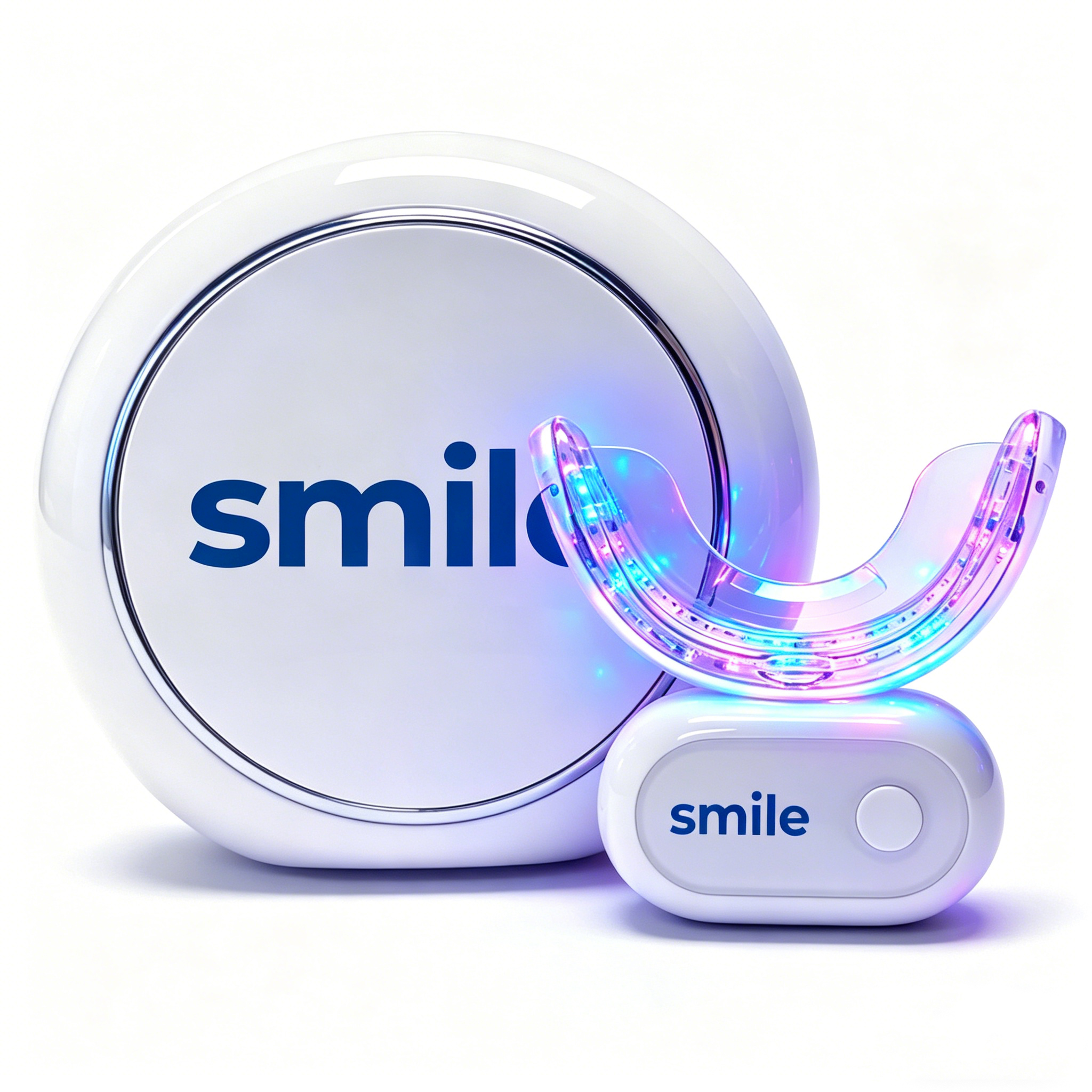
The shift toward kit-based purchasing reflects how professional channels are actually selling whitening to end users. A dental clinic that hands a patient a gel syringe and a separate LED mouthpiece with no integration creates a compliance problem. A spa operator selling a gel-only product cannot justify a premium price point. Buyers have responded by specifying complete take-home kits — gel, tray or strip, LED device, and instructions — as a single SKU.
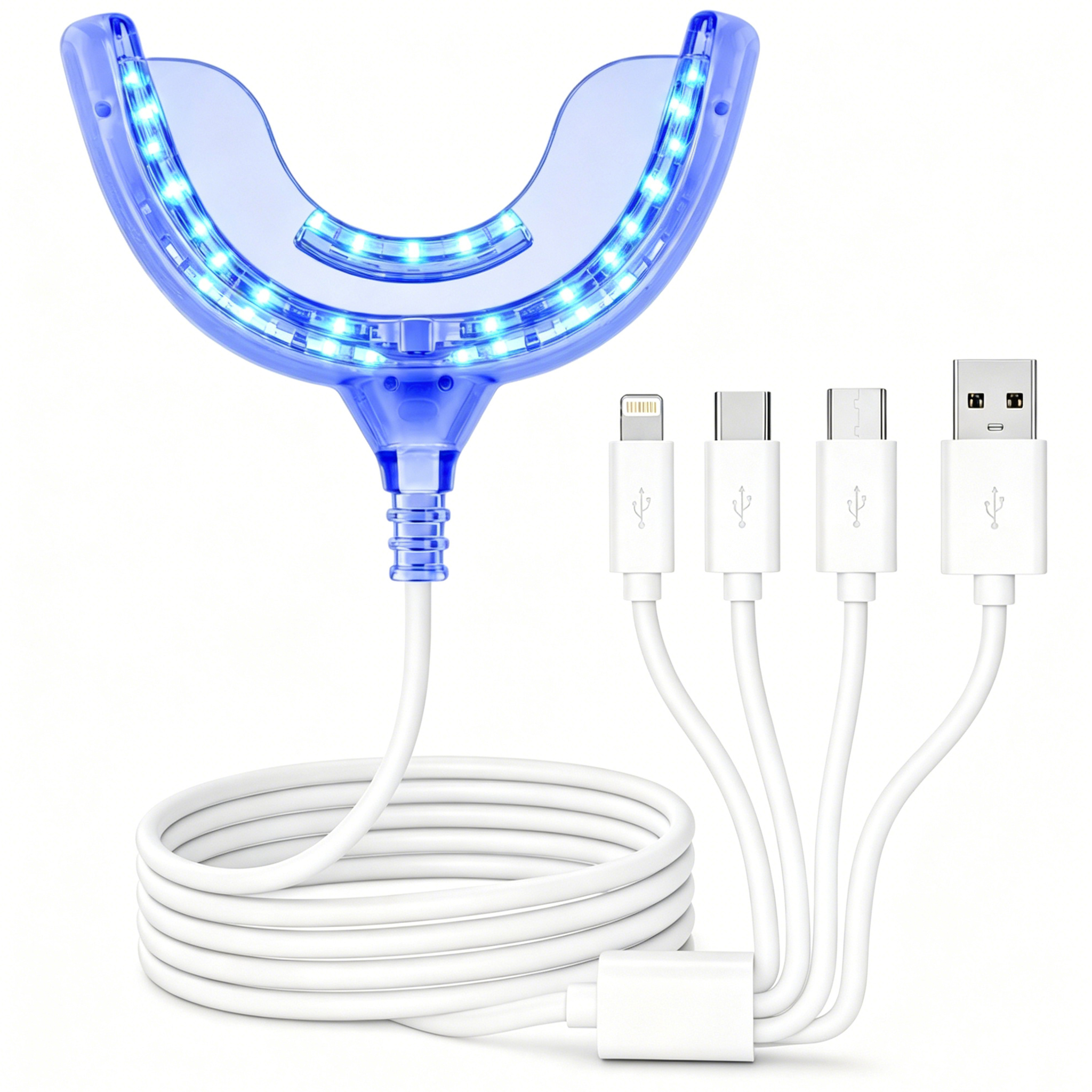
From a sourcing perspective, this changes supplier evaluation criteria significantly. A buyer committing to a take-home whitening kit at scale needs a supplier who can co-develop and co-pack all components to a consistent specification. LED wavelength, battery type, charge cycle count, and device certification all become part of the purchase order specification — not afterthoughts.
The LED pairing also reinforces enamel-safe positioning. Most PAP and low-concentration peroxide formulas are engineered to work with an activation light, which allows formulators to keep active concentrations lower while maintaining efficacy. That architecture — lower active concentration, light activation, mineral-support adjuncts — is the combination most buyers are requesting when they specify enamel safe whitening formulas B2B for 2026 product lines.
Supplier Claims on Enamel Safety: A Verification Checklist
Supplier documentation on enamel safety ranges from robust third-party clinical data to self-generated marketing language with no underlying evidence. A structured verification process protects buyers before they commit to private-label development at volume.
Credible supplier documentation should include:
- RDA test results from an accredited laboratory — not an internal estimate or a reference to a comparable product
- pH stability data across the product's shelf life — low pH accelerates enamel erosion regardless of active ingredient
- Sensitivity incidence data from a clinical or consumer use study, with sample size and study protocol disclosed
- Hydroxyapatite particle size specification if nano-HA is included — particle size affects both efficacy and safety profile
- Stability testing conducted under temperature and humidity conditions relevant to the target market
- Certificate of Analysis (CoA) for each active ingredient batch, not just the finished product
A 2023 systematic review and meta-analysis published in Materials confirmed that biomimetic hydroxyapatite significantly reduced dentin hypersensitivity versus both placebo and fluoride. [1] That level of evidence — a peer-reviewed meta-analysis — is the benchmark buyers should apply when evaluating supplier sensitivity claims. If a supplier cannot point to equivalent published or independently conducted evidence, the claim is marketing, not science.
A separate 2023 systematic review in Dentistry Journal found that hydroxyapatite oral-care products produced short-term whitening with minimal abrasion, while noting that additional clinical trials are needed to strengthen the evidence base. [2] Buyers should treat that qualification honestly: HA whitening is clinically supported but not yet as extensively documented as peroxide-based outcomes. That is a product positioning decision, not a disqualifying finding.
Format Preferences by Channel: Clinics, Spas, and DTC Brands Are Not Buying the Same Kit
Channel-specific format preferences are diverging, and buyers who treat all three channels as interchangeable leave margin — and credibility — on the table.
Dental clinics prioritize clinical credibility and patient compliance. They prefer professional-grade packaging with clear dosing instructions, gel syringes over strips for precise application control, and formulas that include a remineralizing step — either a separate post-treatment gel or an integrated hydroxyapatite component. Clinics are also more likely to require ISO documentation and are increasingly requesting fluoride-free options to accommodate patients who prefer calcium-phosphate alternatives. [4]
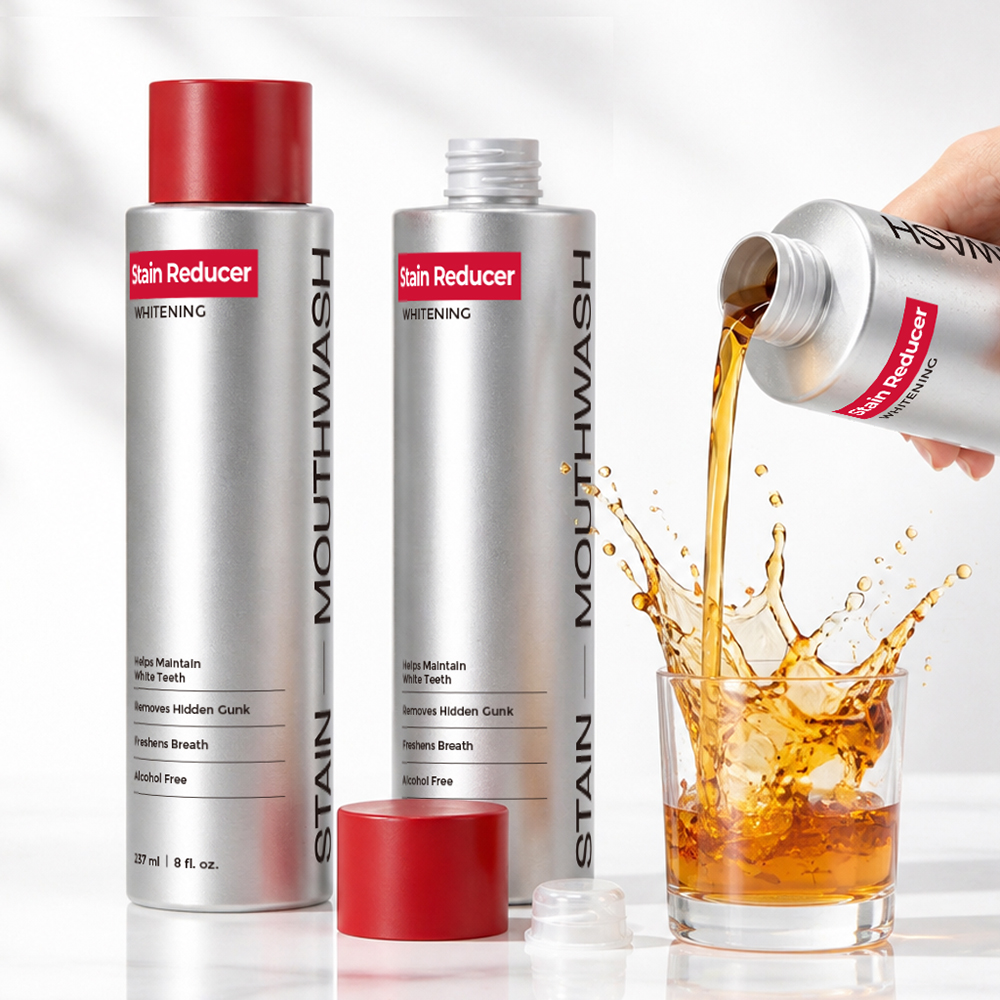
Spa and wellness operators prioritize format elegance and the unboxing experience. Strip and pen formats dominate over syringes in this channel, and packaging aesthetics carry significant weight. PAP-based formulas are the consistent request because operators are not licensed to supply peroxide-based products above cosmetic thresholds in most markets. LED devices specified for this channel are typically compact, USB-charged, and designed for single-session use.
DTC wellness brands are the most specification-flexible but the most claims-sensitive. They need formulas that can be substantiated under FTC guidelines in the US or equivalent consumer protection frameworks in their target markets. They are also the channel most likely to request hydroxyapatite as a co-active alongside PAP, because the HA story supports the broader oral wellness positioning that differentiates premium DTC brands in a crowded market.
Building a Defensible Private-Label Line Around Enamel Safe Whitening Formulas B2B
Enamel-safe positioning is only defensible when the formula, the claims, and the documentation align. Sourcing a PAP formula, adding hydroxyapatite to the label, and approving sensitivity-reduction claims without underlying evidence creates liability, not differentiation.
A defensible private-label line built around enamel safe whitening formulas B2B typically requires three decisions made in sequence:
- Active ingredient selection based on target market regulatory requirements and channel positioning — PAP-only, PAP plus hydroxyapatite, low-concentration peroxide plus nano-bioactive glass, or a phased system combining a whitening step with a dedicated remineralizing step.
- Claim architecture reviewed against ADA substantiation requirements and the relevant jurisdiction's cosmetic or medical device classification — before packaging is designed, not after.
- Supplier documentation audit using the checklist above, with independent laboratory confirmation of at least RDA values and pH stability before committing to production volume.
The market pressure toward enamel-safe formulation is structural. Regulatory thresholds on peroxide are tightening across multiple jurisdictions. Consumer awareness of sensitivity as a post-whitening risk is growing. The clinical evidence base for hydroxyapatite and PAP is expanding, making it progressively easier for buyers to substantiate claims that were difficult to defend five years ago. Buyers who build their private-label specifications around that evidence base now are building toward a position that gets stronger as the market matures, not one that regulatory changes will force them to revise.
References
- [1] Pepla E, et al. Clinical Evidence of Biomimetic Hydroxyapatite in Oral Care Products for Reducing Dentin Hypersensitivity: An Updated Systematic Review and Meta-Analysis. Materials. 2023. PubMed.
- [2] Tooth Whitening with Hydroxyapatite: A Systematic Review. Dentistry Journal. 2023. PubMed Central.
- [3] Effect of Hydrogen Peroxide and Its Combination with Nano-Hydroxyapatite or Nano-Bioactive Glass on Enamel Demineralization and Tooth Color. Dental Research Journal. 2023. PubMed.
- [4] Improving Oral Health with Fluoride-Free Calcium-Phosphate-Based Oral Care Products. Biomimetics. 2023. PubMed.
- [5] Current Evidence on the Impact of Whitening Toothpastes on Dental Hard Tissues and Restorative Materials. Journal of Prosthodontic Research. 2026.
Disclaimer
This article is for general informational purposes only and does not constitute sourcing, legal, or regulatory advice. Always conduct your own due diligence and consult qualified legal or compliance professionals before making purchasing or compliance decisions. WhiteningBright makes no warranties as to the completeness or accuracy of the information, and any reliance is at your own risk.