Which Whitening Format Converts Best for Dental Clinics
14 يونيو 2026
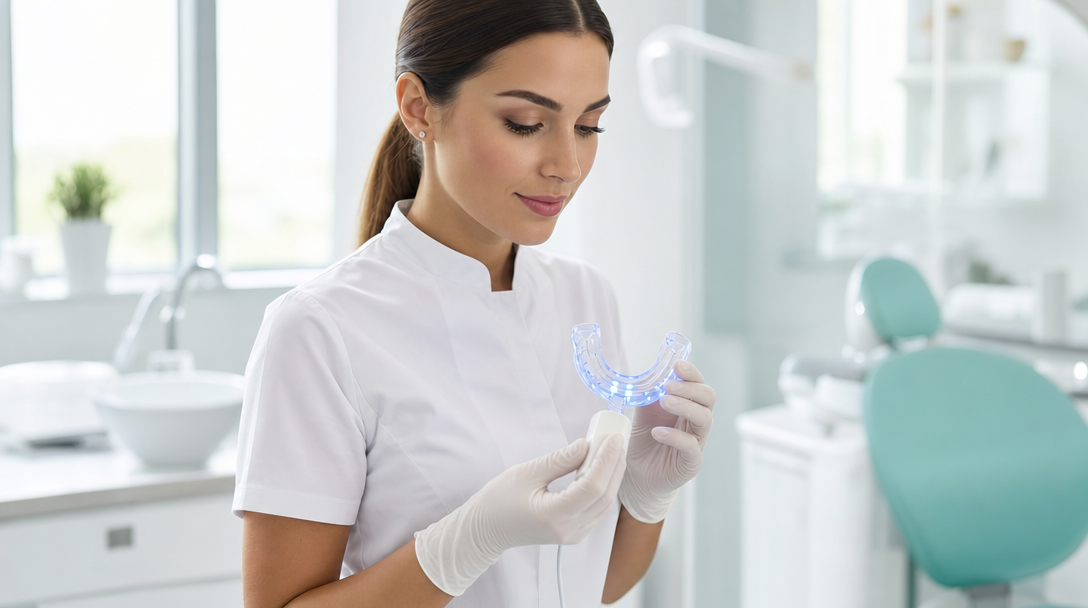
Compare dental clinic whitening products by patient satisfaction, ROI, and compliance. Custom trays vs LED systems vs strips — format decision framework.
Why Format Choice Defines Patient Retention — Not Just Shade Results
Dental clinics evaluating dental clinic whitening products face one decision that shapes downstream revenue more than any other: which format to anchor their whitening program around. Get it right and you build a self-reinforcing cycle of premium appointments and repeat bookings. Get it wrong and you trade chair time for low satisfaction scores and patients who don't return.
The 2026 teeth-whitening market is forecast at $9.37 billion globally, with both in-office and OTC segments expanding simultaneously. That growth creates opportunity — and it creates noise. This analysis cuts through the format options available to clinic owners, evaluating each on patient satisfaction, chair time efficiency, regulatory fit, and repeat visit probability.
Custom Trays: Highest Long-Term Conversion Among Dental Clinic Whitening Products
Custom-fitted trays remain the most clinically trusted format for practices that prioritize patient relationships over single-session throughput. Precise fit eliminates gel leakage, ensures even coverage across all tooth surfaces, and allows professional-grade carbamide peroxide concentrations — typically up to 22% — that OTC products cannot legally match in most jurisdictions.
The treatment model itself is a retention engine. Patients attend an impression appointment, return for tray delivery and protocol instruction, and then complete treatment at home over 10–14 days. That two-visit structure creates natural touchpoints. Patients associate the result with the clinic, not a retail shelf.
Conversion advantages for clinic operators:
- Documented 6–8 shade improvements over the treatment window drive strong word-of-mouth referrals
- Premium pricing is justified by custom fabrication — patients understand they are paying for fit, not just chemistry
- Built-in follow-up appointments make no-shows less likely than single-session formats
- Trays remain in the patient's possession, creating ongoing demand for refill gel at professional concentrations
From a regulatory standpoint, custom trays dispensed by a licensed practitioner fall under dental device frameworks rather than OTC cosmetic limits in the US, EU, and most Commonwealth markets. That classification gives clinics access to concentrations that produce genuinely visible results — a meaningful differentiator from anything a patient can buy at a pharmacy.
LED-Activated Gel Systems: The Premium Single-Session Format
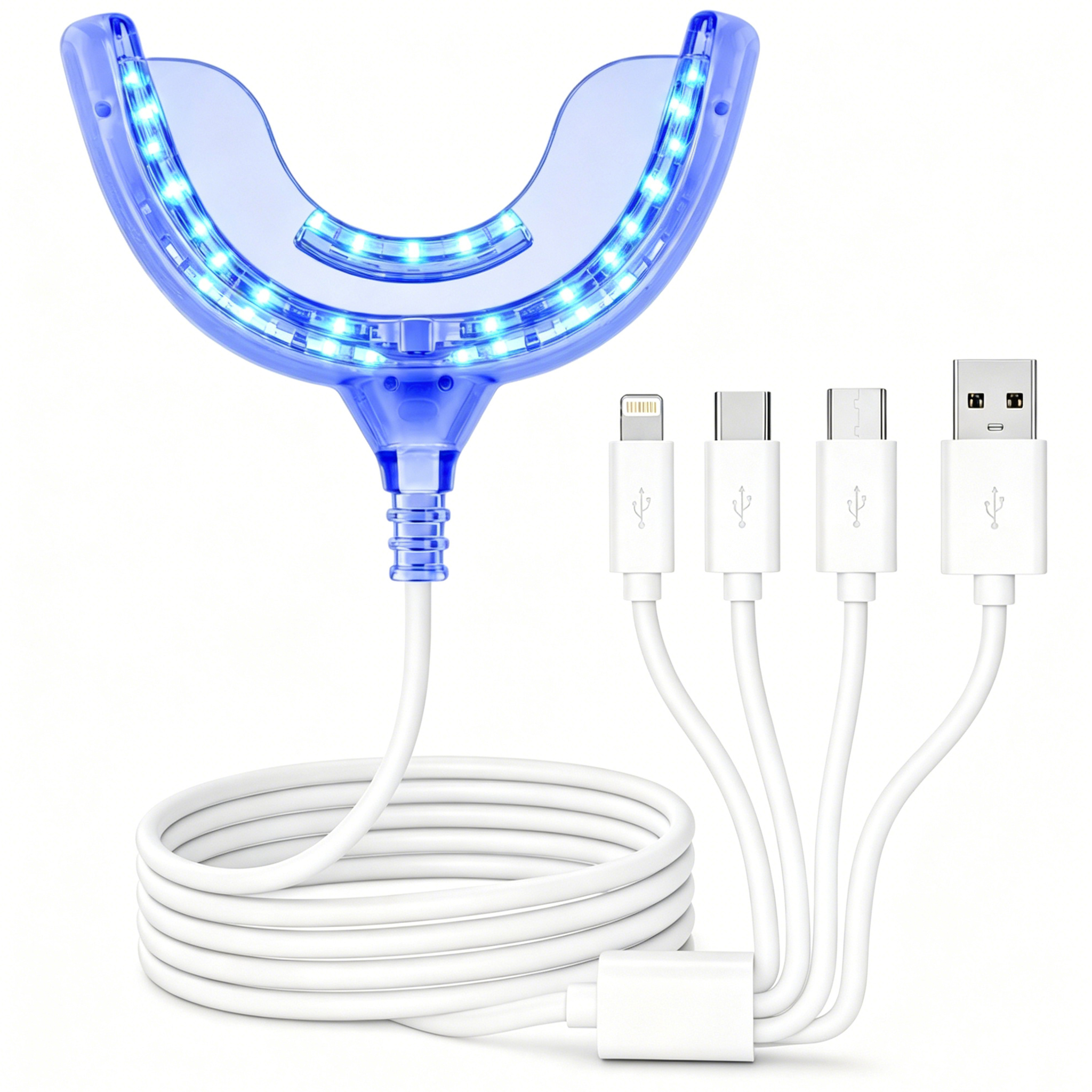
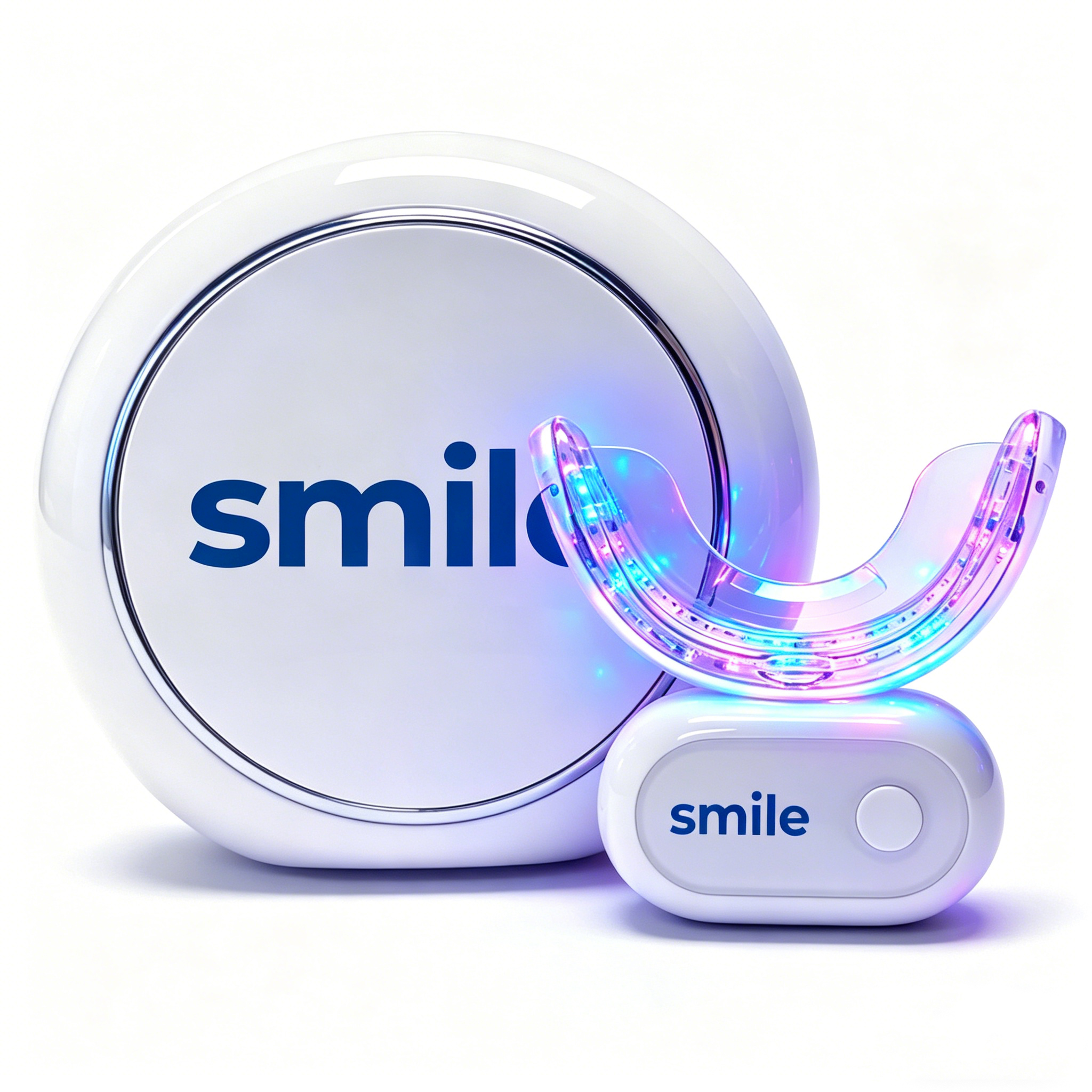
For clinics targeting event-driven patients — pre-wedding consultations, corporate headshot bookings, returning holiday patients — LED-activated in-office gel systems deliver the fastest dramatic outcome. Clinical evidence cited in 2026 dental technology reviews points to LED-based professional whitening as the format most aligned with single-session patient expectations: speed, sensitivity management, and a result visible immediately in the chair.
LED activation accelerates hydrogen peroxide breakdown without the thermal exposure associated with older heat-lamp systems. That distinction matters because sensitivity is the primary reason patients avoid or abandon whitening treatments. Lower post-treatment discomfort directly improves satisfaction scores and reduces the "never again" response that kills repeat bookings.
| Gel Concentration | Session Time | Typical Shade Change | Indicative Price Range |
|---|---|---|---|
| 15–20% H₂O₂ | 45–60 minutes | 4–6 shades | $300–$500 |
| 25–35% H₂O₂ | 60–90 minutes | 6–10 shades | $500–$800 |
Recent evidence also supports a lower-concentration, multi-pass approach — applying shorter rounds of 15–20% hydrogen peroxide repeatedly within a single session — as producing comparable shade change to single high-concentration applications, with meaningfully reduced sensitivity. For clinics serving patients with known dentinal hypersensitivity, that protocol adjustment can shift a hesitant patient into a confirmed booking.
Positioning note: LED gel systems command the highest per-session revenue of any format. Clinics that pair in-office treatment with a custom-tray take-home maintenance kit add 30–40% to the average transaction value without extending chair time.
Professional Strips: Fast Throughput, Moderate Retention
Professional-grade strips — distinct from OTC retail strips by peroxide concentration and fit geometry — occupy a useful middle tier. Sessions run 30–45 minutes. Results are visible same-day. No impression appointments or custom fabrication delays affect scheduling.
The format suits high-volume clinics running whitening as an add-on to routine hygiene visits rather than a dedicated appointment category. A patient arriving for a scale-and-polish can receive a strip application in the same session, generating incremental revenue per chair hour without restructuring the appointment book.
Operational trade-offs to weigh:
- Shade improvement typically ranges 3–5 levels per session — clinically meaningful, but less dramatic than LED gel systems
- Strip geometry cannot match custom-tray coverage for posterior teeth or patients with crowding
- Patients are less likely to associate the result with the clinic specifically, reducing brand loyalty relative to custom tray programs
- Repeat visit probability sits at medium — patients who see results return, but the format creates less structural pull than a two-visit tray protocol
Professional strips work best as an entry-level whitening offer that introduces price-sensitive patients to in-office treatment, with upsell pathways to custom trays or LED systems on the next visit.
Whitening Pens: Low-Cost Retention Tools, Not Primary Revenue Drivers
Whitening pens do not compete with the formats above on primary treatment efficacy. They serve a specific and profitable role: maintenance. Patients who completed custom tray or in-office gel treatment want a convenient touch-up option for high-visibility occasions. A professionally branded pen sold through the clinic keeps that purchase inside your revenue ecosystem rather than losing it to a pharmacy shelf.
Professional-formulation pens typically carry 12–18% carbamide peroxide in a brush-tip applicator. Margin per unit is high relative to product cost. More importantly, the pen extends patient engagement between major whitening sessions — a low-friction touchpoint that reinforces the clinic relationship.
Position pens explicitly as maintenance for patients who already completed a primary treatment. Clinics that bundle pens into custom tray or LED system packages report higher perceived value without meaningful cost increase.
ROI by Format: Matching the Business Model to the Format
No single format is universally optimal. The right choice depends on your patient demographics, appointment structure, and whether you are optimizing for margin per patient or revenue per chair hour.
| Format | Average Revenue | Chair Time | Estimated Profit Margin | Repeat Visit Probability |
|---|---|---|---|---|
| Custom Trays | $400–$600 | 45 min (2 visits) | 65–75% | High |
| LED Gel Systems | $500–$800 | 60–90 min | 70–80% | Medium–High* |
| Professional Strips | $200–$350 | 30–45 min | 55–65% | Medium |
| Whitening Pens | $40–$80 | 5 min | 75–85% | High |
*LED gel system repeat probability rises significantly when combined with a take-home maintenance package at point of sale.
A boutique cosmetic practice in an affluent urban market will extract the most value from LED systems paired with custom tray maintenance kits. A mixed general-and-cosmetic practice with high patient throughput will generate stronger aggregate whitening revenue from strips as an add-on, with custom trays reserved for committed cosmetic patients.
Compliance Requirements Across Key Markets for Dental Clinic Whitening Products
Regulatory constraints are not a footnote — they determine which dental clinic whitening products are legally available in your market and at what concentration. Sourcing a product engineered for the US market and deploying it in the EU creates liability exposure and potential inventory write-offs.
United States: The FDA classifies professional whitening agents as dental devices when dispensed under practitioner supervision. No statutory upper limit exists for in-office hydrogen peroxide concentration under dental oversight, giving US clinics access to the full range of professional gel systems.
European Union: The EU Cosmetics Regulation caps hydrogen peroxide for professional dental use at 6%, with first use required in a dental practice setting. Concentrations above 0.1% are banned for OTC sale. High-concentration LED gel systems available in the US cannot legally be used in EU clinical settings under the same protocols.
Canada: Health Canada permits up to 18% carbamide peroxide for professional dispensing. LED activation systems require medical device registration for commercial clinical use — verify your supplier provides the relevant documentation.
PAP (phthalimidoperoxycaproic acid) and enzyme-based systems are gaining traction specifically because they avoid peroxide-related regulatory thresholds entirely. For clinics operating in the EU or other restrictive jurisdictions, PAP-formulated products deliver measurable shade change without the compliance ceiling that eliminates most high-concentration gel options.
When evaluating any supplier, confirm they provide market-specific documentation: clinical efficacy data, safety dossiers, and jurisdiction-appropriate labeling. A supplier that cannot produce compliant documentation for your specific market is a liability, regardless of the product's performance profile. WhiteningBright's professional-grade product range is formulated with jurisdiction-specific compliance built into the product development process — not retrofitted after the fact.
The Format Decision Framework
Three questions determine the right format for your clinic:
- What is your primary revenue model? High-margin boutique practices anchor on custom trays and LED systems. Volume-driven practices use strips as add-ons with tray upsells.
- What does your patient demographic expect? Event-driven patients want immediate single-session results. Patients investing in cosmetic dentistry long-term respond better to custom protocols with measurable milestones.
- What does your regulatory market permit? Answer this before product selection, not after. EU clinics evaluating LED gel systems must verify the specific concentration against current Cosmetics Regulation limits.
The data supports a hybrid approach for most full-service clinics: LED gel systems as the premium in-office offer, custom trays as the structured take-home protocol, and whitening pens as a branded maintenance product dispensed at both. Professional strips serve as the entry point for patients not yet ready to commit to a full whitening program.
Format selection is a clinical and commercial decision simultaneously. The clinics generating the strongest whitening revenue in 2026 are not those offering the most formats — they are those that built a coherent protocol around one or two formats and executed it consistently across every patient interaction.
References
- Cosmetic Dentistry Statistics 2026 — URBN Dental. Reports $9.37B 2026 teeth-whitening market forecast and continued expansion of OTC and in-office whitening segments.
- Teeth Whitening Market Size & Share Analysis — Mordor Intelligence. Identifies strips/films as fastest-growing consumer format; notes regulatory pressure driving innovation toward lower-peroxide and alternative chemistries.
- Teeth Whitening Technologies 2026: Fast, Safe & Sensitive-Care — Main Street Dental Newark. Highlights LED-based professional whitening as widely preferred for speed, sensitivity management, and single-session results.
- 9 Most Telling Teeth Whitening Statistics 2026–2025 — Dr. John Patterson. Survey data indicating in-office bleaching as the most preferred method; supports clinic conversion logic and consumer willingness to pay at premium price points.