How to Position PAP Whitening Against Peroxide in 2026
1 de junio de 2026
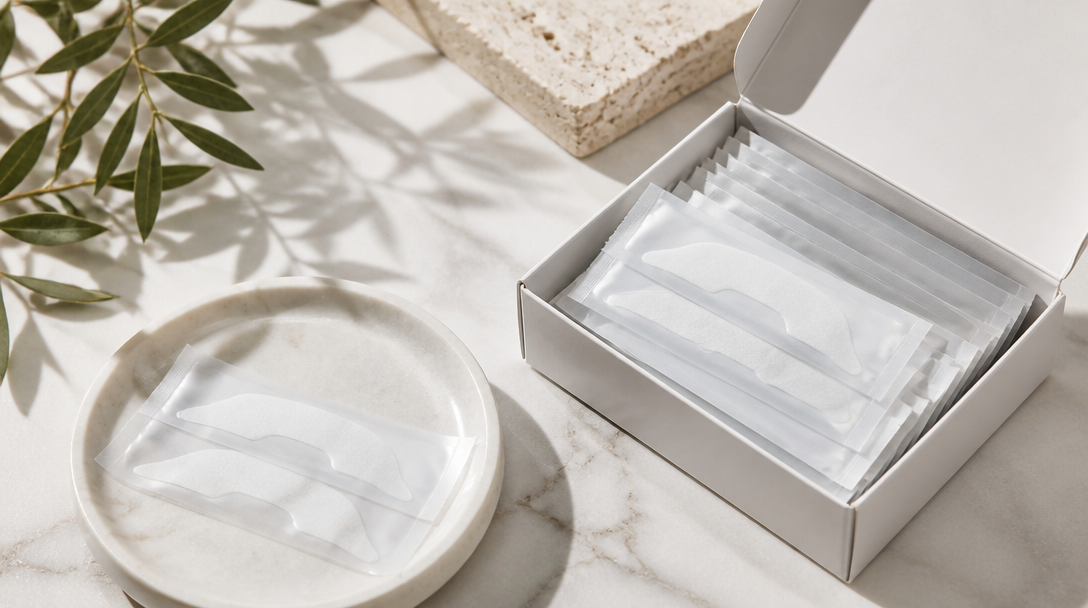
The exact PAP whitening positioning framework for brand owners — channel strategy, clinical messaging, pricing logic, and regulatory-safe claims.
Why PAP Whitening Positioning Determines Your Channel Strategy in 2026
Brand owners launching whitening products face one decision that shapes everything downstream: how to frame PAP whitening positioning relative to peroxide. Get the framing wrong and you compete on peroxide's terms. Get it right and you own a distinct, defensible category with premium pricing logic built in.
The market shift is measurable. The sensitive-teeth whitening segment is moving toward peroxide-free PAP formulations, driven by demand for lower irritation and at-home convenience — a trend accelerating through 2026 and into 2034 according to current category research. Retailers stock limited SKUs. Dental clinics evaluate products on patient compliance, not just whitening speed. DTC wellness brands need differentiation that holds up past the first purchase.
PAP gives brand owners a genuine clinical story. A 2024 peer-reviewed study published in PMC found PAP achieved the best whitening index among all tested agents while producing less enamel surface change than hydrogen peroxide comparators. That is not a soft "gentle" claim — it is an efficacy-plus-comfort proof point. The positioning framework below shows how to use it.
The Three-Pillar PAP Whitening Positioning Framework
Effective PAP positioning rests on three value pillars. Each one sidesteps a direct speed comparison with peroxide and instead builds a different purchase rationale — one that dental professionals, pharmacists, and wellness consumers all respond to.
Pillar 1: Comfort-First Whitening
Lead with sensitivity reduction, not whitening power. Clinical data shows PAP delivers excellent bleaching results with milder enamel interaction than traditional peroxide systems — which means you can claim comfort without sacrificing efficacy credibility.
- Primary claim: "Engineered for sensitive teeth"
- Supporting proof: "Formulated with PAP technology for comfortable daily use"
- Avoid: "Gentle but effective" — the word but signals weakness and invites skepticism
Pillar 2: Modern Chemistry Advantage
Position PAP as the next-generation whitening ingredient designed for at-home use. Peroxide has been the category standard for decades. PAP is what happens when formulation science catches up with what consumers actually want: results without the tradeoff.
- Primary claim: "Peroxide-free whitening technology"
- Supporting proof: "Advanced PAP formula co-developed for consistent visible results"
- Avoid: "Better than peroxide" — it creates a comparison you don't need and can't always win on speed metrics
Pillar 3: Routine Integration
PAP's gentler profile enables longer treatment windows. That means daily-use compatibility, extended treatment cycles, and lower discontinuation rates — a critical advantage for subscription DTC brands and dental professionals managing patient compliance.
- Primary claim: "Designed for extended treatment cycles"
- Supporting proof: "Compatible with daily oral care routines without treatment breaks"
- Avoid: "Use as often as you want" — undefined frequency claims carry regulatory risk across multiple markets
Channel-Specific PAP Positioning That Converts Buyers
The same PAP product requires a different conversation depending on where it sells. Dental clinic buyers prioritize patient compliance data. Pharmacy buyers need shelf differentiation logic. DTC founders need subscription retention arguments. Build the message to the buyer, not to the ingredient.
| Channel | Primary Message | Proof Point | Price Strategy |
|---|---|---|---|
| Dental Clinics | Patient comfort and treatment compliance | Peer-reviewed enamel safety data | Premium professional pricing |
| Premium Pharmacies | Advanced peroxide-free chemistry | Next-generation PAP technology | 15–25% above peroxide equivalent |
| DTC Wellness Brands | Routine-friendly whitening | Daily-use compatibility, lower churn | Subscription model optimization |
| Mass Retail | Sensitive-teeth solution | Clinically gentler whitening option | Competitive with premium peroxide SKUs |
Dental and Clinical Channel
Dental professionals are not interested in ingredient marketing. They want to know what happens to their patients' teeth and whether the product gets used through the full treatment cycle. Lead with the clinical evidence: PAP achieved the highest whitening index in the 2024 PMC comparison study with less measured enamel microhardness change than hydrogen peroxide.
The positioning line here is precise: "Formulated for patients who discontinue peroxide treatments due to sensitivity." That frames PAP as a clinical solution, not a cosmetic compromise.
DTC and Beauty Brand Channel
DTC brands live and die on retention metrics. A whitening product that causes sensitivity drives one-time purchases and negative reviews. PAP's daily-use compatibility supports longer treatment cycles, consistent before-and-after documentation, and subscription renewal logic that peroxide products cannot match.
The message here: "Modern whitening technology designed for your routine." Connect the ingredient story to lifetime value, not just first-use results.
Premium Pharmacy Channel
In markets like Germany, France, and the UK, pharmacy consumers skew toward products they perceive as clinically considered. PAP's peroxide-free positioning aligns with documented consumer preference for lower-irritation cosmetic products in these channels. The "advanced chemistry" angle lands harder than "gentle" because it signals innovation rather than compromise.
Four PAP Positioning Mistakes That Limit Sales
These errors appear consistently in PAP product launches. Each one either invites a comparison PAP cannot win or understates the ingredient's actual clinical credentials.
Mistake 1: Competing on Speed
Claiming "whitens as fast as peroxide" anchors PAP in peroxide's category and on peroxide's terms. Peroxide's speed advantage is established and expected. Compete on a different axis entirely.
Better approach: "Consistent visible results over 14–21 day treatment cycles."
Mistake 2: Labeling PAP as Natural
PAP — phthalimidoperoxycaproic acid — is a synthesized organic compound. Positioning it as a natural or botanical alternative creates regulatory exposure and misrepresents the ingredient. The modern chemistry framing is both more accurate and more compelling to the premium buyer.
Better approach: "Peroxide-free whitening technology."
Mistake 3: Underselling Efficacy
Soft "gentle" messaging without efficacy proof suggests the product sacrifices results for comfort. The clinical record does not support that trade-off. The 2024 PMC study found PAP achieved the best whitening index among all agents tested — that is an efficacy claim, not just a safety one.
Better approach: "Effective whitening engineered for comfort."
Mistake 4: Generic Sensitivity Claims
Broad "safe for sensitive teeth" language without a mechanism or clinical anchor carries no weight with pharmacy buyers or dental professionals. It also blends into dozens of competing claims on-shelf.
Better approach: "Formulated with PAP to minimize enamel interaction during the whitening process."
Building Clinical Credibility Without Regulatory Exposure
PAP's strongest asset is a peer-reviewed clinical record. Use it precisely. The 2024 study published in PMC provides a clear finding: PAP delivered the best whitening index among tested agents and produced less enamel surface change than hydrogen peroxide comparators. That supports two distinct claims — efficacy and comfort — without requiring superlatives or unsupported absolutes.
Evidence-Based Claim Structure
- Lead with the whitening outcome: "Clinically demonstrated whitening results"
- Layer in the comfort differential: "With reduced enamel interaction compared to peroxide systems"
- Close with the technology: "Using advanced PAP chemistry"
Regulatory-Safe Language by Market
Qualifying language is not weakness — it is the difference between a claim that survives EU cosmetics regulation or FDA scrutiny and one that creates liability. Build these substitutions into your product copy from the start.
- "Designed to minimize sensitivity" — not "Eliminates sensitivity"
- "Formulated for comfortable use" — not "Completely painless"
- "Reduced enamel interaction" — not "Safer than peroxide"
- "Clinical research supports PAP's whitening effectiveness" — not "Clinically proven superior"
Price Point Strategy for Premium PAP Formulas
PAP products support a 15–30% price premium over equivalent peroxide formulations when the value rationale is clearly communicated. The premium is not justified by the ingredient cost alone — it reflects advanced formulation, comfort performance, and routine compatibility that peroxide cannot replicate.
For a brand scaling from 500 to 5,000 units, the comfort positioning reduces return rates and negative reviews, which directly protects margin at retail. That is a quantifiable business case, not just a branding preference.
Connecting Price to Measurable Outcomes
- Treatment completion rates: Comfort enables full treatment cycles, which drives visible results and repeat purchase
- Subscription retention: Daily-use compatibility reduces churn caused by sensitivity-related discontinuation
- Professional endorsement: Clinical credibility supports dental channel stocking and recommendation
Dental channels consistently support the highest price premiums, anchored by professional recommendation and patient outcome accountability. Mass retail requires tighter alignment with premium peroxide price points — but the sensitive-teeth segment still commands above-average category pricing even there.
For private-label brand owners building a PAP whitening line, WhiteningBright's product catalog includes formulations co-developed for each of these channel requirements — from dental-professional strips to DTC subscription kits — with full compliance documentation for EU, US, and APAC markets.
References
- Phthalimidoperoxycaproic Acid (PAP) Versus Peroxides and Impact on Whitening Effectiveness, Enamel Microhardness, and Morphology — PMC / NLM
- Teeth Whitening Strips Sensitive Market Outlook 2026–2034 — Intel Market Research
- How Safe Is PAP Teeth Whitening in 2026? — WhiteningBright
- PAP vs. Hydrogen Peroxide: Choosing the Right Gel for Your Use Case — Onuge