Importer Documentation Gaps That Delay Whitening Clearance
27 de septiembre de 2026
Discover the whitening import documentation requirements that cause customs holds — beyond GMP and concentration limits — for US and EU market entry.
Whitening Import Documentation Requirements: The Gaps That Cause Customs Holds
Most whitening shipment holds are not caused by formula failures. They are caused by document failures — missing declarations, outdated standard references, incomplete safety dossiers, or a responsible person who cannot be located by the receiving authority. For importers managing whitening import documentation requirements across the US and EU, the gap between a compliant product and a cleared shipment is almost always a paperwork gap, not a chemistry gap.
A product can be correctly formulated, manufactured under GMP, and still sit in a customs hold for weeks because the document stack is incomplete, mismatched to the destination market, or assembled in the wrong sequence. The cost is not just delay — it is spoilage risk, missed client commitments, and regulatory flags that follow a company's import history.
The sections below map the specific gaps that cause these holds, market by market.
US Entry: What FDA Whitening Import Documentation Requirements Actually Demand
Whitening products entering the US as OTC drug products — primarily those containing hydrogen peroxide at concentrations covered under the OTC drug framework — must conform to the relevant FDA monograph conditions. What many importers underestimate is that monograph compliance is not self-certifying. The importer, not the manufacturer, bears responsibility for ensuring every element of the product as imported matches the monograph conditions on label, formulation, and format.
FDA's recognition of ISO 28399 — the international standard for external tooth bleaching products — is a concrete compliance signal that importers must track. FDA has stated that older declarations referencing superseded versions of this standard will stop being accepted after the applicable transition period. An importer presenting a Declaration of Conformity citing an outdated ISO 28399 version presents a document FDA will treat as deficient, regardless of the product's actual formulation quality.
Beyond standard citations, the following document elements are commonly missing or mismatched at US entry:
- Facility registration: The manufacturing facility must be registered with FDA. Importers sometimes hold GMP certificates without confirming the facility appears in FDA's active registration database.
- Drug Facts labeling conformity: OTC drug labeling must follow the Drug Facts format precisely. Font size, panel placement, and required warnings must match FDA specifications — not the exporting country's label standard.
- Ingredient declaration format: Active and inactive ingredients must be listed in the format and order required by FDA OTC rules, not INCI cosmetic convention.
- Importer of record documentation: The importer of record must be clearly identified and must hold the supporting documentation independently — not simply rely on the supplier's file.
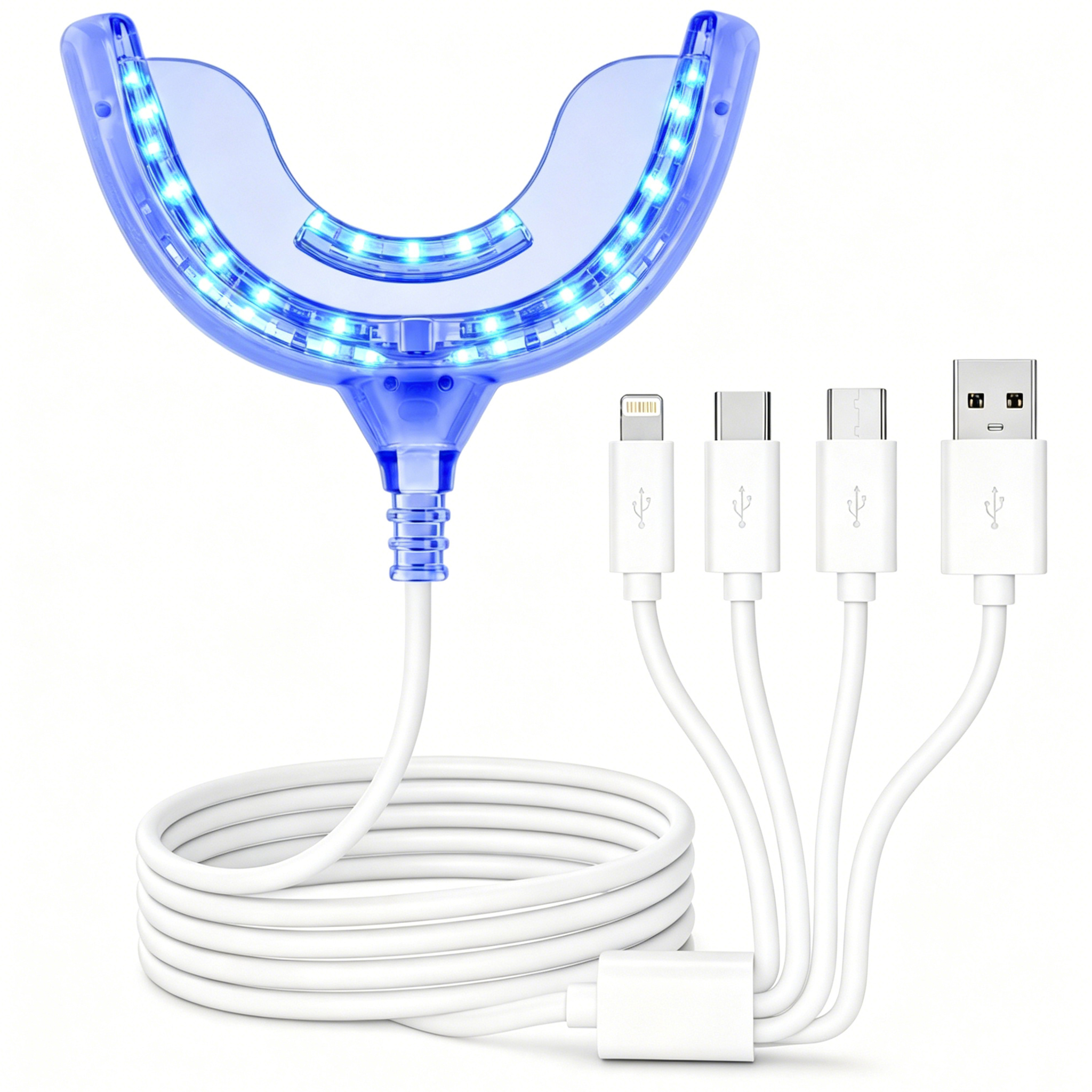
For device-adjacent products — whitening kits that bundle LED accelerators or custom tray components alongside a bleaching agent — FDA guidance on premarket notification submissions makes clear that complete device descriptions, biocompatibility data, and labeling documentation are all required elements. A kit that combines a device with a drug product creates a dual-pathway documentation requirement that many importers do not anticipate until a hold is issued.
EU Entry: CPNP and Product Information File Gaps
In the EU, whitening products containing hydrogen peroxide above 0.1% are regulated as cosmetics with restricted ingredient status under Regulation (EC) No 1223/2009. Products containing between 0.1% and 6% hydrogen peroxide — or equivalent concentrations from peroxide-releasing compounds — are permitted for consumer use under specific conditions, with higher concentrations restricted to dental professionals. Every product in this category requires a completed CPNP submission before it can be placed on the EU market.
The CPNP submission itself is rarely the failure point. The Product Information File (PIF) that underlies it is where most whitening importers encounter rejection or delay. The PIF must contain a Cosmetic Product Safety Report (CPSR) prepared and signed by a qualified safety assessor — someone holding recognized qualifications in toxicology, pharmacy, medicine, or a related discipline. A safety summary prepared by the manufacturer's internal quality team, without an assessor's credentials on file, does not satisfy this requirement.
Specific document gaps that cause CPNP-related holds include:
- Safety assessor credentials not documented: The CPSR must name the assessor and include evidence of their qualifications. A report signed with a name but no credential documentation is incomplete.
- Stability data gaps: The PIF must include stability testing under conditions relevant to the EU market. Data conducted only under the exporting country's conditions may not satisfy EU assessors.
- Challenge testing for preservative efficacy: Whitening gels with preservative systems require documented challenge testing. Many supplier files contain formulation data but omit this specific test entirely.
- Nanomaterial declarations: If any ingredient meets the EU nanomaterial definition, a separate notification is required six months before market entry. This is routinely overlooked for silica- or hydroxyapatite-containing formulas.
The Cross-Market Document Stack: Confirmed Holdings Before You Ship
Importers operating across the US and EU — or preparing a product for sequential market entry — need a document stack that satisfies both frameworks without creating contradictions. A safety dossier written for EU CPSR purposes will not map cleanly onto US OTC drug documentation requirements. These are parallel files, not interchangeable ones.
Before any whitening shipment clears origin, the importer should hold confirmed copies of the following:
- Current GMP certificate with scope explicitly covering tooth bleaching or oral care as a product category
- Declaration of Conformity referencing the current accepted version of ISO 28399
- Full ingredient specification with CAS numbers and concentration ranges
- Certificate of Analysis (CoA) for the specific production batch being shipped
- Stability data report — accelerated and real-time where available
- Safety assessment report with assessor credentials (EU) or OTC drug monograph conformity statement (US)
- Labeling proof set — final artwork approved against destination-market requirements
- Facility registration confirmation: FDA database check for US; Responsible Person appointment letter for EU
Health Canada's guidance on peroxide-generating tooth whitening products adds a requirement that importers targeting the Canadian market must note separately: detailed laboratory reports are required, not summary reports. A safety file that passes EU review as a summary document may still be rejected at the Canadian border as insufficiently detailed. Importers who treat Canada as an extension of US documentation rather than a distinct regulatory pathway encounter this gap routinely.
Responsible Person Requirements: Who Signs and What They Must Prove
Both the US and EU frameworks place legal accountability on a named entity within the destination market — not on the manufacturer. In the EU, this is the Responsible Person (RP), who must be established in the EU and whose name and address must appear on the product label. In the US, the importer of record carries equivalent accountability under FDA's import framework.
The RP requirement is where many private-label arrangements break down at customs. A brand owner who has co-developed a formula and holds the private-label rights may not have formally appointed an EU-established RP before the shipment arrives. The CPNP notification may exist, but if the RP named in the notification cannot be verified as EU-established, the product cannot legally be placed on the market.
The RP must be able to demonstrate, on request:
- Legal establishment within the EU — a registered business address, not a forwarding address
- Access to the full PIF, not just the CPNP submission receipt
- Ability to respond to a competent authority request within the timeframes specified under EU cosmetics regulation
- A documented agreement with the manufacturer covering PIF maintenance and update obligations
For US importers, the parallel requirement is that the importer of record must hold — not simply reference — the supporting documentation. FDA entry review can request documentation at the port. An importer who points to a supplier's website or a shared drive requiring supplier access is not in a defensible position.
Auditing Your Supplier's Document Package Before It Becomes Your Problem
A supplier's document package is a due diligence asset, not a formality. The practical question is not whether documents exist, but whether they are current, complete, and correctly scoped for your destination market. Run this audit before placing a production order:
- Check ISO 28399 version: Confirm the Declaration of Conformity references the version currently recognized by FDA. Outdated references are a documented rejection trigger.
- Verify facility registration independently: Do not rely on the supplier's GMP certificate alone. Check the facility directly against FDA's registration database.
- Request the full CPSR, not a summary: If the supplier provides a one-page safety summary, that is not a CPSR. Request Part A (safety assessment) and Part B (safety assessor statement) as separate, signed documents.
- Confirm the CoA matches the production batch: CoAs are sometimes provided as templates or from prior batches. The CoA for your shipment must reference your specific batch number and production date.
- Review labeling against destination-market rules: A label that passed in one market is not automatically compliant in another. EU and US label requirements for whitening products differ on active ingredient declaration, warning language, and professional-use restriction language.
Peer-reviewed literature on OTC bleaching products notes that product dossiers in this category are frequently thin or inconsistent in the evidence they present for safety and efficacy. That observation applies directly to supplier document packages: inconsistency at the supplier level becomes a compliance liability at the importer level.
Building a Standing Compliance File for Repeat Whitening Import Documentation Requirements
A compliance file built for one shipment is not a compliance program. Importers managing repeat whitening orders need a standing file structure maintained between shipments, updated when standards change, and accessible at the point of entry — not reconstructed after a hold is issued.
Structure the standing file around three update triggers:
- Regulatory updates: When FDA updates its recognized standards list — including ISO 28399 transitions — every Declaration of Conformity in the file must be reviewed and reissued against the current version before the next shipment.
- Formulation changes: Any change to concentration, excipients, or preservative system requires a full review of the CoA, stability data, and safety assessment. Partial updates create document mismatches that are difficult to defend at entry.
- Responsible Person or importer of record changes: If the RP or importer changes between shipments, all labeling, CPNP notifications, and regulatory correspondence must be updated before the next consignment ships.
The ADA's acceptance guidelines for tooth whitening products emphasize that incomplete or inconsistent supporting data directly hinders product acceptance — a principle that applies as clearly to import documentation as it does to clinical substantiation. A file that is current, complete, and internally consistent is not just a compliance requirement. It is the operational foundation that keeps cleared shipments moving.
References
- FDA Recognized Consensus Standards: ISO 28399 Dentistry — External Tooth Bleaching Products. U.S. Food and Drug Administration.
- Dental Curing Lights — Premarket Notification (510(k)) Submissions. U.S. Food and Drug Administration.
- Over-the-counter products in tooth bleaching: A scoping review. PubMed, National Library of Medicine.
- ADA guidelines for the acceptance of tooth-whitening products. PubMed, National Library of Medicine.
- Whitening. American Dental Association, Oral Health Topics.
Disclaimer
This article is for general informational purposes only and does not constitute sourcing, legal, or regulatory advice. Always conduct your own due diligence and consult qualified legal or compliance professionals before making purchasing or compliance decisions. WhiteningBright makes no warranties as to the completeness or accuracy of the information, and any reliance is at your own risk.
---