What B2B Buyers Are Actually Ordering in Whitening
9 de agosto de 2026
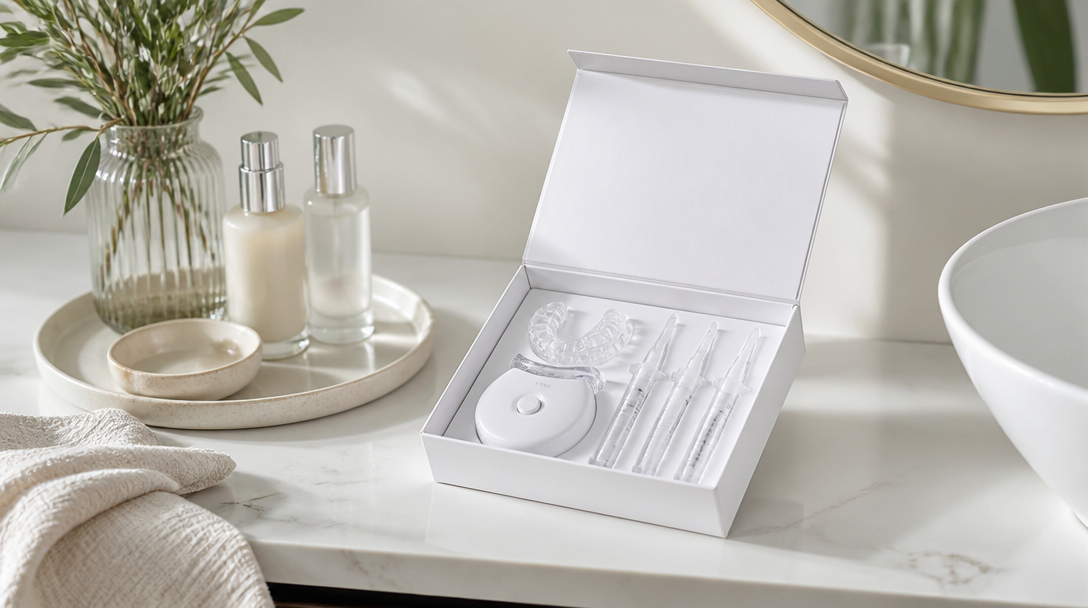
Explore professional whitening kit sourcing trends: take-home formats, LED configs, PAP formulas, and compliance requirements driving B2B orders in 2026.
Professional Whitening Kit Sourcing Trends: What B2B Buyers Are Actually Ordering
If you're placing orders for a dental clinic network, building a private-label wellness line, or managing distribution across multiple retail channels, professional whitening kit sourcing trends have shifted at the format level, the ingredient level, and the regulatory level — simultaneously. This breakdown covers take-home kit configurations, LED device specifications, PAP-based formulations, and what enamel-safe labeling actually requires from a compliance standpoint. Every section is written for buyers already operating in the category.
Why Take-Home Formats Now Drive Professional Whitening Kit Sourcing Trends
Dental literature consistently documents that in-office whitening produces faster initial results, while at-home systems dominate on convenience and patient compliance over time. That clinical distinction is now driving a commercial rebalancing. Clinic owners and distributors report that take-home formats represent a growing share of repeat orders — not because in-office treatments are declining, but because the take-home segment is expanding faster.
Three buyer types are converging on the same category. Patients who complete an in-office treatment want a maintenance product for use between appointments. Spa operators and premium pharmacies are building whitening into broader oral wellness assortments. DTC wellness brands are launching whitening as a hero SKU with professional-grade positioning. Each group is sourcing take-home kits, and the specifications they request are becoming more precise.
Regulatory pressure adds another layer. Peroxide concentration limits vary by jurisdiction. In markets where over-the-counter hydrogen peroxide is capped at low levels, professional-channel take-home kits with higher concentrations require a licensed practitioner in the distribution chain. That dynamic pushes clinic owners to take an active role in the take-home category rather than ceding it to retail.
Three Take-Home Formats Currently Moving Volume
The most active order patterns at the format level center on gel-and-tray systems, strip-based kits, and pen-plus-device bundles. Each serves a different channel and price point.
Gel-and-Tray Systems
Custom or semi-custom tray systems remain the standard for dental clinic take-home programs. Buyers sourcing for clinic use typically specify syringes in 3 mL to 5 mL fills, with carbamide peroxide or hydrogen peroxide at concentrations calibrated to their jurisdiction's professional-channel limits. The tray format allows precise contact time and is well-supported by clinical evidence on peroxide-based whitening efficacy.
At volume orders for regional dental groups, buyers more frequently request desensitizing agents co-formulated into the gel — potassium nitrate and fluoride are the most common. This reflects the documented relationship between peroxide concentration, application time, and sensitivity incidence. Reducing post-treatment sensitivity complaints is a direct operational priority for clinic managers, not a marketing consideration.
Strip-Based Kits
Strip formats are gaining ground in the pharmacy and wellness retail channel. Buyers sourcing for premium pharmacy placement specify thinner, flexible strip substrates with improved adhesion and shorter wear times — typically in the 15- to 30-minute range. The compliance argument is straightforward: patients are more likely to complete a full whitening course with a format that fits easily into a daily routine.
Pen-Plus-Device Bundles
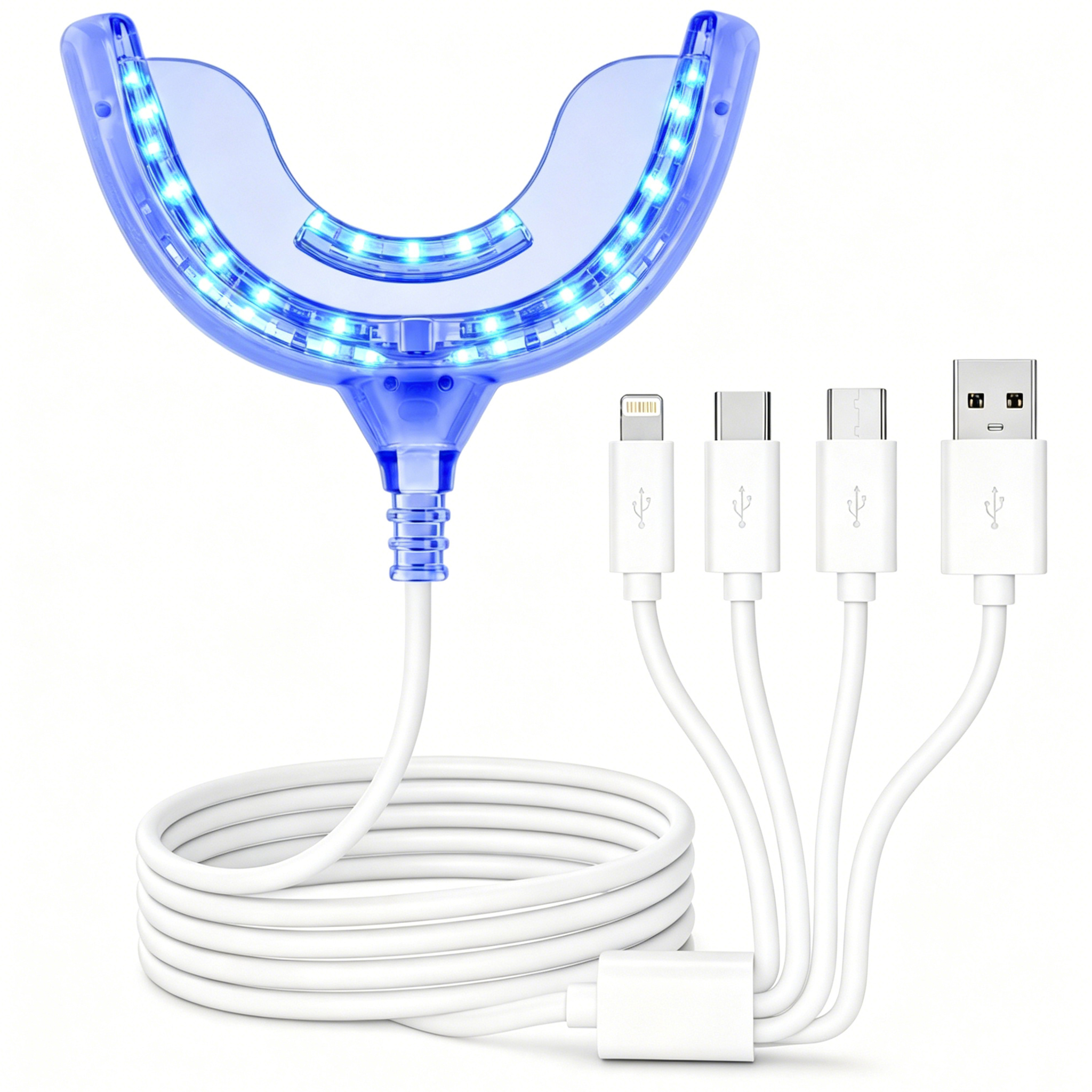
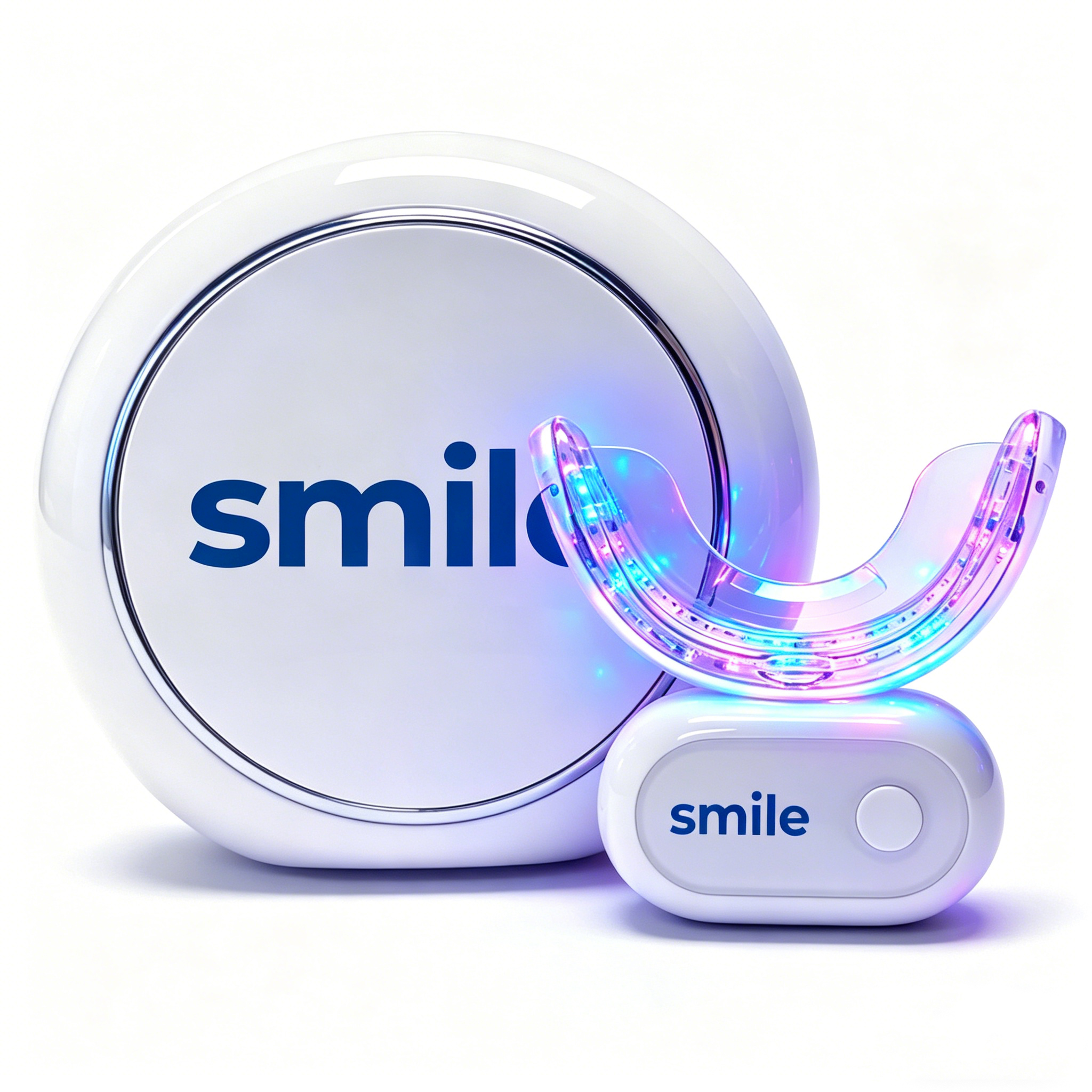
Bundled kits combining a whitening pen with a clip-in LED mouthpiece are the fastest-moving configuration in the DTC wellness and beauty channel. These bundles support a premium retail price point and allow brand owners to differentiate on device design and packaging. Buyers in this segment consistently request private-label-ready packaging with full brand customization across both the pen and the device component.
LED Devices: Why Clip-In Designs Are Outpacing Tray-Style Formats
LED-accelerated whitening devices have moved from a novelty add-on to a standard kit component in the professional take-home segment. The mechanism is photoactivation: blue-spectrum LED light accelerates the breakdown of peroxide or PAP-based whitening agents. The clinical effect is dose- and formulation-dependent, and buyers sourcing for professional channels are increasingly aware of that distinction when evaluating device specifications.
Among device formats, clip-in mouthpieces — held hands-free in the mouth and charged via USB — are outpacing tray-style devices with external light sources. Four reasons account for the shift:
- Compliance: Hands-free use during a 10- to 20-minute session increases completion rates, which matters directly to clinic owners tracking patient outcomes.
- Portability: Compact clip-in designs fit travel retail and subscription box formats, expanding the distribution footprint for brand owners beyond clinic and pharmacy channels.
- Unit economics: Clip-in devices can be manufactured at a price point that supports kit bundling without pushing retail price beyond the premium consumer threshold.
- Regulatory profile: A device functioning as a light source without generating heat or UV output typically follows a simpler regulatory pathway than powered tray devices with heating elements.
Buyers specifying LED devices for professional channels should require CE marking documentation for EU distribution and FDA cosmetic device compliance for the US market. Suppliers who cannot produce this documentation on request represent a sourcing risk regardless of unit price.
PAP Formulas: The Compliance Advantage Reshaping Distributor Orders
Phthalimidoperoxycaproic acid — PAP — has moved from a niche alternative to a mainstream formulation choice in professional whitening kit sourcing trends, particularly among distributors serving markets with strict peroxide regulations.
The compliance case is direct. In the European Union, hydrogen peroxide in consumer whitening products is capped at 0.1% for over-the-counter sale, with concentrations up to 6% restricted to dental professionals. PAP operates through a different oxidative mechanism and does not carry the same regulatory classification in most jurisdictions, allowing brand owners to formulate effective whitening products that move through non-dental retail channels without the same access restrictions.
PAP formulas also carry a sensitivity profile argument that resonates in the premium wellness channel. Dental research documents peroxide-based whitening produces sensitivity and gingival irritation as dose-related adverse effects. PAP-based formulas are positioned — and increasingly marketed — as a lower-sensitivity alternative. For wellness brands whose end-customers have historically avoided whitening due to sensitivity concerns, that positioning opens a meaningful addressable segment.
For dental clinic operators, the operational benefit is fewer sensitivity-related follow-up calls and a broader eligible patient base — including patients with mild existing sensitivity who would not be candidates for higher-concentration peroxide systems.
What Enamel-Safe Claims Actually Require
Enamel-safe appears on a growing share of professional take-home whitening products. It is also one of the most scrutinized claims by regulators and retail buyers. Understanding what the claim requires — and what it does not guarantee — is essential for any buyer co-developing a private-label product.
Government and dental authority guidance consistently distinguishes between products that bleach enamel through chemical oxidation and products that remove extrinsic stains through abrasion or enzymatic action. An enamel-safe claim does not mean the product whitens through a bleaching mechanism. It means the product, as formulated, does not structurally damage enamel under normal use conditions — a narrower assertion than many buyers assume.
For a product to carry an enamel-safe claim with credibility in a professional channel, the supplier should provide all of the following before a purchase order is issued:
- In vitro enamel abrasion data, typically expressed as a Relative Dentin Abrasivity (RDA) or Relative Enamel Abrasivity (REA) score
- pH documentation confirming the formula does not fall into an erosive range under normal use conditions
- Ingredient-level justification for any abrasive agents included in the formula
- Third-party testing or ISO-compliant lab certification supporting the claim
FDA guidance notes that whitening products can cause tooth sensitivity and gum irritation, and that buyers should distinguish between products with adequate safety evidence and those without. A supplier unable to produce supporting data for an enamel-safe claim does not belong in a professional distribution chain.
Reading Order Patterns to Build the Right SKU Mix
Across gel-and-tray, strip, and pen-plus-device formats, order patterns give experienced buyers clear signals about where each channel is heading.
Dental clinic buyers are consolidating around fewer SKUs with higher per-unit gel volume and desensitizing co-formulations. They are less interested in novelty formats and more focused on clinical consistency and patient compliance. Distributors supplying dental groups should lead with gel systems that have documented concentration profiles and sensitivity management built into the formula.
Spa and wellness retail buyers are moving toward PAP-based strip and pen formats with clean-label ingredient decks. They source for end-customers who read ingredient lists and respond to clinical-adjacent positioning. Private-label packaging with ISO or CE documentation visible on the outer carton is a commercial advantage in this channel — not an optional detail.
DTC brand owners are the most format-experimental segment. They order clip-in LED bundles, test PAP gel formulations, and request short minimum order quantities for initial market testing before committing to volume. Suppliers who offer flexibility at the lower end of minimum order thresholds — with a clear and documented path to scaling — are better positioned to win this business.
Evaluating a Supplier Whose Catalog Covers All Three Formats
A supplier offering gel systems, strip kits, and LED devices under one program is operationally attractive: fewer vendor relationships, consolidated compliance documentation, and the ability to build a coherent private-label line across formats. Catalog breadth, however, is not the same as formulation depth.
When evaluating a supplier against current professional whitening kit sourcing trends across all three formats, request the following before placing an initial order:
- Formulation documentation: Active ingredient concentrations, pH ranges, and preservative systems for each formula in the catalog.
- Regulatory filing status: ISO certification, CE marking for EU-bound devices, and FDA cosmetic registration or device listing as applicable to your target market.
- Stability data: Shelf-life testing results under relevant temperature and humidity conditions, confirming active ingredient retention through the stated expiry period.
- Sensitivity substantiation: Any claims related to reduced sensitivity or enamel safety must be backed by in vitro or clinical data, not marketing assertions.
- Private-label readiness: Confirmed lead times, labeling flexibility, and minimum order quantities for each format — specified in writing before sampling begins.
Suppliers who treat documentation requests as obstacles rather than standard pre-order process are a category risk. In 2026, the professional whitening channel operates under enough regulatory scrutiny that compliance transparency is a baseline supplier qualification, not a differentiator.
References
- American Dental Association – MouthHealthy: Teeth Whitening
- U.S. Food and Drug Administration – Tooth Whitening Products
- PubMed – Systematic reviews on tooth-whitening efficacy and adverse effects (Journal of Dentistry; Journal of Esthetic and Restorative Dentistry; Journal of the American Dental Association)
Disclaimer
This article is for general informational purposes only and does not constitute sourcing, legal, or regulatory advice. Always conduct your own due diligence and consult qualified legal or compliance professionals before making purchasing or compliance decisions. WhiteningBright makes no warranties as to the completeness or accuracy of the information, and any reliance is at your own risk.