Carbamide vs Hydrogen Peroxide: Which Is Safer
30 июня 2026 г.
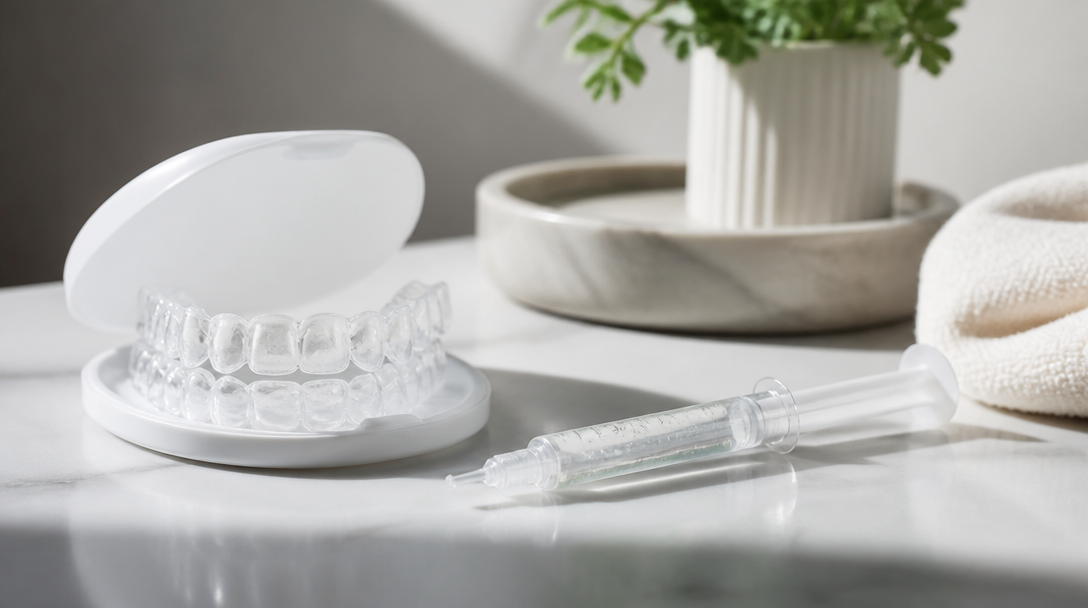
Understand carbamide vs hydrogen peroxide whitening — how each works, which is gentler, and how to pick the right concentration for your sensitivity level.
Why Carbamide vs Hydrogen Peroxide Whitening Is a Choice Worth Understanding
When you compare two whitening products and one lists carbamide peroxide while the other lists hydrogen peroxide, that difference is not a labeling quirk. The carbamide vs hydrogen peroxide whitening distinction affects how fast each formula works, how long it stays active, and which one fits your sensitivity level and daily schedule. Both are safe and effective when used correctly. The choice is about matching the right delivery system to the right situation.
What These Two Ingredients Actually Are
Hydrogen peroxide is the active whitening agent in virtually every peroxide-based product. It penetrates enamel and breaks apart chromogen molecules — the compounds responsible for staining — through an oxidation process.
Carbamide peroxide is a compound that breaks down into hydrogen peroxide and urea once it contacts saliva and moisture in the mouth. The urea plays no role in whitening. It simply allows hydrogen peroxide to release gradually rather than all at once, making carbamide peroxide a slower-release delivery system for the same active ingredient.
This relationship explains why concentration numbers differ between the two. A 10% carbamide peroxide gel delivers approximately the same active whitening agent as a 3.5% hydrogen peroxide formula — but the timing of that delivery is very different.
Carbamide vs Hydrogen Peroxide Whitening: Speed and Gentleness
These two properties pull in opposite directions, and understanding the trade-off helps set realistic expectations.
Hydrogen peroxide releases its whitening activity quickly — within roughly 30 to 60 minutes of application. That fast burst suits short-contact formats like strips or rinse-off gels designed for brief daily sessions. The compressed exposure is effective, but it means enamel and surrounding tissue experience a more intense, concentrated period of activity.
Carbamide peroxide works on a slower curve. Research cited by dental professionals indicates that carbamide peroxide releases approximately 50% of its hydrogen peroxide content within the first two hours, then continues releasing the remainder over up to eight hours. That extended, lower-intensity release is why carbamide peroxide gels are typically used in overnight or extended-wear trays.
Sensitivity is often assumed to favor carbamide peroxide — but the evidence is more nuanced. When both compounds are used at equivalent active concentrations, studies find no significant difference in sensitivity rates between them. What drives sensitivity is total dose delivered and how well the formula matches the individual user's baseline, not which peroxide type is on the label.
What Regulatory Limits Actually Tell You
Concentration percentages on whitening labels can mislead without context. Higher does not always mean better, and it does not always mean faster in a way that benefits your teeth.
Regulatory agencies set clear limits on what is appropriate for consumer use without professional oversight. The European Union's health directorate has established that consumer-available tooth whitening products cannot exceed 3.6% hydrogen peroxide — the equivalent of 10% carbamide peroxide. Products above that threshold require dentist supervision. The American Dental Association has specifically endorsed 10% carbamide peroxide as the concentration approved for safe at-home use.
A product sitting within these limits is not a diluted version of a professional treatment. It is a formula calibrated for unsupervised, repeated home use — which carries a different risk profile than a single in-office session monitored by a clinician.
Where the Real Risk Lives: Gum and Soft Tissue Exposure
Most whitening safety conversations focus on enamel. Gum and soft tissue exposure deserves equal attention — it is often where problems actually originate.
Peroxide in contact with gum tissue can cause temporary irritation, blanching, or a burning sensation. This is more likely when a tray fits poorly, when gel is overfilled, or when a strip is applied imprecisely. The effect is usually short-lived, but repeated or prolonged exposure can cause more persistent soreness.
Aggressive regimens — high concentrations used more frequently than directed — carry a documented risk of enamel softening alongside soft tissue irritation. Research published through the NIH confirms that aggressive whitening regimens can cause enamel softening and sensitivity, and that supervision by a dental professional meaningfully reduces these risks.
Key risk factors for soft tissue irritation
- Ill-fitting or generic trays that allow gel to contact the gums
- Overfilling the tray beyond the manufacturer's recommended amount
- Extending sessions beyond the directed wear time
- Whitening over existing gum recession or exposed root surfaces
- Using a concentration higher than your sensitivity level can tolerate
Fit and application discipline matter as much as which peroxide type you choose. A well-fitted tray with a moderate carbamide peroxide gel used correctly is safer in practice than a lower-concentration strip applied carelessly every day.
Matching the Right Formula to Your Routine
The right choice comes down to three things: your sensitivity baseline, how much time you are willing to spend per session, and the results timeline you are working toward.
If you have sensitive teeth or gums
Carbamide peroxide at or below 10% is the more practical starting point. The slower release means enamel and soft tissue experience a lower peak concentration at any given moment. Starting with shorter wear times — even if the product is designed for overnight use — lets you gauge your tolerance before committing to a full session.
If you want faster visible results
Hydrogen peroxide formulas, used within consumer-safe limits, deliver their activity in a shorter window. This suits people who prefer a 30-to-60-minute daily session over an overnight routine. Results can appear sooner, but the compressed exposure window requires careful attention to fit and timing.
For maintenance after a professional treatment
In-office treatments typically use higher concentrations under controlled conditions. If a dentist recommends a home-use maintenance product afterward, a lower-concentration carbamide peroxide formula is usually the appropriate follow-up — it preserves results without re-stressing enamel that may still be in a recovery phase.
Side-by-side comparison
| Factor | Hydrogen Peroxide | Carbamide Peroxide |
|---|---|---|
| Release speed | Fast (30–60 minutes) | Slow (up to 8 hours) |
| Typical session format | Short-contact strips or gels | Tray-based, extended or overnight wear |
| Consumer concentration limit | Up to 3.6% (EU standard) | 10% (ADA-endorsed for at-home use) |
| Sensitivity at equivalent doses | Comparable | Comparable |
| Best suited for | Shorter daily sessions | Sensitive users, overnight routines |
Signals Your Concentration May Be Too Strong
Your teeth and gums typically signal a problem before any lasting damage occurs. Recognizing those signals early is what protects long-term enamel health.
Temperature sensitivity is the most common indicator. Sharp, brief pain from cold water or air during or after a session suggests the concentration or wear time may be exceeding what your enamel can tolerate comfortably. This sensitivity is typically temporary, but it should not be ignored.
Gum blanching or soreness — a white, slightly swollen appearance along the gum line immediately after use — indicates direct peroxide contact with soft tissue. It resolves on its own in most cases, but if it happens consistently, tray fit or application method needs adjustment before you continue.
Persistent sensitivity between sessions is a more serious signal. If teeth feel sensitive even when you are not actively whitening, pause the routine and consult a dentist before resuming. Continuing through ongoing sensitivity can compound the problem.
In most cases, sensitivity is tied to dose or application method rather than to the peroxide type itself. Reducing concentration or session frequency typically resolves it.
What Safe Long-Term Use Looks Like
Both carbamide peroxide and hydrogen peroxide have well-established safety records when products are used as directed. The risk is not in the ingredient — it is in how it is applied: specifically, concentration, duration of contact, and frequency.
Safe long-term use means staying within the concentration limits established by regulatory agencies, following the manufacturer's recommended session length without extending it, and taking breaks between whitening cycles rather than whitening continuously. Most products are designed for a defined treatment period, not indefinite daily use.
People with existing restorations — crowns, veneers, bonding — should know that peroxide does not whiten these materials the same way it affects natural enamel. Visible color mismatches can develop over time. Discussing this with a dentist before starting any whitening routine is practical, not precautionary.
The goal of understanding carbamide vs hydrogen peroxide whitening is not to declare a winner. It is to find the right fit for your specific situation. At appropriate concentrations, with proper technique, either ingredient can deliver meaningful results without compromising the health of your enamel or gums.
References
- Tooth Whitening: What We Now Know — NIH/National Library of Medicine (PMC)
- Efficacy and Safety of Carbamide Peroxide Tooth-Whitening Gels — International Journal of Community Medicine and Public Health
- Clarification of the Opinion Concerning Hydrogen (Carbamide) Peroxide in Tooth Whitening Products — European Commission Health Directorate
Disclaimer
This article is for general informational purposes only and is not a substitute for professional dental or medical advice. Always consult a qualified dental professional before starting any teeth-whitening or oral-care regimen. WhiteningBright makes no warranties as to the completeness or accuracy of the information, and any reliance is at your own risk.