How TikTok Micro-Influencers Beat Celebrity Deals for Whitening
8 июня 2026 г.
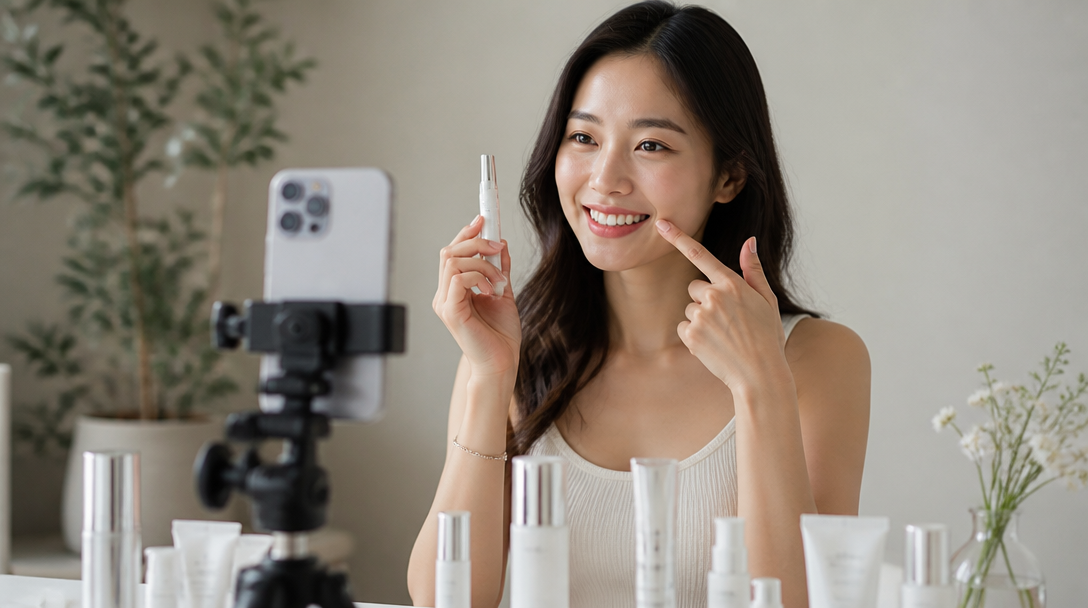
How TikTok influencer whitening partnerships with 10K–50K creators deliver 4x better ROI than celebrity deals — contract terms, structures & measurement.
Why TikTok Influencer Whitening Partnerships Now Outperform Celebrity Deals
TikTok influencer whitening partnerships have become the most efficient growth lever available to brand owners launching whitening products in 2026. While celebrity endorsements dominated beauty marketing for the better part of two decades, the economics have inverted. WeArisma's 2026 Beauty Influencer Marketing Trends report documents a decisive platform-wide shift: beauty buyers now respond to trust and demonstrated efficacy, not reach alone. For whitening brands specifically, that distinction separates profitable launches from expensive awareness plays.
The core tension is simple. A celebrity post generates impressions. A micro-influencer running a six-week whitening series generates purchase decisions. The difference is documentation — and TikTok's algorithm now rewards it directly.
The Budget Case: What $50K Buys in Each Model
A single sponsored post from a celebrity with 5M+ followers typically costs between $50,000 and $200,000. Engagement rates at that tier average around 2.3%, and purchase intent scores — a composite measure of comment sentiment, saves, and click-through behavior — sit at roughly 4.2 out of 10, according to engagement benchmarks tracked across beauty verticals by Traackr.
The same $50,000 deployed across 25 to 40 micro-influencer co-creation partnerships produces a structurally different outcome. Each creator operates in the 10K–50K follower range, maintains direct audience relationships, and posts across a multi-week arc that documents actual whitening progression. Engagement rates in this tier hold near 6.8%, with purchase intent scores averaging 7.4 out of 10.
AMRA & Elma's 2026 beauty marketing data puts the customer acquisition cost differential at 67% lower for micro-influencer campaigns measured over 90-day attribution windows. For a brand owner planning a whitening launch — whether DTC, pharmacy retail, or dental clinic distribution — that efficiency gap is not marginal. It determines whether a product launch is self-funding or perpetually subsidized.
Why the 10K–50K Follower Range Is the Operational Sweet Spot
Nano-influencers (under 10K followers) deliver the highest raw engagement rates, often above 8%, but their audiences are too small to move meaningful sales volume. Mid-tier creators (50K–500K) have typically professionalized their content to the point where promotional posts read as promotional — engagement drops to around 4.1%, and audience trust erodes proportionally.
The 10K–50K tier occupies productive middle ground. These creators have refined their craft — lighting, camera angles, caption structure — without losing the conversational authenticity that drives whitening content specifically. Showing genuine tooth color change over four to six weeks requires consistent, credible documentation. Audiences at this scale are habituated to watching a creator's real life, which makes whitening progress feel observable rather than staged.
Syncly's 2026 TikTok Beauty Playbook confirms that TikTok's algorithm actively favors this content pattern. Completion rates, comment depth, and share behavior on progressive results content outperform single-post celebrity content by a substantial margin. The platform redistributes that engagement signal as organic reach — effectively amplifying paid partnerships at no additional cost.
For brand owners conducting market testing before committing to broader retail distribution, micro-influencer campaigns also provide granular geographic and demographic data. A creator in the 10K–50K range typically serves a concentrated audience — a specific city, age bracket, or interest cluster — that maps cleanly to target retail segments.
Co-Creation vs. Product Gifting: The Structure That Actually Converts
Product gifting — sending free units with loose content guidelines — remains common because it requires minimal setup. It also produces minimal results. Single posts showing an unboxing and a first impression provide no whitening evidence, and creators feel no obligation to follow up. Traackr's performance data indicates co-creation partnerships outperform gifting arrangements by approximately 340% on tracked conversion metrics.
A structured co-creation framework for whitening products typically runs six weeks:
- Week 1: Unboxing, product walkthrough, and baseline documentation (initial shade reference)
- Week 2: Application technique, first-use sensations, early observations
- Week 4: Mid-point progress update with visible before/after comparison
- Week 6: Final results, honest assessment, and creator's own recommendation
This arc serves multiple functions. It provides four to six pieces of indexable content per creator. It demonstrates whitening efficacy in a format audiences accept as credible. It also gives brand owners structured checkpoints to review content before publication — critical for claims compliance in an oral care category that carries FDA and FTC scrutiny.
Compensation for co-creation partnerships typically combines a flat fee of $500–$2,000 per creator with performance bonuses tied to tracked engagement or attributed sales. For brand owners sourcing private-label whitening products designed for at-home use, this investment structures directly into launch budgets alongside formulation and packaging costs.
Contract Terms That Protect Whitening Brands Specifically
Standard influencer agreements are built for fashion and lifestyle categories. Oral care adds a layer of regulatory exposure that generic contracts do not address. Claims compliance, disclosure placement, content approval windows, and usage rights all require explicit terms.
| Contract Section | Required Specification | Risk Addressed |
|---|---|---|
| Claims Compliance | Pre-approved messaging only; no medical or clinical claims without substantiation | FDA/FTC enforcement exposure |
| Disclosure Standards | #ad or #sponsored in first three hashtags; verbal disclosure in video for content over 60 seconds | Platform policy and FTC compliance |
| Content Approval | 24–48 hour brand review window before publication | Claims control and brand consistency |
| Usage Rights | 12-month license for brand reposting and paid amplification | Extended asset value post-campaign |
| Exclusivity Window | 90–180 days, category-specific (whitening products only) | Competitive brand protection |
Exclusivity clauses warrant careful scoping. Blanket exclusivity frustrates creators and narrows the pool of partners willing to commit. Category-specific exclusivity — restricting promotion of competing whitening products only — provides meaningful brand protection without limiting a creator's broader income.
Performance guarantees should specify minimum content deliverables and engagement benchmarks rather than sales targets. Creators do not control purchase decisions, and sales-contingent contracts create adversarial dynamics that undermine the authentic tone the partnership depends on.
TikTok Influencer Whitening Partnerships: Measuring What Actually Matters
Views and likes are table stakes, not performance indicators. The metrics that inform sourcing decisions and campaign iteration are further down the funnel.
- Tracked discount codes: Unique codes per creator enable direct attribution without requiring pixel access or platform integration
- UTM parameters: Separate landing page links per creator map traffic sources precisely to campaign spend
- Comment sentiment analysis: Questions about shades, sensitivity, and application timelines indicate active purchase consideration — more reliable than raw engagement volume
- Organic follow-up content: Creators who post unsolicited updates beyond their contractual deliverables signal genuine product satisfaction, which correlates with audience trust and continued conversion
- Brand account growth: Follower acquisition on brand-owned TikTok and Instagram accounts during campaign windows provides a durable asset beyond the campaign itself
Advanced campaigns integrate TikTok Shop pixel data for full-funnel attribution. Ecommop's 2026 TikTok Shop Revenue Report documents how beauty sellers are segmenting creators by commercial function — micro creators for niche conversion, broader creators for category awareness — and optimizing creator mix based on real-time attribution data rather than follower tier alone.
For private-label brand owners, retailer velocity data should factor into ROI calculation. Pharmacy buyers and clinic procurement teams respond to demonstrated sell-through. A well-documented micro-influencer campaign that generates regional demand can serve as a credible data point in retail pitch conversations.
Red Flags That Disqualify a Creator Before Contracting
Creator vetting should apply the same rigor as formulation partner evaluation. A single non-compliant post can trigger regulatory review or audience backlash that outlasts any campaign benefit.
- Overnight results claims: Any creator documenting dramatic whitening in under 48 hours is fabricating outcomes. Whitening works over days to weeks — content that contradicts this is not credible and may trigger FTC scrutiny.
- Unsubstantiated clinical language: Terms like "dentist-approved," "clinically proven," or "enamel-safe" require documented substantiation. Creators using these terms freely are a compliance liability.
- Edited before/after imagery: Lighting shifts, filter changes, or visible photo manipulation in before/after sequences are detectable by audiences and destroy brand credibility when called out in comments.
- Buried or absent disclosures: FTC guidelines require clear, conspicuous disclosure. A #ad tag in position 15 of a hashtag stack, or absent entirely, exposes both creator and brand to enforcement action.
- History of competitor promotion: Creators who have recently promoted competing whitening products without an exclusivity gap signal low brand loyalty and risk confusing their audience about category positioning.
Insense's analysis of TikTok skincare influencer performance in 2026 confirms that creators with consistent, honest review patterns — including acknowledgment of limitations and realistic timelines — sustain higher long-term engagement than creators known for uniformly positive, promotional content. Audiences calibrate quickly. Partnerships with credible creators compound over time; partnerships with promotional-first creators depreciate.
Due diligence should include a manual review of a creator's last 90 days of content, not just their media kit metrics. Comment section behavior, response patterns, and previous brand partnerships reveal audience relationship quality that follower counts cannot.
References
- WeArisma — 2026 Beauty Influencer Marketing Trends
- Syncly — TikTok Influencer Marketing for Beauty Brands: A 2026 Playbook
- Traackr — Top Beauty Influencers to Watch in 2026
- Ecommop — Top Beauty Influencers for TikTok Shop in the US: 2026 Revenue Report
- AMRA & Elma — Top 20 Beauty Marketing Statistics 2026