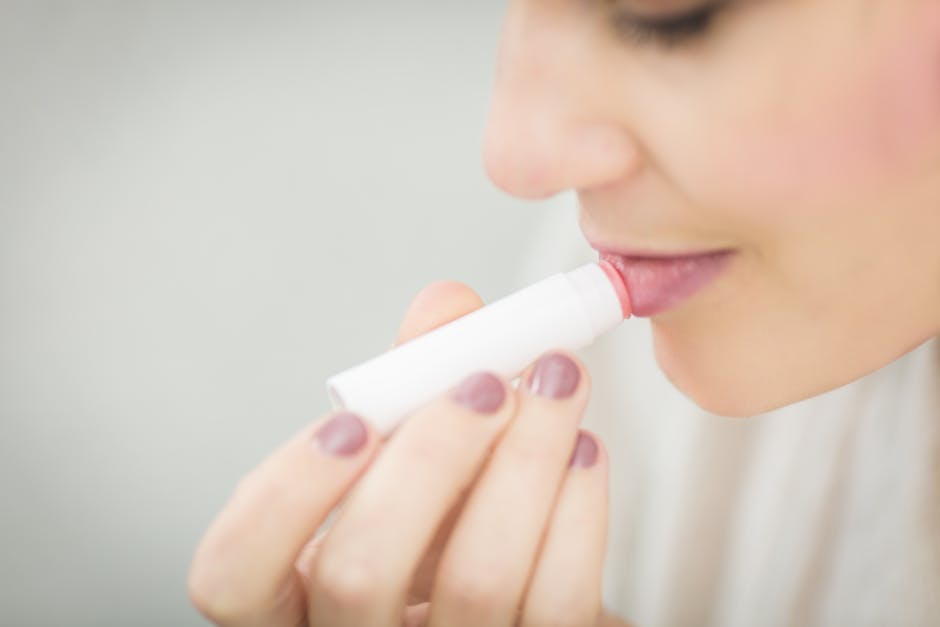
Understanding FDA lip balm regulations is the single most important step you can take before purchasing a product you apply to your lips dozens of times every day — a product you inevitably ingest in small amounts with every meal, drink, and breath. The phrase "FDA approved" appears constantly in beauty marketing, carrying an implicit promise of safety and efficacy. For lip balms, that promise is far more complicated than the label suggests, and in 2026, the gap between consumer expectation and regulatory reality has never been wider.
This guide breaks down exactly how the FDA classifies, monitors, and enforces standards for lip balm products — from drugstore staples to premium wellness brands — so you can make genuinely informed decisions.
What "FDA Approved" Actually Means for Lip Care Products
Here is the foundational truth: most lip balms are not FDA approved. They never were. Under the Federal Food, Drug, and Cosmetic (FD&C) Act, cosmetic products and their ingredients — with one critical exception — require no premarket approval from the U.S. Food and Drug Administration before reaching store shelves.
The FDA states this directly in its official guidance, FDA Authority Over Cosmetics: How Cosmetics Are Not FDA-Approved: "FDA does not have the legal authority to require premarket approval of cosmetic products or ingredients." The manufacturer alone bears legal responsibility for product safety and accurate labeling.
That does not mean the FDA is absent. The agency regulates cosmetics under the FD&C Act, actively monitoring the market for products that are adulterated — containing harmful or filthy substances, or manufactured under unsanitary conditions — or misbranded, meaning the label is false, misleading, or incomplete. The distinction is between pre-approval and post-market surveillance. The FDA intervenes after problems emerge, not before a product ships.
This reactive framework is the operating reality of all FDA lip balm regulations in 2026, and it places a significant burden of due diligence on the consumer.
FDA Lip Balm Regulations: Cosmetic vs. Drug Classification
Photo by Burst on Pexels
The most consequential regulatory question for any lip product is not whether it is safe — it is how the FDA classifies it. Classification determines every compliance requirement a brand must meet, and it hinges entirely on one factor: intended use.
When a Lip Balm Is a Cosmetic
A product intended to moisturize, condition, or beautify the lips without altering the body's structure or function is a cosmetic. Claims like "keeps lips soft and smooth," "adds a sheer tint," or "locks in moisture" are purely cosmetic claims. As clarified in the FDA's guidance document Are all "personal care products" regulated as cosmetics?, these products do not require premarket approval.
The brand is legally responsible for substantiating safety before sale or, if safety has not been substantiated, displaying a specific warning label. Cosmetics must also comply with labeling requirements under the Fair Packaging and Labeling Act (FPLA), including a full ingredient declaration.
When a Lip Balm Becomes an OTC Drug
The moment a lip balm makes a drug claim — language that implies it diagnoses, treats, cures, mitigates, or prevents a disease or affects the body's structure or function — it is regulated as an over-the-counter (OTC) drug. Common drug claims on lip products include:
"Prevents or treats chapped lips" — qualifies as a skin protectant drug claim
"Prevents sunburn" or any SPF rating — classifies the product as an OTC sunscreen drug
"Helps heal cold sores" — an antiviral drug claim requiring specific active ingredients
OTC drug lip balms must comply with the relevant FDA monograph — a detailed rulebook prescribing which active ingredients are permitted, at what concentrations, and with what labeling language. They require a Drug Facts panel on the label, facility registration, and use of monograph-compliant active ingredients. Any product making both cosmetic and drug claims is dual-classified and must meet the full requirements of both categories simultaneously.
This classification boundary is where many brands — particularly private label manufacturers — run into serious compliance problems in 2026.
Photo by Burst on Pexels
2026 Enforcement Focus: Private Label Products and Contamination Risk
Photo by Ron Lach on Pexels
In 2026, FDA scrutiny of the lip balm category has intensified, with a particular focus on private label products. These are formulations manufactured by third-party contract facilities and sold under a retailer's or influencer's own brand name — a category that expanded dramatically during the e-commerce boom of the early 2020s.
Reports of irritation and contamination linked to private label lip balms have triggered more rigorous compliance reviews. The FDA's heightened attention centers on two specific risks: ingredient safety substantiation and manufacturing hygiene. Because lips are a mucosal surface and users ingest small but continuous amounts of product throughout the day, the safety bar for lip-specific formulations is effectively higher than for skin-applied cosmetics.
Brands selling private label lip balms in 2026 must have documented evidence that their contract manufacturer operates under current Good Manufacturing Practice (cGMP) standards, and they must be prepared to produce safety substantiation data on request. Absence of this documentation is grounds for FDA enforcement action, including warning letters, recalls, and import alerts for internationally sourced products.
For consumers, this means that a low-cost, unrecognizable brand on a marketplace platform carries a measurably different risk profile than a product from a manufacturer with an established compliance history.
Labeling Requirements: What Must Appear on Every Lip Balm
Labeling is the most direct consumer protection mechanism within FDA lip balm regulations. The FDA's Summary of Cosmetics Labeling Requirements specifies that every cosmetic lip balm sold in the United States must carry the following on its label:
Identity statement: A clear declaration of what the product is (e.g., "Lip Balm," "Moisturizing Lip Treatment").
Net quantity of contents: Listed in both metric and U.S. customary units.
Responsible party: Name and place of business of the manufacturer, packer, or distributor.
Full ingredient declaration: Every ingredient listed in descending order of predominance, using INCI (International Nomenclature of Cosmetic Ingredients) names. This requirement is non-negotiable under the FPLA.
Warning statements: If safety has not been fully substantiated, the label must state: "Warning — The safety of this product has not been determined."
Products classified as OTC drugs carry additional mandatory labeling. A properly formatted Drug Facts panel must appear prominently, listing active ingredients and their purposes, uses, warnings, directions, and inactive ingredients. A lip balm with SPF that lacks a Drug Facts panel is misbranded under federal law — full stop.
The Color Additive Rule: The One Area of Mandatory Pre-Approval
Color additives are the single category where FDA pre-approval is legally required before use in any cosmetic, including lip balms. Every colorant — from the pigment making a balm pink to the ingredient giving it an opaque finish — must be an FDA-approved color additive from a batch certified by the agency for purity.
On a compliant tinted lip balm label, approved colors appear in a standardized format: FD&C or D&C followed by a color name and number (e.g., D&C Red No. 6, FD&C Red No. 40). Any product using an unapproved colorant or a certified color from an uncertified batch is in direct violation of the FD&C Act, regardless of how the rest of the product is formulated.
For deeper insight into how ingredient regulations intersect with product safety across oral care categories, see our coverage of oral care ingredient standards and professional knowledge.
Ingredients That Warrant Extra Scrutiny
Knowing which ingredient categories carry elevated risk helps translate regulatory knowledge into practical shopping decisions.
Sunscreen actives (avobenzone, oxybenzone, octinoxate): These are OTC drug ingredients when used for sun protection. They must appear in the Drug Facts panel at FDA-monograph-compliant concentrations. A product listing these in the cosmetic ingredient section, without a Drug Facts panel, is misbranded.
Flavor and fragrance additives (cinnamon oil, citrus oils, mint): Common contact allergens and irritants. U.S. law does not require disclosure of individual fragrance or flavor allergens on cosmetic labels — a meaningful gap compared to EU regulations. Consumers with sensitivity should seek fragrance-free and flavor-free formulations and verify the full ingredient list.
Moisturizing bases (petrolatum, lanolin, beeswax): Generally recognized as safe and effective, particularly for skin protectant applications. Purity grade matters: low-refinement petrolatum can contain polycyclic aromatic hydrocarbon impurities, and low-grade lanolin may contain pesticide residues. Cosmetic-grade or USP-grade designations on manufacturer documentation indicate appropriate purity standards.
Menthol and phenol: At low concentrations, these provide a cooling or soothing sensation. At high concentrations, they can disrupt the lip's moisture barrier and create a dependency cycle — the product causes dryness that only the product appears to relieve. The FDA monitors adverse event reports involving these ingredients.
Marketing language for cosmetics operates in a legally permissive environment. Several widely used phrases carry no standardized regulatory definition and no enforceable meaning under U.S. law:
"Hypoallergenic," "Dermatologist Tested," "All-Natural," "Clean": None of these terms are defined or regulated by the FDA for cosmetics. Any manufacturer can print them on packaging without meeting a specific legal threshold or conducting any particular test.
"Clinical Strength" or "Medical Grade": These are not recognized FDA product classifications. For cosmetics, they function as marketing language only.
"Heals severely chapped lips" or "repairs damaged lips": Healing and repair language implies a drug function. A product making this claim without a Drug Facts panel is misbranded and potentially subject to enforcement action.
"FDA Registered": Cosmetic facility registration is voluntary and conveys nothing about product safety, ingredient approval, or efficacy. It does not mean the FDA has reviewed or endorsed the product.
A Practical Checklist for Evaluating Lip Balm Safety in 2026
Apply these five steps before purchasing or continuing to use any lip balm:
Confirm the ingredient list exists and is complete. No ingredient list means the product is misbranded under federal law. Walk away.
Check for a Drug Facts panel. If the product claims SPF protection or treats chapped lips, a Drug Facts panel is legally required. Its absence is a compliance failure.
Verify color additives. Tinted products should list only FD&C- or D&C-designated colors with a number. Vague terms like "mica blend" or "natural pigments" without specific INCI names warrant further scrutiny.
Research the manufacturer, not just the brand. Transparent brands disclose their manufacturing partners, provide safety data on request, and can confirm cGMP compliance for their facilities.
Report adverse reactions. Stop use immediately if irritation, swelling, or an allergic response occurs. File a report with the FDA through its MedWatch Safety Reporting Portal. Consumer reports are a primary mechanism by which the FDA identifies product-level safety signals.
FAQ: FDA Lip Balm Regulations Explained
Does the FDA test lip balms before they go on sale?
No. The FDA does not conduct premarket testing or approval for cosmetic lip balms. Per the FDA's Small Businesses & Homemade Cosmetics Fact Sheet, the legal burden for safety substantiation rests entirely with the manufacturer. The FDA acts on post-market complaints, adverse event reports, and inspection findings.
What makes a lip balm an OTC drug instead of a cosmetic?
Intended use determines classification. Any claim that the product treats, prevents, or cures a condition — chapped lips, sunburn, cold sores — triggers drug classification. The product must then comply with the relevant OTC monograph, carry a Drug Facts panel, and use only monograph-approved active ingredients at specified concentrations.
Are "natural" or "organic" lip balms subject to different regulations?
No. The FDA does not define or regulate "natural" or "organic" as applied to cosmetics. These terms carry no enforceable meaning under the FD&C Act. A natural lip balm containing undisclosed essential oil allergens presents the same regulatory exposure as any other mislabeled cosmetic. The ingredient list is the only reliable source of truth.
What should I do if my lip balm causes a reaction?
Discontinue use immediately. Document the product's lot number, purchase date, and retailer. Report the reaction to both the manufacturer and the FDA via MedWatch at fda.gov/safety/medwatch. In cases of severe allergic response, seek medical attention. Consumer adverse event reports are the primary data source the FDA uses to identify systemic safety problems in the cosmetics market.
Is SPF lip balm safe to use daily?
SPF lip balms classified as OTC sunscreen drugs and compliant with the FDA's sunscreen monograph are formulated for regular use. Verify the product carries a Drug Facts panel listing the sunscreen active and its concentration. Products claiming SPF without this panel have not demonstrated monograph compliance and should be avoided.
This article is for informational purposes only. The content is based on publicly available information, industry research, and scientific studies. LLRNCARE makes no representations or warranties of any kind, express or implied, about the completeness, accuracy, reliability, suitability or availability of the information contained in this article. Any reliance you place on such information is strictly at your own risk.
For professional dental advice, please consult a qualified dental professional. For regulatory compliance questions, consult with legal experts familiar with dental product regulations in your target markets.