Which Whitening Format Wins in Your Target Market
29 мая 2026 г.
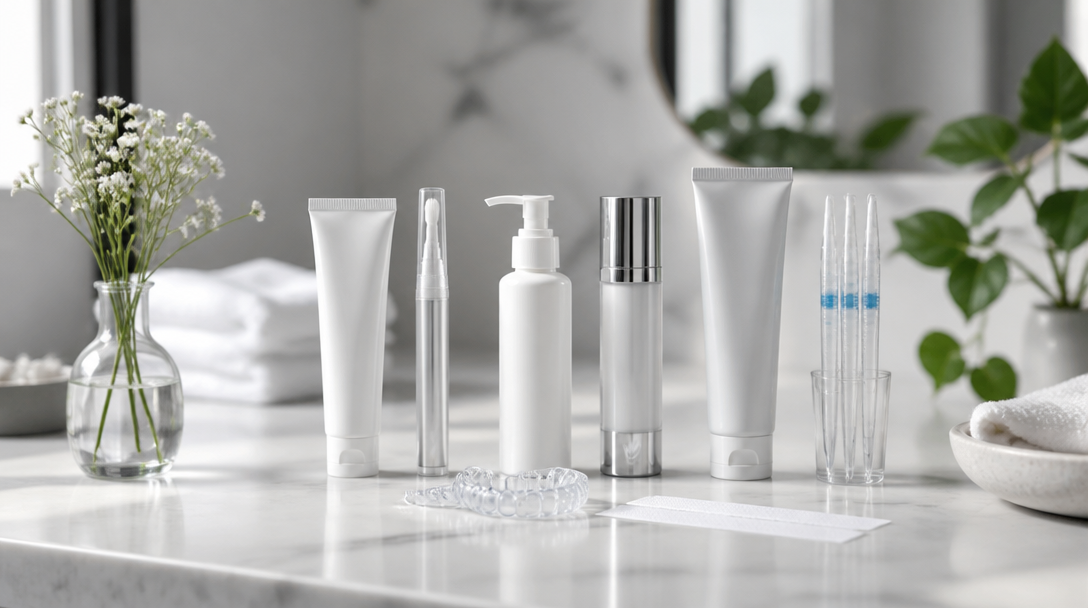
Whitening format comparison by channel: kits vs strips vs pens vs powders. Margins, manufacturing costs, and regulatory timelines for brand owners.
Which Whitening Format Wins in Your Target Market: A Format Comparison for Brand Owners
The whitening format comparison that matters for brand owners is not which product consumers prefer in surveys — it is which format generates the fastest regulatory clearance, the strongest channel margins, and the highest repeat purchase rate in your specific distribution context. At-home whitening already accounts for 68.67% of market demand globally, and online retail is the fastest-growing distribution channel. The format you launch with shapes everything downstream: your MOQ economics, your compliance timeline, your retailer conversations, and your DTC unit economics.
This guide breaks down kits, strips, pens, and powders by channel type, margin potential, manufacturing cost, and regulatory complexity — so your development resources go toward the format that matches your market reality, not the one that looks best on a general market report.
Channel Economics First: Premium Retail vs. DTC Are Not the Same Problem
Premium retailers optimize for margin per linear foot and perceived category authority. DTC brands optimize for contribution margin after shipping and customer acquisition cost. These priorities pull in different directions — and they favor different formats.
Whitening toothpaste leads the mass market with 42.5% share, but that data is largely irrelevant for private-label developers targeting premium channels. Toothpaste competes on price, requires extensive stability testing, and sits in a category dominated by legacy consumer packaged goods brands. For a brand owner building a premium or professional line, kits and specialized formats create the separation that justifies higher retail pricing.
| Channel Type | Winning Format | Margin Range | Key Success Factor |
|---|---|---|---|
| Premium Pharmacy | Professional-grade strips | 65–75% | Clinical packaging and efficacy language |
| Beauty Retail | LED kit systems | 70–85% | Unboxing experience and visual shelf presence |
| Mass Grocery | Whitening strips | 45–55% | Impulse price point and recognized format |
| DTC Launch | Complete whitening kits | 75–90% | Perceived value relative to shipping cost |
Premium pharmacy chains favor formats that justify brief consultation at the counter — a strip with clinical documentation or a kit with a clear treatment protocol answers that need. Beauty retailers choose formats that generate strong visual content for social commerce. Your format decision is, in large part, a channel decision made before the product is formulated.
Dental Clinic Partnerships: Kits Hold 62% of the Professional Market
In the professional whitening segment, whitening gels and kits account for 62% of market share, with light-activated systems representing the fastest-growing procedure category. These numbers reflect real clinic purchasing behavior, not consumer preference data.
Dental clinics prefer kits because the format supports a supervised treatment model. A professionally packaged take-home kit positions the dentist as treatment director rather than retail reseller. Strips and pens register as drugstore alternatives — they undercut the perceived clinical value of the recommendation.
For brand owners targeting dental distribution, kits should be engineered with professional-strength PAP or carbamide peroxide formulations and co-developed with documentation that clinicians can hand directly to patients. Retail price points between $89 and $149 allow clinics to maintain 40–50% margins while competing with in-office procedure costs.
Specifications that matter in the dental channel:
- 16% carbamide peroxide or up to 6% hydrogen peroxide for at-home use (FDA-compliant concentrations)
- Thermoplastic tray materials suitable for chairside customization
- 14-day treatment protocols with clearly mapped progress stages
- Clinical efficacy documentation formatted for dentist review, not end-consumer reading
Beauty Subscriptions: Pens and Powders Create Natural Replenishment Cycles
Subscription commerce rewards formats with predictable depletion rates. Kits solve a problem once. Pens and powders solve it monthly.
A whitening pen engineered with a 2.5ml chamber provides approximately 14–21 days of daily use. Subscribers deplete it, reorder, and the habit loop reinforces itself. Powders serve a similar function for wellness-positioned brands — a 30-day portion creates automatic reorder timing that subscription platforms can automate without friction.
Powders also carry a formulation advantage for wellness audiences. Activated charcoal or enzyme-based whitening powders can be positioned as ritual products rather than treatments, which aligns with premium wellness brand messaging and avoids aggressive peroxide language where regulatory environments are sensitive.
Format matching by subscription audience:
- Beauty enthusiasts: Precision whitening pens with fine-tip applicators designed for targeted enamel contact
- Wellness consumers: Enzyme or activated-ingredient powders formulated for daily oral care rituals
- Convenience-first buyers: Individual strip packets in travel-ready formats
- Premium segment: Serum-based pen formulations with PAP and supporting actives
Pharmacy Retail: Strips Win on Velocity, Kits Win on Margin
Pharmacy impulse purchases favor familiar formats with transparent usage expectations. Whitening strips dominate pharmacy shelving because consumers understand the application method before they read the box.
Three operational factors drive strip performance in pharmacy settings. They require minimal shelf space per SKU. Packaging communicates treatment length clearly — "7 days" reads faster than a kit's instruction booklet. Price points between $19 and $39 clear the impulse purchase threshold without requiring a considered decision.
In pharmacy environments, strips typically outperform kits roughly 3:1 in unit velocity — but kits generate significantly higher absolute profit per transaction. A brand owner with pharmacy distribution should treat strips as the volume engine and kits as the margin driver, stocking both SKUs in chains that allow secondary placement near the pharmacy counter.
Strip specifications optimized for pharmacy retail:
- 14-strip packages supporting 7-day treatment cycles — short enough to feel achievable
- Dry-strip or grip-strip technology that reduces consumer handling frustration
- Hydrogen peroxide concentrations under 0.1% for EU compliance, up to 10% for US retail depending on classification
- Retail packaging under 6 inches tall to fit standard pharmacy peg and shelf formats
DTC Launch Strategy: Establish With Kits, Scale With Strips
DTC brand economics follow a predictable format progression. Kits establish brand authority and support the customer acquisition costs required to build awareness from zero. Strips extend reach once conversion data and email lists exist.
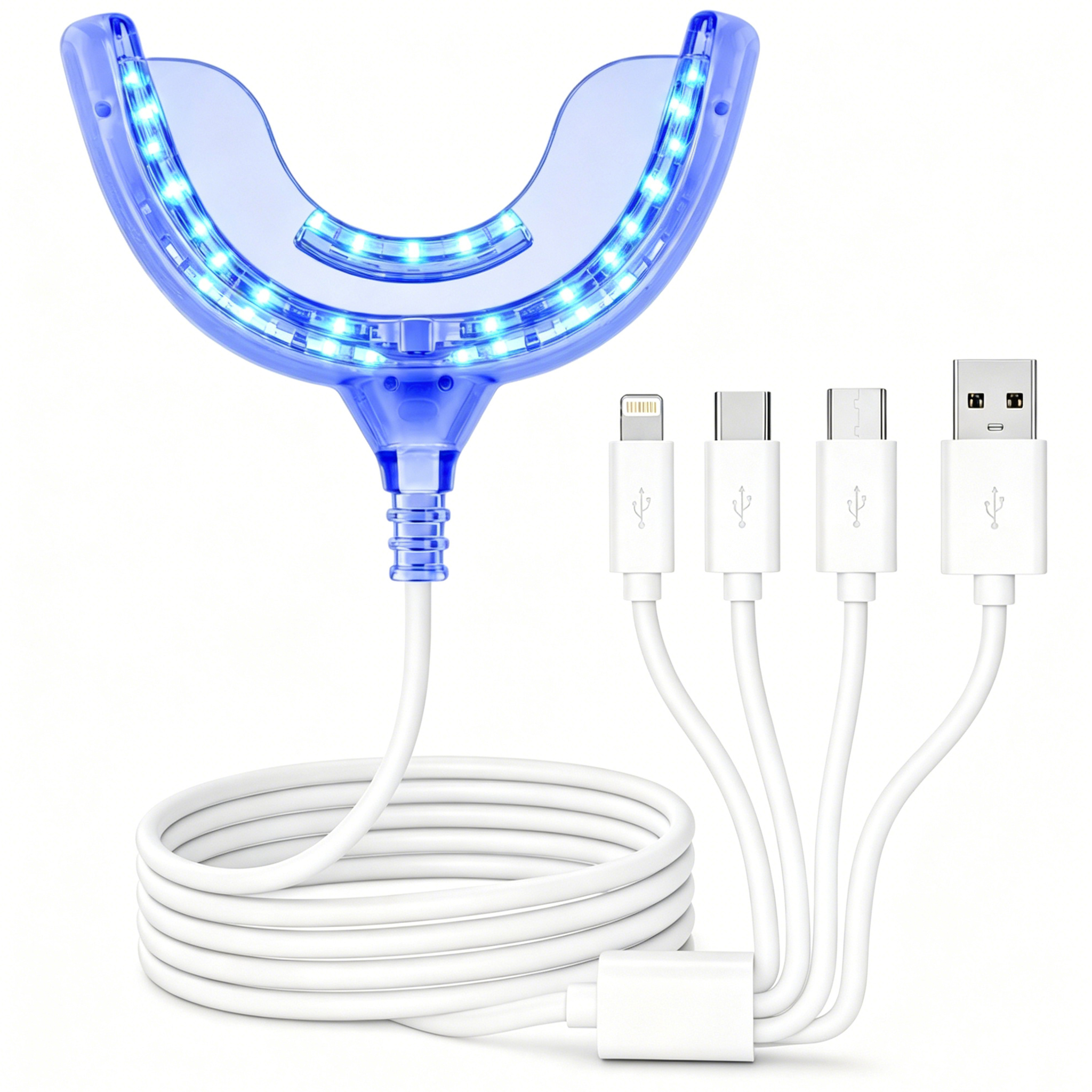
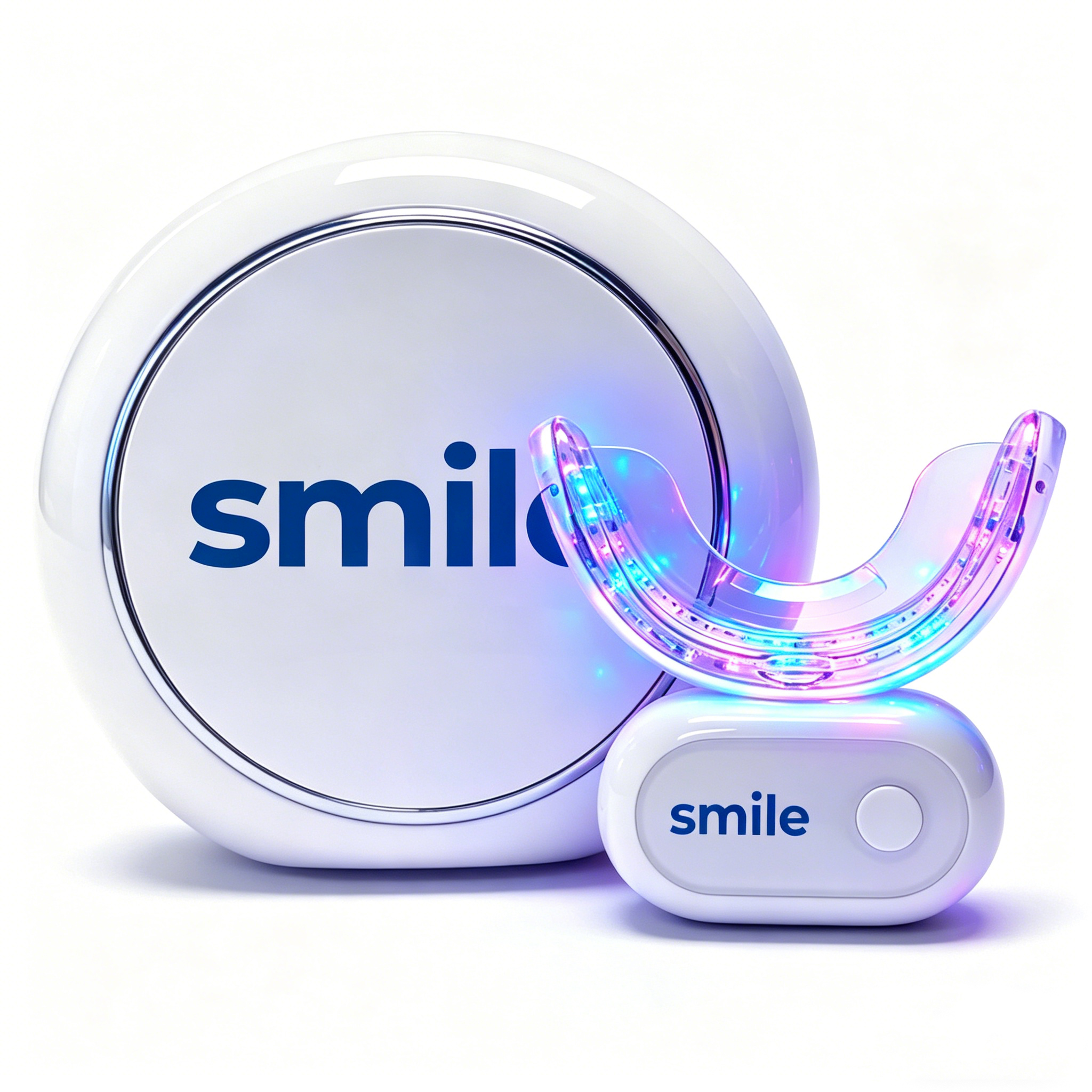
Launching with an LED whitening kit priced between $79 and $129 creates a brand anchor point. The format generates unboxing content, detailed usage tutorials, and before-and-after documentation that fuels the organic content cycle DTC brands depend on. The higher price point also supports influencer partnership budgets without destroying contribution margin on the first sale.
North America held 32% of the global whitening market in 2024 and remains the most developed DTC channel, but Asia Pacific is projected to be the fastest-growing region — relevant for brand owners planning international DTC expansion in years two and three.
A practical format roadmap for DTC launches:
- Months 1–6: Premium LED kit as hero SKU — establish positioning and capture email
- Months 7–12: Add professional-strength strips for repeat purchase revenue
- Year 2: Introduce whitening pens to activate a subscription revenue layer
- Year 3+: Expand into powders and specialty formats for audience segmentation
Manufacturing Cost Reality: Landed Costs by Whitening Format
Margin projections mean nothing without accurate manufacturing cost baselines. Format complexity drives landed cost, and landed cost determines whether your retail pricing strategy is viable before a single unit ships.
| Format | Est. Manufacturing Cost | Minimum Order Quantity | Lead Time | Margin Potential |
|---|---|---|---|---|
| LED Kit System | $8.50–$12.00 | 500 units | 35–45 days | 75–85% |
| Professional Strips | $2.80–$4.20 | 1,000 units | 25–30 days | 60–70% |
| Whitening Pens | $1.90–$3.10 | 1,000 units | 20–25 days | 70–80% |
| Whitening Powder | $2.40–$3.80 | 500 units | 15–20 days | 65–75% |
LED kits carry the highest manufacturing cost because they require custom-molded cases, electronic component sourcing, and quality control across two product categories simultaneously. Strips require specialized coating and moisture-barrier pouching. Pens demand precision filling equipment and leak-proof applicator assemblies — relatively low component cost, but engineering tolerance matters at scale.
Brand owners with a $50,000 initial inventory budget consistently perform better when they allocate roughly 70% to the hero kit SKU and 30% to a strip or pen format for conversion testing — rather than spreading budget evenly across multiple formats before channel fit is proven.
Regulatory Complexity: Which Whitening Format Gets Approved Fastest
Regulatory timelines directly determine launch windows. A format that clears compliance in 45 days generates revenue three months before one that requires 150 days — a gap that compounds when you factor in retailer lead times and marketing campaign setup.
Powders typically move through regulatory review fastest because they qualify as cosmetics in most jurisdictions, avoiding the adhesive and active-ingredient scrutiny that strips face. Pens follow closely. LED kits carry the longest approval cycle because they combine a topical cosmetic with an electronic consumer device.
Regulatory complexity ranked fastest to slowest approval:
- Whitening powders: 30–60 days — cosmetic classification in most markets
- Whitening pens: 45–75 days — topical cosmetic with straightforward ingredient documentation
- Whitening strips: 60–90 days — adhesive formulation and peroxide concentration review
- LED kit systems: 90–150 days — cosmetic formulation plus electronic device compliance
EU markets require CE marking for any LED device, adding 30–45 days to kit timelines. The US FDA treats most whitening products as cosmetics unless the brand makes drug or therapeutic claims — keeping approval timelines manageable for pens, powders, and strips. For brand owners targeting both markets simultaneously, a pen or powder launch generates revenue and real-world usage data during the longer EU kit approval window.
Private-label-ready formats across all four categories are available through WhiteningBright's product range, with compliance documentation structured for FDA, CE, and ISO requirements from the first production run.
The Format Decision Is a Strategy Decision
There is no universally winning whitening format — there is only the format that matches your channel, your customer's customer, and your regulatory market. Kits dominate dental and premium DTC. Strips hold pharmacy volume. Pens and powders build subscription economics. The brands that scale efficiently choose one format to establish margin and positioning, then layer adjacent formats once the first SKU proves its channel fit.
The whitening format comparison that drives smart product development is not about which format consumers prefer in aggregate — it is about which format your specific distribution channel rewards, and which your regulatory market clears fastest.
References
- Mordor Intelligence — Teeth Whitening Market Report: at-home segment share (68.67%), toothpaste product share (42.5%), Asia Pacific growth projection, online retail expansion data.
- Straits Research — Teeth Whitening Market: North America regional share (32%), toothpaste category dominance, 2033 forecast trajectory.
- Dentistry Today / Research and Markets — Professional Teeth Whitening Market: whitening gels and kits (62% professional share), light-activated systems as fastest-growing procedure, dental clinic end-user dominance.
- Grand View Research — Teeth Whitening Market Report: offline distribution revenue share leadership, North America market position, Asia Pacific growth outlook.