Does Fluoride Toothpaste Actually Rebuild Enamel?
17 يوليو 2026
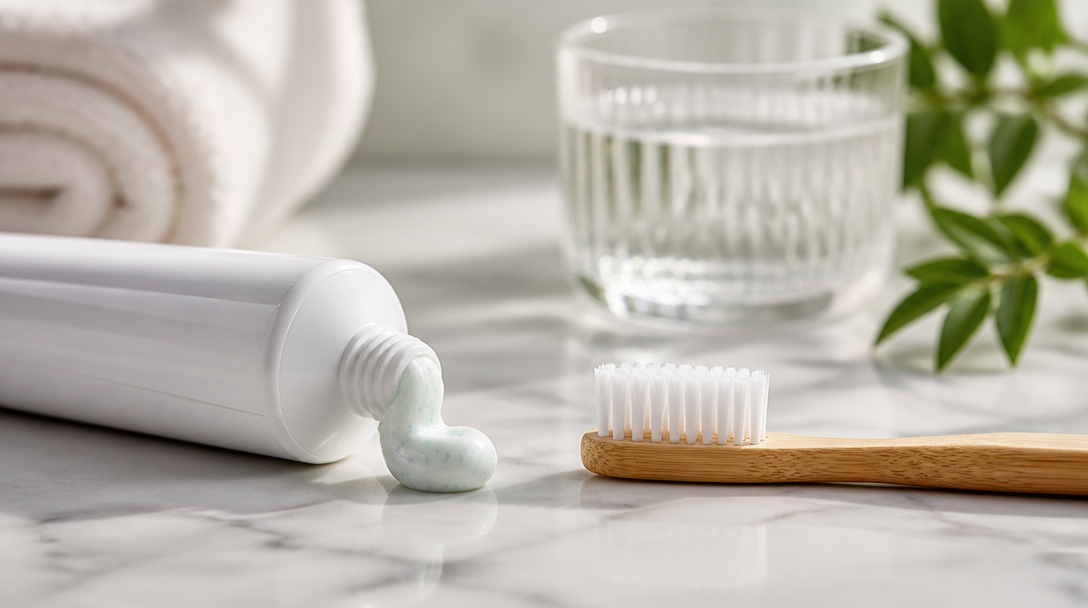
Can fluoride toothpaste rebuild enamel? Learn what remineralization actually does, its limits, and when to see a dentist for real enamel damage.
Does Fluoride Toothpaste Rebuild Enamel? What the Science Actually Says
If your teeth have become more sensitive, look slightly translucent at the edges, or stopped responding to whitening, you have likely asked whether switching toothpaste can fix things. The question of whether fluoride toothpaste can rebuild enamel comes up constantly — and the honest answer is more nuanced than most product labels suggest. Getting this distinction right could save you time, money, and further damage.
What Enamel Erosion Actually Means
Enamel is the hard, mineralized outer layer of your tooth. It is made primarily of a crystalline compound called hydroxyapatite. Unlike bone, enamel contains no living cells — once the physical structure is gone, your body has no mechanism to grow it back.
Erosion happens gradually. Acidic foods and drinks, acid reflux, dry mouth, and aggressive brushing all strip minerals from the enamel surface over time. Early erosion looks like microscopic mineral loss within the enamel layer. Advanced erosion means visible structural loss: thinning, chipping, or decay that has progressed into the softer layer beneath enamel called dentin.
The stage of erosion you are at determines what a toothpaste can realistically do.
How Fluoride Works Inside the Tooth Surface
Fluoride does not sit on top of enamel like a coating. It integrates into the enamel's mineral structure. When acid attacks enamel, it pulls calcium and phosphate ions out of the hydroxyapatite crystals — a process called demineralization. Fluoride, when present in saliva or applied topically, promotes the redeposition of those minerals back into the enamel surface.
Crucially, fluoride does not simply restore the original hydroxyapatite. It forms a compound called fluorapatite, which is chemically more resistant to acid than the natural mineral it replaces. The American Dental Association recognizes fluoride as the gold standard for enamel remineralization — it effectively reverses early decay and strengthens the surface against future acid attack.
The CDC confirms the same mechanism: fluoride replaces minerals lost from acid breakdown, hardens the outer enamel layer, and reduces the ability of oral bacteria to produce acid in the first place. That dual action — repair and prevention — is why fluoride toothpaste has remained a cornerstone of oral care for decades.
Remineralization vs. Regrowth: The Distinction That Matters
Remineralization means restoring lost mineral content within existing enamel structure. Regrowth would mean generating new enamel tissue where none exists. Fluoride toothpaste does the first. Nothing currently available for home use does the second.
Think of early enamel erosion like a sponge that has lost some of its material but still holds its basic shape. Fluoride can help refill some of those gaps. Advanced erosion is more like a sponge that has been physically cut — no amount of remineralization restores the missing section.
Research published in the Journal of Dental Research confirms that fluoride toothpastes enhance remineralization of early, caries-like lesions. The same research notes that different fluoride compounds — sodium fluoride, monofluorophosphate, and amine fluoride — vary in efficacy, with amine fluoride showing superior results in laboratory conditions. All of these findings apply to early, subsurface lesions, not to structural loss that has already occurred.
Does Fluoride Toothpaste Rebuild Enamel at Every Stage?
Fluoride toothpaste is genuinely effective in specific situations:
- Early demineralization: White spot lesions — the chalky patches sometimes visible on enamel — represent mineral loss that fluoride can partially reverse with consistent use.
- Cavity prevention: Regular use significantly reduces the risk of new cavities forming by keeping enamel in a more mineralized, acid-resistant state.
- Post-whitening sensitivity: After a whitening treatment, enamel can be temporarily more porous. A fluoride toothpaste used in the days following treatment helps stabilize the surface.
- Ongoing acid exposure: If you consume acidic foods regularly, fluoride toothpaste helps offset daily mineral loss before it accumulates into visible damage.
Fluoride toothpaste is not sufficient when:
- Erosion has progressed to visible thinning, chipping, or sensitivity that does not improve with consistent use over several weeks.
- A cavity has formed — decay that has created an actual hole in the tooth requires restorative treatment from a dentist.
- The underlying cause of erosion — acid reflux, heavy consumption of acidic drinks, dry mouth — has not been addressed. Toothpaste cannot compensate for ongoing acid exposure at that level.
Fluoride Concentration: Why It Matters More Than the Brand
Research published in Clinical Oral Investigations demonstrates a clear dose-response relationship across a range of fluoride concentrations: higher fluoride levels produce significantly better surface microhardness recovery and acid resistance in eroded enamel. Standard adult toothpastes carry concentrations effective for general prevention, but if you have a history of erosion or elevated cavity risk, a higher-concentration prescription formula may be appropriate.
This is a conversation worth having with your dentist at your next checkup — not a reason to self-prescribe or switch products without guidance.
How to Use Fluoride Toothpaste Correctly
Most people use fluoride toothpaste, but far fewer use it in a way that maximizes its remineralizing effect. Technique matters as much as product choice.
- Do not rinse immediately after brushing. Rinsing with water right after brushing removes the fluoride before it has time to interact with enamel. Spit, but do not rinse — or rinse minimally with a very small amount of water.
- Wait before eating or drinking. Allow at least 30 minutes after brushing before introducing food or drink.
- Brush gently. Aggressive brushing — especially right after consuming something acidic — can physically abrade softened enamel. Wait at least 30 minutes after acidic food or drink before brushing.
- Use it twice daily, consistently. Remineralization is a slow, cumulative process. Sporadic use produces minimal benefit.
Other Ingredients That Support Enamel Alongside Fluoride
Fluoride is foundational, but it is not the only ingredient with meaningful evidence behind it.
Nano-Hydroxyapatite
Nano-hydroxyapatite (nHA) is a synthetic form of the mineral that makes up natural enamel. It deposits directly onto the tooth surface, filling microscopic defects and reducing sensitivity. Research published in BMC Oral Health shows that combining fluoride with calcium-delivering compounds — including nano-hydroxyapatite — produces superior remineralization compared to fluoride alone, particularly in early enamel lesions.
CPP-ACP (Casein Phosphopeptide-Amorphous Calcium Phosphate)
CPP-ACP is a milk-derived compound that delivers calcium and phosphate directly to the tooth surface — providing the raw materials fluoride needs to form fluorapatite. The same BMC Oral Health research confirms that fluoride paired with calcium sources like CPP-ACP demonstrates stronger remineralization than fluoride used alone.
Arginine and Silica-Based Compounds
Research in the Dental Materials Journal indicates that fluoride formulations enhanced with arginine or specific silicon compounds improve mineral deposition and form protective layers over exposed dentin tubules — particularly relevant for people experiencing sensitivity alongside erosion. These ingredients do not replace fluoride; they work alongside it, and their benefit depends on consistent, correct use over time.
Signs Your Enamel Needs More Than a Toothpaste Change
Knowing when to move beyond a toothpaste routine is important. Watch for these indicators:
- Persistent or worsening sensitivity to cold, heat, or sweet foods that does not improve after four to six weeks of consistent fluoride toothpaste use.
- Visible changes in tooth shape or translucency — particularly at the biting edges of front teeth, which become noticeably thin or see-through as enamel wears away.
- Pain or discomfort when biting, which may indicate erosion has reached dentin or that structural damage is present.
- Yellowish discoloration that is not surface staining — when enamel thins, the naturally yellow dentin beneath shows through. No whitening toothpaste addresses this effectively.
- Active cavities found at a dental checkup, confirming that remineralization has not kept pace with demineralization and restorative treatment is needed.
If any of these apply, a dentist can assess the extent of the erosion, recommend prescription-strength fluoride treatments, apply professional remineralizing agents, or discuss restorative options based on severity. A toothpaste change alone is not a substitute for that evaluation.
The Honest Summary: Fluoride Toothpaste and Enamel Rebuilding
Fluoride toothpaste does not rebuild enamel in the sense of regenerating lost tooth structure. What it does — and does well — is remineralize early damage, form a more acid-resistant fluorapatite surface, and slow the progression of erosion when used correctly and consistently. The science behind that is solid and well-established.
The mistake most people make is expecting toothpaste to reverse damage that has already moved beyond the early stage, or continuing to use it without addressing the underlying cause of erosion. Used as part of a broader oral care routine — one that includes managing dietary acid, staying hydrated, and getting regular dental checkups — fluoride toothpaste remains one of the most evidence-backed tools available for protecting enamel long-term.
References
- American Dental Association — Fluoride: Topical and Systemic Supplements
- Centers for Disease Control and Prevention — About Fluoride and Oral Health
- Journal of Dental Research — Fluoride Toothpaste Efficacy and Remineralization of Enamel Lesions (PMC)
- Clinical Oral Investigations — Dose-Response Relationship of Fluoride Ion and Enamel Acid Resistance (PubMed)
- BMC Oral Health — Fluoride Combined with Calcium Sources and Nano-Hydroxyapatite: Remineralization Outcomes (PMC)
Disclaimer
This article is for general informational purposes only and is not a substitute for professional dental or medical advice. Always consult a qualified dental professional before starting any teeth-whitening or oral-care regimen. WhiteningBright makes no warranties as to the completeness or accuracy of the information, and any reliance is at your own risk.