Does Whitening Gel Work Faster Than Strips?
19 يوليو 2026
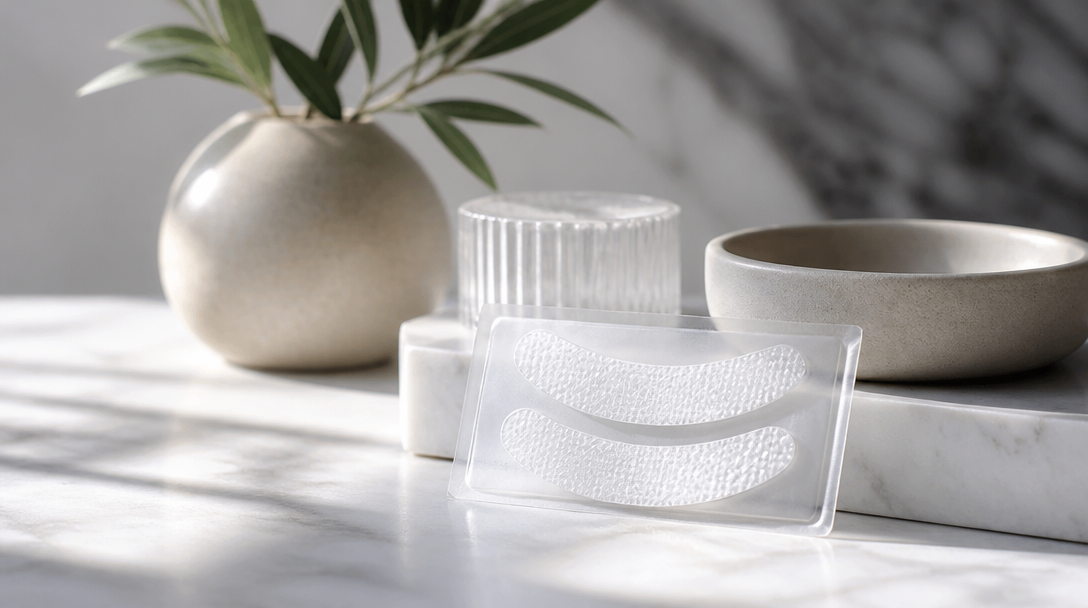
Comparing whitening gel vs strips? Learn how delivery format affects speed, coverage, and sensitivity — and which option suits your teeth and stain type.
Why Format Matters as Much as Concentration in Whitening Gel vs Strips
When weighing whitening gel vs strips, most people look at the peroxide percentage first. That instinct is understandable — but concentration is only part of what determines how fast you see results. The delivery format itself controls how evenly the active ingredient spreads across your teeth, how long it stays in contact with enamel, and whether it reaches every surface that needs whitening. Two products with identical active ingredients can perform very differently depending on format alone.
This article breaks down the mechanics of each format, what the clinical evidence actually shows about speed and evenness, and how to match the right format to your teeth and routine.
How Whitening Gel Works
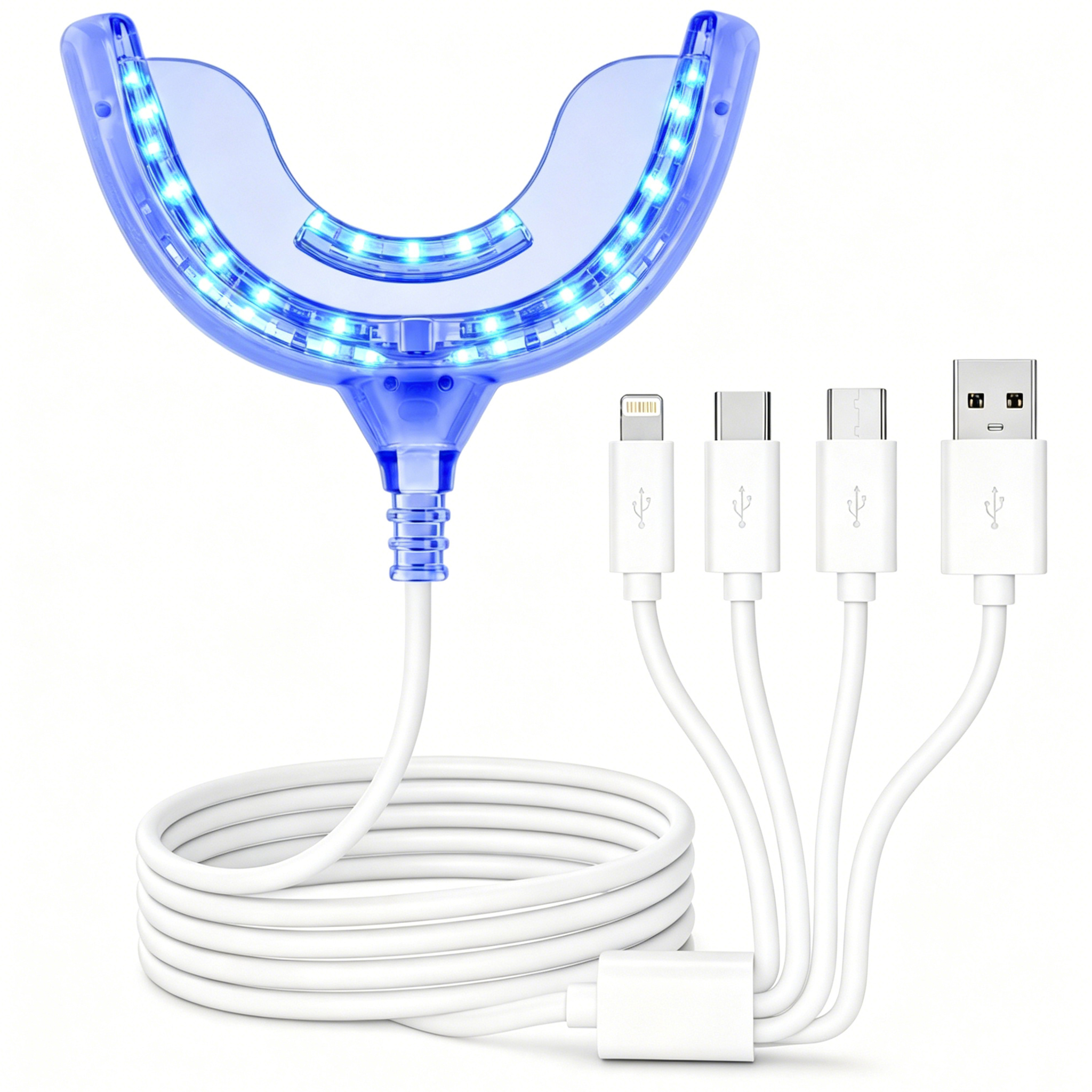
Whitening gel is a viscous, peroxide-based formula — most commonly hydrogen peroxide or carbamide peroxide — applied to a tray that fits over your teeth. The gel sits between the tray and the tooth surface, releasing its active ingredient over a set period. Session length ranges from around 30 minutes to several hours, depending on concentration.
The core advantage of tray-applied gel is custom coverage. A well-fitted tray conforms to the curves and contours of your teeth, including the spaces between them and the areas near the gumline. That makes gel particularly useful for people with crowded or rotated teeth, where a flat strip may not make full contact.
Gel also offers flexible dosing. Lower-concentration formulas — particularly carbamide peroxide, which releases hydrogen peroxide slowly over time — can be worn for longer sessions, which suits people who prefer a gradual approach or who have a history of sensitivity.
How Whitening Strips Deliver Their Active Ingredient
Whitening strips are thin, flexible films pre-coated with a peroxide gel on one side. You press them onto the front surface of your upper and lower teeth, where they adhere and hold the active ingredient in close, direct contact with enamel for a fixed period — typically around 30 minutes per session.
Because the strip is pre-loaded with a precise amount of gel and presses flush against the tooth face, there is very little room for the formula to migrate or thin out. That consistent, direct contact is one reason strips tend to produce measurable color change quickly, particularly on the flat front surfaces of teeth where surface staining concentrates.
The clinical evidence is consistent on this point. A randomized clinical trial published on PubMed found that whitening strips provided the greatest reduction in yellowness and lightness compared to a paint-on gel, with strips working significantly faster and showing greater overall color change. A Cochrane Review reached a similar conclusion, finding strips achieved greater whitening than a 10% carbamide peroxide tray gel, with a meaningful efficacy difference favoring strips.
Contact Time and Coverage: The Two Variables That Drive Speed
Two factors determine whitening speed more than any other: contact time — how long the active ingredient stays on the tooth — and coverage — how evenly it reaches the entire tooth surface. Gel and strips handle these differently.
- Contact time: Tray gels, especially lower-concentration carbamide peroxide formulas, are designed for longer wear. Carbamide peroxide breaks down slowly, releasing hydrogen peroxide over an extended period. Strips are worn for shorter sessions but deliver a more concentrated, uninterrupted period of contact during that window.
- Coverage: Strips cover the flat facial surface of teeth reliably. They struggle with teeth that are rotated, crowded, or have deep grooves. Gel in a tray can reach more of the tooth's geometry — but only with a well-fitted tray. A poorly fitting tray leads to uneven gel distribution and patchy results.
A meta-analysis on PubMed confirmed no significant difference in overall whitening efficacy between strips and 10% carbamide peroxide gel trays across a full treatment course. The same analysis found that reduction of yellowing was significantly higher with strips early in treatment — suggesting strips hold a specific speed advantage in the initial phase, even when long-term outcomes converge.
Surface Stains vs. Deep Discoloration: Which Format Works Faster for Each
The type of staining you're addressing matters as much as the format you choose. Whitening agents work through two distinct mechanisms depending on where discoloration sits in the tooth structure.
Surface Stains (Extrinsic Discoloration)
Coffee, tea, red wine, and tobacco leave pigment molecules on and just beneath the enamel surface. These respond relatively quickly to peroxide-based whitening. For this stain type, strips tend to show faster visible results because of their direct, consistent contact with the front enamel surface where extrinsic staining accumulates most.
A 2022 study found that 6% hydrogen peroxide strips showed maximum stain removal and whitening improvement compared to 15% carbamide peroxide gel, with better efficacy observed in the first seven days of treatment. Strips used a lower peroxide concentration than the gel in that study yet still outperformed it in the early phase — reinforcing that delivery format, not concentration alone, drives initial speed.
Deep Discoloration (Intrinsic Staining)
Discoloration from aging, certain medications, or dental trauma sits within the dentin layer. This type responds more slowly to any at-home format. For intrinsic staining, longer contact time becomes more important — which is where extended-wear tray gels carry a practical advantage, provided concentration and session length are managed carefully to avoid sensitivity.
Neither format will fully resolve severe intrinsic discoloration at home. Setting that expectation before starting a regimen prevents frustration and prompts appropriate consultation with a dental professional for more resistant cases.
Sensitivity: How Each Format Affects Your Tolerance
Tooth sensitivity is the most common side effect of peroxide-based whitening, and format influences how much you're likely to experience.
Strips press directly against enamel and hold a consistent concentration in place, which can cause localized sensitivity if worn longer than directed. The adhesive nature of strips also means the formula can occasionally contact the gums, causing temporary soft-tissue irritation.
Gel in a tray carries its own risks, particularly if the tray doesn't fit well and gel leaks onto soft tissue. With a properly fitted tray, however, gel allows more practical control: you can reduce the volume applied, shorten session length, or switch to a lower concentration without changing the format entirely.
Practical steps for managing sensitivity with either format:
- Start with a lower-concentration formula regardless of format if you have known sensitivity.
- With strips, trim the edges if they consistently reach your gumline.
- With gel, apply only the amount needed to coat the tooth surface — excess gel increases gum exposure without improving results.
- Use either format on alternating days rather than daily to reduce cumulative sensitivity.
A 2026 study published in Frontiers in Oral Health found that low-concentration strips at 3% hydrogen peroxide delivered satisfactory bleaching results over time — relevant for readers who need a gentler entry point without sacrificing meaningful results.
Whitening Gel vs Strips: Matching Format to Your Teeth and Routine
There is no single correct answer. The right format depends on the shape of your teeth, the nature of your staining, your sensitivity history, and how much time you can commit each day.
Strips are likely the better fit if:
- Your teeth are relatively even and well-aligned, allowing the strip full contact across the surface.
- You want faster visible results on surface staining, particularly yellowing.
- You prefer a straightforward, no-measuring routine with a fixed session time.
- You want a format easy enough to use while reading, working, or watching television.
Gel in a tray is likely the better fit if:
- Your teeth are crowded, rotated, or have irregular surfaces a flat strip won't fully reach.
- You're addressing deeper or more stubborn discoloration that benefits from longer contact time.
- You want more control over concentration and session length, particularly with sensitivity concerns.
- You've had professional whitening and are using gel to maintain results between appointments.
Realistic timelines
Based on available clinical evidence, strips tend to produce faster initial color change — particularly for yellowing — compared to standard-concentration tray gels. Over a full treatment course, the difference in overall whitening efficacy between the two formats narrows considerably. The format that works fastest for you is, in practice, the one you use consistently and correctly.
| Factor | Whitening Gel (Tray) | Whitening Strips |
|---|---|---|
| Speed of initial color change | Moderate | Faster, especially for yellowing |
| Coverage on irregular teeth | Better with well-fitted tray | Limited on crowded or rotated teeth |
| Contact time control | High — adjustable by session length | Fixed by strip design |
| Ease of use | Moderate | High |
| Sensitivity management | More adjustable | Less adjustable |
| Best suited for | Uneven teeth, deeper stains, maintenance | Even teeth, surface stains, speed |
If speed is your priority and your teeth are reasonably well-aligned, strips have a demonstrated early advantage for reducing yellowing. If coverage, control, and long-term flexibility matter more, a well-fitted tray with an appropriate gel concentration is the stronger choice. Neither format is universally superior — they are tools designed for different situations, and understanding that distinction is what leads to better, more consistent results.
References
- Randomized clinical trial: whitening strips vs. paint-on gel — color change and speed of efficacy. PubMed / National Library of Medicine.
- Meta-analysis: comparison of strips and 10% carbamide peroxide gel tray — overall efficacy and yellowing reduction. PubMed / National Library of Medicine.
- Cochrane Review: efficacy of strips versus carbamide peroxide gel in tray — comparative whitening outcomes. PubMed / National Library of Medicine.
- RCT: low-concentration whitening strips (3% hydrogen peroxide) — bleaching efficacy over time. Frontiers in Oral Health, 2026.
Disclaimer
This article is for general informational purposes only and is not a substitute for professional dental or medical advice. Always consult a qualified dental professional before starting any teeth-whitening or oral-care regimen. WhiteningBright makes no warranties as to the completeness or accuracy of the information, and any reliance is at your own risk.