LED Bundle Margins: What Buyers Lock In at MOQ
5 نوفمبر 2026

Map the margin variables, MOQ thresholds, and specification commitments in LED whitening kit bundle sourcing — before your first order erodes your reorder revenue.
Why Bundle Pricing Behaves Differently Than Single-SKU Orders
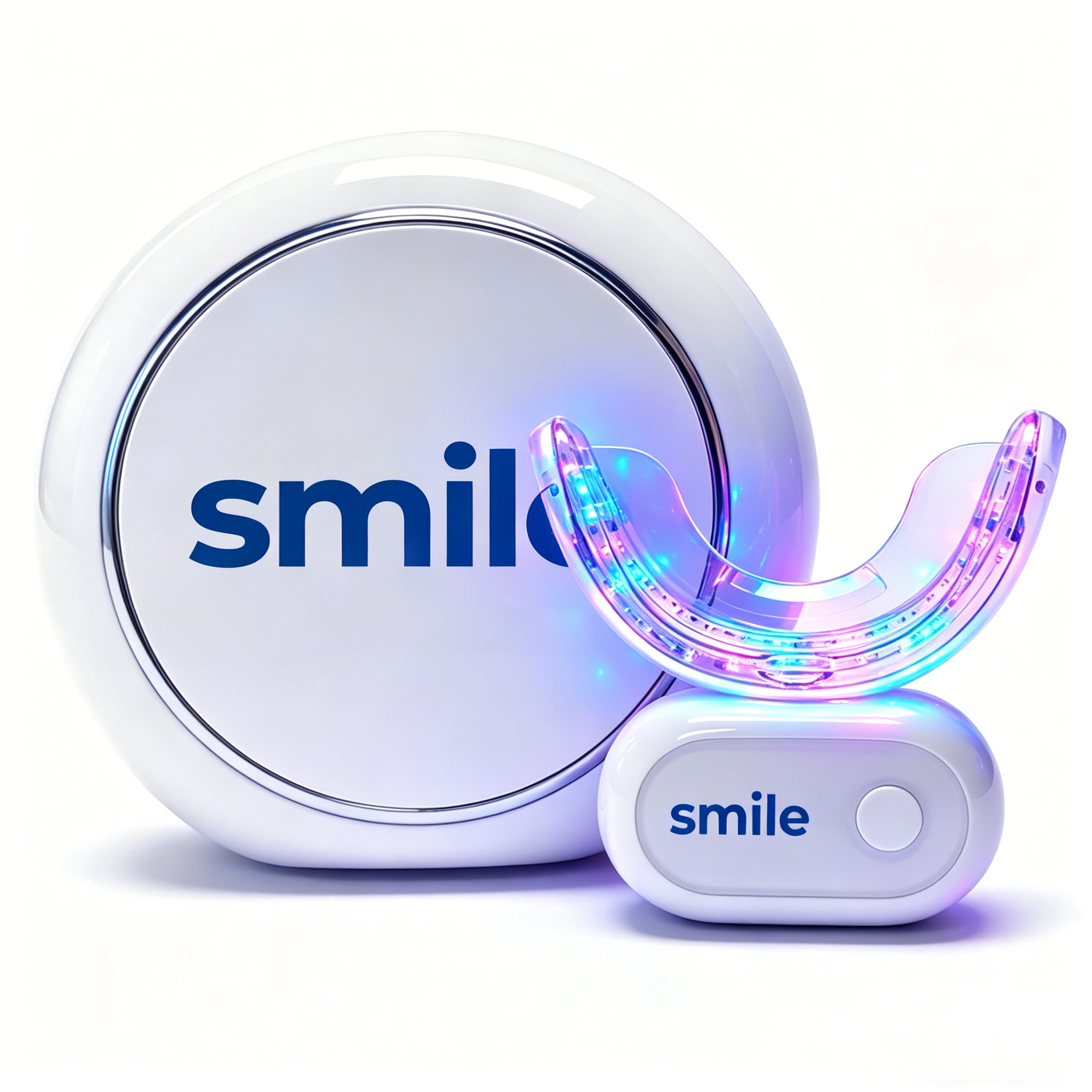
Buyers entering LED whitening kit bundle sourcing for the first time often apply single-SKU margin logic to a multi-component purchase — and that mismatch is where margin erosion starts. A bundle is not a discounted kit. It is a structured commitment across two or more product categories, each carrying its own cost floor, lead time, and compliance requirement.
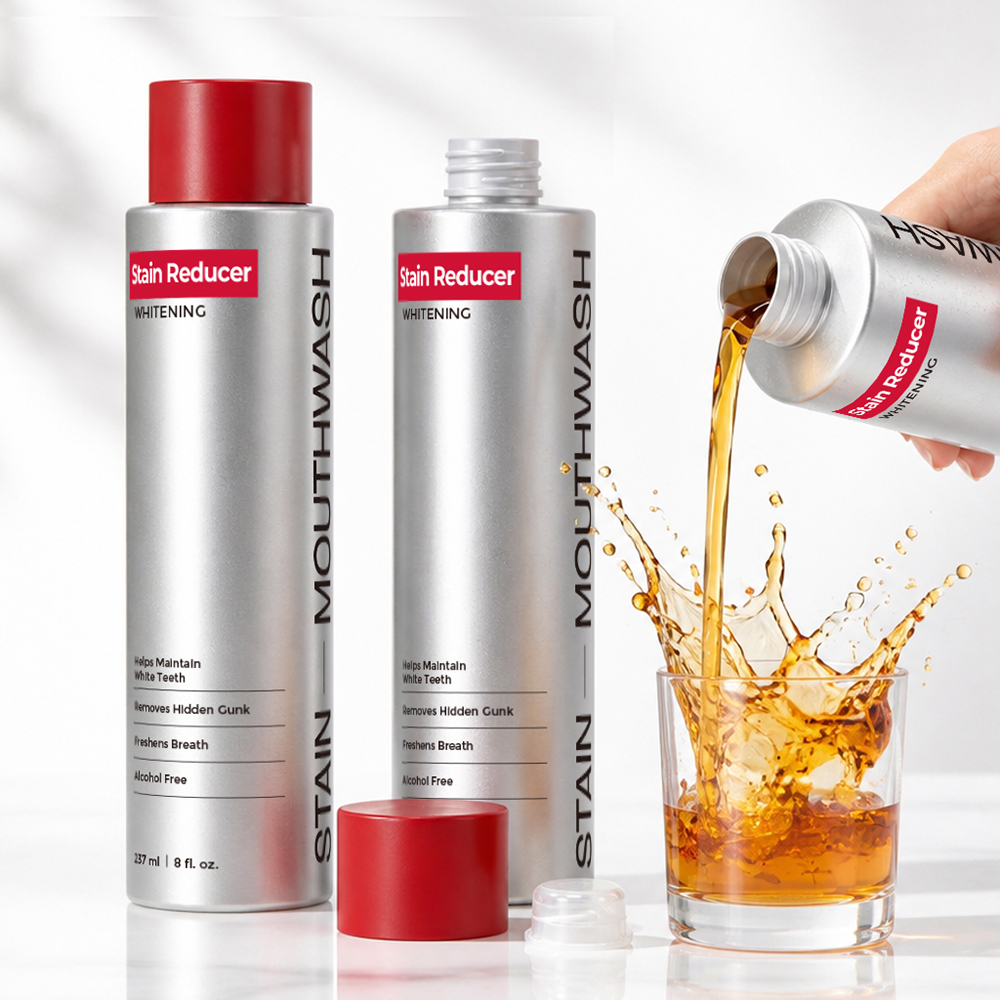
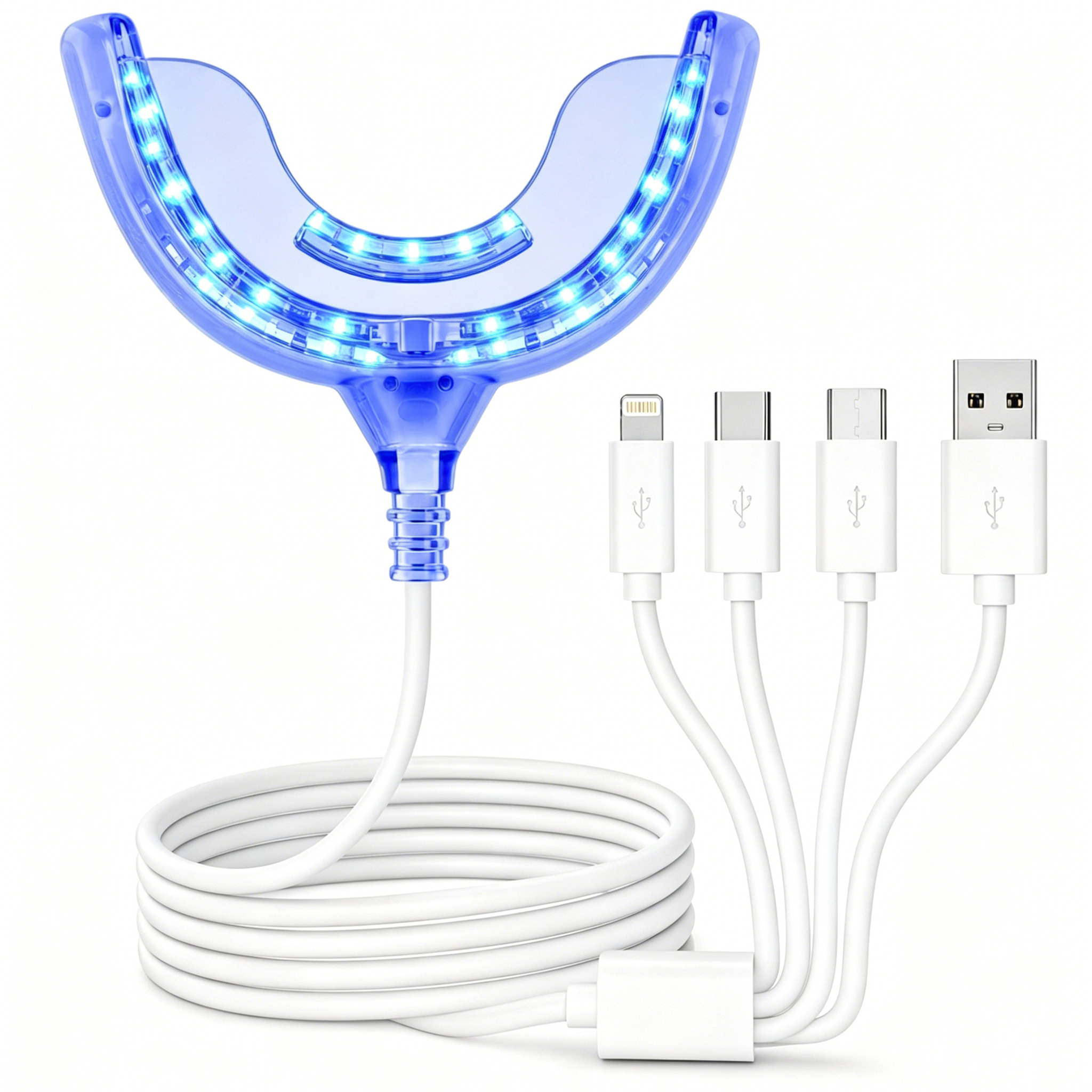
When an LED device and a whitening gel ship together as a single SKU, the pricing mechanics shift. The device carries tooling amortization, battery or USB component costs, and regulatory classification overhead. The gel carries formulation, stability testing, and fill-volume costs. Neither behaves like a consumable strip or a single-use sachet.
Treating them as equivalent units in a margin calculation produces inaccurate landed-cost projections. Buyers need separate cost models for the device component and the gel component before they can evaluate whether a bundled price from a supplier is structurally sound or simply a low entry number designed to win the initial order.
The MOQ Math: Where LED Devices Change the Cost Floor in LED Whitening Kit Bundle Sourcing
LED devices introduce a hard cost floor that gel-only sourcing does not have. Electronic components — LED arrays, charging circuits, housing tooling — carry minimum production runs tied to component purchasing, not filling capacity. When a supplier quotes a bundle MOQ, the device MOQ is typically the binding constraint.
This creates a structural asymmetry. A distributor ordering a modest initial quantity of bundles may absorb device-side costs that only normalize at significantly higher volumes. The gel portion of that same order could be produced economically at a fraction of the device MOQ. Buyers who do not separate these two cost floors when negotiating will overpay on small runs or underestimate the true per-unit cost at scale.
Key variables to isolate before committing to a bundle MOQ:
- Device tooling status: Is the LED mold proprietary to your SKU, or shared tooling? Shared tooling reduces upfront cost but limits exclusivity.
- Component lead time: LED arrays and USB components carry procurement lead times independent of gel production schedules. Misaligned lead times can delay the full bundle even when gel is ready to ship.
- Minimum gel fill run: Syringes, trays, and pens each have their own minimum fill quantities. Confirm these align with your device MOQ before finalizing the bundle structure.
- Packaging synchronization: Co-packaged bundles require coordinated print runs for outer cartons. A short-run carton print can add disproportionate cost to a small MOQ order.
The bundle MOQ that appears competitive at first quote often reflects only one of these cost layers. A rigorous buyer requests a component-level cost breakdown before accepting a bundled unit price.
Gel Pairing Specifications That Protect Bundle Performance Claims
The LED device and the whitening gel in a bundle are not interchangeable with other brands' equivalents. The performance claim on the finished bundle — whether it references shade improvement, treatment duration, or sensitivity profile — depends on the specific interaction between device output and gel formulation.
Clinical research underscores why this matters. A randomized trial published in Clinical Oral Investigations found that violet LED used with a biocatalyst-based whitening protocol achieved efficacy comparable to conventional treatment, with a lower sensitivity profile in the test group — but the authors noted that LED effects varied meaningfully by treatment design.[2] A separate pilot randomized clinical study comparing LED- and diode-laser-assisted whitening found clinically perceptible color changes with both protocols, yet reported no statistically significant difference between them, and characterized the findings as preliminary pending larger trials.[1]
The practical implication for buyers: the performance story behind a bundle is protocol-specific. Wavelength, gel concentration, exposure time, and formulation chemistry all interact. A bundle assembled from mismatched components — a device engineered for one wavelength range paired with a gel formulated for a different activation profile — may underperform against label claims.
Specification commitments to secure before finalizing a gel pairing:
- Active ingredient and concentration: Confirm whether the formula uses hydrogen peroxide, carbamide peroxide, or a PAP-based system, and at what concentration. Each carries different regulatory implications by market.
- LED wavelength compatibility: Verify that the device's output wavelength corresponds to the gel's activation design. This is a formulation chemistry requirement, not a marketing alignment.
- Sensitivity data: Request tolerability data for the specific gel formula. A peer-reviewed clinical study evaluating tooth-color change and tolerability provides a framework for what credible product-level evidence looks like.[3] Suppliers unable to provide equivalent documentation are a sourcing risk.
- Stability and shelf-life testing: Gel formulas degrade. Confirm tested shelf life under your actual distribution and storage conditions — not ideal laboratory conditions.
Component Sourcing Splits: When Unified Supply Beats Mixed Vendors
Some buyers attempt to optimize margin by sourcing the LED device from one supplier and the gel from another, then co-packing internally. At scale with experienced operations teams, this can work. At most distributor and clinic-buyer volumes, it introduces more risk than it removes.
The primary risk is accountability fragmentation. When a performance complaint arrives — a clinic reporting uneven results or a retailer fielding consumer returns — a split-source bundle has no single responsible party. The device supplier points to the gel. The gel supplier points to the device. The buyer absorbs the cost of the dispute and the reputational exposure.
A unified supply relationship — where both components are co-developed or sourced through a single accountable partner — transfers that accountability. It also simplifies the regulatory documentation trail. FDA device classification distinguishes meaningfully between illumination devices and devices making therapeutic or whitening claims.[4][5] A supplier managing both the device and the gel can deliver a coherent compliance package. A mixed-vendor arrangement requires the buyer to assemble that documentation independently.
Unified sourcing is not always cost-optimal. But buyers should price the operational and compliance overhead of a split arrangement honestly before choosing it on margin grounds alone.
Reorder Architecture: Designing the Bundle for Repeat Gel Pull-Through
The most durable margin structure in LED whitening kit bundle sourcing is not the bundle itself — it is the gel reorder stream the bundle enables. An LED device has a finite purchase cycle. A patient or consumer who receives a device with an initial gel supply will need gel replenishment. If that reorder defaults to a generic formula rather than your branded product, the device sale generated no long-term revenue.
Designing for gel pull-through requires deliberate choices at the bundle specification stage:
- Proprietary gel format: A gel delivered in a format specific to your device — a custom tray geometry, a proprietary syringe tip, or a branded applicator — creates a functional reason to reorder your gel rather than a competitor's.
- Starter-pack sizing: Bundle the device with a gel supply sized for the initial treatment course, not an extended supply. A 14-day supply creates a natural reorder trigger that an extended supply eliminates.
- Reorder SKU clarity: The gel reorder SKU should be distinct, easy to identify, and available through the same channel the buyer uses for the original bundle. Friction in the reorder path kills pull-through.
- Clinic and retail channel alignment: For clinic buyers, the gel reorder should be positioned as a professional take-home recommendation — a product the clinician prescribes, not one the patient discovers independently.
Contract Terms That Prevent Margin Erosion Between Reorders
The gap between the initial bundle order and the first gel reorder is where margin most commonly erodes. Prices shift. Formulations change without notice. Component substitutions occur at the supplier level. Without contractual protections, a buyer who locked in a margin at MOQ may find that margin has degraded by the time the reorder arrives.
Terms worth negotiating before committing to a bundle SKU:
- Formula lock: A written commitment that the gel formulation — active ingredient, concentration, and delivery format — will not change without 90-day advance notice and buyer approval.
- Device component continuity: Confirmation that the LED device will not undergo component substitution without disclosure. Undisclosed component changes can affect both performance claims and regulatory status.
- Price escalation caps: A ceiling on input-cost pass-throughs between reorders, expressed as a percentage tied to a defined index. Open-ended escalation clauses transfer all input-cost risk to the buyer.
- Minimum reorder availability: A commitment that the gel reorder SKU remains available at a defined minimum volume for a period aligned with the expected device lifecycle in market.
Audit Checkpoints Before You Commit to an LED Whitening Kit Bundle Sourcing Decision
A structured pre-commitment audit reduces the probability of downstream margin and compliance problems. The following checkpoints apply whether you are evaluating a private-label ready bundle or a co-developed formulation.
- Regulatory classification confirmed: Verify how the LED device is classified in your target market. FDA classification distinguishes between illumination devices and those making therapeutic claims.[4] CE marking requirements differ by device category across EU markets. Misclassified devices create import and distribution liability.
- Gel formula documentation complete: Active ingredient, concentration, stability data, and tolerability evidence should be in hand before you commit — not promised for delivery after the order is placed.
- Component-level cost breakdown received: Device cost, gel cost, packaging cost, and co-packing cost should be itemized separately. A single bundled unit price without breakdown is not sufficient for margin modeling.
- Performance claim alignment verified: The claims on your label must be supportable by the specific device-and-gel combination you are sourcing. Clinical research confirms that LED efficacy outcomes vary by wavelength, protocol, and formulation design.[1][2] Generic LED efficacy claims do not transfer automatically to every bundle configuration.
- Reorder path documented: Confirm in writing the gel reorder SKU, pricing structure, minimum order quantity, and lead time before the initial bundle order ships. Reorder terms negotiated after the device is in market carry significantly less leverage.
Buyers who complete this audit before committing to an MOQ are not being slow — they are protecting margin at every reorder cycle that follows.
References
- [1] Comparative evaluation of LED- and diode laser-assisted in-office tooth whitening: a pilot randomized clinical study — PubMed
- [2] Bleaching with biocatalysts and violet LED: a randomized clinical trial — Clinical Oral Investigations / PubMed
- [3] Tooth color change and tolerability evaluation of a whitening product — PubMed
- [4] Orthodontic LED Accessory — Product Classification, U.S. Food and Drug Administration
Disclaimer
This article is for general informational purposes only and does not constitute sourcing, legal, or regulatory advice. Always conduct your own due diligence and consult qualified legal or compliance professionals before making purchasing or compliance decisions. WhiteningBright makes no warranties as to the completeness or accuracy of the information, and any reliance is at your own risk.