PAP Whitening for Sensitive Teeth: Does It Work?
6 يوليو 2026
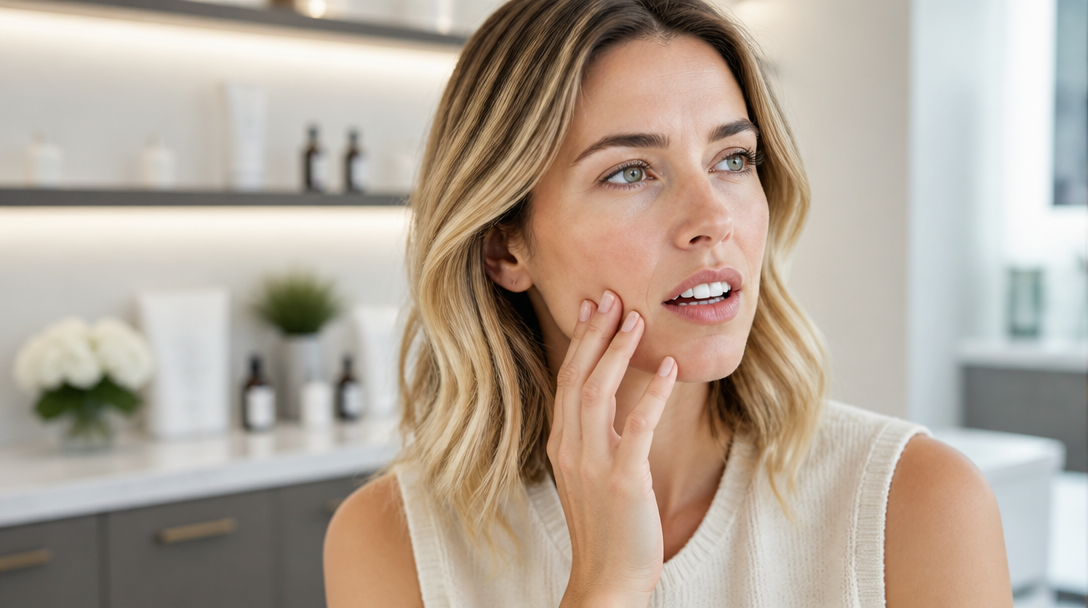
Discover how PAP whitening for sensitive teeth compares to peroxide, what research confirms, and what results to realistically expect.
Why Sensitive Teeth React Badly to Peroxide Whitening
For anyone who has tried a peroxide strip and spent the next two days flinching at cold water, the problem is familiar. PAP whitening for sensitive teeth offers a chemically different approach — and understanding why it behaves differently is the first step to deciding whether it suits your situation.
Hydrogen peroxide molecules are small enough to pass through enamel and reach the dentinal tubules — the microscopic channels running toward the tooth's nerve. Once peroxide reaches that layer, it triggers a nerve response. That sharp, shooting discomfort after whitening is a direct consequence of this migration.
Higher concentrations amplify the risk. In-office treatments use stronger peroxide formulas, which is why post-treatment sensitivity is routinely reported after professional bleaching. Even lower-concentration at-home strips can cause the same reaction in people whose enamel is already thin or whose gum line has receded, exposing root surface that has no enamel protection at all.
How PAP Whitening for Sensitive Teeth Works Differently
PAP — phthalimidoperoxycaproic acid — is an organic peroxy acid that whitens through oxidation, the same basic mechanism as hydrogen peroxide. The critical difference is molecular size. PAP is a larger molecule. It does not penetrate dentinal tubules the way hydrogen peroxide does.
Because PAP stays at the enamel surface rather than migrating inward, it targets stain molecules in and on the enamel without activating the nerve pathway that causes sensitivity. This surface-level, non-cytotoxic behavior is the core scientific basis for its reduced-sensitivity profile.
Research published on PubMed Central found that PAP removed stains without causing enamel surface alterations — a meaningful distinction from hydrogen peroxide, which produced the greatest color change in the same study but also showed mild surface dissolution. PAP is gentler on enamel structure, even though it produces a more modest whitening effect.
One persistent myth is worth clearing up. Early concerns about PAP causing enamel etching were traced to formulations containing citric acid alongside PAP — not to PAP itself. Studies examining PAP in isolation found no enamel demineralization and no gum irritation.
What the Research Actually Confirms
The evidence base is promising but still developing. PAP has received FDA clearance for use in over-the-counter whitening products, and dental literature increasingly cites it as a lower-sensitivity alternative to peroxide. As of 2026, the American Dental Association has not issued a formal statement endorsing PAP as the preferred treatment for sensitive teeth over other established gentle alternatives — that context matters when evaluating the claims you'll find on product packaging.
What peer-reviewed research does confirm:
- PAP effectively removes extrinsic stains — the surface discoloration caused by coffee, tea, wine, and tobacco.
- PAP does not cause the sensitivity, enamel demineralization, or gum irritation associated with peroxide when used in properly formulated products.
- Hydrogen peroxide delivers a more significant color change than PAP, particularly for altering the natural underlying shade of enamel rather than clearing surface stains.
A 2023 study comparing hydrogen peroxide and PAP confirmed hydrogen peroxide produced a more significant overall color difference. PAP is not a like-for-like replacement if the goal is dramatic shade alteration. For people whose priority is gentler treatment with meaningful stain removal, that trade-off is often the right one.
Two supporting ingredients appear frequently in sensitive-specific PAP formulations: nanohydroxyapatite (nHAp) and potassium nitrate. Both have established records for supporting enamel remineralization and reducing sensitivity. Neither replaces PAP's whitening action, but both can strengthen its safety profile when combined thoughtfully.
Not All Sensitivity Is the Same
Before starting any whitening protocol — even a gentle PAP-based one — understanding the source of your sensitivity matters. Some sensitivity is safe to whiten around with appropriate care. Some is a signal to see a dentist first.
Generally safe to whiten around, with caution:
- Mild temperature sensitivity with no identified structural damage
- Post-cleaning sensitivity that has settled within a few days
- Sensitivity from thin enamel where the enamel remains structurally intact
- Generalized sensitivity your dentist has attributed to enamel wear rather than active decay
See a dentist before whitening if you have:
- Sharp, lingering pain after hot or cold — this can indicate pulp involvement
- Sensitivity localized to one specific tooth, which may point to a cavity, crack, or failing restoration
- Pain when biting down
- Sensitivity alongside visible gum recession exposing root surface
The practical rule: if your sensitivity is diffuse, mild, and your dentist has given you a clean bill of health, PAP whitening for sensitive teeth is a reasonable option to explore. If sensitivity is new, worsening, or localized to one tooth, get it assessed before applying anything to your teeth.
A Sensible PAP Protocol for Sensitive Teeth
Once you've confirmed your sensitivity doesn't signal something that needs dental treatment, the approach below reduces your risk of irritation while giving the formula room to work.
Before You Start
Use a remineralizing toothpaste containing nanohydroxyapatite or fluoride for two weeks before beginning. This strengthens enamel and lowers baseline sensitivity before any active whitening agent is introduced. Treating this preparation phase as non-optional makes a measurable difference for sensitive teeth users.
During Treatment
- Follow the recommended wear time exactly. Longer contact time does not improve results — it increases the chance of gum irritation from prolonged exposure.
- Start shorter than the maximum. If a product recommends up to 30 minutes, begin with 15 and assess your response over the first few applications before extending duration.
- Space sessions out. Every other day, or three sessions per week, gives enamel recovery time between treatments. Daily back-to-back applications are rarely necessary and rarely beneficial.
- Avoid acidic food and drink immediately after. Enamel is temporarily more porous after any whitening treatment. Hold off on citrus, vinegar-based foods, and carbonated drinks for at least an hour.
After Each Session
Apply a thin layer of remineralizing gel or an nHAp-containing toothpaste. This supports enamel recovery and manages residual sensitivity. If discomfort persists beyond 24 hours, pause the treatment and reassess before continuing.
When to Postpone or Skip Whitening Entirely
PAP is gentler than peroxide. It is still an active whitening agent. There are situations where even a PAP-based product is not appropriate.
Postpone whitening if you have:
- Active cavities or cracked teeth — any breach in the enamel allows whitening agents to reach sensitive inner structures
- Recent dental work involving bonding, veneers, or crowns — whitening agents do not alter the color of restorations, and uneven results are the likely outcome
- Gum disease or active gum inflammation — irritated tissue reacts more strongly to any topical agent
- Mouth sores or ulcers
Avoid whitening entirely if you are:
- Pregnant or breastfeeding — out of precaution, not because PAP is proven harmful, but because sufficient safety data for these groups does not yet exist
- Under 18 — enamel is still developing and more permeable
- Experiencing sensitivity severe enough to affect daily life — this warrants dental assessment, not whitening
Realistic Results from PAP Whitening for Sensitive Teeth
This is where honesty is most useful. Choosing PAP because of its gentler sensitivity profile means accepting a specific set of strengths and limitations — and understanding both up front avoids disappointment.
PAP excels at removing extrinsic stains: the yellowing and dullness that accumulates from years of coffee, tea, red wine, and food pigments. For most people with discolored teeth, this surface staining is the primary issue, and PAP addresses it effectively without the sensitivity penalty of peroxide.
What PAP does less well is alter the intrinsic color of enamel — the underlying natural shade a person was born with. The 2023 research confirms that hydrogen peroxide produces a more significant color difference in this respect. If teeth are naturally dark or gray-toned rather than stained, PAP alone may not deliver the shift you're expecting.
In practice, most sensitive-teeth users who complete a full PAP course report a noticeable improvement in brightness — teeth look cleaner, more even, and fresher. The result tends to look natural rather than stark, which many people prefer over an artificially bleached appearance.
PAP whitening is not permanent. Continued exposure to staining food and drink will gradually reverse results. Periodic maintenance sessions — rather than repeated intensive courses — form a more sustainable long-term strategy for anyone with sensitive teeth.
For the right candidate — genuine sensitivity, realistic expectations, and surface staining as the main concern — PAP whitening offers a meaningful path to a brighter smile without the discomfort that has made whitening feel off-limits before.
References
Note: As of 2026, large-scale peer-reviewed clinical trials examining PAP specifically for sensitive-teeth populations remain limited. The ADA and FDA have not published dedicated guidance documents on PAP versus peroxide for sensitivity management. Additional references will be added as the clinical evidence base develops. Readers are encouraged to consult their dental professional and review current literature via PubMed for the most recent findings.
Disclaimer
This article is for general informational purposes only and is not a substitute for professional dental or medical advice. Always consult a qualified dental professional before starting any teeth-whitening or oral-care regimen. WhiteningBright makes no warranties as to the completeness or accuracy of the information, and any reliance is at your own risk.