Private Label Whitening Kit: Supplier Vetting Checklist
27 أغسطس 2026
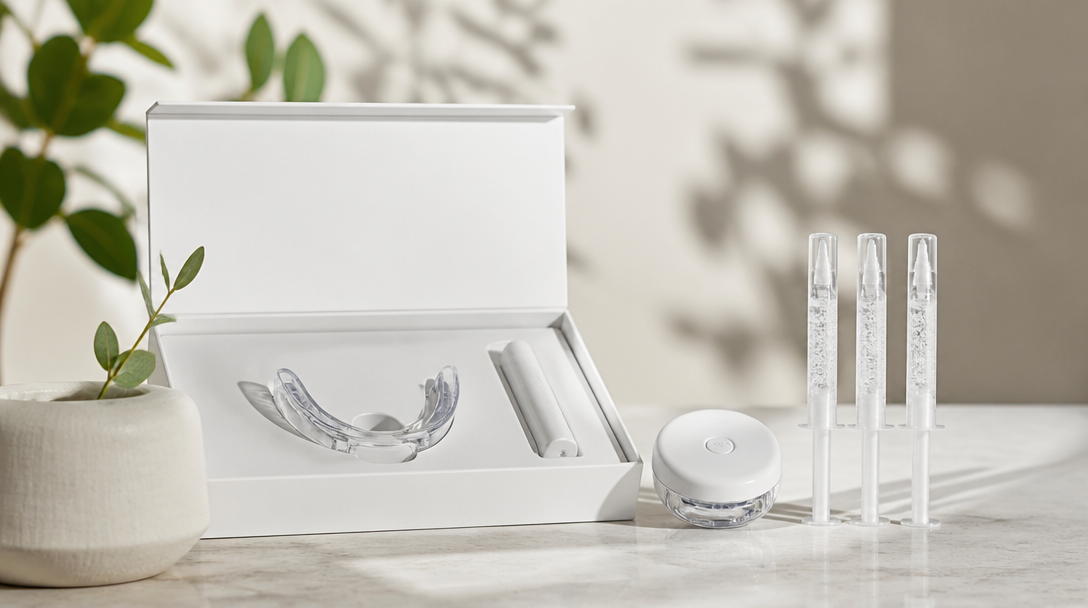
Evaluate any private label whitening kit supplier with this structured checklist — covering formulation safety, MOQ terms, compliance docs, and key questions to ask.
Why Private Label Whitening Kit Supplier Deals Fail Before Launch
Brand owners evaluating a private label whitening kit supplier rarely lose deals on price. They lose them on formulation gaps discovered after sampling, compliance documents that never arrive, and packaging timelines that slip past launch windows. The vetting process most buyers use is too shallow — a price request, a sample, a quick call — and it leaves critical variables unexamined until production is already underway.
This checklist is structured for brand owners past the browsing stage: dental clinic groups building a retail line, wellness brands co-developing a whitening SKU, and distributors evaluating whether a supplier can scale with them. Work through each section before signing anything.
Formulation Standards to Demand From Any Private Label Whitening Kit Supplier
The whitening agent is where supplier quality separates most visibly. Hydrogen peroxide and carbamide peroxide remain the dominant active ingredients. PAP (phthalimidoperoxycaproic acid) formulations are increasingly requested by brands targeting sensitivity-conscious consumers or markets with stricter peroxide concentration limits.
Concentration matters beyond efficacy — it directly affects adverse-event risk. Peer-reviewed research confirms that side effects including tooth sensitivity, gingival irritation, surface roughening, and demineralization risk increase with peroxide strength and duration of use. The ADA identifies temporary sensitivity and gingival irritation as the most common adverse effects, with higher peroxide concentrations compounding that risk. Any supplier that cannot show concentration-specific safety data for the formulation you are ordering is not a production partner — they are a liability.
Demand these formulation disclosures before sampling:
- Active ingredient identity and concentration — hydrogen peroxide percentage, carbamide peroxide percentage, or PAP concentration by weight
- pH range of the finished gel — low-pH formulations increase demineralization risk; this is not a cosmetic detail
- Abrasivity data for any whitening toothpaste SKUs — peer-reviewed research confirms that product acidity and buffering directly affect dentin loss, making formulation testing non-negotiable when vetting suppliers
- Desensitizing agents present — potassium nitrate, fluoride, or hydroxyapatite inclusion must be documented, not described verbally
- Full INCI list — including any gingival protection materials in the kit, since accessory components such as barrier gels can introduce allergen exposure risks documented in clinical literature
If a supplier cannot produce a complete INCI list and pH data for the exact formulation you are ordering, move on.
MOQ, Lead Times, and the Hidden Costs Buyers Miss
Minimum order quantities for private-label whitening kits vary by component complexity. A gel-only SKU in standard packaging carries a lower MOQ than a full kit with LED device, tray, gel syringes, and branded outer box. Identify which components are co-developed exclusively for your brand and which are shared stock items — this distinction affects both your MOQ and your competitive exposure.
Lead times break into two phases that suppliers routinely quote as one: production lead time (formulation, filling, assembly) and packaging lead time (custom print, box construction, label application). A supplier quoting 30 days may mean 30 days for the gel — and another three to four weeks for printed packaging arriving from a separate vendor. Get a written production schedule that separates these phases explicitly.
Confirm the following costs in writing before ordering:
- Tooling or mold fees for custom tray shapes or device housings
- Artwork setup fees and revision limits
- Storage or warehousing fees if your shipment is delayed on your end
- Re-testing costs if a formulation batch fails QC and must be reformulated
- Freight terms — FOB, CIF, or DDP — and who absorbs customs clearance costs
A per-unit cost difference of a few cents is less consequential than a six-week delay caused by a packaging vendor your supplier never disclosed. Get the full supply chain map in writing before committing to a production run.
Branding and Packaging: What a Capable Private-Label Partner Delivers
A capable private-label partner does more than print your logo on a stock box. They provide dieline templates, material specifications, and finish options — matte laminate, soft-touch coating, foil stamping — as part of their standard onboarding process, not as an upsell.
Evaluate packaging capability across three dimensions:
- Structural options — carton, pouch, tube, syringe, pen applicator. Confirm which formats are available within your target MOQ range.
- Print specification depth — Pantone matching, bleed tolerances, label substrate compatibility. A supplier who accepts "our brand colors are blue and white" without requesting a brand guide is not operating at a professional level.
- Regulatory labeling compliance — packaging must carry legally required ingredient disclosures, usage instructions, and market-specific warnings. This is not optional and must not be left to your team to resolve post-production.
Ask to see finished packaging samples from existing private-label clients — not renders, not prototypes. Physical samples reveal print registration quality, material weight, and closure integrity in ways that digital files cannot.
Compliance Documentation Your Supplier Must Provide Before You Commit
Compliance documentation is not a post-agreement deliverable. If a supplier cannot produce these documents during the vetting process, they cannot produce a compliant product for your market.
Depending on your target market, require:
- ISO 22716 certification — GMP compliance for cosmetic manufacturing; required for EU market entry and increasingly expected by premium retail buyers globally
- FDA registration or OTC drug documentation — for US market whitening products carrying active drug claims; confirm whether your formulation is classified as a cosmetic or a drug in your target market before production begins
- CE marking documentation — for EU device-classified whitening products, including LED accelerator devices
- Certificate of Analysis (CoA) per batch — active ingredient concentration verified, microbial testing results, pH confirmation
- Safety Data Sheet (SDS) — for all active and functional ingredients
- Stability testing data — shelf-life claims must be supported by accelerated or real-time stability studies, not estimated
- Adverse event documentation policy — how the supplier tracks, reports, and responds to adverse events linked to their formulations
The ADA notes that whitening is generally safe when products are used as directed, but cautions that overuse can damage enamel and increase sensitivity. Your compliance documentation should demonstrate that your formulation and usage instructions are engineered to minimize these risks — not merely that the product passed a basic safety screen.
Twelve Questions to Ask Every Private Label Whitening Kit Supplier on the First Call
Use this list to qualify suppliers before investing time in sampling or negotiation. Weak answers predict problems in production.
- What is the exact hydrogen peroxide or PAP concentration in your standard whitening gel, and can you provide CoA documentation confirming it?
- What is the pH range of the finished gel, and do you have stability data showing pH consistency across the stated shelf life?
- What allergen disclosures apply to your gingival protection or barrier gel components?
- Which regulatory certifications does your facility hold — ISO 22716, FDA registration, CE?
- What is your minimum order quantity for a full kit versus gel-only, and does MOQ change for custom formulations?
- What is your production lead time, and does that figure include or exclude packaging production?
- Do you manufacture all kit components in-house, or do you source devices, trays, or accessories from third parties?
- Can you provide physical packaging samples from an existing private-label client?
- What is your batch failure rate, and what is the remediation process if a batch does not pass QC?
- How do you handle adverse event reports linked to your formulations, and do you maintain a documented adverse event log?
- What are your freight terms, and which Incoterms do you operate under for international orders?
- Can you co-develop a modified formulation — adjusted concentration, added desensitizer, or alternative active ingredient — within your standard MOQ framework?
How to Evaluate a Sample Order Before Placing a Full Run
A sample order is not a formality. It is a structured test with defined pass/fail criteria. Treat it as such.
Formulation Performance
Test the gel against the CoA provided. If you have access to a dental professional or clinical testing partner, assess sensitivity response and whitening efficacy under controlled conditions. Research confirms that sensitivity and gingival irritation are real, concentration-dependent adverse effects — a sample that causes significant sensitivity at the stated concentration suggests either a formulation issue or a concentration discrepancy worth resolving before full production.
Packaging Integrity
Check seal integrity on syringes or pens, closure force on caps, and label adhesion. Examine print registration and color accuracy against your brand specification. Request a sample stored for at least 30 days post-production to assess whether gel consistency or color has shifted — stability matters at the sample stage, not just at scale.
Documentation Completeness
The sample shipment should arrive with a CoA, SDS, and a draft of the regulatory labeling for your target market. If documentation is incomplete at the sample stage, it will be incomplete at scale. Treat missing paperwork as a red flag, not a follow-up item.
Communication Quality During the Sample Process
How a supplier handles your sample request — response time, accuracy of the brief they followed, proactiveness on specification questions — is a direct preview of how they will manage your production run. A supplier who ships the wrong concentration without flagging it is communicating something important about their account management standards.
A private label whitening kit supplier worth committing to will welcome this level of scrutiny. Suppliers who resist detailed pre-production questions are the ones most likely to create problems after your deposit clears.
References
- ADA Oral Health Topics: Whitening — American Dental Association
- Risks of Frequent Teeth Whitening — ADA News
- Tooth Whitening: What We Now Know — PMC / PubMed Central
- Hydrogen Peroxide Tooth-Whitening (Bleaching) Products — PubMed
Disclaimer
This article is for general informational purposes only and does not constitute sourcing, legal, or regulatory advice. Always conduct your own due diligence and consult qualified legal or compliance professionals before making purchasing or compliance decisions. WhiteningBright makes no warranties as to the completeness or accuracy of the information, and any reliance is at your own risk.