Does Teeth Whitening Damage Enamel? The Real Answer
June 22, 2026
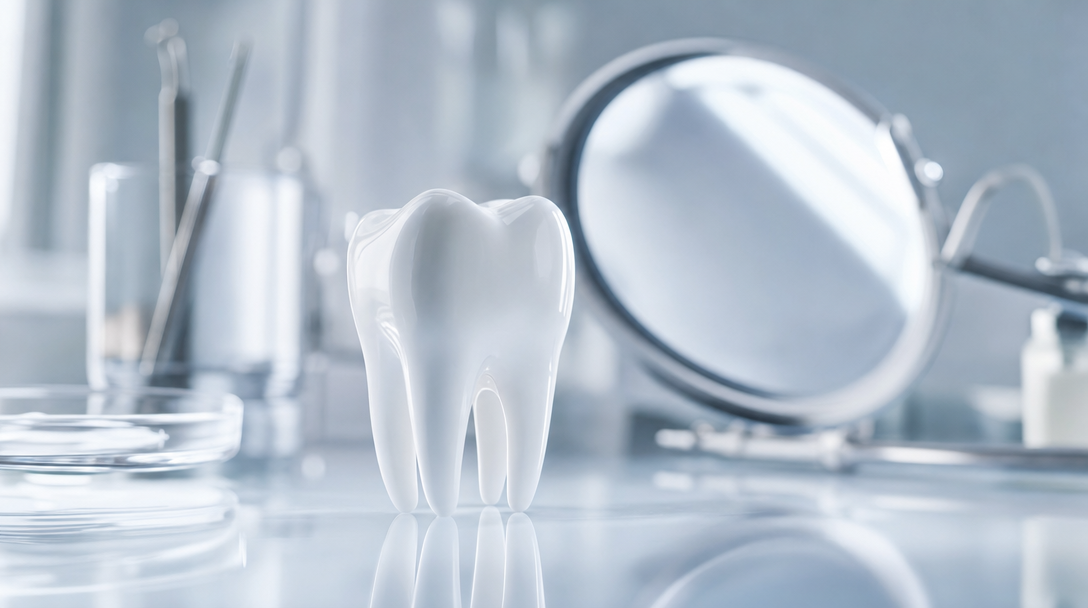
Does whitening damage enamel? Science-backed answers on peroxide concentration, PAP alternatives, real risk factors, and how to whiten safely.
Does Whitening Damage Enamel? The Real Answer
The question of whether does whitening damage enamel is legitimate — and it deserves a straight answer, not a marketing disclaimer or a blanket reassurance. The science is clear on one point: properly formulated, correctly used whitening products do not cause permanent enamel damage in healthy teeth. Where real risk enters the picture is specific — it depends on concentration, frequency, and the baseline condition of your teeth before you start.
What Enamel Is and Why Its Structure Matters
Enamel is the outermost layer of your tooth and the hardest substance in the human body. It is composed primarily of hydroxyapatite, a crystalline calcium phosphate mineral. It contains no living cells, which means genuine enamel loss does not regenerate on its own.
That fact shapes every whitening conversation worth having. The concern is not surface discomfort — it is whether repeated or aggressive treatment alters enamel structure in ways that compound over time. Understanding that distinction separates science from noise.
Enamel sits above dentin, the slightly yellower layer beneath. Most of the discoloration people want to correct originates in stain molecules embedded within enamel's porous surface, or in the dentin itself — not from enamel loss. Whitening agents work at that level.
How Peroxide Whitening Works at the Enamel Level
Hydrogen peroxide and its precursor carbamide peroxide are the active agents in most regulated whitening products. They diffuse through the enamel surface and break apart chromogenic — color-causing — molecules through an oxidation reaction. The stain fragments; the tooth appears lighter.
That diffusion is both the mechanism of effectiveness and the source of legitimate questions. Peroxide does penetrate dental hard tissues, as confirmed by peer-reviewed research. Under normal use conditions, this does not strip enamel away. The concern documented in laboratory studies is more specific: aggressive or prolonged peroxide exposure can cause enamel softening and increased surface roughness, which raises susceptibility to demineralization.
That is a meaningfully different claim from "whitening destroys enamel." Context — concentration and duration — determines whether the chemistry stays within safe parameters or crosses into risk.
Does Whitening Damage Enamel? Concentration Is the Key Variable
Peer-reviewed evidence links higher peroxide concentrations to greater sensitivity and a higher likelihood of adverse effects on enamel surface properties. The same evidence confirms that when manufacturer protocols are followed, tooth whitening is safe and effective. The risk arises when those protocols are ignored: extended wear times, back-to-back sessions, or using high-concentration formulas without professional supervision.
Regulatory frameworks reflect this directly. In-office treatments using high-concentration peroxide are administered by trained clinicians who control exposure time and protect surrounding tissue. Over-the-counter products are formulated at lower concentrations specifically because unsupervised use removes those safeguards.
- Low-concentration OTC products used as directed: Evidence supports safety. Temporary sensitivity is the most commonly reported effect — not structural enamel damage.
- High-concentration in-office treatments: Effective and safe when administered correctly. Sensitivity is more expected, and soft tissue protection is a clinical requirement.
- Any concentration used beyond recommended frequency or duration: This is where laboratory findings of enamel softening and surface alteration become clinically relevant.
The American Dental Association identifies temporary tooth sensitivity and gingival irritation as the two primary side effects of whitening when products are used as directed — not permanent enamel damage.
PAP and Peroxide-Free Formulas: A Different Risk Profile
Phthalimidoperoxycaproic acid — PAP — has emerged as the leading peroxide-free whitening alternative. It works through a similar oxidation mechanism but is designed to target stain molecules more selectively, with a different reactivity profile than hydrogen peroxide.
The proposed advantage is that PAP does not release free radicals in the same way peroxide does, which in theory reduces the potential for oxidative stress on enamel and soft tissue. Early research has been promising, though the long-term evidence base for PAP is less extensive than the decades of data behind peroxide-based whitening.
For people with existing sensitivity or compromised enamel, PAP-based formulas offer a reasonable alternative to discuss with a dentist. They are not automatically superior for every user — efficacy varies depending on the type and depth of staining. But the risk profile is different, and that matters for certain candidates.
"Peroxide-free" is not the same as "risk-free." Any active whitening agent interacts with tooth structure. The relevant questions remain: at what concentration, for how long, and on what baseline condition?
Gum Tissue: The Overlooked Safety Factor
Most whitening safety discussions focus on enamel. Gingival irritation is equally common — and in practice, more immediately noticeable.
Peroxide contact with gum tissue causes a well-documented temporary blanching effect, sometimes accompanied by soreness. This is a chemical reaction, not a burn in the conventional sense, and it typically resolves within hours. Repeated exposure from poorly fitting trays that allow gel to pool against the gumline can cause more persistent irritation.
The ADA identifies gingival irritation alongside tooth sensitivity as the two primary side effects of whitening. Both are described as temporary under normal use conditions.
- Custom-fitted trays reduce gel overflow significantly compared to generic one-size options.
- Using less gel than you think you need is usually more effective — excess gel does not increase whitening; it increases gum contact.
- If blanching or soreness persists beyond a few hours after each session, reduce frequency or consult a dentist before continuing.
Conditions That Raise Real Risk Before You Whiten
For most adults with healthy teeth and gums, correctly used whitening carries a low risk of lasting harm. Certain pre-existing conditions shift that risk meaningfully.
Existing Enamel Erosion or Thinning
If enamel is already compromised — from acid erosion, aggressive brushing, or dietary factors — the protective barrier is thinner from the start. Whitening on eroded enamel can increase sensitivity substantially and may accelerate existing vulnerability. A dentist can assess enamel condition before treatment begins.
Active Cavities or Cracked Teeth
Peroxide penetrates through intact enamel at a controlled rate. A cavity or crack creates a direct pathway to the dentin and pulp, where sensitivity and irritation will be far more pronounced. Decay must be treated before whitening begins.
Dental Restorations
Crowns, veneers, bonding, and composite fillings do not respond to peroxide whitening. The ADA confirms that whitening works on natural teeth only — restorations remain their original shade while surrounding natural teeth lighten, creating a visible mismatch. This is not an enamel damage issue, but it is a practical reason to consult a dentist before whitening if you have significant restorative work.
Active Gum Disease
Periodontal disease means gum tissue is already inflamed and compromised. Introducing a peroxide agent to that environment is likely to cause disproportionate irritation. Whitening should be deferred until the condition is treated.
Heightened Baseline Sensitivity
Teeth already sensitive to temperature or pressure will typically respond more intensely during whitening. That does not make whitening impossible — it means starting at a lower concentration and shorter exposure time is the appropriate approach.
How to Read a Product Label for Enamel Safety Signals
Not all whitening products disclose their formulation clearly. Here is what to look for — and what to question.
Active Ingredient and Concentration
The label should state the active whitening agent and its percentage. Hydrogen peroxide and carbamide peroxide are the regulated standards. Products making whitening claims without a recognizable active ingredient — or relying solely on "natural whitening" language backed by ingredients with no established oxidation mechanism — are not supported by clinical evidence.
Usage Instructions
Legitimate products specify wear time, frequency, and treatment duration. Vague instructions — "use as needed" — are a red flag. The safety of any peroxide product is dose-dependent. A product that does not define the dose is withholding the information you need to use it safely.
Regulatory Compliance Markers
Look for evidence that the product meets recognized safety standards: FDA compliance for the United States, CE marking for Europe, or an equivalent national regulatory acknowledgment. These markers indicate the formulation has been evaluated against established safety thresholds.
Sensitivity Guidance
Responsible products acknowledge sensitivity as a possible side effect and provide clear guidance — reduce frequency, switch to a lower concentration, or consult a dentist. A product claiming zero side effects for all users is not giving you an accurate picture.
The Bottom Line on Whitening and Enamel
Does whitening damage enamel under normal conditions? The evidence says no — not permanently, and not in healthy teeth when products are used as directed. What the evidence does confirm is that enamel softening and surface changes are documented under aggressive or prolonged use. Concentration, frequency, and baseline tooth health are the variables that determine where safe use ends and real risk begins.
Know those variables before you start. The risk profile is manageable — but only if you work with it, not around it.
References
- American Dental Association — Oral Health Topics: Whitening
- Carey CM. "Tooth Whitening: What We Now Know." Journal of Evidence-Based Dental Practice. PubMed Central PMC4058574.
- Cochrane Library — Systematic Reviews on Home Whitening (referenced by ADA)
Disclaimer
This article is for general informational purposes only and is not a substitute for professional dental or medical advice. Always consult a qualified dental professional before starting any teeth-whitening or oral-care regimen. WhiteningBright makes no warranties as to the completeness or accuracy of the information, and any reliance is at your own risk.
---