Per-Treatment Cost Benchmarks for Whitening Services
September 24, 2026
Learn how to calculate whitening service cost per treatment across in-chair and take-home formats, set a markup floor, and protect margin at every service tier.
Why Whitening Service Cost Per Treatment Is the Number Most Operators Get Wrong
Most dental practices and spa operators price whitening services by benchmarking competitors. That approach leaves margin to chance. When product costs shift — a gel reformulation, a supplier change, a move from peroxide to PAP — the service price rarely adjusts with it. Calculating the true whitening service cost per treatment is the only reliable foundation for a margin structure that holds.
The result of assumption-based pricing is predictable: some treatments run thin, others are priced so conservatively they undersell the clinical result. Both problems are solvable once the operator knows the actual cost number per session — not the invoice price of the gel, but the fully loaded cost across every component consumed.
This article walks through how to build that number across in-chair and take-home formats, how to set a markup floor that protects margin across service tiers, and how to select products when cost-per-use is the primary decision driver.
Breaking Down Gel Cost Across In-Chair Session Formats
In-office whitening uses a higher-concentration gel applied chairside, typically across multiple application cycles within a single session. The ADA identifies professional in-office whitening as a distinct treatment category from dentist-supervised take-home kits and over-the-counter options — a distinction that matters for cost modeling because gel volume, application method, and staff time differ significantly across each format.[4]
To calculate gel cost per in-chair session, account for each of the following:
- Gel volume per application cycle — measured in syringes or unit-dose trays per patient
- Number of cycles per session — a standard in-chair protocol may use two to four application cycles
- Waste factor — opened but unused product in multi-use packaging that cannot be stored and reused
- Disposables — cheek retractors, gingival barriers, mixing tips, and protective barriers consumed per session
Gel cost alone is not the full product cost. A clinic running a three-cycle session with unit-dose syringes will carry near-zero waste. A clinic using bulk syringes and cutting doses carries a measurable waste percentage that must be added back into the per-treatment calculation — otherwise the cost model is structurally understated from the start.
Take-Home Kit Cost Allocation: What Operators Routinely Miss
Take-home whitening kits present a different cost structure. The product leaves the clinic, so there is no chairside waste — but cost allocation is often incomplete. Operators typically count the gel and miss several components that affect the true cost per treatment.
A complete take-home kit cost should include:
- Gel syringe or strip quantity included in the kit
- Custom tray fabrication cost, if trays are provided (lab fee or in-house material cost)
- Packaging — branded box, instruction card, protective case
- Staff time for dispensing, labeling, and patient instruction
- Any included accessories such as desensitizing gel or maintenance strip samples
A peer-reviewed cost-effectiveness analysis published in the Journal of Applied Oral Science compared at-home bleaching against whitening toothpastes as treatment pathways, using formal economic methods to evaluate the efficiency of each approach.[1] The framework is instructive: cost-effectiveness in whitening is not unit price — it is cost relative to clinical outcome delivered. That framing applies directly to how operators should evaluate take-home kit pricing against in-chair alternatives on the same service menu.
Operators who omit tray fabrication cost or staff time routinely understate take-home kit cost by a meaningful margin. That understatement compresses perceived margin and makes the take-home tier appear less profitable — or prices it less profitably than the result warrants.
Setting a Markup Floor That Holds Across Your Service Tiers
A markup floor is the minimum multiplier applied to true product cost before a service is priced for the client. Without a defined floor, pricing defaults to intuition or competitive pressure, and margin erodes at the lower end of the service menu first.
A tiered whitening menu typically spans three levels: an entry-level take-home kit, a supervised take-home protocol, and a premium in-chair session. Each tier carries a different product cost and should carry a different markup floor that reflects the value delivered — not just the cost incurred.
A practical framework for setting that floor:
- Calculate true product cost per treatment using the full component list above
- Add allocated overhead — a proportional share of room cost, equipment depreciation, and staff time per session
- Define minimum acceptable gross margin for each service tier
- Set the floor price as product cost plus overhead, divided by one minus the target margin percentage
The floor is not the service price — it is the price below which the service should not be offered. Promotional pricing, package discounts, and loyalty offers should be structured so they compress margin toward the floor, never through it.
Whitening Service Cost Per Treatment: Where LED Device Amortization Fits
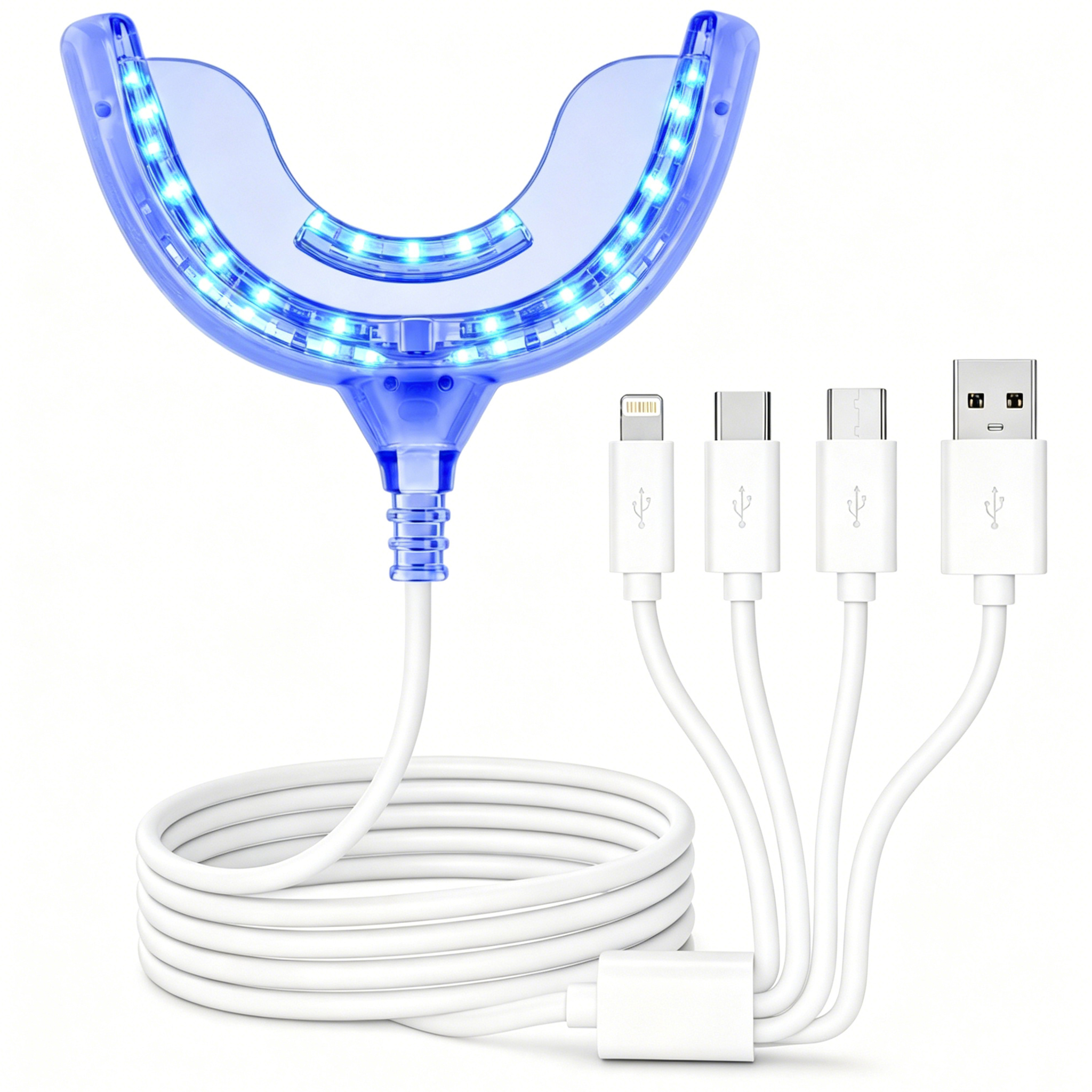
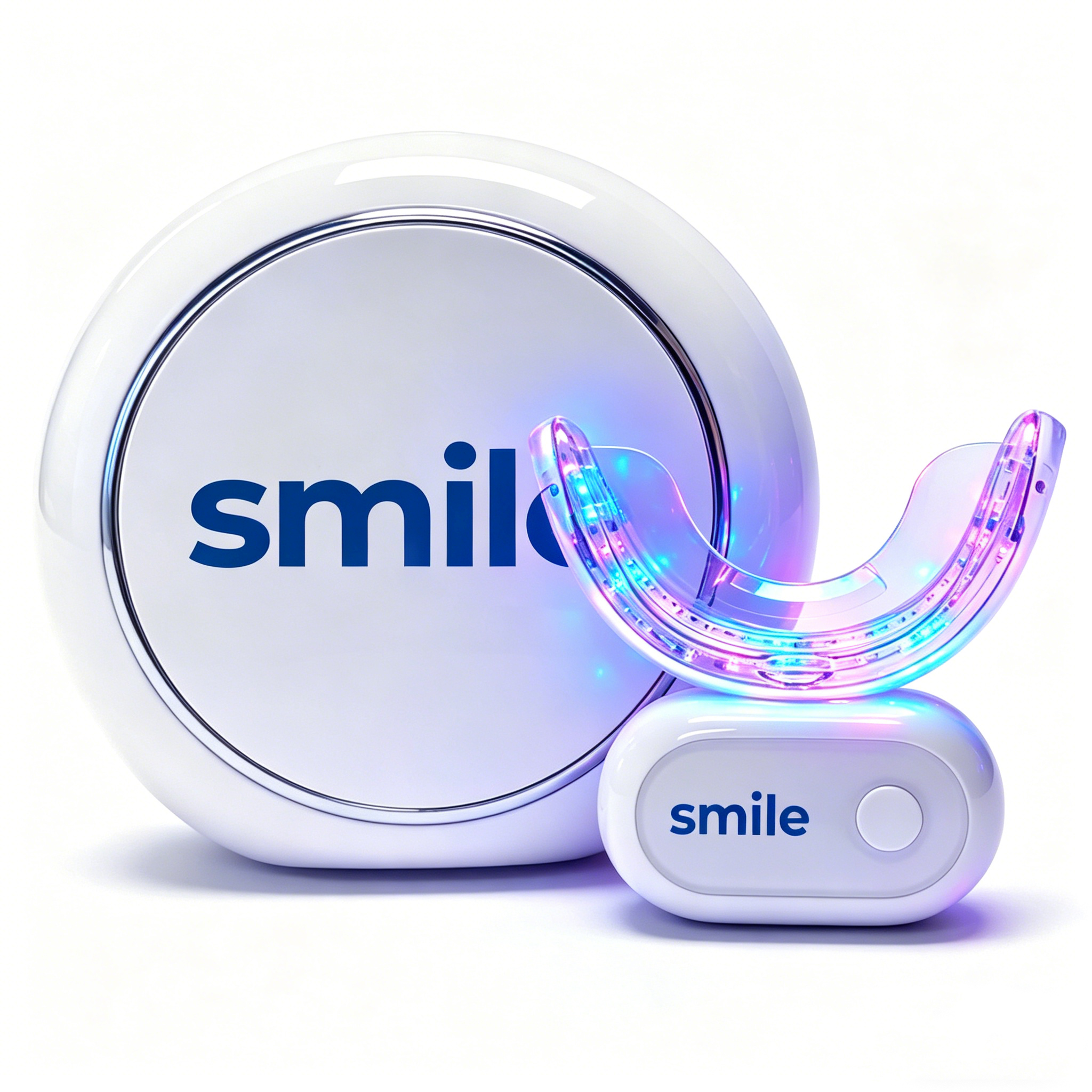
LED light devices used in in-chair protocols represent a capital cost that most operators exclude from their per-treatment model. The device is purchased once, but its cost is incurred across every session it enables. Excluding it systematically understates the true whitening service cost per treatment for in-chair formats.
Amortization is straightforward: divide the device purchase price by the expected number of sessions over its service life. If the manufacturer specifies a rated use-cycle limit, that figure is the denominator. If no limit is specified, apply a conservative estimate based on device category and your session volume.
Include the following in the amortization calculation:
- Device purchase price
- Replacement mouthpiece or light-guide components, where applicable
- Annual calibration or maintenance cost
- Projected session volume per month to model payback period
A clinic running high session volume amortizes device cost quickly, reducing its contribution to per-treatment cost. A spa offering whitening as an occasional add-on carries a higher device cost per session for longer. Both operators need to model this explicitly before setting in-chair service pricing — the variance between the two scenarios is not marginal.
Product Selection Criteria When Cost Per Use Drives the Decision
When cost-per-use is the primary selection criterion, the evaluation shifts from unit price to yield. A gel priced higher per syringe may deliver more applications per unit, lower waste, and better clinical consistency — making it less expensive per treatment than a lower-priced alternative with higher waste and inconsistent dosing.
Key criteria for evaluating whitening products through a cost-per-use lens:
- Formulation type — peroxide-based gels are regulated as drugs in some jurisdictions; PAP-based formulas are typically classified as cosmetics. The FDA categorizes whitening products based on active ingredient and concentration, which governs how they can be marketed and distributed.[5] Regulatory classification affects procurement, labeling, and which channels the product can move through.
- Concentration and dose per application — higher concentration does not automatically reduce the number of applications required; clinical protocol determines actual gel consumption per session
- Packaging format — unit-dose syringes minimize waste; bulk formats require dosing discipline to avoid cost overrun
- Shelf life and storage requirements — peroxide gels with short shelf life or cold-chain requirements carry hidden cost in spoilage and logistics
- Private-label availability — products co-developed for your brand eliminate the margin compression that comes from reselling a manufacturer's branded product at a publicly visible retail price
Research reviewing the online marketing landscape for consumer whitening products found that these items are available at relatively low price points across consumer channels.[3] That creates a reference price problem for operators: when clients can locate superficially similar products at low retail prices, the professional service must be positioned on outcome and clinical supervision — not product exclusivity alone. That positioning starts with product selection that supports a credible clinical narrative.
Building a Product Mix That Supports Both Margin and Client Retention
A single whitening product does not serve the full client lifecycle. Operators who build a deliberate product mix — one that maps to different treatment moments and price points — create both a stronger margin structure and a natural retention pathway.
A functional product mix for a dental clinic or spa typically spans three roles:
- In-chair treatment product — the primary revenue driver, priced to reflect the full cost model including device amortization and staff time
- Supervised take-home kit — a follow-on or standalone option that extends the treatment relationship and generates recurring product revenue
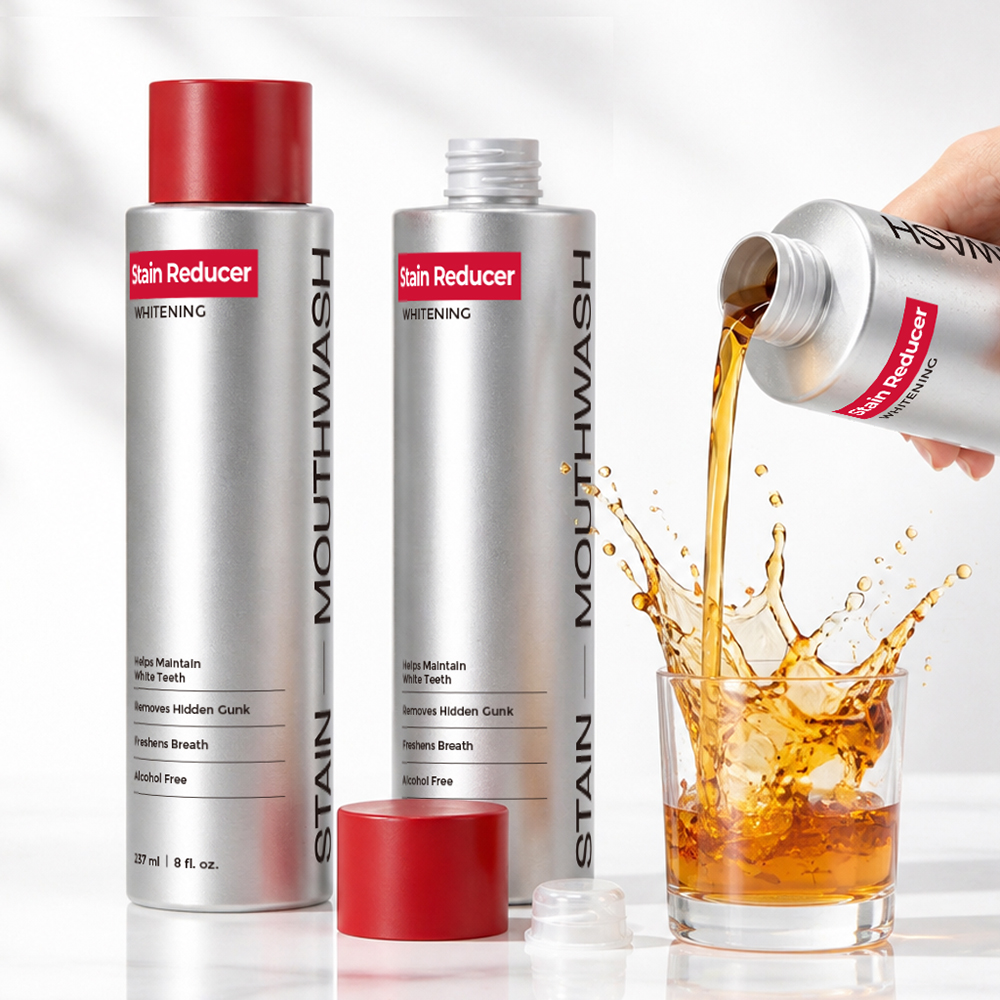
- Maintenance product — a lower-cost daily-use item such as a whitening toothpaste, maintenance strip, or low-concentration touch-up gel that keeps the client engaged between professional sessions
The ADA distinguishes these categories — professional in-office, dentist-supervised take-home, and OTC-adjacent maintenance — as separate treatment types with distinct clinical roles.[4] That clinical distinction maps directly to a tiered pricing and margin structure. Each tier serves a different client need and carries a different cost basis, which means each can be priced and margined independently.
Retention is built into the structure when the maintenance tier creates a natural re-entry point to the take-home or in-chair tier. A client purchasing a maintenance product monthly is more likely to return for a professional session than one who has no ongoing product relationship with the practice.
When selecting products across all three tiers, prioritize formulations available in private-label-ready formats. Co-developed products give the operator control over pricing at every level without the constraint of a manufacturer's suggested retail price. That control is the foundation of a margin structure that holds across service tiers and market conditions.
The Calculation Rewards Precision
Operators who build pricing on a fully loaded cost model — gel, disposables, device amortization, staff time, and packaging — will find their service menu is more defensible and more profitable than one built on competitive benchmarking alone. The whitening service cost per treatment is not a single number. It is a calculation that differs by format, by session volume, and by product selection — and it rewards the operators who run it precisely.
WhiteningBright offers a range of formulations engineered for professional clinic and spa environments, including private-label-ready options across peroxide and PAP formats. View the full product range to evaluate cost-per-use fit for your service menu.
References
- PubMed — At-home bleaching versus whitening toothpastes for treatment of tooth discoloration: a cost-effectiveness analysis
- Journal of Applied Oral Science — At-home bleaching versus whitening toothpastes: cost-effectiveness analysis
- PMC — Rampant online marketing of teeth whitening products
- American Dental Association — Tooth Whitening: What You Should Know
- U.S. Food and Drug Administration — Teeth Whitening
Disclaimer
This article is for general informational purposes only and does not constitute sourcing, legal, or regulatory advice. Always conduct your own due diligence and consult qualified legal or compliance professionals before making purchasing or compliance decisions. WhiteningBright makes no warranties as to the completeness or accuracy of the information, and any reliance is at your own risk.