Whitening Add-On Pricing That Protects Service Margin
October 26, 2026

How dental practices and spas should structure whitening service pricing strategy — cost modeling, tiered formats, take-home margins, and supplier terms that protect net margin.
Why Whitening Margins Compress Before Owners Notice
A whitening service pricing strategy fails most practices and spas at the same inflection point: the service is added to the menu without a structured cost model behind it. Pricing gets anchored to what competitors charge, consumable cost gets estimated loosely, and staff time never enters the calculation. Margin looks acceptable until it quietly isn't.
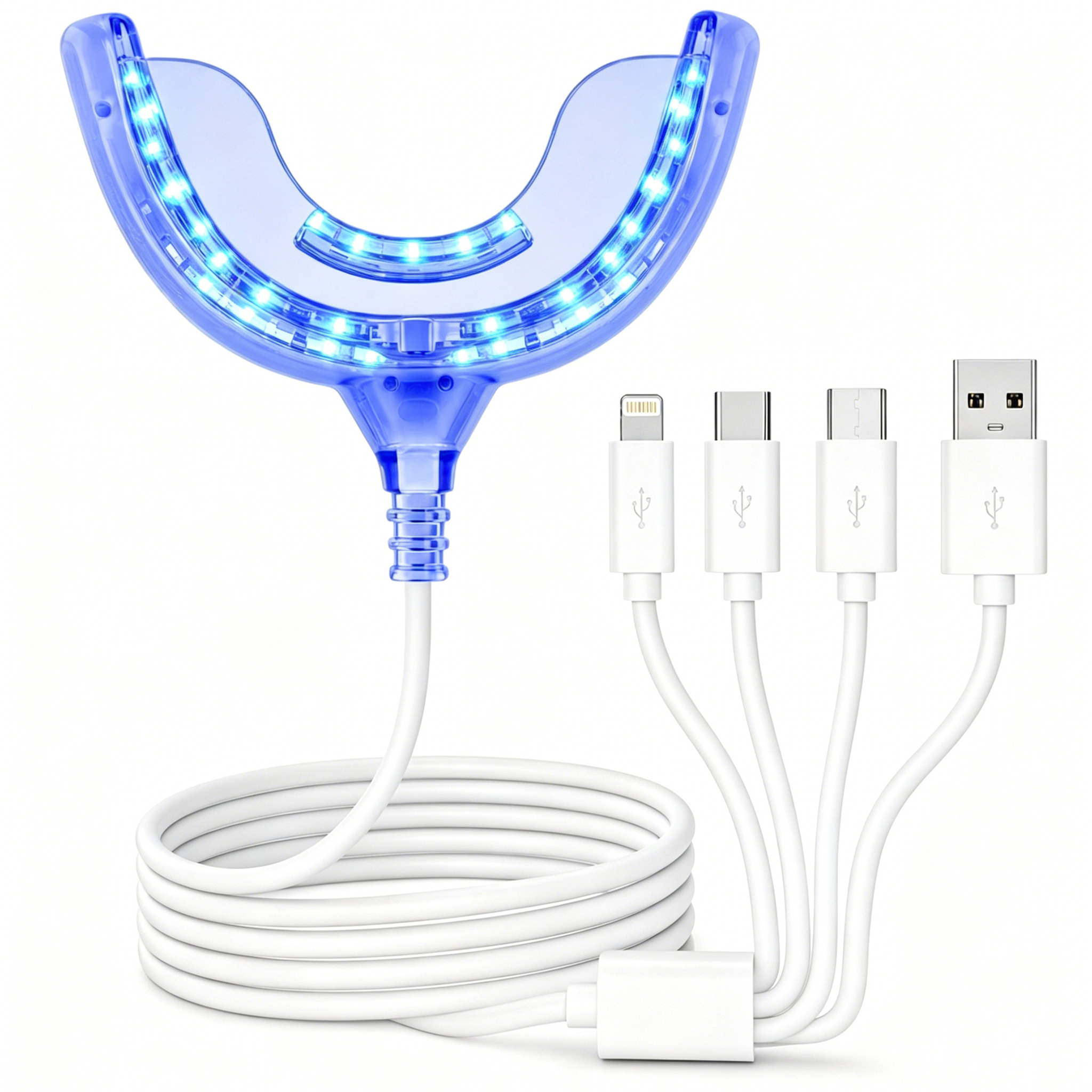
The compression is gradual. Consumable costs rise with each reorder cycle. Staff spend more time per session than the original estimate assumed. A light-activation device gets purchased to signal premium positioning — yet published research does not support consistent efficacy gains from LED, halogen, or laser activation over well-formulated peroxide protocols alone. That capital outlay accumulates in the per-chair cost without a corresponding price adjustment to absorb it.
Protecting net margin on whitening means building the price from the cost stack upward — not from the market rate downward. The sections below address each layer of that stack.
Build Your Whitening Service Pricing Strategy on Product Cost, Not Market Rate
Market-rate pricing is a reactive position. It tells you what competitors charge, not what your service costs to deliver or what clinical value supports a premium. A sound whitening service pricing strategy treats product cost as the fixed anchor and builds outward from there.
The core cost inputs are:
- Consumable cost per treatment: gel unit, tray or strip, barrier materials, disposables
- Device amortization: if a light or lamp is part of the protocol, divide its purchase cost across projected treatment volume to arrive at a per-session charge
- Staff time: chair preparation, application, patient monitoring, and cleanup — priced at the loaded hourly rate for each role involved
- Overhead allocation: the share of room cost, utilities, and administrative time attributable to the appointment slot
Total those inputs, apply your target gross margin, and that calculation produces a floor price. Any price below that floor is margin-negative, regardless of what the practice down the street charges. The market rate becomes useful only as a ceiling check — confirming that your floor is competitive, not as a starting point for the model.
On formulation: hydrogen peroxide and carbamide peroxide are the established active agents in professional whitening. The ADA identifies both as common whitening agents, noting that temporary tooth sensitivity and gingival inflammation are the most common adverse effects. Products positioned as professional-grade should be priced to reflect verified concentration, documented safety data, and clinical traceability — not simply a higher retail sticker.
Tiered Treatment Formats and What Each Should Return
A single whitening SKU on the service menu is a missed revenue architecture opportunity. Structuring whitening across two or three tiers captures a wider patient base while protecting margin at each level.
Entry Tier: Supervised Take-Home Protocol
A professionally dispensed take-home kit — custom or prefitted tray plus a defined gel supply — carries low chair time and predictable consumable cost. The clinical evidence supports this format: a narrative review of in-office and at-home bleaching found both approaches produced perceptible whitening, with no clinically meaningful efficacy difference across many analyses. At-home treatment is slower but generally causes less acute sensitivity than in-office protocols and is often easier for patients to maintain.
Price the entry tier to return a meaningful margin on a short dispensing appointment. It also functions as a low-commitment acquisition point that primes the patient for upsell into in-office treatment.
Mid Tier: Single-Session In-Office Treatment
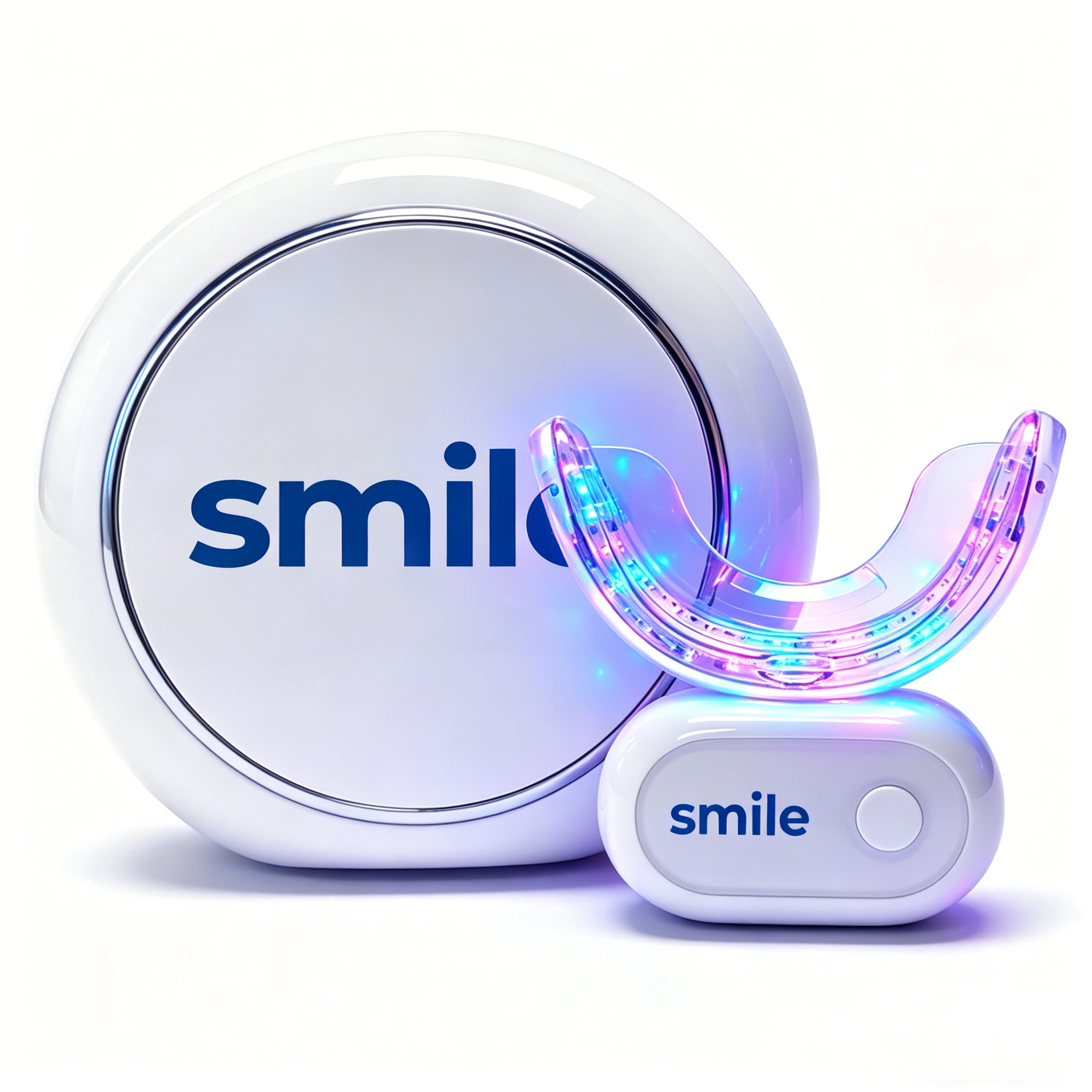
In-office treatment delivers faster visible results and justifies a higher per-visit price on the basis of immediacy and professional supervision. The cost model here must account for full chair time — not just application time. If the protocol includes a light device, amortize that cost honestly into the calculation, but do not build a price premium around light activation alone. Current evidence does not show consistent improvement in final whitening efficacy from laser or light activation, and some high-energy protocols have raised safety concerns.
The mid tier should return the highest absolute margin per appointment, because the chair is the constraining resource in any service-based business.
Premium Tier: In-Office Treatment Plus Maintenance Kit
The premium tier pairs an in-office session with a professionally dispensed take-home maintenance supply. This is the highest-revenue format and the most clinically defensible: research indicates whitening results commonly remained stable for approximately one to two and a half years, though cases involving severe discoloration showed greater recurrence. A maintenance kit extends visible results and establishes a clear retreatment expectation — which directly supports the reorder model discussed in the final section.
The Take-Home Component as a Margin Multiplier
Take-home product is consistently underpriced in practices that treat it as an afterthought. When dispensed as a standalone recommendation or as part of a premium tier, it carries strong margin characteristics: minimal chair time, predictable consumable cost, and high perceived value when presented with a clinical rationale.
The multiplier effect works in two directions. The product itself should be priced at a professional dispensing rate — not benchmarked against a retail consumer comparison. And it creates a retreatment cycle: a patient who leaves with a maintenance kit has a defined supply window, so the reorder conversation is already framed before the supply runs out.
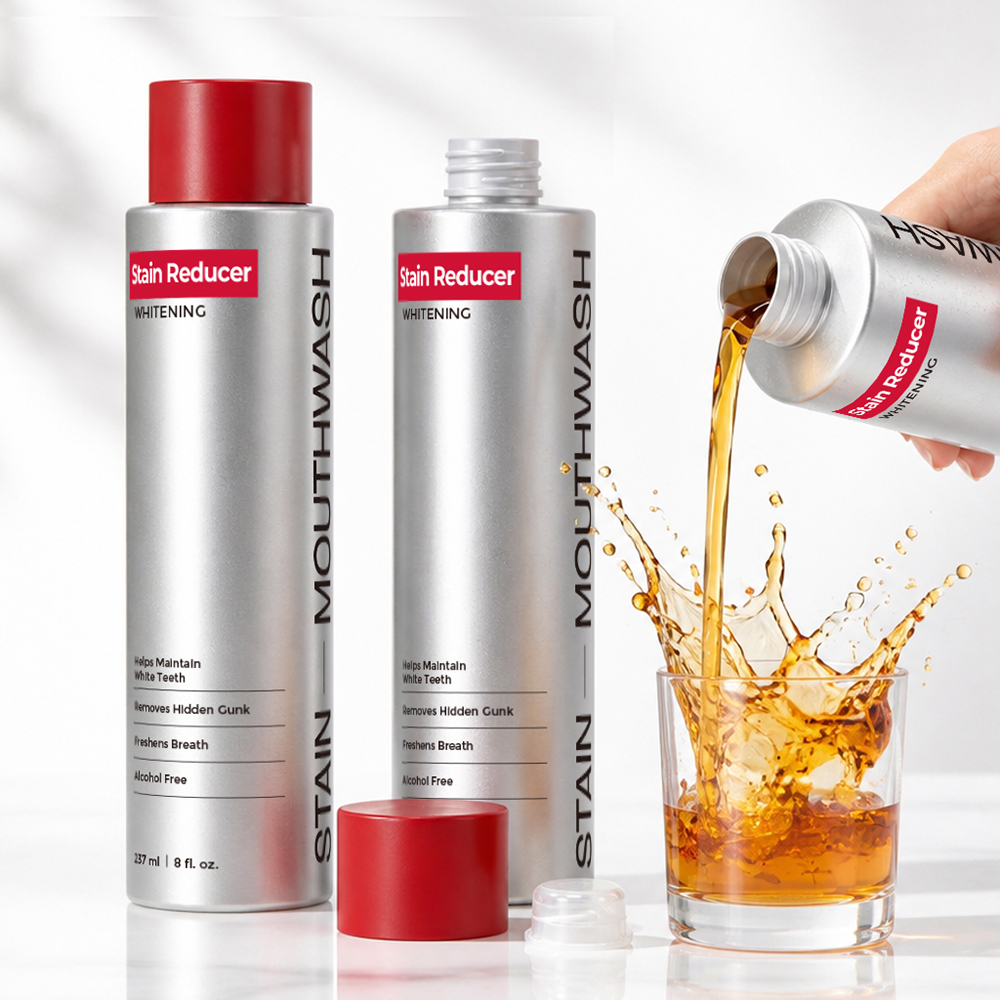
For practices sourcing take-home product, private-label ready formulations allow the practice to present a branded product rather than a recognizable consumer brand. That removes price-comparison pressure and reinforces clinical authority. Evaluate formulations on active agent concentration, sensitivity management ingredients, and shelf stability — not on packaging aesthetics alone.
Bundling Logic: When Packages Help and When They Erode Revenue
Bundling whitening services into packages is a common upsell structure, but it requires disciplined pricing to avoid margin erosion. A poorly constructed bundle discounts your highest-margin components without a volume increase that offsets the discount.
Bundles work when they accomplish at least one of the following:
- Commit the patient to a multi-session sequence that fills appointment slots predictably
- Combine a lower-margin service with a higher-margin product to raise total transaction value
- Reduce administrative cost per patient by consolidating billing and scheduling
Bundles erode revenue when they are used primarily as a competitive response — matching a lower-priced competitor by discounting a package rather than differentiating on clinical value. If hitting a bundle price requires compressing the margin on your in-office treatment to make the package look attractive, the bundle is working against the cost model.
A practical rule: calculate the margin on each component individually, then set the bundle price so that combined margin equals or exceeds the sum of the components priced separately. Any discount offered should come from reduced administrative cost or increased volume commitment — never from reduced product margin.
Staff Time: The Hidden Cost in Every Per-Chair Calculation
Staff time is the most consistently underestimated input in whitening service pricing. Practices that calculate consumable cost and device amortization but leave staff time out are operating on an incomplete model.
The relevant time inputs for an in-office whitening appointment include:
- Patient intake and clinical screening — contraindication review and restoration identification (restorations do not whiten and must be documented before treatment begins)
- Room and equipment preparation
- Gel application and patient monitoring during the treatment window
- Post-treatment review, sensitivity management instructions, and product dispensing
- Cleanup and room turnover
Each task carries a time cost and a labor rate. A hygienist performing intake and application is billed at a different loaded rate than a dental assistant handling room prep. Map the actual role performing each task, apply the loaded hourly rate — salary, benefits, and employer taxes included — and allocate that cost to the per-treatment calculation.
The implication is direct: if a whitening appointment occupies a hygienist for 75 minutes at a loaded rate that makes labor a significant cost input, the service price must recover that cost before contributing to margin. Practices that treat whitening as a low-effort add-on often discover, when they run this calculation for the first time, that the service is margin-neutral or negative at current pricing.
Reorder Cadence and Supplier Terms That Sustain the Model
A whitening model built on a single treatment visit is a low-ceiling revenue structure. Practices and spas that protect margin over time build a reorder cadence into the patient relationship from the first appointment.
The clinical basis for retreatment is clear in the research: whitening results are not permanent, and maintenance or periodic retreatment is a supportable clinical recommendation. Communicating this at the point of service — as a factual outcome expectation, not a sales pitch — positions the practice as the appropriate source for maintenance product and future appointments.
On the supplier side, reorder cadence only protects the model if supplier terms are structured to support it. Confirm or negotiate the following before committing to a product line:
- Minimum order quantities: Low MOQs on reorders allow lean inventory management without overcommitting cash to stock
- Shelf life and storage requirements: Peroxide-based formulations have defined stability windows; supplier documentation should confirm shelf life under standard storage conditions
- Private-label availability: Co-developed or private-label ready product lines let the practice brand maintenance kits, removing the patient's ability to source the same product at retail
- Regulatory documentation: ISO, FDA, or CE compliance documentation should be available on request and current — a non-negotiable requirement for professional dispensing
A supplier relationship that delivers consistent formulation, reliable lead times, and current compliance documentation is a structural asset. Switching suppliers to chase a lower unit cost disrupts formulation consistency and patient outcomes — costs that exceed any savings on consumables.
Whitening service pricing strategy is not a one-time menu decision. It is a living cost model that gets reviewed each time consumable costs change, each time a new device enters the protocol, and each time staff composition shifts. Practices that treat it as a living calculation protect margin as the service matures. Those that set a price once and move on discover the compression too late to correct it without disruption.
References
- American Dental Association — Whitening: Oral Health Topics
- ADA Seal Category Requirements: Tooth Bleaching (2026)
- Prognosis in Home Dental Bleaching: A Systematic Review — PubMed
- In-office vs. At-home Tooth Bleaching: Efficacy and Safety — PubMed
- Do Laser and Light Activation Improve In-office Dental Bleaching? — PubMed
Disclaimer
This article is for general informational purposes only and does not constitute sourcing, legal, or regulatory advice. Always conduct your own due diligence and consult qualified legal or compliance professionals before making purchasing or compliance decisions. WhiteningBright makes no warranties as to the completeness or accuracy of the information, and any reliance is at your own risk.