Professional Teeth Whitening vs At-Home Methods Guide
3 de mayo de 2026
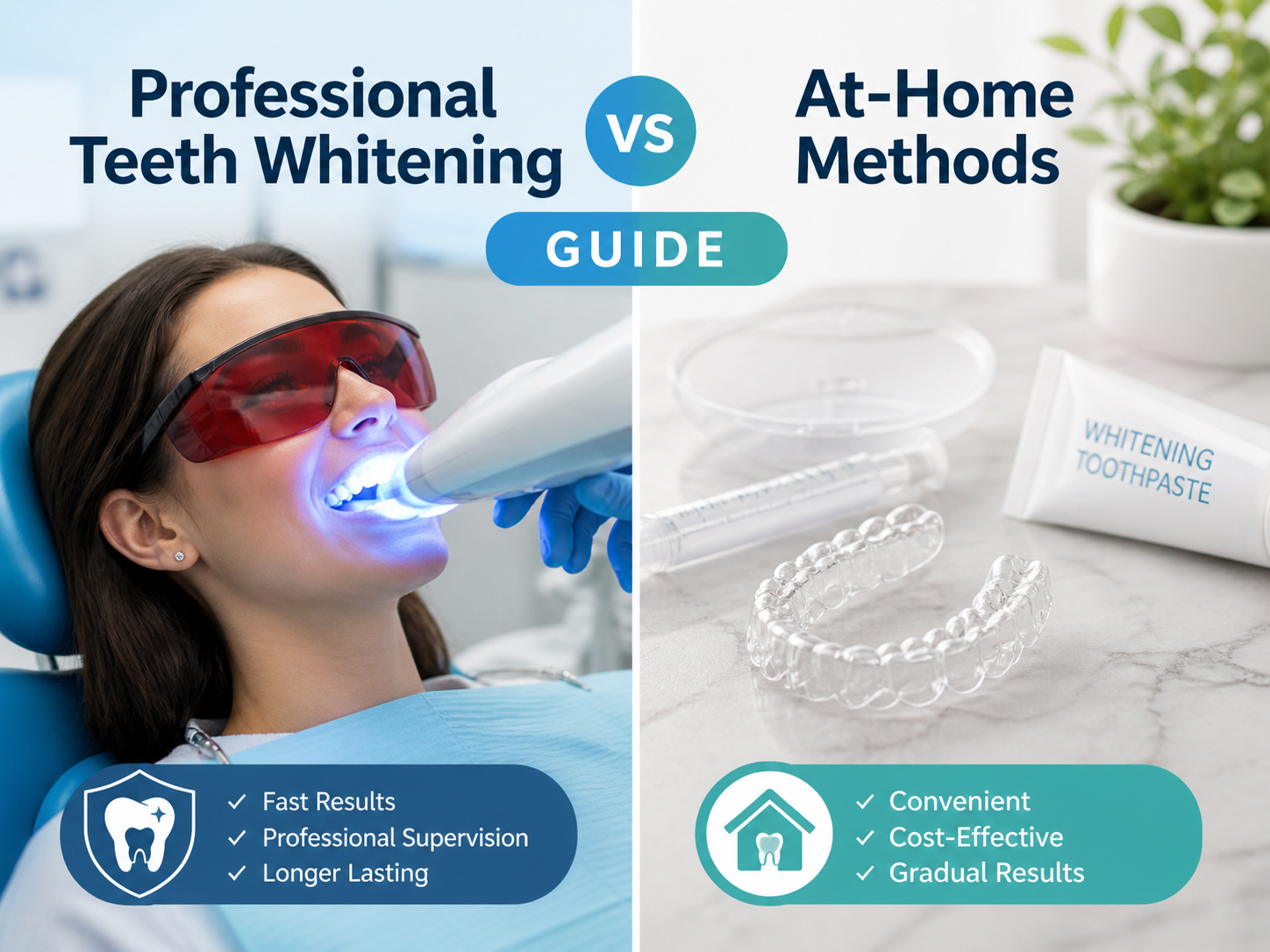
Professional Teeth Whitening vs At-Home: The Complete 2026 Guide
Choosing between professional teeth whitening vs at-home methods is one of the most common questions patients ask their dentists — and the answer carries real consequences for your results, your budget, and your enamel. A 2026 meta-analysis of 47 clinical trials published in the Journal of Dentistry found professional methods statistically superior across every measured outcome, yet millions of consumers still reach for drugstore strips. This guide breaks down exactly what the science says, what each option costs, and which approach is right for your specific situation. Understanding the core differences between these two paths requires looking beyond marketing claims and into the clinical data — because the gap in outcomes is wider than most people expect.How Professional Teeth Whitening Works
Professional whitening treatments delivered in dental offices use high-concentration bleaching agents, typically 15–43% hydrogen peroxide or carbamide peroxide. These concentrations are far above what any over-the-counter product can legally contain, which is the primary driver of faster and more dramatic results. In-office procedures often incorporate light or heat activation to accelerate peroxide penetration into the enamel. Dentist-supervised take-home systems use custom-fitted trays created from dental impressions, ensuring even gel distribution and minimal gum tissue contact — a critical safety advantage over generic trays. The controlled clinical environment allows immediate intervention if sensitivity spikes, precise protocol adjustments mid-treatment, and pre-treatment screening for conditions like decay or gum disease that would compromise whitening outcomes or patient safety.At-Home Whitening Options: Types, Concentrations, and Real Results


Effectiveness Comparison: Professional Teeth Whitening vs At-Home by the Numbers
The clinical data on this comparison is unambiguous. A JADA-cited study found professional whitening achieved an 89% success rate in a single session, while at-home kits reached only 34% success after completing full treatment cycles. That is not a marginal gap — it represents a fundamentally different class of outcome. In terms of shade improvement, professional treatments consistently deliver 3–8 shade improvements per treatment course. At-home methods typically produce 1–3 shade improvements under ideal conditions. For patients starting with significant yellowing or brown staining, this difference determines whether treatment goals are achievable at all. A PMC umbrella review of in-office bleaching data reported shade changes of 5.9 units for professional treatment versus control groups. The same review noted that product brand and formulation quality matter more than application time — meaning not all at-home kits perform equally, and the weakest OTC products (whitening rinses, low-concentration dentifrices) offer negligible clinical benefit. Professional treatment also proves superior for intrinsic stains — discoloration caused by tetracycline antibiotic exposure, fluorosis, or developmental factors. These stain types are largely unresponsive to OTC concentrations and require the deeper peroxide penetration that only professional-grade protocols deliver.Cost Breakdown: What You Actually Pay for Each Option
Professional in-office whitening treatments range from $300 to $1,500 in 2026, depending on geographic market, practice type, and protocol. This typically includes consultation, the whitening session itself, and follow-up care. Dentist-supervised take-home systems with custom trays generally cost $200–$500. This positions them as a middle-tier option: stronger than OTC products, more affordable than single-session in-office treatment, and still benefit from professional oversight during the prescription and fitting process. Over-the-counter products present the lowest barrier to entry. Whitening strips run $30–$60 for a standard two-week course. Gel-and-tray kits cost $50–$150. Whitening toothpastes cost $5–$15 per tube and require several tubes for any perceptible surface-stain improvement. When calculating true cost, factor in retreatment frequency. Professional whitening typically maintains results for 1–3 years with proper oral hygiene. Many at-home users retreat every 3–6 months to sustain results, meaning cumulative OTC spending can approach or exceed professional treatment costs — without achieving the same shade improvement.Safety Profiles and Side Effects: What the Research Shows
Both approaches carry a sensitivity risk. The distinction lies in how that risk is managed. Professional treatments use higher peroxide concentrations, which can produce more intense initial sensitivity — but dentists can apply desensitizing agents, modify exposure time, and intervene immediately if the patient's response warrants it. At-home whitening presents risks tied specifically to unsupervised use. Ill-fitting generic trays concentrate gel against gum tissue, causing chemical burns. Extended or excessive application beyond manufacturer instructions accelerates enamel surface roughness. A PMC-published study on OTC bleaching agents found measurable effects on enamel microhardness with misuse, reinforcing that concentration and contact time both require monitoring. The Frontiers in Dental Medicine review confirmed that both professional and at-home whitening can cause sensitivity, but at-home-induced sensitivity is generally milder due to lower peroxide concentrations. The trade-off is reduced results alongside reduced risk — a rational compromise only if the patient's whitening goals are modest. Populations who should avoid whitening without professional clearance include pregnant or nursing women, patients under age 16, individuals with active gum disease or untreated decay, and anyone with extensive existing dental restorations. Crowns, veneers, and bonding do not respond to peroxide bleaching, and uneven whitening around restorations is a predictable outcome without pre-treatment planning. Stay current on safety standards and ingredient regulations affecting whitening products through the latest oral care industry news and regulatory updates.Results Timeline: Session-by-Session Expectations
Professional in-office whitening delivers the fastest visible change of any approach. Most patients achieve 3–8 shade improvements in a single 60–90 minute session. Some complex cases — heavy intrinsic staining, tetracycline discoloration — require two to three sessions spaced one to two weeks apart for optimal results. Dentist-supervised take-home systems require 1–2 weeks of nightly or twice-daily wear. Patients typically notice visible improvement after 3–5 applications, with full results emerging over the complete course. Many dental professionals prefer this protocol for patients with sensitivity concerns, as the gradual approach allows easier management. OTC whitening strips require 10–14 days of consistent use for full results, with initial color change visible around day 3–5 for most users. Generic tray-and-gel systems need 2–4 weeks depending on gel concentration. Whitening toothpastes require 4–6 weeks of twice-daily use for any measurable surface-stain reduction. Tooth chemistry significantly influences timelines. Yellow-toned stains respond fastest and most completely to peroxide bleaching. Gray and brown discoloration — particularly tetracycline-related — responds poorly to standard protocols regardless of whether treatment is professional or OTC. Setting realistic expectations before starting any regimen prevents disappointment and overtreatment.Who Should Choose Professional vs At-Home Treatment
Professional whitening is the clear choice for patients seeking rapid, dramatic results; those with intrinsic staining or significant discoloration; patients with known sensitivity who need active management; and anyone preparing for a high-visibility event within days or weeks of treatment. At-home whitening is a legitimate option for patients with mild to moderate surface staining, good baseline oral health, realistic expectations of 1–3 shade improvement, and flexible timelines. It also works well as a maintenance protocol following a professional treatment course. Age and dental history matter. Younger patients with minimal staining often achieve satisfactory results with quality whitening strips. Older patients with decades of accumulated staining, or those with restorations requiring color matching, benefit significantly from professional assessment before committing to any whitening investment. Budget constraints are a legitimate factor — but the analysis should include long-term retreat frequency, not just upfront cost. A patient who spends $60 on strips every three months for two years has spent $480 and achieved 1–3 shade improvement per cycle. A single professional session at $500 may deliver 6 shades of improvement lasting 18–24 months with proper maintenance.Maintaining Results After Whitening Treatment
Whitening results are not permanent regardless of which method you use. Teeth naturally re-stain through dietary exposure to coffee, tea, red wine, and tobacco — all of which deposit chromogens that bind to enamel over time. After professional treatment, dentists typically recommend a 48-hour avoidance window for staining foods and beverages while enamel pores remain open from the bleaching process. Long-term maintenance using a whitening toothpaste and periodic touch-up strips helps extend professional results without full retreatment costs. Twice-daily brushing, regular professional cleanings, and consistent flossing remain the foundation of whitening longevity. Patients who maintain these habits alongside periodic professional assessments consistently report longer intervals between whitening retreatments. For guidance on formulation standards and quality benchmarks in whitening product manufacturing, explore oral care production and quality control standards.
Making the Right Decision for Your Whitening Goals
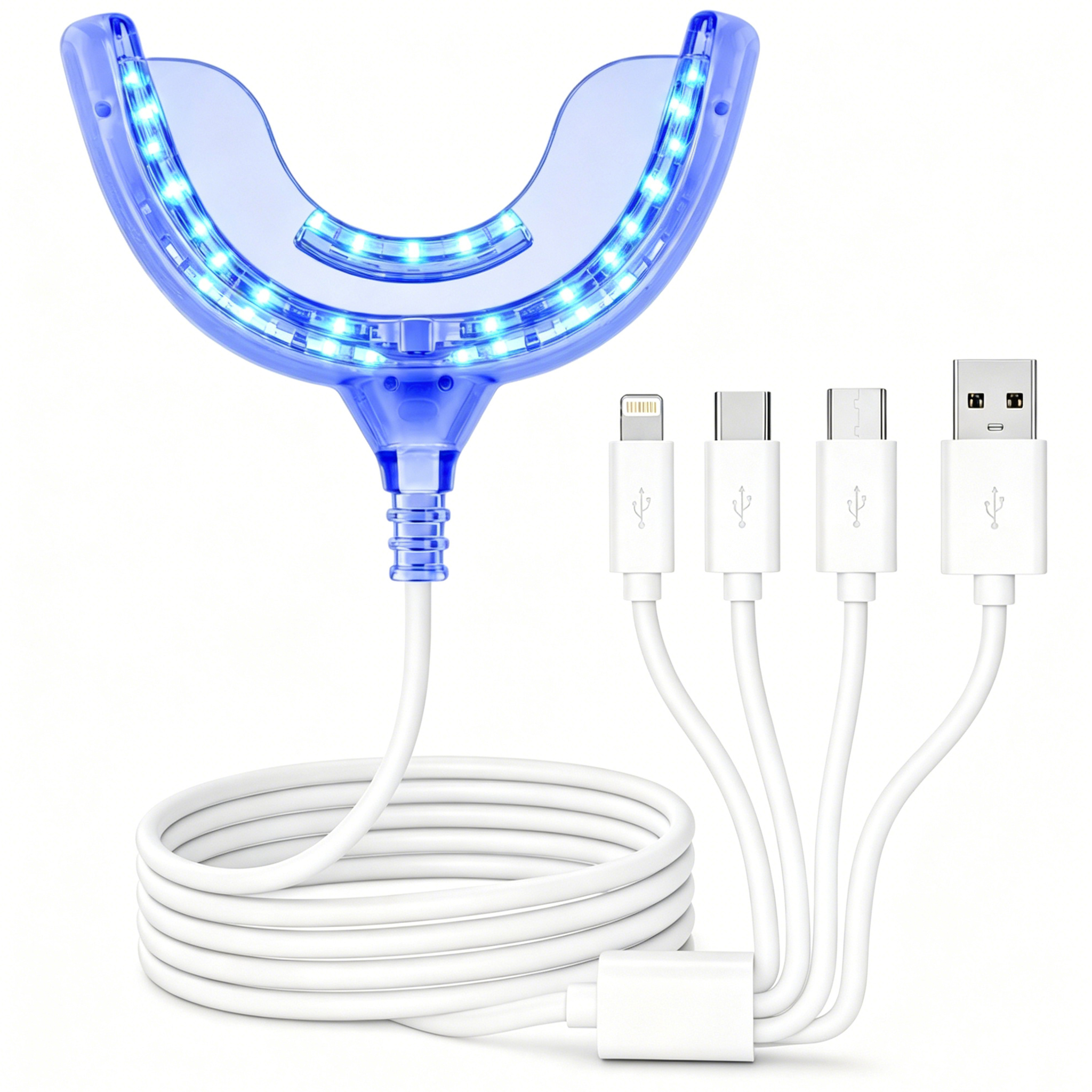
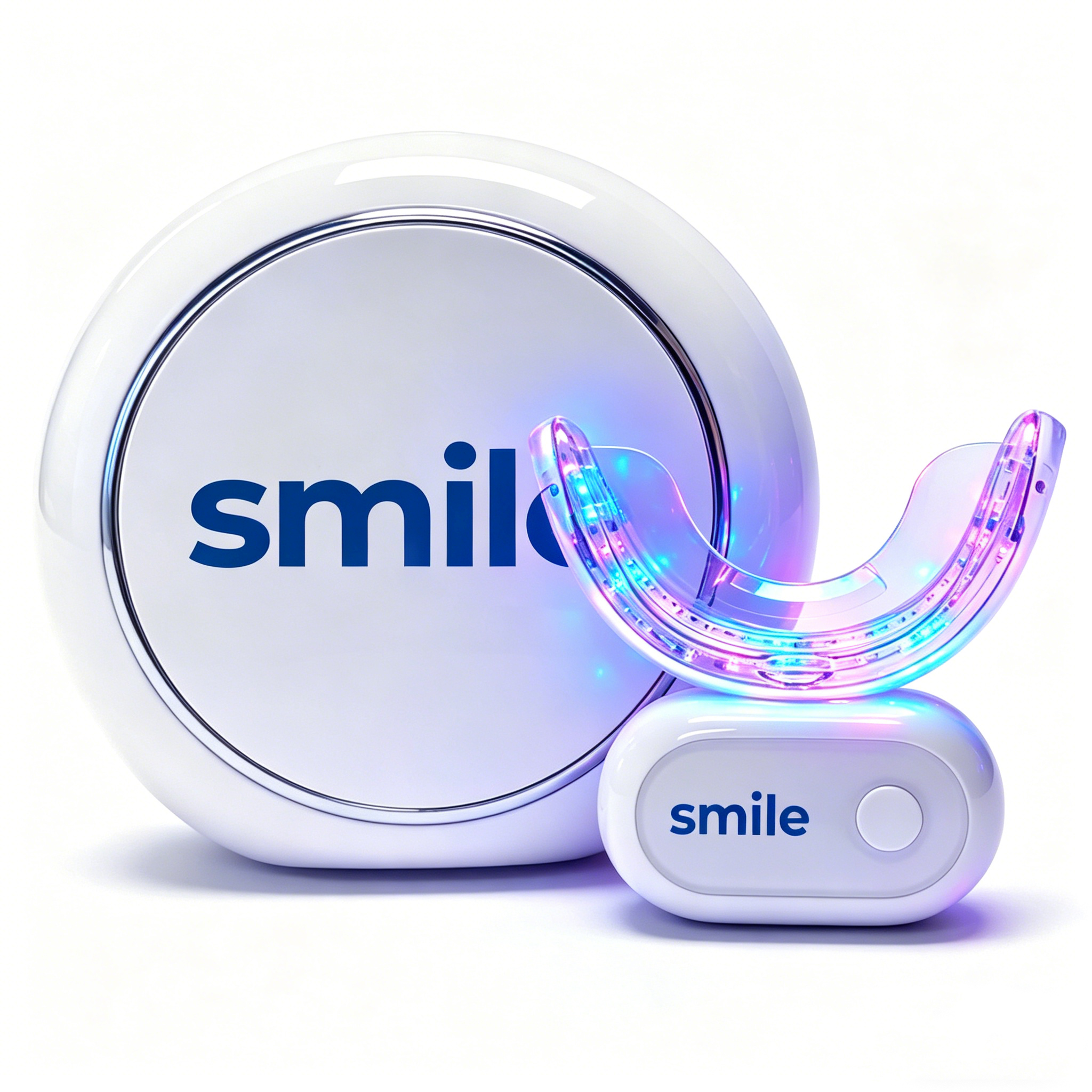
Comparing professional teeth whitening vs at-home methods ultimately comes down to matching the intervention to the clinical need. If your goal is dramatic color change, treatment of intrinsic staining, or results within days, professional treatment is the evidence-supported choice — with an 89% single-session success rate versus 34% for at-home full cycles backing that recommendation. If your goal is mild brightening, surface stain maintenance, or supplementing previous professional treatment, quality at-home products — particularly whitening strips or LED tray systems — provide a cost-accessible path with an acceptable safety profile when used as directed. Start with a professional consultation regardless of which direction you lean. A dentist can identify contraindications, recommend appropriate concentration levels, and flag existing restorations that will affect your results. That 30-minute conversation prevents wasted money, unnecessary sensitivity, and the frustration of underperforming treatment.Frequently Asked Questions
How many shades can professional whitening improve?
Clinical studies consistently show professional whitening delivers 3–8 shade improvements per treatment course. In-office treatments using 35–43% hydrogen peroxide with light activation achieve the upper end of this range in a single session for patients with yellow-toned staining.Is professional whitening safe for sensitive teeth?
Yes, with proper clinical management. Dentists can apply desensitizing agents before and after treatment, reduce gel concentration, shorten exposure time, and schedule multiple shorter sessions rather than one extended session. Patients with sensitivity should disclose this before treatment begins.How long do professional whitening results last?
With proper maintenance and dietary awareness, professional whitening results typically last 1–3 years. Patients who regularly consume staining beverages without touch-up maintenance may see noticeable re-staining within 6–12 months.Are whitening strips effective for intrinsic stains?
No. OTC whitening strips are formulated for extrinsic surface stains. Intrinsic staining caused by tetracycline exposure, fluorosis, or developmental factors requires the higher peroxide concentrations and extended contact protocols only available through professional treatment.Can I use whitening products with crowns or veneers?
Peroxide-based whitening does not change the color of dental restorations. Whitening natural teeth while leaving crowns or veneers unchanged creates visible color mismatches. Professional assessment before whitening is essential for patients with existing restorations.What is the most effective at-home whitening product type?
Peer-reviewed evidence identifies whitening strips as the most effective OTC category, outperforming dentifrices and rinses. Among tested OTC systems, LED tray-based home kits showed the best whitening outcome and post-staining stability in controlled PMC-published research.References
- Medigy – Professional Teeth Whitening vs At-Home Kits: Effectiveness and Safety Compared (2026)
- Jax Smiles Dentistry – DIY Teeth Whitening vs. Professional Treatments: A Comparative Study (2026)
- AGD Frisco – Professional Teeth Whitening vs At-Home Kits: Pros and Cons (2026)
- PMC / National Library of Medicine – Effect of At-Home Versus Over-the-Counter Bleaching Agents on Enamel Color, Surface Roughness, and Microhardness (2026)
- PMC / National Library of Medicine – Comparison of In-Office and At-Home Bleaching Techniques: Umbrella Review (2026)
- Frontiers in Dental Medicine – Effectiveness and Adverse Effects of Over-the-Counter Whitening Products (2026)