Upsell Sequencing That Lifts Whitening Revenue Per Visit
3 de noviembre de 2026
Learn how to build a whitening service upsell structure that sequences tiers and take-home products to maximize revenue per client visit.
Why Menu Depth Alone Does Not Drive Whitening Revenue
The most persistent error in whitening service upsell structure is equating menu length with revenue performance. Adding a fifth or sixth service tier does not increase average spend per client — it creates decision paralysis that pushes clients toward the lowest-priced option or no decision at all. Practices and spas generating the strongest per-visit revenue are not offering more options. They are sequencing fewer options deliberately, with each tier engineered to convert naturally into the next.
That sequencing logic begins at the service menu and runs through your supplier agreement. The products you stock at each tier must be specified to support the clinical or aesthetic narrative you are telling at that tier — not simply priced to hit a margin target.
The Three-Tier Whitening Service Upsell Structure That Converts
Three tiers is the functional ceiling for most whitening menus. Beyond three, complexity rises without conversion following. The structure that performs consistently across dental clinic and spa environments looks like this:
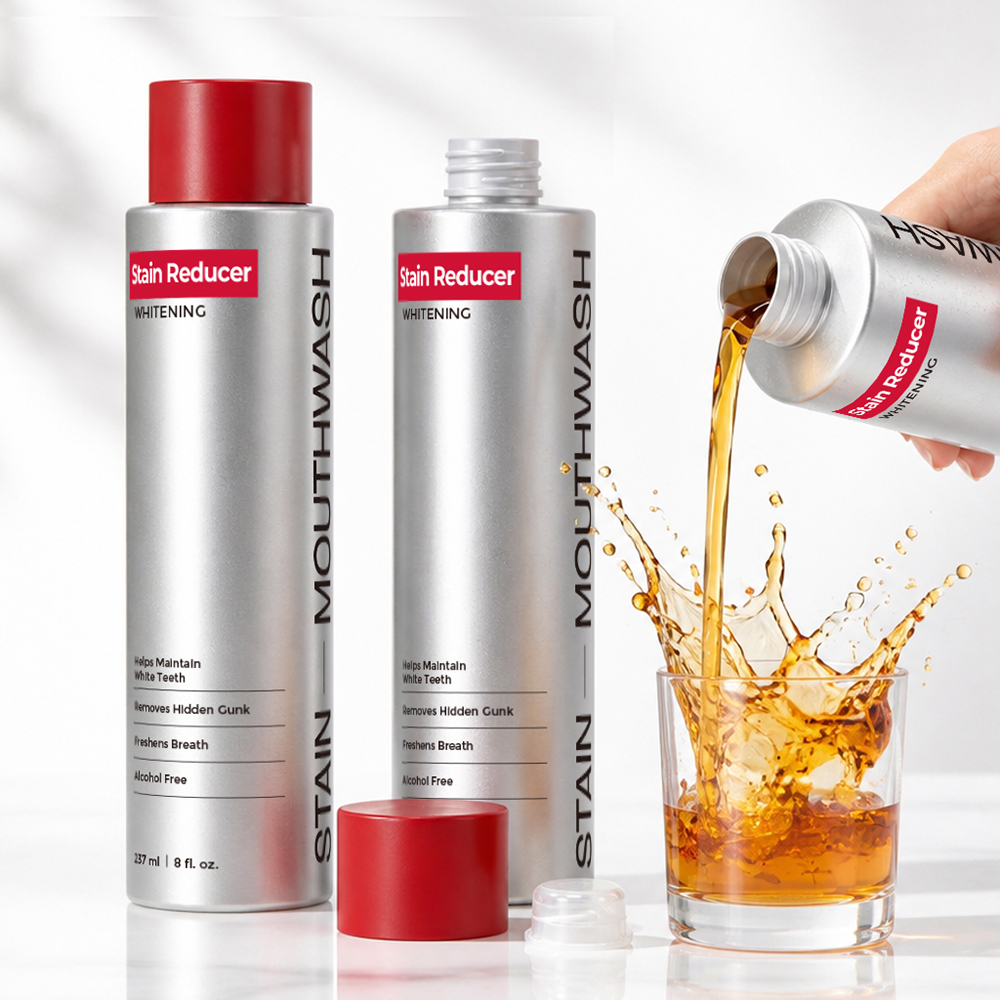
- Entry tier: A take-home whitening kit — strips, syringes, or a pen — positioned as accessible and low-commitment. This is your acquisition product, not your revenue driver.
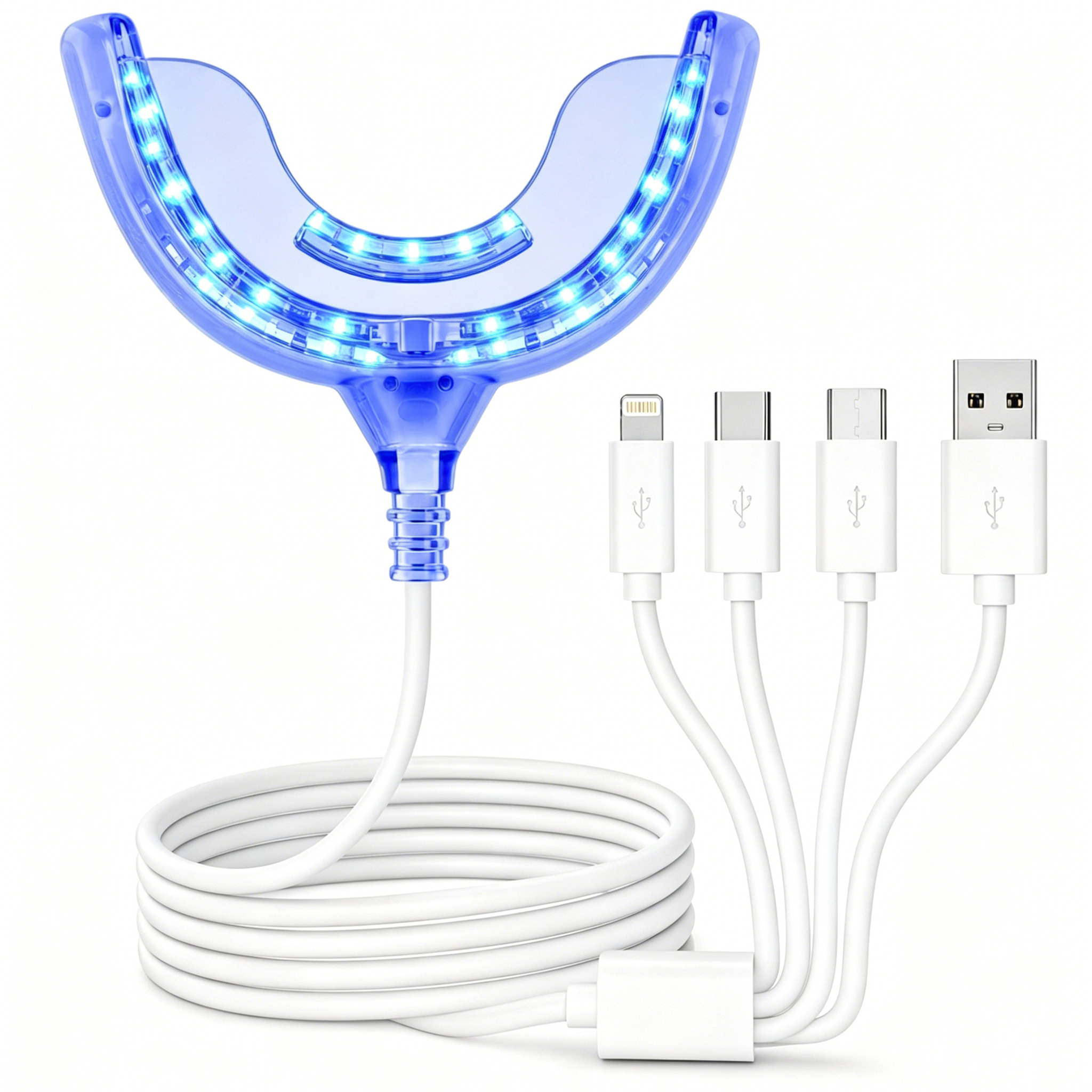
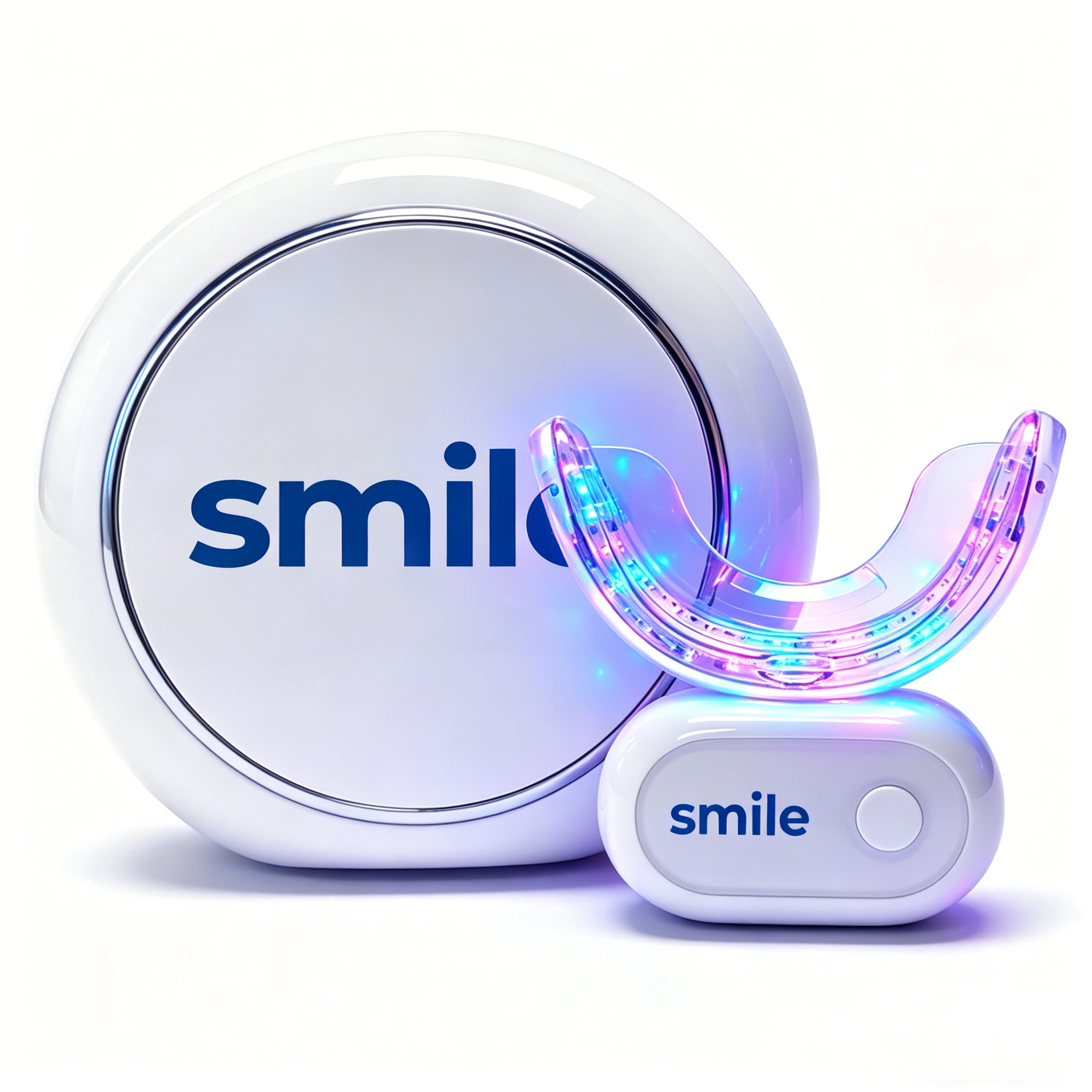
- Mid tier: A supervised or assisted in-chair treatment using a professionally applied gel at a concentration appropriate to the setting's regulatory environment. This is where the majority of revenue should concentrate.
- Premium tier: A combined protocol — in-office treatment followed by a structured take-home maintenance program. This is your highest-value offering and, when positioned correctly, your most defensible upsell.
A 2023 randomized clinical trial published in the International Journal of Dental Hygiene found that combined and in-office bleaching protocols produced stronger improvements across psychological and functional quality-of-life measures than home bleaching alone. That evidence gives clinical and spa operators a credible, peer-reviewed reason to present the combined tier as the standard of care — not as an add-on.
Which Products Belong at Each Tier — and Why Sourcing Decisions Follow
Tier assignment is not a pricing decision alone. It is a formulation decision, and it has direct implications for what you specify when sourcing or co-developing products.
Entry Tier: Take-Home Formats
Strips and lower-concentration gel syringes belong here. A 2023 randomized clinical trial published in Clinical, Cosmetic and Investigational Dentistry confirmed that hydrogen-peroxide strips produced significant color improvement, while a plant-oil and salt regimen did not produce comparable results. That distinction matters when evaluating entry-tier products: the format must deliver a visible result, or the upsell to mid-tier loses credibility.
At sourcing, specify products that are private-label ready with compliant active-agent concentrations for your target market — EU, US, and GCC each maintain different regulatory thresholds. Entry-tier products need enough efficacy to create a positive first experience, but not enough to make the client feel no need to return for a higher tier.
Mid Tier: In-Chair Gel Systems
Concentration and sensitivity management are the key sourcing variables at this tier. A 2025 randomized clinical trial found that both lower-concentration (6% hydrogen peroxide) and higher-concentration (35% hydrogen peroxide) in-office protocols produced whitening, but the higher-concentration protocol generated substantially more sensitivity. For spa settings operating under non-dental supervision, that evidence directly supports sourcing mid-tier gels at moderate concentrations rather than defaulting to maximum strength.
Sensitivity management at this tier is a revenue protection strategy, not a secondary concern. Clients who experience significant post-treatment discomfort do not return for the premium tier and do not refer. Specify formulations that include desensitizing or remineralizing agents — hydroxyapatite, potassium nitrate, or fluoride — and document those ingredients in the product brief, not as a marketing afterthought.
Premium Tier: Combined Protocol Products
The premium tier requires a matched pair: an in-office treatment product and a take-home maintenance product formulated to work in sequence. When sourcing at this tier, co-develop or select products where the take-home component is explicitly positioned as a maintenance protocol — not a standalone whitening kit. That distinction supports the clinical narrative and protects your mid-tier from being bypassed entirely.
Packaging alignment matters here. Clients who receive a maintenance kit that looks unrelated to the in-office treatment are less likely to associate the two as a system, which weakens the premium-tier value proposition. Ensure private-label packaging across the pair is visually coherent before you finalize the supplier agreement.
Timing the Take-Home Upsell Within the Client Journey
When you introduce the take-home product has a measurable effect on conversion. The three windows each carry different dynamics.
Before treatment: Presenting take-home options during consultation or intake positions them as part of the treatment plan rather than a retail add-on. This works well for premium-tier combined protocols where the maintenance component is integral to the clinical outcome.
During treatment: Some operators introduce take-home comfort or desensitizing products while the client is in the chair. A 2024 systematic review published in the Journal of the American Dental Association, synthesizing a decade of whitening evidence, confirmed that sensitivity remains the primary adverse effect across both in-office and take-home protocols. That clinical reality makes the moment immediately post-application a high-relevance, high-conversion window for recommending a comfort product.
After treatment: Presenting take-home products at checkout is the weakest conversion window. The client's attention has shifted, and the product reads as a retail transaction rather than a clinical recommendation. Reserve this window for entry-tier products only, and only when the client has not already been moved into a maintenance protocol.
Pricing Anchors That Make Mid-Tier the Default Choice in Your Whitening Service Upsell Structure
Anchoring is the mechanism that makes three-tier menus work. The premium tier does not need to be your highest-volume seller — it needs to make the mid-tier feel like the rational, well-priced choice.
Present all three tiers together, with the premium tier listed first. When a client sees the combined protocol price before the mid-tier price, the mid-tier reads as a meaningful saving without appearing low-grade. The entry tier, listed last, functions as a reference point that makes both upper tiers feel substantive.
Avoid discounting the mid-tier directly. Build value into the presentation: specify what the mid-tier gel contains — remineralizing agents, a defined concentration range, a documented sensitivity-management protocol — and let the specification carry the price. Clients in dental and premium spa settings respond to clinical specificity. It signals that the price reflects formulation decisions, not margin padding.
A systematic review published in Clinical Oral Investigations (2023) found that whitening color stability typically holds for approximately one to two and a half years, with greater recurrence in cases of severe discoloration. That finding gives your team a clinically grounded reason to present the mid-tier treatment as a multi-year investment — and to schedule a follow-up conversation before the client leaves the chair.
Product Specifications That Support a Confident Upsell Conversation
An upsell conversation fails when the staff member cannot explain why the higher tier costs more. That answer has to live in the product specification. Your sourcing decisions directly determine whether your team can sell with confidence or defaults to vague reassurances.
When evaluating or co-developing products for a tiered menu, specify the following at each tier:
- Active agent and concentration: Hydrogen peroxide percentage or PAP (phthalimidoperoxycaproic acid) concentration, clearly documented for staff training and, where required, for regulatory disclosure.
- Adjunctive ingredients: Hydroxyapatite, fluoride, potassium nitrate — any ingredient supporting a sensitivity-management or remineralization claim must be specified in the product brief before the product is finalized.
- Regulatory compliance documentation: ISO certification, CE marking for EU markets, FDA compliance documentation for US distribution. These are non-negotiable for clinical settings and increasingly expected in premium spa environments.
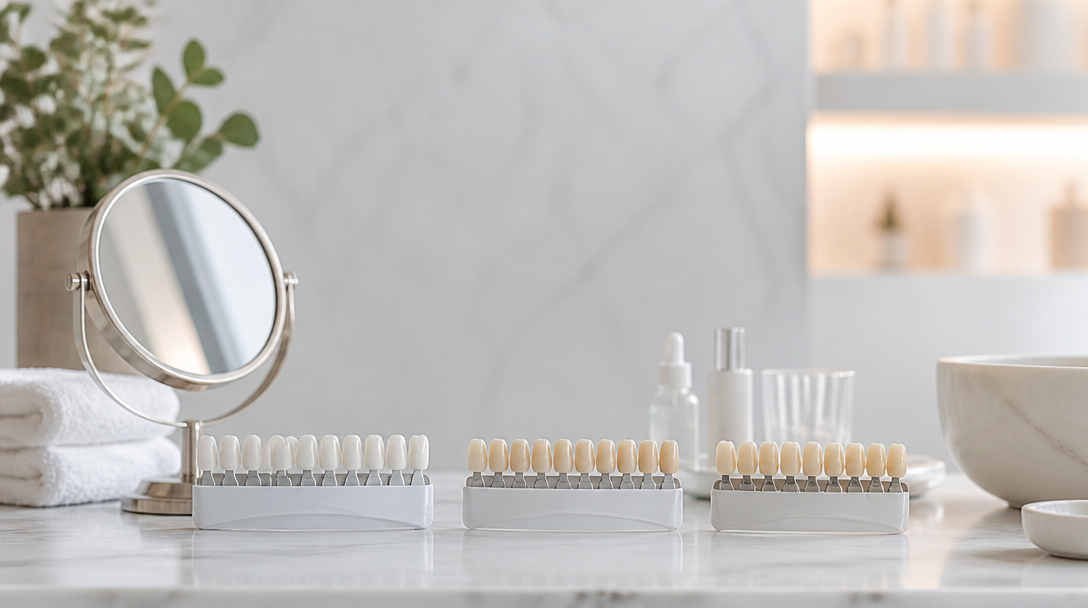
- Shade guide compatibility: Products supplied with or referenced against a standardized shade guide — VITA or equivalent — allow staff to document and communicate results objectively, which strengthens the case for retreatment and maintenance scheduling.
The 2024 Journal of the American Dental Association systematic review confirms that sensitivity is the primary adverse effect across both in-office and take-home protocols. If your product specifications do not address sensitivity management at each tier, that concern will interrupt your upsell conversation — and the client's concern is clinically legitimate, not a sales objection to overcome.
Reorder Logic: Building the Whitening Service Upsell Structure Into Your Supplier Agreement
A tiered whitening menu only sustains revenue if the supply chain is designed to support it. The most common failure point is a mid-tier or premium-tier product going out of stock during a high-demand period, which forces staff to default to the entry tier and collapses the anchoring logic built into the menu.
When negotiating supplier agreements for tiered whitening programs, address these terms explicitly:
- Minimum order quantities by tier: Entry-tier products typically move faster by unit volume; premium-tier products move slower but at higher margin. Set reorder thresholds that reflect actual consumption patterns — not uniform MOQs applied across all SKUs.
- Formulation consistency guarantees: If your mid-tier gel is specified at a defined concentration with documented adjunctive ingredients, lock that specification in the agreement. Reformulation without notification breaks the clinical story your team is trained to tell.
- Private-label packaging alignment: Confirm that take-home maintenance products carry packaging that visually connects to your in-chair treatment products. Visual coherence across the pair signals that the two products are a system — which is precisely the story the premium tier depends on.
- Lead times for seasonal demand: Whitening demand spikes predictably ahead of key social and cultural calendar moments. Build seasonal buffer quantities into the agreement rather than relying on standard lead times during those windows.
Operators who treat supplier agreements as administrative paperwork — rather than as infrastructure for their service menu — consistently underperform on revenue per visit relative to operators who specify and lock the same variables at the sourcing stage.
References
- Prognosis in home dental bleaching: a systematic review — Clinical Oral Investigations, PubMed (2023)
- Randomized clinical trial: three vital tooth bleaching protocols and oral-health-related quality of life — International Journal of Dental Hygiene, PubMed Central (2023)
- Ten years of at-home and in-office tooth bleaching: efficacy and adverse effects — Journal of the American Dental Association (2024)
- Efficacy and tooth sensitivity: low- versus high-concentration hydrogen peroxide for in-office bleaching — PubMed (2025)
Disclaimer
This article is for general informational purposes only and does not constitute sourcing, legal, or regulatory advice. Always conduct your own due diligence and consult qualified legal or compliance professionals before making purchasing or compliance decisions. WhiteningBright makes no warranties as to the completeness or accuracy of the information, and any reliance is at your own risk.