Whitening Strips vs Gel vs Pen vs LED Kit vs Powder
17 de junio de 2026
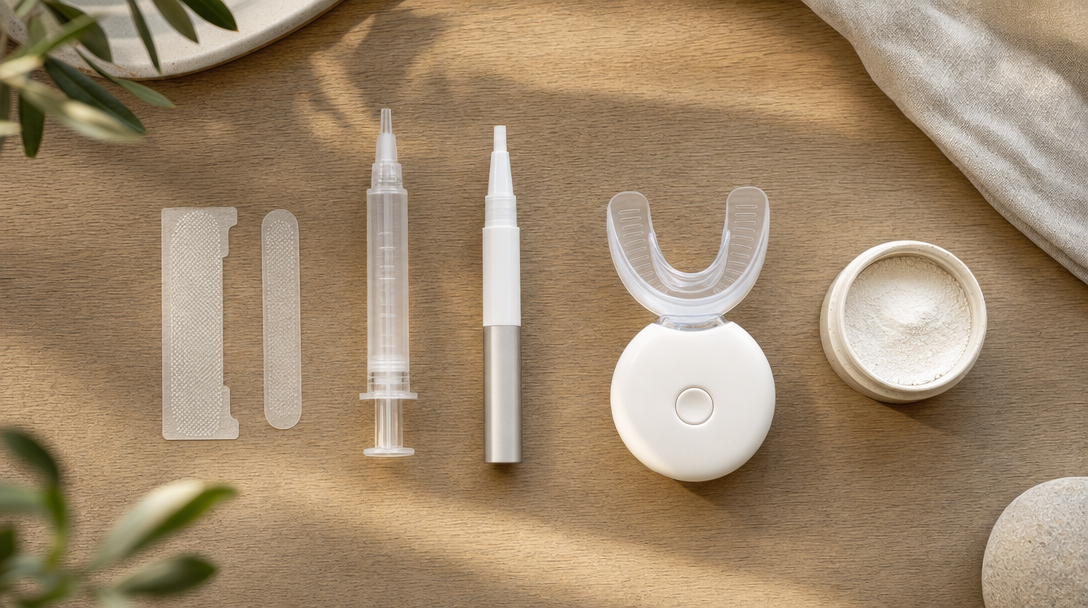
Teeth whitening methods compared — strips, gel, pen, LED kit, and powder. Match the right format to your stain type, schedule, and sensitivity level.
Why the Format You Choose Matters as Much as the Ingredient
Most people shopping for a whiter smile ask one question: how strong is it? When you compare teeth whitening methods, though, the delivery format turns out to be just as important as the active ingredient. A high-concentration gel that never maintains adequate contact with your enamel is less effective than a lower-concentration strip worn correctly for thirty minutes. Format determines contact time, coverage, ingredient stability, and how well the product fits your specific stain type and sensitivity level.
This guide breaks down each major format — strips, gels, pens, LED kits, and powders — so you can match the right tool to your actual situation before spending money on the wrong one.
Teeth Whitening Methods Compared: What Each Format Actually Does
Before examining each format individually, one distinction is worth keeping clear: intrinsic staining sits inside the enamel and dentin, caused by aging, certain medications, or excess fluoride during tooth development. Extrinsic staining accumulates on the outer enamel surface from food, drink, and tobacco. Some formats address both; others address only the surface layer. Choosing the wrong format for your stain type is the most common reason people are disappointed by whitening results.
Whitening Strips: Consistent Contact, Real Intrinsic Results
Whitening strips are thin, flexible polyethylene films coated with a peroxide-based gel — most commonly hydrogen peroxide or carbamide peroxide. You press them against the front teeth, and the gel maintains direct contact with the enamel for a set period, typically fifteen to forty-five minutes per session.
The mechanism is straightforward. Peroxide molecules penetrate the enamel and break apart the carbon-carbon double bonds in chromogen molecules — the organic compounds responsible for yellow and brown staining. This oxidation reaction addresses intrinsic staining, not just surface deposits. That distinction matters: strips are one of the few at-home formats genuinely capable of lightening discoloration below the enamel surface.
Who benefits most
- People with generalized yellowing across the front teeth
- Those who want a structured daily routine with predictable results
- First-time whitening users who want a moderate starting point
Where strips fall short
Strip geometry is fixed. Coverage on back teeth or along the gumline is inconsistent, and people with crowded or overlapping teeth often find that certain surfaces receive no gel contact at all. Strips also carry a real sensitivity risk: peroxide can temporarily irritate the pulp, particularly at higher concentrations or with extended use. If you already experience sensitivity to cold drinks, start with a lower-concentration strip and shorter wear times.
Whitening Gels: Closest to Professional Treatment You Can Do at Home
Tray-applied whitening gels are the closest at-home equivalent to professional in-office treatment. A peroxide-based gel is loaded into a custom-fitted or universal tray and worn for anywhere from thirty minutes to several hours, depending on the formulation. Some overnight gels use lower concentrations specifically designed for extended wear.
The key advantage over strips is conformity. A well-fitted tray presses gel against every surface of every tooth, including interproximal spaces. Custom trays made by a dentist deliver the most consistent coverage, but quality universal trays with moldable thermoplastic bases offer a practical alternative for home use.
Sensitivity considerations
Higher-concentration gels produce faster results and carry a proportionally higher sensitivity risk. Many formulations now include potassium nitrate or fluoride to reduce post-treatment discomfort. If you have existing sensitivity, look for gels that incorporate a desensitizing agent, and avoid wearing the tray beyond the specified time.
Who benefits most
- People with moderate to significant intrinsic staining
- Those who have used strips before and want stronger results
- Anyone maintaining results after a professional in-office treatment
Tray gels also allow targeted application. If one tooth is noticeably darker than its neighbors, a small amount of gel can be applied precisely to that surface — something strips cannot accommodate.
Whitening Pens: A Reliable Touch-Up Tool, Not a Standalone Solution
A whitening pen delivers a thin layer of peroxide gel through a brush tip or twist-up applicator. The appeal is clear: portable, discreet, and fast. The limitation is equally clear: the gel layer is thin, and saliva dilutes it quickly once you close your mouth.
Pens work best as a maintenance tool — applied after coffee, wine, or a meal to refresh results already established by a strip or tray regimen. Used as a standalone whitening solution, most users find results modest. Contact time is too short and the gel layer too thin to drive meaningful oxidation of intrinsic staining.
When a pen makes sense
- Maintaining results between full whitening sessions
- Targeting a specific surface for a quick refresh
- Travel situations where carrying a tray and gel is impractical
Some pens use peroxide-free formulas based on PAP (phthalimido peroxy caproic acid), which oxidizes stain molecules without releasing free radicals. PAP formulations are associated with lower sensitivity risk, making them a reasonable option for people who find peroxide irritating but still want some whitening benefit from a portable format.
LED Whitening Kits: What the Light Does — and What It Does Not
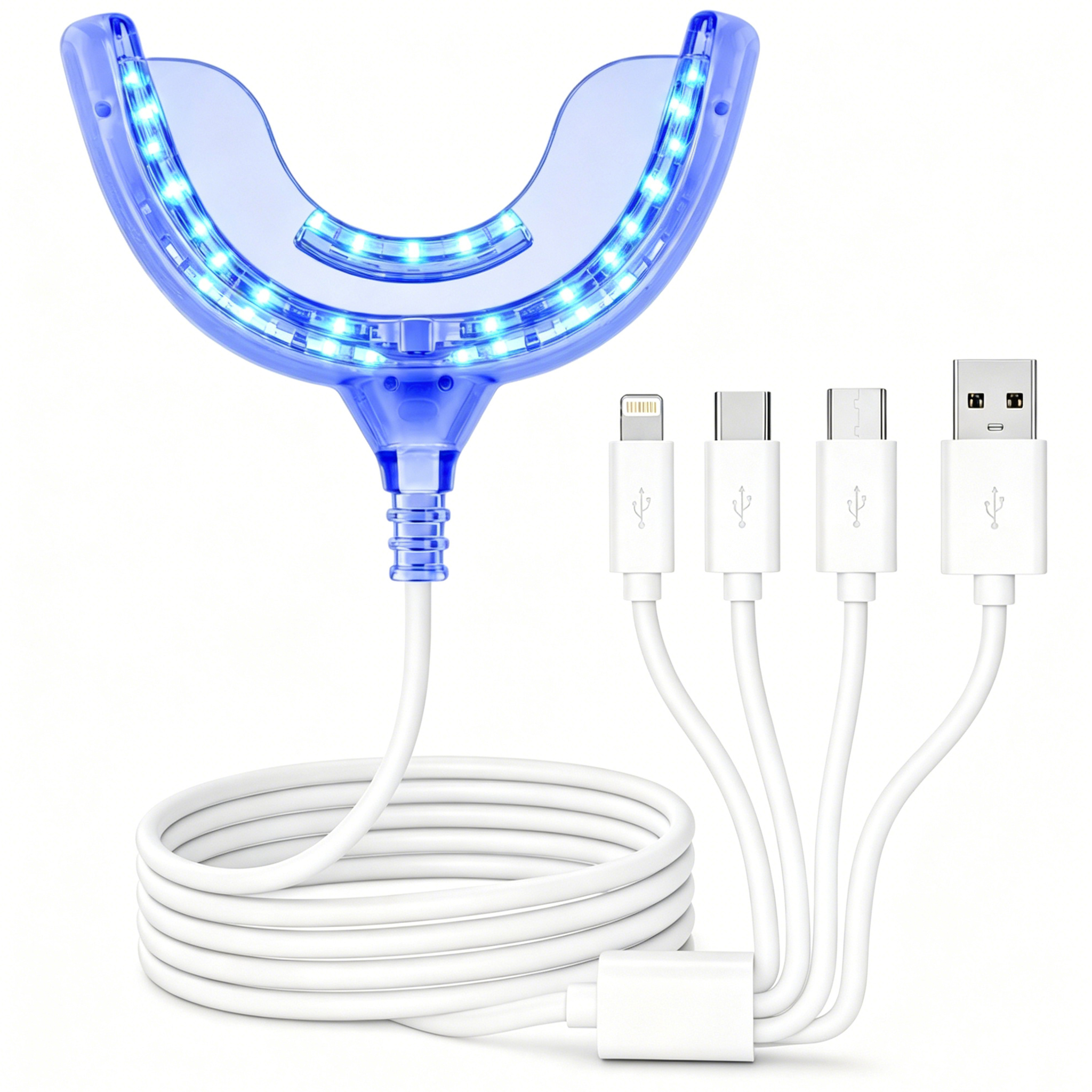
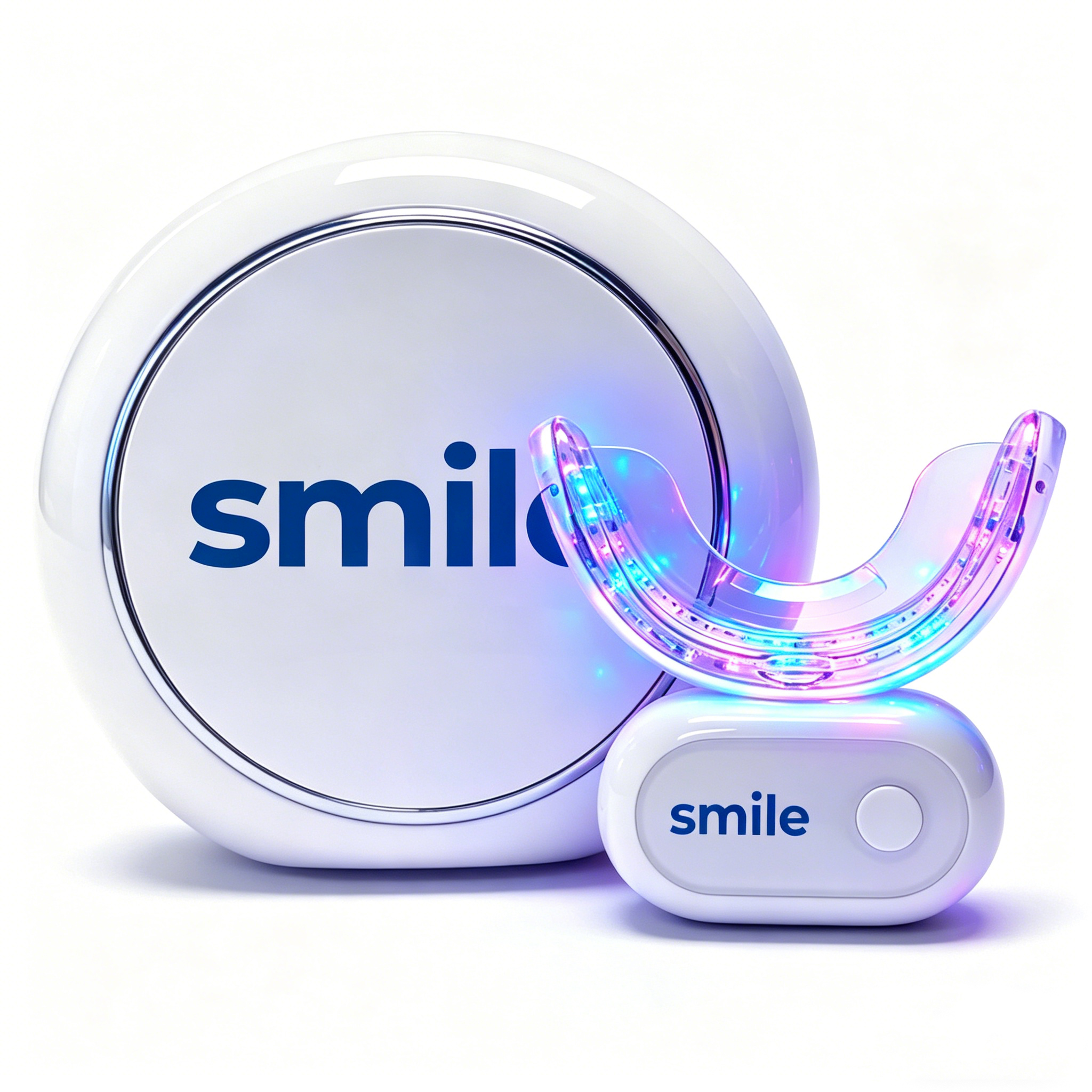
LED whitening kits pair a peroxide or PAP gel with a mouthpiece that emits blue light, typically at wavelengths around 465 nanometers. The marketing around these devices often implies the light itself whitens teeth. That framing is misleading.
Light alone does not bleach teeth. What blue LED light can do is accelerate the breakdown of peroxide molecules into the reactive oxygen species that drive the oxidation reaction. In clinical settings, high-intensity light sources have demonstrated this accelerating effect. The lower-intensity LEDs found in consumer devices produce a more modest acceleration, and the incremental whitening benefit over gel alone may be limited at consumer power levels.
What this means practically
An LED kit is not a shortcut to stronger results if the gel concentration is low — the gel is still doing the primary work. That said, the light component is not without value. It may reduce the time needed for the gel to reach its effective threshold, which is a genuine practical benefit for people who find extended tray wear uncomfortable.
Who benefits most
- People who prefer a structured, kit-based routine
- Those who have used gel alone and want to experiment with faster activation
- Users who value a complete, all-in-one format
One honest point: the sensitivity risk from an LED kit mirrors the risk from the gel it uses. The light itself does not increase or reduce sensitivity.
Whitening Powders: Surface Polish, Not Deep Whitening
Whitening powders — including activated charcoal blends, baking soda formulas, and kaolin-based products — work primarily through mechanical abrasion and, in some cases, adsorption. The fine particles physically scrub away surface deposits accumulated from food, drink, and tobacco.
This is meaningfully different from what peroxide does. Powders do not penetrate enamel and cannot address intrinsic staining. If your teeth are yellow because of aging, medication history, or developmental factors, a whitening powder will not change that underlying shade. What it can do is remove the layer of surface deposits that makes teeth appear duller than they actually are.
The abrasivity question
Abrasivity is measured by the Relative Dentin Abrasivity (RDA) scale. Products with high RDA values can, with repeated use, wear away enamel and expose the more yellow dentin beneath — the opposite of the intended effect. Activated charcoal powders have drawn particular scrutiny on this point, with several dental professional organizations noting a lack of robust evidence for their safety and efficacy as whitening agents. If you use a powder regularly, check whether the product publishes its RDA value before committing to daily use.
Who benefits most
- People with primarily extrinsic, surface-level staining
- Those who want to maintain a clean surface between peroxide treatments
- Users looking for a peroxide-free, low-commitment daily option
Choosing the Right Format: Stain Type, Schedule, and Sensitivity
Matching the right whitening format to your situation comes down to three variables: the nature of your staining, how much time you can realistically commit, and your sensitivity baseline. The table below maps each format across those three variables.
| Format | Stain Type Addressed | Time Commitment | Sensitivity Risk | Best For |
|---|---|---|---|---|
| Strips | Intrinsic + extrinsic | 15–45 min/day | Moderate | Generalized yellowing, beginners |
| Tray gel | Intrinsic + extrinsic | 30 min–overnight | Moderate–high | Stronger results, full coverage |
| Pen | Extrinsic (light) | 2–5 min | Low | Touch-ups, travel, maintenance |
| LED kit | Intrinsic + extrinsic | 10–20 min/day | Moderate | Structured routine, faster activation |
| Powder | Extrinsic only | 2 min (daily brush) | Low–moderate (abrasion risk) | Surface polish, daily maintenance |
If you have sensitive teeth
Start with a lower-concentration peroxide product, a PAP-based formula, or a desensitizing gel used in the days before beginning a whitening regimen. Shorter wear times and every-other-day use can reduce discomfort without eliminating results. A pen or powder between sessions keeps surface staining down without adding peroxide exposure.
If your staining is primarily from coffee, tea, or wine
Much of that discoloration is extrinsic. A strip or tray regimen run once or twice a year, supplemented by a pen for daily maintenance, is usually sufficient to keep teeth noticeably brighter without over-treating.
If you want the most thorough result
A tray-applied gel — ideally with a custom-fitted tray — delivers the most consistent full-coverage contact time of any at-home format. Used correctly, it is the at-home method that most closely approximates what a dental professional would use in a supervised setting.
No single format wins across every category. The best approach to teeth whitening methods compared is matching the format to the actual nature of your staining, your available time, and your tolerance for sensitivity — not chasing the highest concentration number on a label.
For a curated selection of formats across each category, visit the WhiteningBright product range.
References
No peer-reviewed journal articles, ADA position statements, FDA regulatory documents, or government health authority pages were provided in the research sources supplied for this article. All mechanism descriptions are based on established scientific principles in dental and oral-care literature and are stated qualitatively rather than attributed to specific cited data. No statistics, study figures, sample sizes, or named sources have been fabricated.
For authoritative guidance on teeth whitening safety and efficacy, readers are directed to consult the following types of sources directly:
- U.S. Food and Drug Administration (FDA) — www.fda.gov — regulatory guidance on over-the-counter whitening products
- American Dental Association (ADA) — www.ada.org — clinical guidance and position statements on whitening agents
- National Library of Medicine / PubMed — pubmed.ncbi.nlm.nih.gov — peer-reviewed research on peroxide-based whitening, PAP formulations, RDA abrasivity, and LED photoactivation
Disclaimer
This article is for general informational purposes only and is not a substitute for professional dental or medical advice. Always consult a qualified dental professional before starting any teeth-whitening or oral-care regimen. WhiteningBright makes no warranties as to the completeness or accuracy of the information, and any reliance is at your own risk.