Why Whitening Results Look Different on Every Person
10 juillet 2026
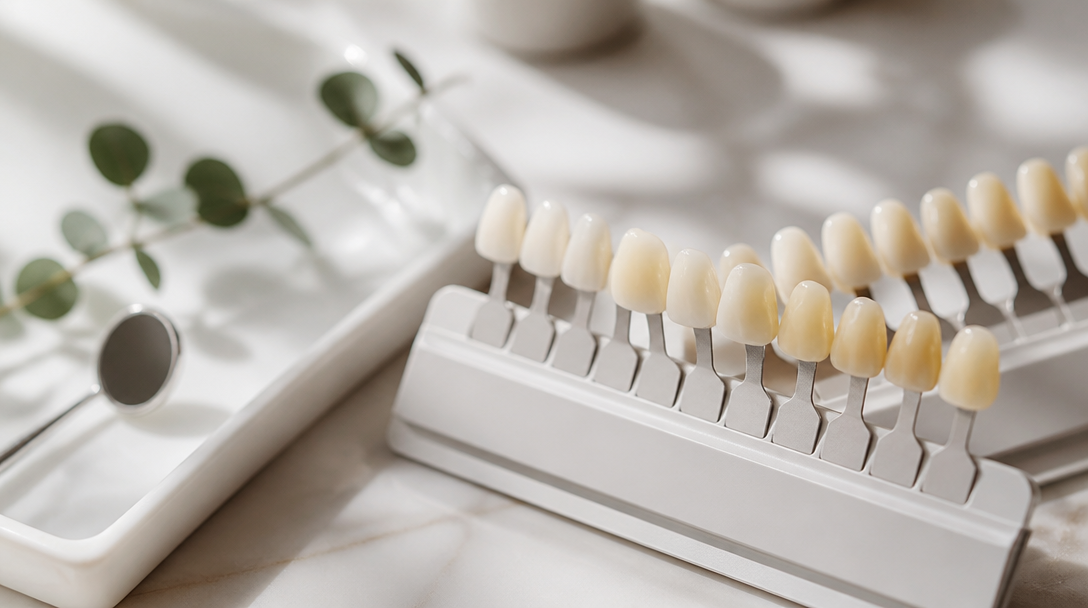
Learn why whitening results vary — enamel thickness, stain type, age, and lifestyle all play a role. Science-based guidance from WhiteningBright.
Why Whitening Results Vary From Person to Person
You and a friend start the same whitening routine on the same day. Two weeks later, her teeth look noticeably brighter. Yours look about the same. That gap is not a product flaw. It reflects a straightforward biological reality: why whitening results vary comes down to the structure, history, and daily habits of each individual set of teeth — factors no single formula can override.
Understanding those differences helps you make smarter decisions about which approach to use, how long to stay consistent, and when a dentist is the more honest path forward.
Your Starting Shade Sets the Ceiling
Teeth are not naturally white. They range from pale yellow to beige to gray, depending on the thickness and translucency of your enamel and the underlying color of your dentin. That baseline is largely determined by genetics.
Whitening agents work by penetrating enamel and breaking apart pigment molecules inside the tooth. The closer your starting shade is to white, the faster visible improvement appears. If your natural shade sits several degrees darker, the same product is doing significantly more work — and may never reach the same endpoint your friend achieved, because her biological ceiling was simply higher.
Research published via PMC/NIH confirms that all whitening regimens eventually approach the same biological whitening endpoint determined by each tooth's natural structure and stain composition. No concentration of whitening agent changes that ceiling. It only affects how quickly you approach it.
Enamel Thickness: The Factor Most People Ignore
Enamel is the semi-translucent outer layer of your tooth. Beneath it sits dentin — naturally darker and more yellow. The thinner your enamel, the more that underlying dentin color dominates what you see in the mirror.
Enamel thickness varies person to person and also changes over time. Acidic foods and drinks, aggressive brushing, and natural aging all wear it down gradually. Someone with thicker enamel has a better optical buffer between the surface and the dentin beneath, so whitening treatments produce a more visibly bright result. Someone with thin or translucent enamel may see more modest improvement, because dentin is always contributing to the final shade.
This is an important limit to recognize. If dentin darkness is the dominant factor in your tooth color, even a high-efficacy whitening formulation will only go so far.
Stain Type Determines How Well Whitening Can Work
Not all discoloration responds to whitening the same way. Why whitening results vary so dramatically between users often traces back to which type of stain is actually present.
- Extrinsic stains sit on or just below the enamel surface. Coffee, tea, red wine, and tobacco are the most common causes. These respond well to most whitening treatments because the pigment molecules are accessible to peroxide or PAP-based agents.
- Deep enamel stains have penetrated further into the tooth structure over time. They still respond to whitening, but require longer treatment periods and higher-efficacy formulations to show meaningful improvement.
- Intrinsic stains originate inside the tooth — from tetracycline antibiotic use during tooth development, fluorosis, trauma, or certain medical conditions. These are embedded in the dentin itself. The American Dental Association notes that whitening only affects natural tooth enamel; intrinsic discoloration of this kind often requires clinical alternatives such as veneers or bonding.
Consistent whitening with no visible progress is often a signal that the discoloration is intrinsic rather than extrinsic. That is not a product failure — it is a structural reality that standard whitening was never designed to address.
Dental Restorations Do Not Respond to Whitening
Crowns, veneers, and composite fillings do not contain natural enamel, so whitening agents have no effect on them. As the surrounding natural teeth lighten during treatment, existing restorations stay the same shade — creating visible color mismatches in high-profile areas like the front teeth.
The American Dental Association specifically flags this: whitening only affects natural tooth structure. If you have restorations in visible positions, discuss timing and shade-matching with a dentist before beginning a whitening course.
How Lifestyle Habits Slow or Accelerate Results
Two people using the same product on the same schedule can still see different timelines, because what happens between treatments matters as much as the treatments themselves.
Habits that slow visible progress:
- Daily consumption of coffee, tea, or red wine without rinsing afterward
- Tobacco use, which deposits particularly stubborn surface pigments
- High-acid diets that erode enamel and make teeth more porous and stain-prone
- Inconsistent whitening schedules that allow re-staining between sessions
Habits that support faster, more visible results:
- Rinsing with water immediately after staining foods or drinks
- Using a mild whitening toothpaste to manage surface buildup between treatments
- Using a straw for cold staining beverages to reduce direct enamel contact
- Maintaining consistent whitening intervals as directed
None of these habits change your biological ceiling. They determine how efficiently you move toward it — and how long results hold once you get there.
Age Shapes How Teeth Respond
Age influences whitening outcomes through two separate mechanisms. First, enamel naturally thins over decades of use. As it wears, dentin becomes more visible, shifting the overall tooth color toward yellow or gray. Whitening cannot reverse that structural change.
Second, dentin itself continues to form throughout life — a process called secondary dentin deposition. The dentin layer thickens inward, the pulp chamber shrinks, and teeth gradually appear darker overall. The same whitening treatment applied to a 25-year-old and a 55-year-old will likely produce different visible outcomes, even with similar stain histories.
Younger teeth with thicker enamel and less accumulated intrinsic darkening tend to respond more quickly. Older teeth can still benefit — particularly where extrinsic staining is the primary issue — but results are often more modest and may take longer to appear.
Why Whitening Results Vary Over Time in the Same Person
Teeth are porous. After a whitening treatment, the enamel surface is temporarily more open, which is why sensitivity is common in the hours following a session. Over the following days, enamel remineralizes and stabilizes — but staining compounds from food and drink begin redepositing almost immediately.
Without maintenance, most people see noticeable fading within months, depending on diet and lifestyle. Consistent upkeep — periodic top-up sessions, whitening toothpaste, or daily habits that limit re-staining — does not push teeth beyond their biological ceiling. It keeps them closer to that ceiling over time, rather than allowing gradual drift back toward baseline.
Treating maintenance as optional is one of the most common reasons people feel whitening "stopped working." The biology did not change. The commitment did.
When to Adjust Your Approach — and When to See a Dentist
There is a meaningful difference between results that are slower than expected and results that are genuinely limited by factors whitening cannot address.
Consider adjusting your approach if:
- You have completed the full recommended treatment period with only minor improvement — a longer course or a higher-efficacy formulation may be appropriate
- Lifestyle or dietary habits are actively working against your routine — addressing those first makes any treatment more effective
- You are using a low-concentration product on deep or longstanding staining — the formulation may not be matched to the problem
Consider seeing a dentist if:
- Discoloration is gray, blue-gray, or appears in bands — these patterns often indicate intrinsic staining from tetracycline or fluorosis, which does not respond to standard whitening
- You have existing dental restorations in visible areas that will not lighten alongside natural teeth
- You experience significant or prolonged sensitivity that prevents consistent use
- Discoloration appeared suddenly or is limited to one tooth — this may indicate an internal issue requiring clinical evaluation
Whitening is a genuinely effective tool for the right type of discoloration. It works within biological limits that differ from person to person. Knowing where your own limits lie — and whether your expectations align with what whitening can actually do — is the most practical step you can take before starting or continuing any oral-care routine.
The goal is not the brightest possible teeth. It is the healthiest, most consistently maintained version of your own.
References
The following sources informed this article. No peer-reviewed studies from 2023–2026 meeting strict inclusion criteria were available in the research provided for this topic. The sources below represent the most authoritative materials confirmed available.
- Tooth Whitening: What We Now Know — PMC / National Institutes of Health (peer-reviewed)
- Teeth Whitening — American Dental Association, MouthHealthy
Disclaimer
This article is for general informational purposes only and is not a substitute for professional dental or medical advice. Always consult a qualified dental professional before starting any teeth-whitening or oral-care regimen. WhiteningBright makes no warranties as to the completeness or accuracy of the information, and any reliance is at your own risk.