Does Whitening Gel Expire and Still Work Safely
July 20, 2026
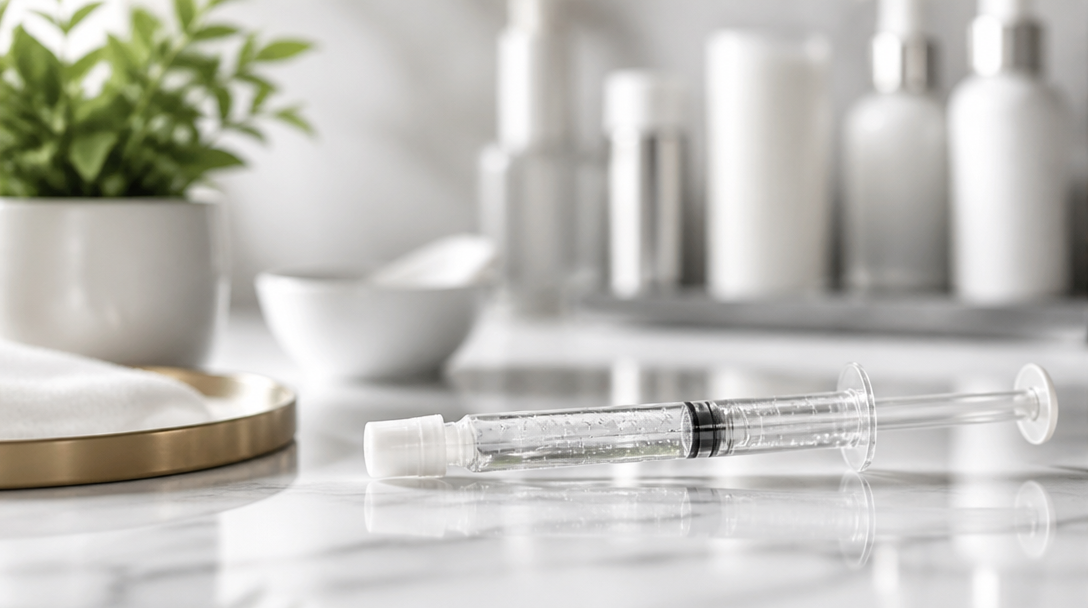
Does whitening gel expire? Learn how peroxide and PAP break down, when expired gel becomes unsafe, and how to store your kit to preserve its potency.
Does Whitening Gel Expire — And What Actually Happens When It Does
You find a sealed whitening kit at the back of a drawer. The gel looks clear, the syringe is intact, and the expiration date is either close or already passed. Before you load it into a tray, the question worth asking is: does whitening gel expire in a way that matters — and does "expired" mean dangerous, useless, or just weaker? The answer depends on chemistry, not guesswork.
Whitening gels are not shelf-stable indefinitely. Their active ingredients begin degrading from the moment they are manufactured. Expiration dates reflect real chemical change happening inside the packaging — not a regulatory formality.
Why Whitening Gel Expires: The Chemistry Behind the Date
Most whitening gels are built around one of two active systems: peroxide-based or PAP-based.
Hydrogen peroxide is inherently unstable. Over time it breaks down into water and oxygen — both harmless, but neither whitens teeth. The degradation is continuous and accelerates with heat, light, and air exposure. A gel that looks identical to a fresh product may contain a fraction of its original active concentration.
Carbamide peroxide follows the same path. It first releases hydrogen peroxide and urea, then the hydrogen peroxide breaks down further. The whitening window closes progressively as the active concentration falls.
PAP (phthalimidoperoxycaproic acid) — the newer non-peroxide oxidizer used in sensitivity-conscious formulas — is more chemically stable under ideal storage conditions, but it is not immune to degradation. Oxidizing agents of any kind have a finite functional lifespan, and the formulation's pH directly affects how long PAP stays active.
Ineffective vs. Unsafe: The Distinction That Matters
An expired whitening gel is not automatically dangerous — but it is not automatically safe either. These are two separate outcomes, and they depend on what has changed inside the formula.
When peroxide degrades cleanly into water and oxygen, the gel simply stops working. You sit through a full treatment and see little to no shade change. That wastes time, but it does not harm tissue.
The more relevant concern is pH shift. Whitening gels are formulated within a specific pH range to protect enamel and soft tissue. As a gel ages — particularly past its expiration date or after poor storage — its pH can drift outside that range. The ADA identifies tooth sensitivity and gingival irritation as the most common adverse effects of peroxide whitening, and these effects are more likely when formulations are at higher concentrations or are chemically compromised.
Expired gel is most likely ineffective. A gel with a shifted pH and uncertain chemistry raises the baseline risk of soft tissue irritation. That is reason enough to replace it rather than guess.
How Storage Conditions Accelerate the Expiration Clock
Printed expiration dates are calculated under assumed storage conditions — cool, dark, and dry. Real-world storage rarely meets that standard.
These factors shorten a gel's functional life before the printed date is reached:
- Heat: Elevated temperatures speed peroxide decomposition. A kit stored in a warm bathroom or left in a car loses potency faster than the date on the label accounts for.
- Light: UV and visible light catalyze oxidation. Opaque or foil packaging is there for this reason — removing gel from its original packaging removes that protection.
- Air contact: Once a syringe or tube is opened, oxygen begins interacting with the formula immediately. Opened gels can lose meaningful potency well ahead of the printed expiry date.
- Contamination: Touching the nozzle to a used tray introduces saliva, bacteria, and enzymes that accelerate breakdown. Cap the syringe between uses and avoid cross-contamination.
Refrigeration slows degradation and is recommended by dental professionals and manufacturers for this reason. It does not stop the process, but it meaningfully extends the period during which the gel retains its labeled concentration.
Physical Signs a Gel Has Already Degraded
A gel can reach the end of its useful life before the printed date — especially when storage conditions were not controlled. Check these indicators before any application.
Visual changes
Fresh whitening gel is typically clear to slightly translucent with a uniform gel consistency. Separation into layers, a watery texture, cloudiness, or a yellowish tint all indicate the formulation has broken down. Separation in particular suggests the gel matrix has destabilized.
Odor changes
Hydrogen peroxide carries a faint, clean, slightly sharp smell. A gel that smells sour, rancid, or noticeably different from when first opened has undergone chemical changes beyond normal degradation. Discard it.
Texture changes
A gel that has become unusually runny or, conversely, thick and clumped is no longer in its original state. These changes affect how the gel contacts enamel, how long it stays in the tray, and how much of it may migrate onto soft tissue.
If any of these signs are present, discard the gel. Its chemistry is no longer predictable, and the risk of irritation outweighs any potential whitening benefit.
How Long Does Whitening Gel Realistically Stay Potent
Professional-grade whitening gels are generally formulated with expiration windows of twelve to twenty-four months from the manufacture date, assuming correct storage. That range reflects the stability characteristics of peroxide at typical at-home and professional concentrations.
Once opened, the functional window narrows considerably. Opened gels can lose meaningful potency within a matter of months — a practical benchmark for deciding whether to continue using an opened kit, even if the printed date has not yet passed.
A 2023 study published in PMC (NIH) found that many whitening products sold online lack clear expiry information and safety warnings. Consumers using those products have no reliable way to assess whether the gel they are applying is still at its labeled concentration. This is one of the clearest arguments for purchasing from brands that provide transparent formulation and shelf-life data.
PAP-based gels may carry a slightly different stability profile, but the same principle applies: once the active ingredient degrades below its effective threshold, the product no longer delivers the shade change it was designed to produce.
Does Whitening Gel Expire Before You Even Open It
Yes — and this is an underappreciated issue. A sealed gel stored incorrectly during shipping or warehousing can arrive already compromised. The printed expiration date assumes storage conditions were maintained throughout the supply chain, which is not always the case.
If you receive a kit that is close to its expiration date, or if the packaging shows signs of heat exposure — swollen syringes, discolored gel visible through clear packaging — treat it with the same caution you would apply to an opened kit past its prime.
The 2023 PMC review specifically flags that high-peroxide gels sold through online channels frequently lack expiry data and standardized safety warnings, making it impossible for consumers to verify whether the product meets its labeled specification. Peroxide concentration regulation is not internationally standardized, which compounds the uncertainty.
When to Replace a Kit Before the Expiration Date Passes
The expiration date is a ceiling, not a guarantee of quality. Replace a gel kit even before the date if:
- The kit has been open for more than two to three months and was not refrigerated consistently.
- The gel shows any visual, odor, or texture change described in the section above.
- You cannot confirm the kit was stored correctly — cool, dark, and dry — since purchase.
- You are using it following a professional in-office treatment. Enamel and soft tissue are temporarily more reactive after in-office bleaching; a gel with uncertain pH raises that baseline risk.
- You have existing sensitivity or gum concerns. The ADA identifies sensitivity and gingival irritation as the most common adverse effects of peroxide whitening. Degraded formulas with unpredictable chemistry make those effects more likely.
The EU Scientific Committee on Consumer Safety has confirmed that properly formulated hydrogen peroxide gels at approved concentrations do not cause significant enamel or dentin damage. That safety profile depends on the gel remaining within its intended concentration range and pH — conditions that expired or improperly stored gels may no longer meet.
Storing Gel Correctly to Protect What You Paid For
Correct storage is not complicated, but it requires consistency.
- Keep sealed and opened gels in a refrigerator when possible. Cool temperatures slow peroxide decomposition without affecting gel texture significantly.
- Store gels away from direct light. If the original packaging is opaque or foil-wrapped, keep the gel in it until use.
- Cap syringes immediately after dispensing. Even brief air exposure begins the oxidation process.
- Do not store gel in a bathroom cabinet if the room experiences significant daily humidity and temperature swings — a common situation in smaller bathrooms.
- Check the manufacture date, not just the expiry date, when purchasing. A product with eighteen months remaining is a better choice than one with three months remaining at the same price.
These steps do not make a gel last forever, but they ensure it reaches its printed expiry date at or near its intended concentration — which is the baseline assumption behind every efficacy claim on the label.
Does Whitening Gel Expire: The Practical Summary
Whitening gel expires because its active ingredients — peroxide or PAP — are chemically unstable and degrade into compounds that no longer whiten teeth. Expired gel is most likely ineffective rather than acutely dangerous. But pH changes in degraded formulas can increase the risk of gum irritation and sensitivity, which matters more if you have existing tooth or gum sensitivity, or if you are combining home gel with a recent in-office treatment.
Store gel in a cool, dark place — refrigeration is the best option. Use opened syringes within a few months. Check for physical changes before any application. If a gel is past its printed date, replace it. The cost of a new kit is lower than the cost of a treatment that does nothing, or one that causes unnecessary irritation to healthy gum tissue.
References
- Rampant online marketing of teeth whitening products — PMC / National Institutes of Health (2023)
- Whitening — Oral Health Topics, American Dental Association (ADA)
- Scientific Committee on Consumer Safety — Tooth Whiteners, European Commission
Disclaimer
This article is for general informational purposes only and is not a substitute for professional dental or medical advice. Always consult a qualified dental professional before starting any teeth-whitening or oral-care regimen. WhiteningBright makes no warranties as to the completeness or accuracy of the information, and any reliance is at your own risk.