LED Device Sourcing: What Buyers Must Verify First
September 2, 2026
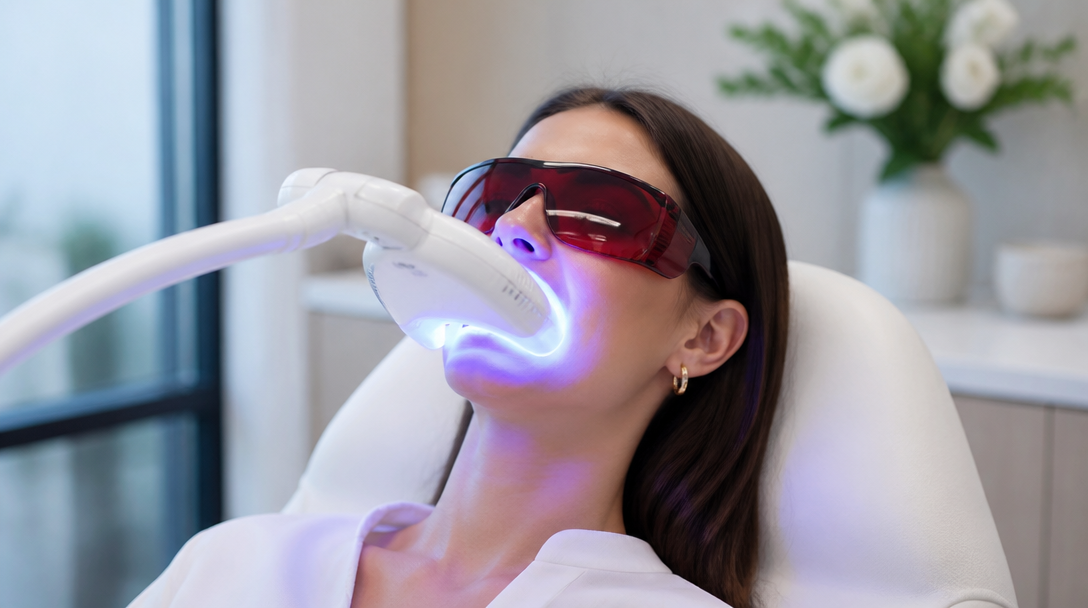
A practical framework for professional LED whitening device sourcing — covering output specs, CE and FDA certification, and PAP and peroxide gel compatibility before your first order.
Professional LED Whitening Device Sourcing: What Buyers Must Verify First
Professional LED whitening device sourcing has shifted from a niche procurement request to a standard line item for clinic owners, spa operators, and private-label buyers. Patient demand for at-home maintenance between in-chair treatments is one driver. The broader entry of wellness retail into oral care is another. For distributors, the category generates recurring volume. For private-label brand owners, it offers a defensible margin tier — provided the device is specified correctly from the start.
What separates a defensible sourcing decision from a costly one is the quality of the questions asked before the purchase order is signed. This framework covers the four areas where buyers most frequently expose themselves to risk: output specifications, regulatory clearance, gel compatibility, and co-development structure.
What the Science Actually Supports on LED Activation
Not every LED whitening device delivers the same mechanism. Blue-light LEDs marketed for whitening operate across a range of actual functions — and the clinical evidence does not treat them as interchangeable.
A 2023 comparative study published in the European Journal of Dentistry found that commercial LED devices vary meaningfully in performance. Buyers should not assume equivalence based on shared technology labels. A device described as a "whitening accelerator" may deliver measurable photonic energy to a gel formulation — or it may function primarily as a patient engagement and positioning tool with limited chemical effect.
A 2025 PubMed study on optical analysis for LED oral-care devices confirmed that optical characteristics — specifically wavelength and emitted dose — determine whether a device delivers effective phototherapy. Wavelength is a performance specification. It is not a marketing variable, and it must be verified against the gel system the device is intended to accompany.
Buyers should also apply scrutiny to broader LED efficacy claims. A 2023 study published in BMC Oral Health found that a blue-light LED toothbrush was not clinically superior to a manual toothbrush for plaque reduction or gingival inflammation control. The sourcing lesson is direct: efficacy claims require controlled clinical evidence specific to the application, not category association with LED technology generally.
Output Specifications That Define Device Performance
Three technical parameters determine whether an LED whitening device will perform as documented: wavelength, irradiance intensity, and session duration design. Request verified data on all three before evaluating any device for your channel.
Wavelength
Most professional whitening LED devices operate in the blue-light range, typically between 400 nm and 470 nm. The 2025 optical analysis study confirms that wavelength directly shapes phototherapy effectiveness. Request the exact emission peak from every supplier — not a stated range. A device emitting at 450 nm and one emitting at 420 nm are not functionally equivalent when matched to a specific gel formulation, and the difference can determine whether your kit performs as positioned.
Irradiance Intensity
Intensity, measured in milliwatts per square centimeter (mW/cm²), determines how much energy reaches the gel surface during a session. Higher intensity is not automatically preferable. Exposure time, working distance, and intensity function as a combined safety variable — not independent performance metrics. Any supplier specification that presents intensity in isolation, without session duration context, is incomplete documentation.
Session Duration Design
Consumer-grade devices typically use fixed session timers. Devices positioned in the professional channel should specify session parameters that align with the gel protocol — defined intervals, rest periods where applicable, and clear documentation of whether the timer is fixed or adjustable. If the device documentation does not specify recommended session length, request it in writing before proceeding.
Certification Requirements by Market
Regulatory compliance is the most common sourcing failure point for buyers entering new markets. Clearance in one jurisdiction does not transfer to another.
FDA 510(k) for the U.S. Market
The FDA classifies dental light-based devices under its premarket notification framework. According to FDA guidance on dental curing lights and 510(k) submissions, the core buyer verification points are device description, performance testing documentation, and labeling compliance. A supplier claiming FDA clearance must be able to provide a 510(k) number. That number is publicly searchable in the FDA database. If a supplier cannot produce it, treat the claim as unverified — not pending confirmation.
CE Marking for the EU and UK
CE marking under the EU Medical Device Regulation requires conformity assessment by a notified body for any device carrying a medical claim. If a device is positioned as a therapeutic or clinical tool rather than a cosmetic accessory, the regulatory burden is higher. Request the Declaration of Conformity and confirm the identity of the notified body that issued it.
Additional Markets
Buyers distributing into Canada, Australia, or Gulf markets face equivalent frameworks: Health Canada device licensing, TGA registration in Australia, and the relevant registration requirements in Gulf states. Confirm market-specific documentation before placing volume orders. Regulatory gaps discovered after import create delays that no pricing structure absorbs cleanly.
Gel Compatibility: Sourcing the Device and Formula as a System
An LED device and a whitening gel are one system. Sourcing them independently without verifying compatibility is among the most common errors in private-label kit development.
Hydrogen peroxide and PAP (phthalimidoperoxycaproic acid) gels respond differently to light. Peroxide-based formulas have an established photochemical mechanism — light energy accelerates free-radical release, which oxidizes chromophores in enamel. PAP operates through a different oxidative pathway that does not rely on the same photochemical trigger. For PAP-based kits, the LED may function primarily as a positioning and session-timing tool rather than a chemical activator.
This distinction has direct implications for how a kit is positioned. If your brand presents a PAP formula as "light-activated," that claim requires documentation from the gel manufacturer — not an assumption drawn from the inclusion of an LED device in the packaging. When co-developing a private-label kit, request compatibility testing data that covers your specific gel concentration alongside the device's verified output specifications.
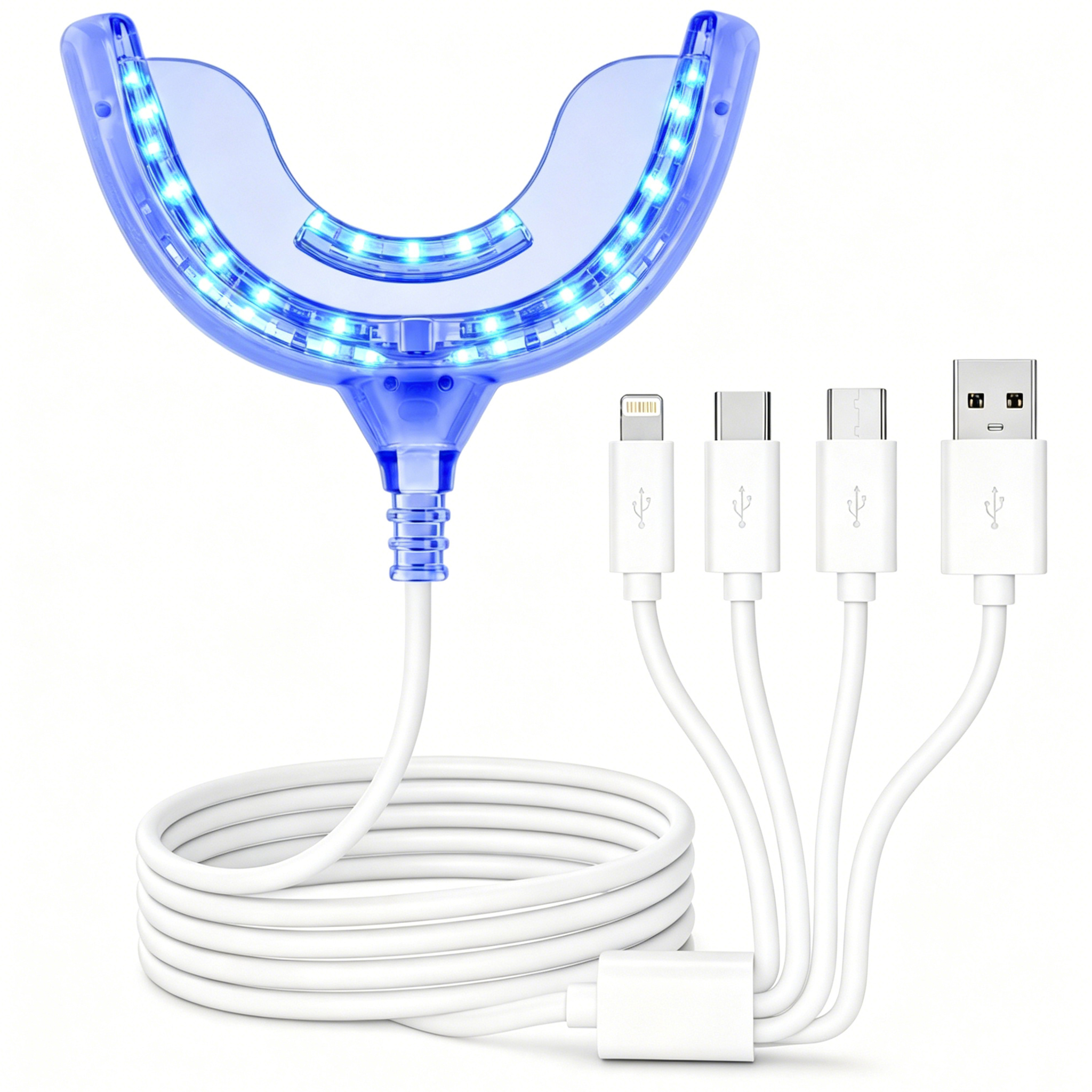
Tray geometry matters as well. The LED mouthpiece must provide consistent arch coverage to ensure uniform light exposure. Devices with uneven LED placement or insufficient coverage will produce inconsistent whitening results regardless of gel formulation quality.
Professional LED Whitening Device Sourcing at the Co-Development Level
Private-label LED whitening kits are available at several levels of customization. Understanding what each level requires helps buyers set accurate timelines and budget expectations.
- Branded packaging on an existing platform: The device and gel are established formulations. The buyer applies their brand identity to packaging and instructions. Fastest path to market, lowest development cost, limited differentiation from other buyers using the same platform.
- Formula customization: Gel concentration, flavor profile, or ingredient composition is adjusted to the buyer's specification. Requires stability testing and, depending on the target market, regulatory re-filing. Expect four to twelve weeks added to the development timeline.
- Device co-development: LED configuration, housing design, session timer, and charging system are specified by the buyer. This involves tooling costs, prototype rounds, and engineering sign-off. Appropriate for buyers committing to sustained volume and seeking genuine product distinction.
At the co-development level, request a technical specification sheet covering wavelength, irradiance intensity, battery capacity, charging cycle life, and IP rating if the device will be used in humid environments. These parameters belong in the purchase agreement — not only in the marketing brief.
Pre-Commitment Verification: A Structured Sourcing Checklist
Before placing a first order, complete the following verification steps. Each corresponds to a sourcing risk that emerges repeatedly in professional channel procurement.
| Verification Point | Why It Matters | Source Basis |
|---|---|---|
| Wavelength specification (nm) | Determines phototherapy effectiveness and gel compatibility | PubMed optical analysis study, 2025 |
| Irradiance intensity (mW/cm²) and session duration | Combined safety and performance variable; neither operates in isolation | FDA 510(k) guidance; device performance testing standards |
| Regulatory clearance documentation | 510(k) number (U.S.), CE Declaration of Conformity (EU), market-specific equivalents | FDA guidance on dental curing lights and 510(k) submissions |
| Gel compatibility testing data | Confirms device and formula function as a verified system | Formulation science standard practice |
| Clinical or performance evidence for efficacy claims | LED category claims vary widely; controlled evidence is required per application | PubMed comparative LED study, 2023; BMC Oral Health, 2023 |
| MOQ and tooling cost structure | Determines private-label entry viability at your volume tier | Standard sourcing due diligence |
| Packaging specification and compliance labeling | Ingredient disclosure, warning language, and usage instructions vary by market | FDA labeling requirements; EU MDR |
On minimum order quantities: LED device MOQs in the professional channel scale with customization level. Branded packaging on an existing device platform carries a lower MOQ than a co-developed housing with custom tooling. Request a clear breakdown of what the MOQ covers — device units only, or a complete kit including gel, trays, and retail packaging.
Request a sample order before committing to volume. Evaluate the device against your gel formulation under the session parameters specified in the supplier documentation. If a supplier cannot provide samples with full technical documentation attached, that is a sourcing risk — not a negotiation position.
Professional LED whitening device sourcing rewards buyers who treat the device as a regulated system component rather than a commodity item. The orders that hold up — commercially and regulatorily — are the ones placed after wavelength is verified, clearance is confirmed for the target market, and gel compatibility is tested before the purchase order is signed.
References
- U.S. Food and Drug Administration — Dental Curing Lights: Premarket Notification (510(k)) Submissions
- PubMed (2025) — Optical analysis for effective phototherapy in an LED oral care device
- PubMed / European Journal of Dentistry (2023) — A Blinded Comparative Study of Four Commercially Available LEDs and a Laser Light Curing Device
- PubMed / BMC Oral Health (2023) — Effects of blue-light LED toothbrush on reducing dental plaque and gingival inflammation in orthodontic patients with fixed appliances
Disclaimer
This article is for general informational purposes only and does not constitute sourcing, legal, or regulatory advice. Always conduct your own due diligence and consult qualified legal or compliance professionals before making purchasing or compliance decisions. WhiteningBright makes no warranties as to the completeness or accuracy of the information, and any reliance is at your own risk.