Purple Color Corrector vs Traditional Whitening: ROI Analysis
June 2, 2026
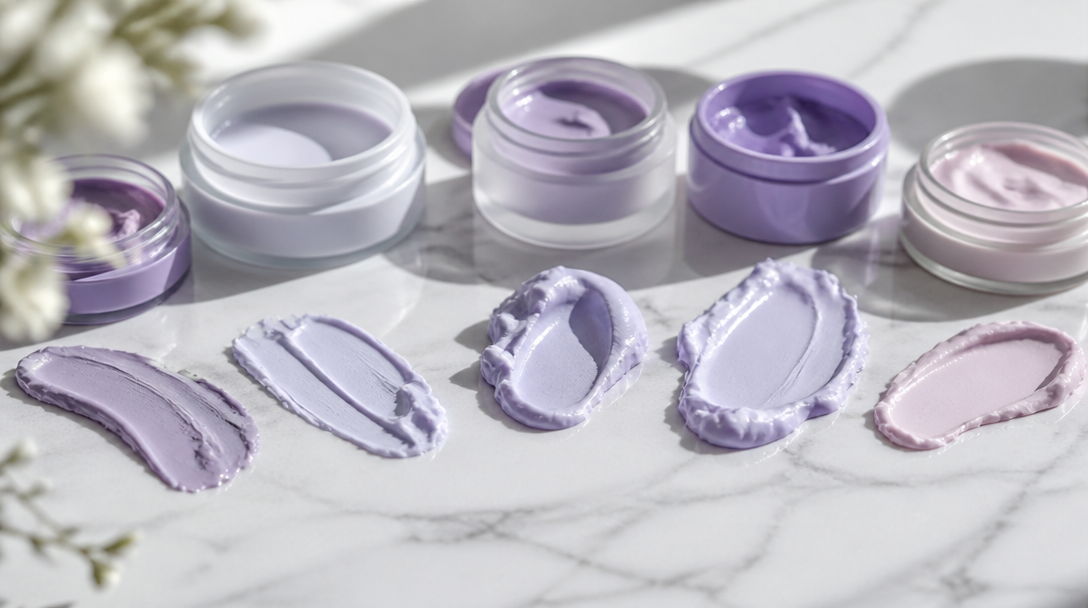
Purple color corrector ROI analysis: margin breakdowns, regulatory timelines, channel strategy, and launch scenarios for brand owners sourcing instant-results oral care.
Purple Color Corrector ROI vs. Traditional Whitening: A Margin Analysis for Brand Owners
Purple color corrector ROI consistently outperforms traditional peroxide-based whitening when measured across gross margin, inventory velocity, and speed to market. The gap is not marginal. Brand owners sourcing for beauty retail, DTC, or pharmacy channels face a structurally different P&L depending on which category they enter — and understanding that difference before a launch decision determines whether the first SKU funds the second or stalls on a warehouse shelf.
Why Purple Color Correctors Deliver Higher Margins Than Standard Whitening Kits
The margin advantage starts at formulation. Purple correctors use colorant-based technology — typically violet pigments that cancel yellow undertones through complementary color theory — rather than active bleaching agents. Raw material costs for a production-ready purple corrector unit typically run $0.80–$1.20, compared to $1.40–$2.10 for a peroxide-based equivalent. That differential compounds across a full launch.
Eliminating hydrogen peroxide or carbamide peroxide from the formula removes several cost layers simultaneously: specialized packaging to protect oxidizing agents, extended 24-month real-time stability protocols, and hazardous-material freight classifications. Purple correctors ship at standard cosmetic rates and store under standard warehouse conditions.
The result: brand owners report 40–65% gross margins on purple corrector lines versus 25–35% on traditional whitening kits. The lower end of the peroxide range reflects products competing on price; the upper end reflects premium positioning with professional-channel restrictions that limit distribution volume.
Inventory turnover also favors the corrector category. Beauty retailers tracking this segment report 2.3× faster turnover than comparable whitening kit SKUs, driven by impulse purchase behavior and social media content that rewards visible, immediate results.
The V34 Mechanism: What the Clinical Evidence Actually Shows
Purple correctors work through optical neutralization, not chemistry. Purple sits opposite yellow on the color wheel; when deposited on tooth surfaces, violet pigment reduces the perceived yellow cast that makes teeth appear dull. A 2024 peer-reviewed clinical study published in Dentistry Journal found a color-correcting serum produced an improvement of approximately 3 shade units immediately after application, with effects lasting up to 60 minutes and no significant safety concerns reported.1
That 60-minute window defines the product category. Purple correctors are pre-event tools — engineered for photos, meetings, first impressions — not daily whitening treatments. Dental professionals consistently classify them as cosmetic enhancements that do not affect intrinsic staining or internal tooth structure.2
For brand owners, this distinction is an asset, not a limitation. Accurate claims drive repeat purchase. Consumers who buy a purple corrector expecting a 60-minute optical boost and receive exactly that are satisfied customers. Consumers who buy expecting permanent whitening are not — and they leave reviews.
| Claim Type | Purple Corrector | Traditional Whitening | Regulatory Risk |
|---|---|---|---|
| Instant brightening | Clinically supported | Not applicable | Low |
| Stain removal | Avoid | Supported with limitations | Medium–High |
| Long-term whitening | Not applicable | Supported with compliance | High |
| Sensitive-teeth safe | Supportable (no peroxide) | Requires clinical substantiation | Medium |
Regulatory Structure: Where Purple Corrector ROI Accelerates Past Peroxide
Regulatory classification is where the cost divergence becomes most pronounced for new brand launches. In most markets, purple correctors qualify as cosmetics. Peroxide-based whitening products — particularly those above 0.1% hydrogen peroxide in the EU — face drug or medical device classification, restricting distribution to professional dental channels and requiring safety plus efficacy dossiers.3
The practical impact: a purple corrector can move from formulation sign-off to retail shelf in 30–90 days under standard cosmetic registration. A compliant peroxide product requires 6–18 months of regulatory groundwork before the same shelf is accessible. For a brand owner planning a seasonal launch or testing a new market, that timeline difference is often the deciding factor.
| Regulatory Factor | Purple Corrector | Peroxide Whitening | Brand Impact |
|---|---|---|---|
| Market entry timeline | 30–90 days | 6–18 months | Launch speed |
| Testing requirements | Safety assessment | Safety + efficacy dossier | Pre-launch cost |
| Labeling standard | Cosmetic | Drug/device warnings | Channel flexibility |
| Distribution access | Unrestricted | Professional channels in EU | Retail breadth |
Distribution access matters beyond speed. Beauty retailers, subscription box operators, and DTC platforms that prefer to avoid therapeutic product liability are natural purple corrector stockists — channels largely closed to high-concentration peroxide products.
Channel Strategy: Positioning Purple Correctors Where They Turn Fastest
Channel placement drives velocity more than price point in this category. Purple correctors placed in oral care aisles perform below their potential. Placed adjacent to color cosmetics — alongside color-correcting primers, highlighters, and setting sprays — they benefit from established consumer understanding of optical correction and convert at significantly higher rates.
Pharmacy positioning requires a different frame. Messaging centered on gentle, non-peroxide enhancement resonates with pharmacists and their customers managing tooth sensitivity. The absence of oxidizing agents becomes a clinical talking point rather than a formulation compromise.
Dental clinic distribution functions differently again. Clinics sourcing purple correctors as between-appointment maintenance products report that patients use them to extend the perceived results of professional whitening treatments. This positions the corrector as a professional recommendation, not a retail impulse — a trust signal that supports premium pricing.
- Beauty retail: Position near color cosmetics; lead with instant results for events and photography
- Pharmacy: Frame as sensitivity-friendly enhancement; no peroxide messaging
- DTC: Bundle with beauty subscriptions; event-based marketing cycles align with usage frequency
- Dental clinics: Position as professional maintenance between whitening treatments
PAP + Purple Corrector Bundles: The High-Ticket Formula
The highest average order values in this category come from bundling phthalimidoperoxycaproic acid (PAP) whitening with a purple corrector in a two-stage system. PAP delivers gradual, measurable whitening without the sensitivity profile associated with hydrogen peroxide. The purple corrector delivers the immediate visual result that justifies the purchase decision before PAP's cumulative results become visible.
This addresses a genuine consumer tension: whitening products take time to work, but purchase decisions are made on immediate satisfaction. The bundle resolves that tension — the corrector provides day-one results while the PAP treatment builds lasting change over two to four weeks.
Brand owners using this combination report average order values 180% higher than single-product launches. Private-label ready co-developed formulations can structure this as a graduated protocol: PAP treatment followed immediately by purple corrector application, creating a professional-feeling two-step routine that supports premium price positioning and encourages consistent daily use.
Three Launch Scenarios and Their Purple Color Corrector ROI Profiles
Scenario 1: Beauty Brand Extension
Cosmetics brands entering oral care through a purple corrector carry a structural advantage: their customers already understand color theory. Purple canceling yellow is a concept borrowed directly from makeup — concealer, color-correcting primer, toning shampoo. The consumer education cost approaches zero.
Cross-promotion with existing color cosmetics lines accelerates velocity and justifies placement in beauty retail without oral care aisle negotiation. Positioning as "optical correction for teeth" aligns with category language already familiar to the target customer.
Scenario 2: Oral Care Innovation Extension
Established oral care brands can launch purple correctors as a complementary SKU without cannibalizing core whitening lines. The corrector targets a different use occasion — social events, photography, one-hour enhancement — while core whitening products serve the daily treatment routine.
This approach expands shelf presence into beauty sections the brand did not previously occupy and opens DTC bundling options with non-oral-care partners. Careful channel briefing prevents retailer confusion about whether the new product competes with the existing range.
Scenario 3: DTC Subscription Model
Direct-to-consumer brands maximize purple corrector ROI through subscription mechanics tied to event-based usage. Consumer data suggests usage frequency of 8–12 applications per month — a rate that generates predictable replenishment cycles and supports monthly subscription pricing without the churn risk of daily-use products consumers often overbuy and cancel.
Subscription data also enables usage-pattern analysis. Brands can identify high-frequency event seasons, optimize bundle timing, and increase lifetime value through personalized add-on offers without discounting the core product.
Choosing the Right Formulation Partner
Not all purple corrector formulations perform equally. The colorant concentration, pH calibration, and adhesion profile determine whether the optical effect lasts the clinically demonstrated 60 minutes or fades within 20. For brand owners building a premium positioning, the formulation has to support the marketing claim — consistently, across production batches.
WhiteningBright's private-label ready purple corrector range is co-developed with colorant concentrations validated against published clinical benchmarks, with ISO-compliant stability data and cosmetic safety assessments included in the specification package. The supply structure supports both market-entry MOQs for new launches and scale volumes for established brands expanding distribution.
Purple color corrector ROI depends on starting with a formula that performs at the shelf, not just on a specification sheet.