Whitening Menu Design: Products That Drive Repeat Bookings
October 10, 2026
Learn how whitening service menu design structured around product tiers, sensitivity protocols, and take-home formats drives repeat bookings and higher revenue.
Why Whitening Service Menu Design Determines Revenue More Than Treatment Price
Practices and spas that underperform on whitening revenue typically share one structural problem: they treat whitening as a single SKU rather than a service architecture. A well-considered whitening service menu design does not simply list options — it creates a logical progression that moves clients from entry-level treatments into recurring maintenance, sensitivity management, and bundled take-home protocols. That progression is where predictable revenue lives.
Price alone rarely drives repeat bookings. Menu structure does. The practices generating consistent whitening revenue have built tiered systems where each format serves a distinct clinical and commercial function.
Anchoring Your Whitening Service Menu Design: Matching In-Office Formats to Service Tiers
The in-office treatment is your anchor — the highest-margin, highest-perceived-value entry point. How you position it within the menu determines whether clients see whitening as a one-time event or the start of a maintenance relationship.
A three-tier in-office structure gives you the most commercial flexibility:
- Entry tier: A single-session treatment using a moderate-concentration peroxide gel, suited for first-time clients or those presenting with mild discoloration.
- Core tier: A multi-application session with a desensitizing protocol built in — potassium nitrate or sodium fluoride included as standard, not as a reactive add-on.
- Premium tier: Extended treatment time, custom tray fabrication included, and a take-home maintenance kit bundled at checkout.
Peer-reviewed evidence supports keeping in-office peroxide concentrations in the 25–35% range. Moderate-certainty evidence indicates this range produces whitening comparable to higher concentrations while generally reducing sensitivity risk [2]. Positioning your core tier around a clinically defensible concentration — rather than marketing the highest number on a label — gives your clinical team a more confident, credible conversation with clients.
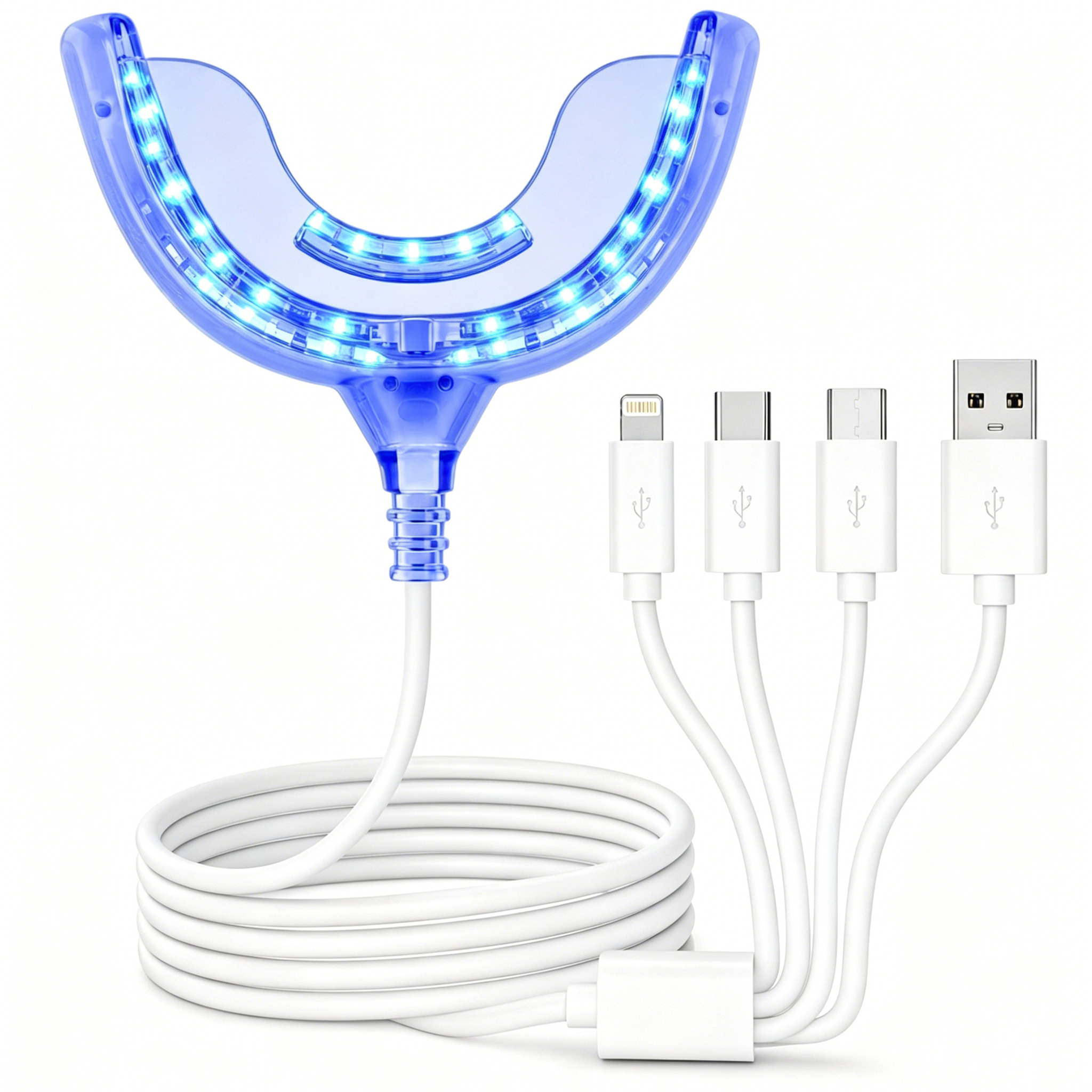
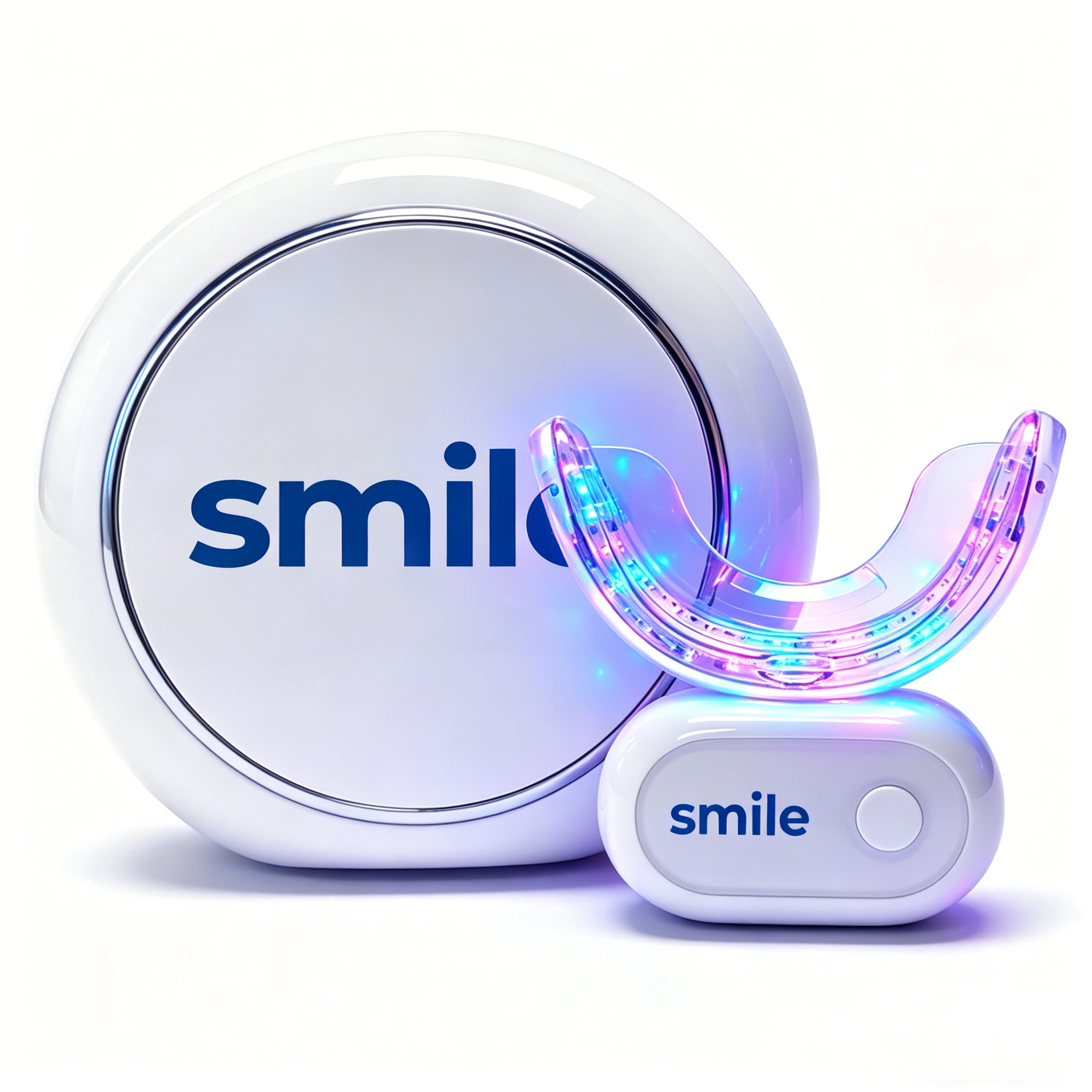
One important note on light activation: current umbrella-review evidence does not consistently support laser or LED activation as a clinical efficacy step, and in some protocols it produced less favorable sensitivity outcomes [3]. If your premium tier includes an LED device, position it as a client experience differentiator rather than a clinical accelerant. Overpromising on light-activated results creates expectation gaps that erode retention.
The Take-Home Bridge: Converting Single Visits Into Recurring Revenue
The most reliable driver of repeat bookings is a structured take-home protocol dispensed at the point of the first in-office visit. Without it, the client's whitening journey ends at checkout.
Systematic review data indicates that at-home bleaching results remain generally stable for approximately one to two and a half years, with recurrence more common in cases of severe discoloration [1]. Clinically, this means maintenance intervals of roughly twelve to eighteen months are appropriate for most clients. Your whitening service menu design should be built around that cycle — not structured on the assumption that clients need retreatment every few months.
The most effective take-home formats for bridging single visits into return appointments:
- Custom tray with syringe gel: Highest perceived clinical value, strongest compliance when the tray is fabricated in-office. Gel refill orders create a direct reorder relationship with your practice or retail channel.
- Prefilled tray or strip format: Lower barrier to compliance, easier to dispense at checkout. Strip formulations containing hydrogen peroxide and potassium nitrate have demonstrated clinically significant whitening over short daily-use periods while showing potential to reduce dentin hypersensitivity [5].
- Whitening pen: Effective as a between-visit touch-up product. Lower margin individually, but useful as a loyalty driver when included in a maintenance bundle.
Format selection should match your client profile. A dental clinic serving sensitivity-prone patients benefits from take-home products that incorporate desensitizing agents as standard. A spa operator serving a wellness-oriented clientele may prioritize a peroxide-alternative format — such as PAP (phthalimidoperoxycaproic acid) — for the take-home component, with peroxide reserved for the in-office tier.
Sensitivity Management as a Menu Line Item, Not an Afterthought
Sensitivity is the primary reason clients abandon whitening programs. Treating it as a menu line item — rather than a reactive response to complaints — changes both the clinical outcome and the revenue model.
The evidence is direct: both 6% and 35% hydrogen peroxide produce significant whitening, but higher concentrations carry substantially greater sensitivity risk [4]. Lower-concentration protocols are clinically preferable for sensitivity-prone patients, and that reality belongs in your menu structure — not just in how your team manages complaints after a session.
Practical menu applications:
- Offer a pre-treatment desensitizing application as a standalone line item at a modest fee, or include it as a built-in differentiator within your core and premium tiers.
- Stock take-home desensitizing gel separately from whitening gel, so clients who experience sensitivity have a defined next step rather than abandoning the program.
- Name potassium nitrate and sodium fluoride explicitly in your menu descriptions. These ingredients reduce sensitivity without compromising whitening outcomes [2], and naming them signals clinical credibility to informed buyers at every channel level.
A practice or spa that manages sensitivity proactively retains clients through the full treatment cycle. One that treats it as an afterthought loses them after the first session — along with all the maintenance revenue that follows.
Bundling Logic: Packaging Gel, Trays, and LED for a Higher Average Ticket
Bundling is not discounting. A bundle should combine products that serve distinct functional roles in a treatment sequence — not group items to hit an arbitrary price point. The distinction matters for margin and for how clients perceive professional value.
A structurally sound whitening bundle for a dental practice or spa:
| Bundle Component | Function | Menu Role |
|---|---|---|
| In-office peroxide gel application | Primary whitening event | Anchor treatment |
| Custom or prefitted take-home tray | Maintenance delivery vehicle | Compliance driver |
| Take-home gel (2–4 week supply) | Post-treatment stabilization | Refill reorder trigger |
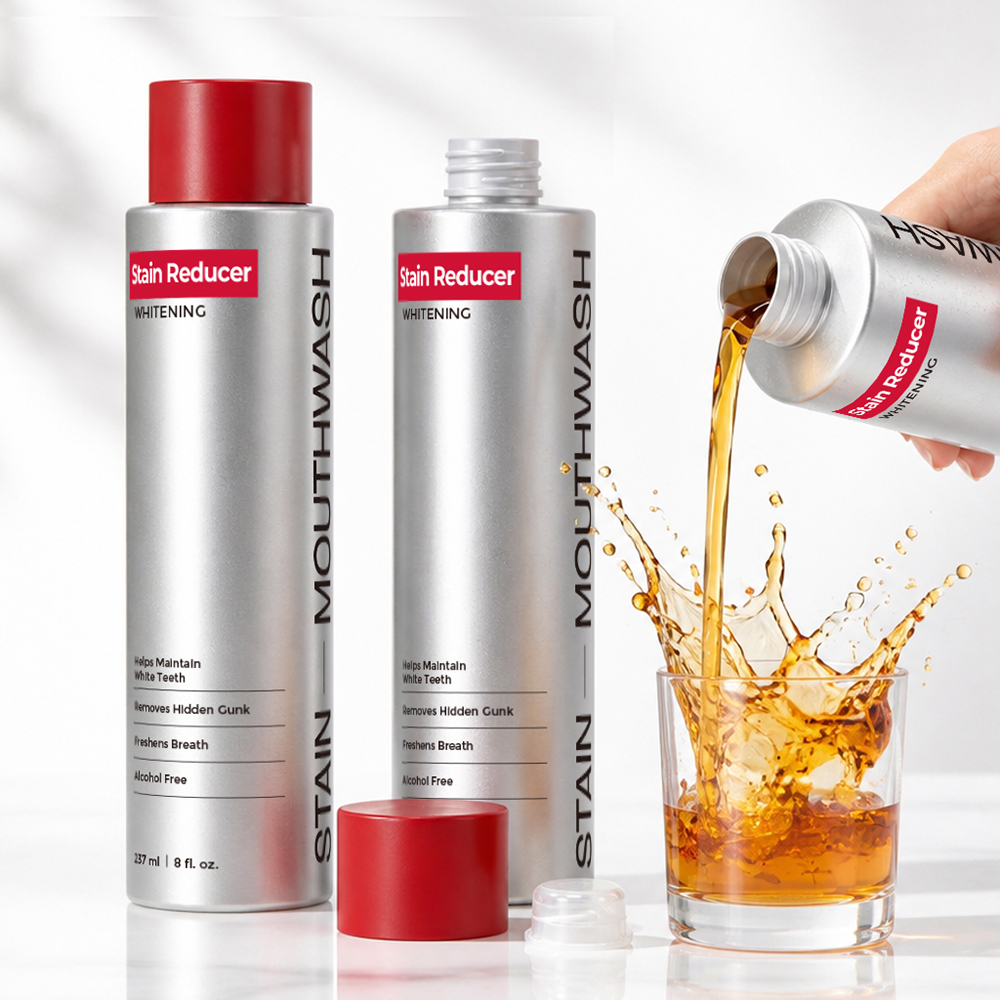
| Desensitizing gel or strip | Sensitivity management | Retention tool |
| LED mouthpiece (optional) | Client experience, perceived value | Premium tier differentiator |
The LED component warrants a direct note. Current evidence does not support light activation as a consistent clinical enhancer [3], so if you include an LED device in a bundle, price and describe it as an experience feature — not a clinical accelerant. Clients who understand what they are buying are less likely to feel misled and more likely to return.
For distributors and retailers building private-label whitening service menu design kits for clinic or spa accounts, bundling at the supply level — gel plus tray plus desensitizer in a single co-developed kit — simplifies procurement for the operator and creates a stickier supply relationship over time.
Pricing Thresholds That Signal Professional Value Without Compressing Margin
Whitening pricing is a positioning decision before it is a margin calculation. A price that is too low signals commodity. A price that is too high without visible clinical differentiation creates resistance. The goal is a threshold that communicates professional-grade outcomes without requiring constant justification.
Structural principles that hold across most markets:
- Anchor your premium tier visibly higher than your entry tier. The gap creates perceived value for the mid-tier, which is typically your highest-volume service.
- Price sensitivity management as additive rather than buried in entry-tier pricing. Clients who opt into a desensitizing protocol spend more and achieve better outcomes — both of which improve retention.
- Bundle pricing should reflect a modest saving relative to à la carte, but not so deep that it implies the individual components are overpriced. A saving in the ten to fifteen percent range is typically sufficient to drive bundle selection without significant margin erosion.
- Maintenance refill pricing should make reordering through your practice or retail channel clearly preferable to seeking alternatives. Convenience and formulation familiarity are your competitive advantages at this stage of the client relationship.
For operators sourcing private-label products, the cost-per-unit economics of a co-developed gel or strip format set the ceiling on what you can charge without compressing margin. Sourcing decisions made at the procurement stage directly determine pricing headroom at every menu tier.
Sourcing Consistency as a Whitening Service Menu Stability Strategy
A whitening service menu is only as reliable as the products behind it. Inconsistent sourcing — switching gel formulations between orders, substituting tray materials, or introducing unvetted LED devices — creates clinical variability that undermines client trust and complicates staff training.
For dental clinic owners and spa operators, sourcing consistency means:
- Working with a supplier whose formulations are stable across production batches, with documented ISO, FDA, or CE compliance as appropriate for your market.
- Confirming that peroxide concentrations are accurately labeled and consistent — particularly relevant if your menu specifies a concentration as part of a described clinical protocol.
- Ensuring take-home products carry the same formulation integrity as in-office gels. A client who experiences a noticeably different result from their take-home kit will attribute the discrepancy to the treatment, not the product change.
For distributors supplying multiple clinic or spa accounts, sourcing a private-label ready product line that is co-developed to consistent specifications across gel, strip, and tray formats eliminates the formulation variability that generates downstream service complaints.
Menu stability is a sourcing discipline. The practices and operators that build durable whitening revenue treat their product supply chain with the same rigor they apply to their service protocols — because the two are operationally inseparable.
References
- [1] Prognosis in Home Dental Bleaching: A Systematic Review — PubMed, National Library of Medicine
- [2] In-Office Tooth Bleaching Protocols: An Umbrella Review of Systematic Reviews and Meta-Analyses — Evidence-Based Dentistry and Oral Health, Springer
- [3] Do Laser and Light Activation Improve In-Office Dental Bleaching? An Umbrella Review — PubMed, National Library of Medicine
- [4] Efficacy and Tooth Sensitivity of Low- Versus High-Concentration Hydrogen Peroxide in In-Office Dental Bleaching — PubMed, National Library of Medicine
Disclaimer
This article is for general informational purposes only and does not constitute sourcing, legal, or regulatory advice. Always conduct your own due diligence and consult qualified legal or compliance professionals before making purchasing or compliance decisions. WhiteningBright makes no warranties as to the completeness or accuracy of the information, and any reliance is at your own risk.