How to Brush and Floss Without Undoing Whitening
5. Juli 2026
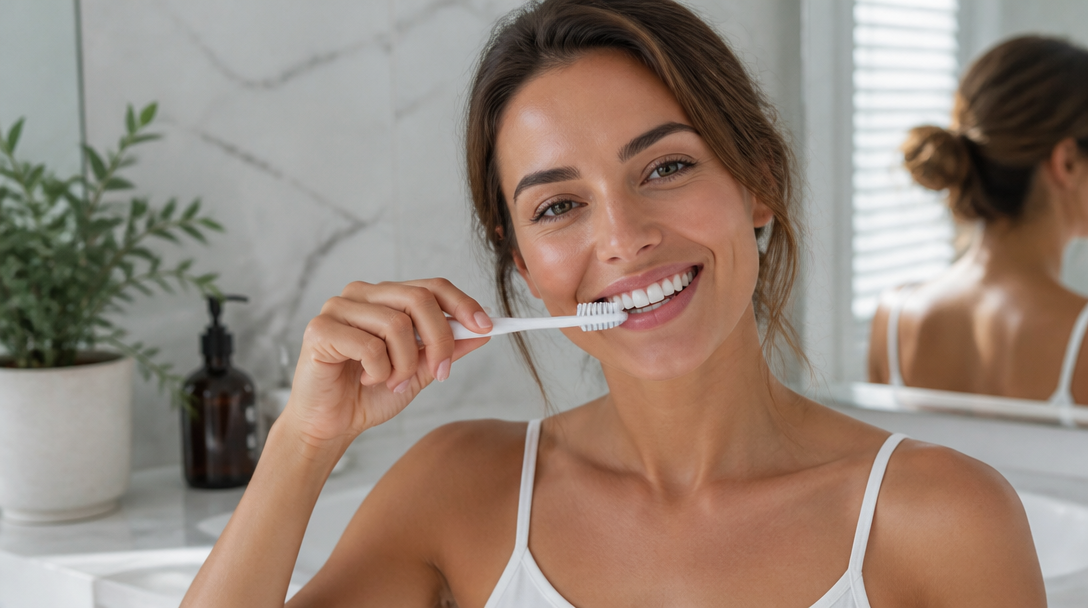
Master the brushing technique after whitening to protect enamel, reduce sensitivity, and keep your smile brighter for longer with daily habits that work.
Why Your Routine Matters More After Whitening Than Before
Most people treat the whitening session as the finish line. It is not. The brushing technique after whitening you use in the days and weeks that follow determines how long your results actually hold. Get it wrong and you risk abrading temporarily vulnerable enamel, irritating sensitive gums, or letting new staining settle in within days of treatment.
Whitening agents — whether peroxide-based or PAP-based — lift pigment by opening the enamel's surface structure. That process leaves enamel in a temporarily more porous state. Your daily brushing and flossing routine either supports recovery and protects brightness, or it works against both. This guide covers exactly how to adjust your technique, tools, and timing.
The Correct Brushing Technique After Whitening
The governing principle is gentle precision, not force. The National Institute of Dental and Craniofacial Research (NIDCR) recommends angling bristles at 45 degrees toward the gumline and using small circular motions rather than back-and-forth strokes. That angle cleans just beneath the gum margin where plaque accumulates, without dragging abrasively across the enamel surface.
Duration matters as much as angle. The American Dental Association (ADA) confirms that a two-minute brushing session significantly reduces plaque compared to shorter efforts. Split that time evenly across all four quadrants — 30 seconds each. Most people underestimate how brief 30 seconds actually feels until they time it.
Two specific adjustments are worth making immediately after treatment:
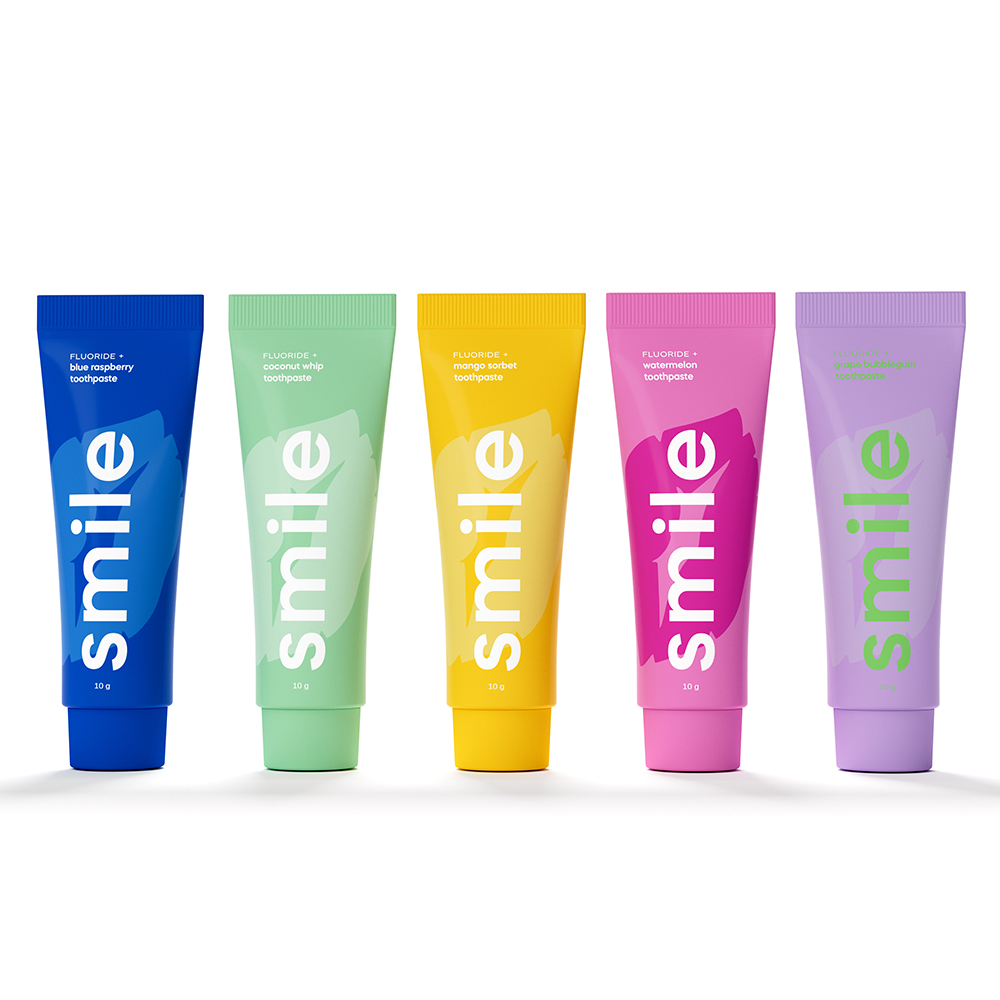
- Switch to a sensitive-formula fluoride toothpaste. Standard whitening toothpastes rely on abrasive particles to polish surface stains. On post-treatment enamel, that abrasion drives sensitivity and long-term wear. A non-abrasive fluoride toothpaste protects the surface and supports remineralization during recovery.
- Reduce pressure. If your bristles are visibly splaying within a few weeks, you are brushing too hard. Light, consistent contact removes plaque. Force does not improve the outcome — it damages enamel and contributes to gingival recession over time.
If sensitivity persists after treatment, dental professionals often recommend beginning a sensitive toothpaste at least two weeks before your next whitening session, not just after. Pre-conditioning the enamel reduces the discomfort cycle rather than reacting to it.
How Flossing Protects Whitening Results
Whitening agents do not reach the contact points between teeth as effectively as the visible front surfaces. Interproximal areas — the tight spaces between teeth — accumulate debris and early staining that undermines overall brightness even when the front surfaces look clean. Flossing is not optional after whitening; it is arguably more important than before.
The ADA recommends flossing once daily. Most dental professionals suggest doing this at night, before your final brush, so food particles and bacteria are not sitting against your enamel for eight hours while you sleep.
There is a practical sequencing tip supported by clinical guidance: for people who are cavity-prone or concerned about enamel health, brush first with fluoride toothpaste, spit but do not rinse, then floss. This approach carries residual fluoride between the teeth, extending its protective contact with the interproximal enamel surfaces that are hardest to reach.
Consistent flossing also supports benefits that go well beyond aesthetics. Research cited by Prisma Health, drawing on a large-scale study, found that regular flossing may reduce the risk of stroke associated with blood clots — a finding linked to the role of oral bacteria in systemic inflammation. That context elevates flossing from cosmetic routine to foundational health behavior.
Tools That Protect Results — and Tools That Undo Them
Use These After Whitening
- Soft-bristle manual or electric toothbrush: Both are effective when used correctly. The critical variable is technique and pressure, not the device. An electric brush with a built-in pressure sensor can prevent over-brushing without requiring constant attention.
- Non-abrasive fluoride toothpaste: Fluoride supports enamel remineralization after treatment. The ADA recommends twice-daily use for optimal reduction of caries risk and gingival recession.
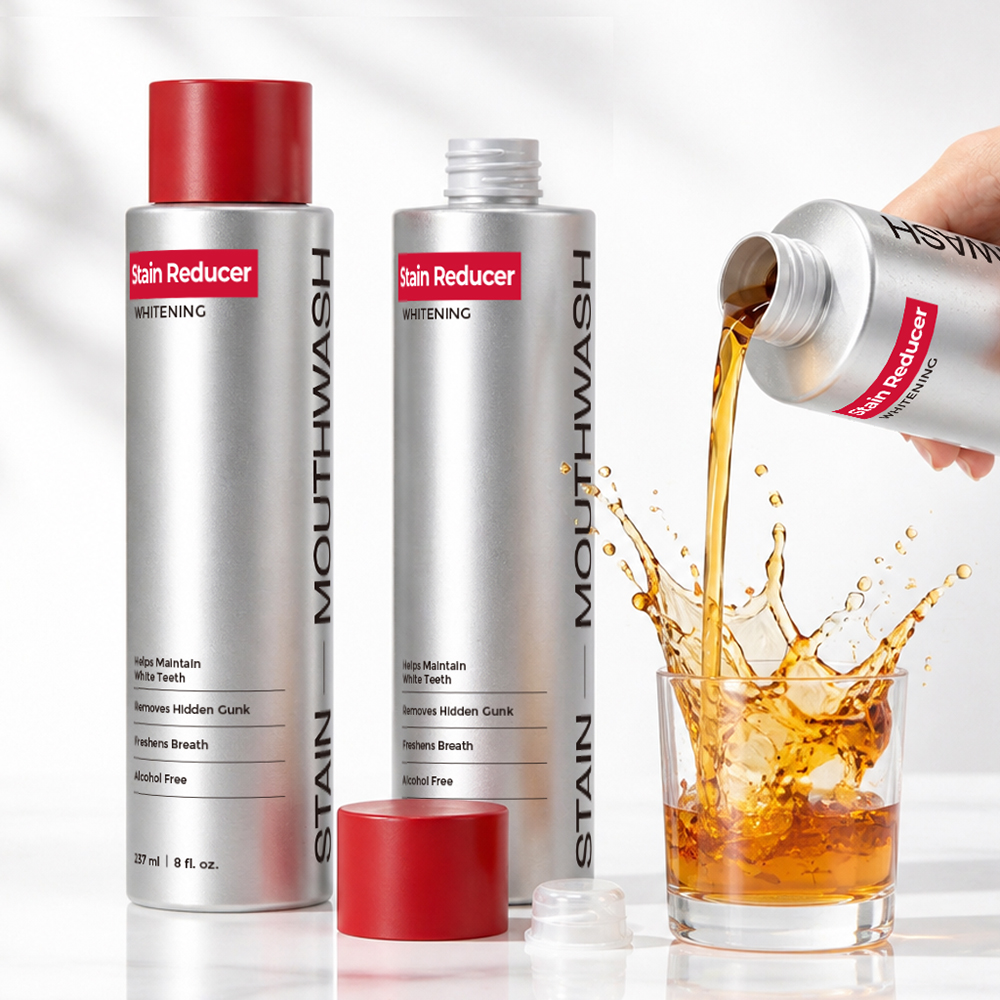
- Fluoride mouthrinse: Particularly useful for people with higher cavity risk. The ADA recognizes fluoride mouthrinses as effective for caries risk reduction when used consistently as part of a daily routine.
- Custom-fitted whitening trays (for maintenance): If you plan at-home touch-ups, custom trays from a dentist keep whitening gel against the tooth surface and away from gum tissue. Gum contact with peroxide gel is a primary cause of post-treatment irritation. Clinical guidance from Enamel Dentistry confirms that properly fitted trays enable the chemistry to target intrinsic stains effectively.
Avoid These After Whitening
- Charcoal toothpaste: Despite widespread marketing claims, charcoal-based products are often highly abrasive. Guidance aligned with the ADA notes that charcoal can cause measurable enamel wear and sensitivity — precisely the outcomes post-treatment enamel is most vulnerable to.
- High-abrasion whitening toothpastes: These physically scrub surface stains. On post-treatment enamel, that mechanism is counterproductive. Surface abrasion cannot maintain the intrinsic whitening achieved by peroxide or PAP chemistry.
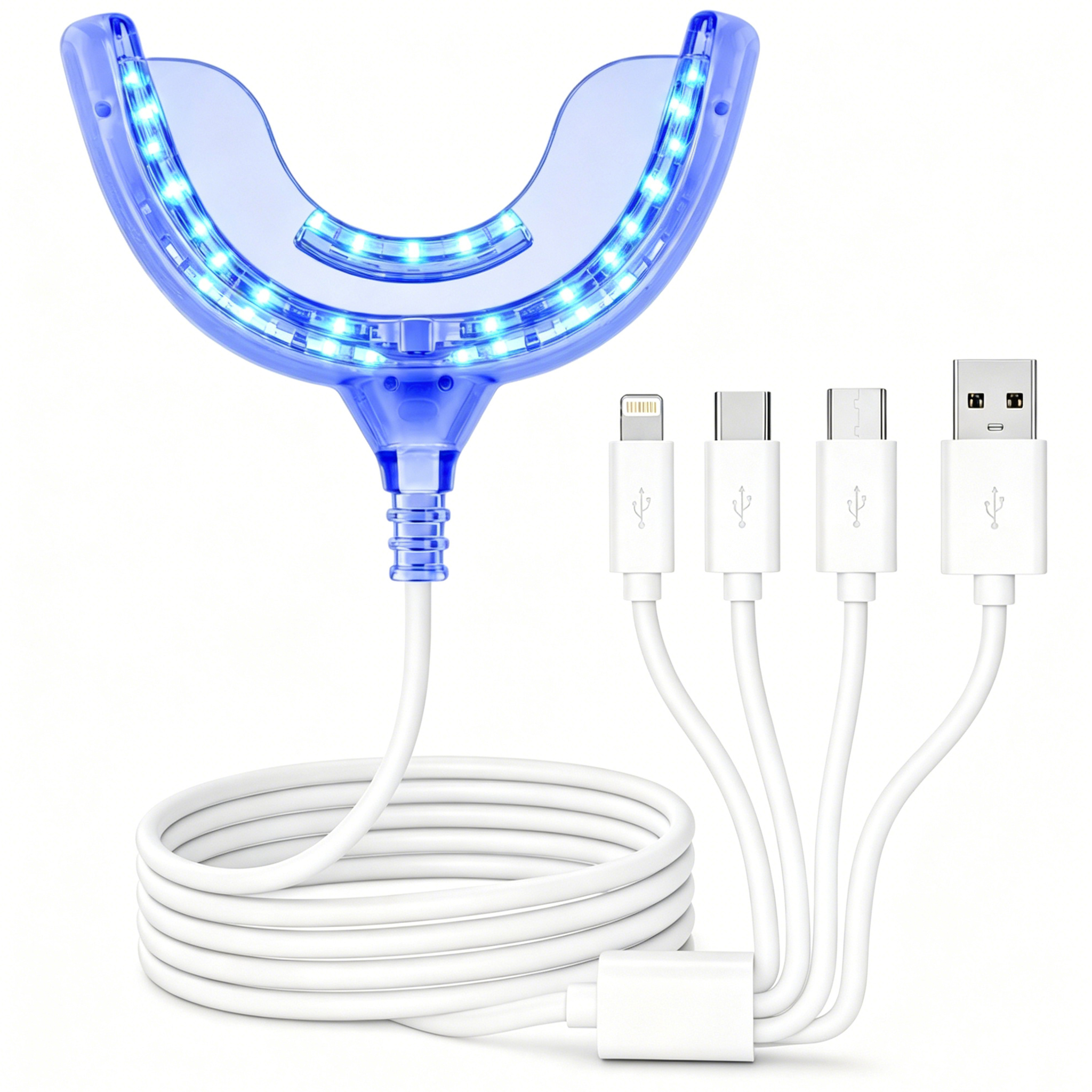
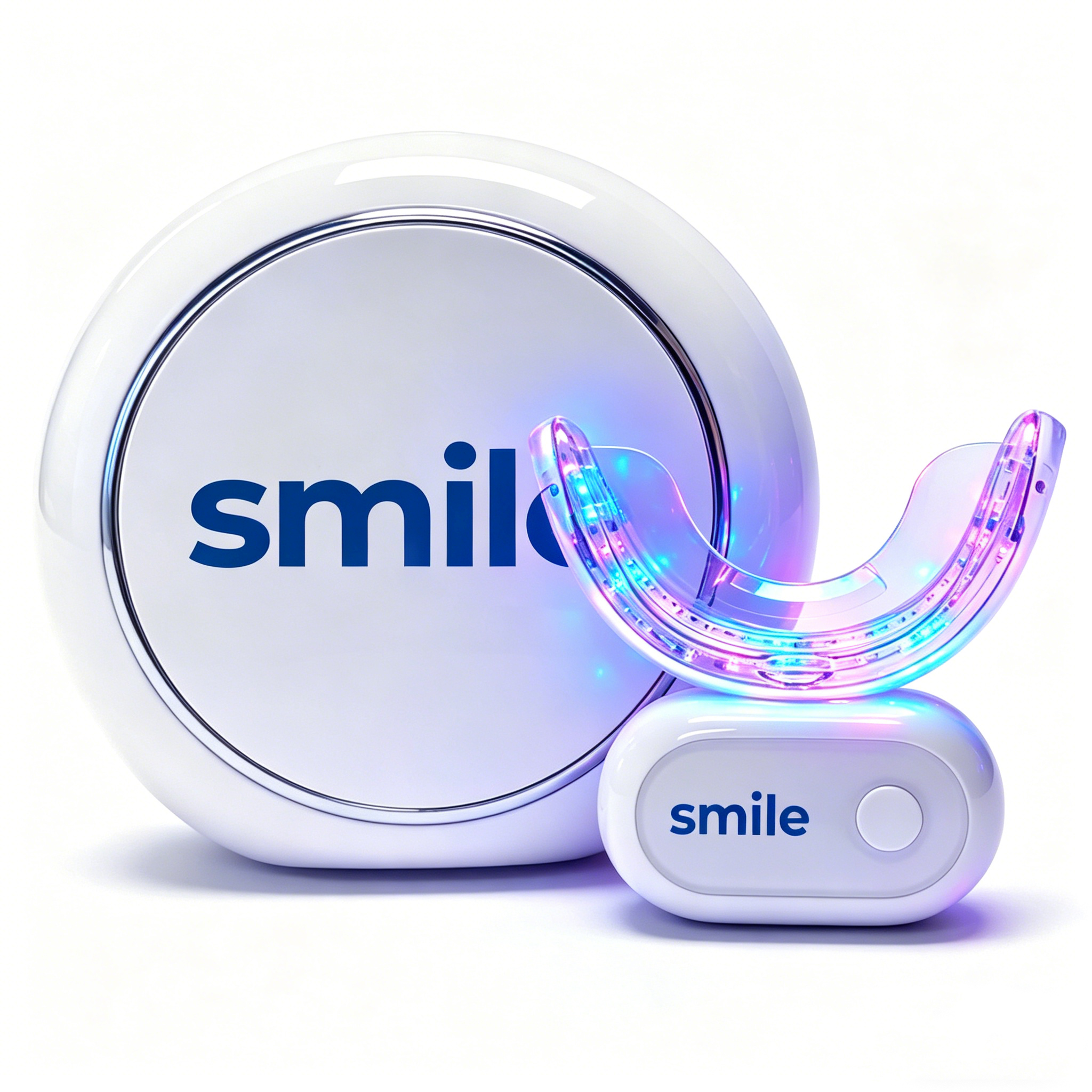
- Low-quality LED whitening devices: Many consumer LED devices are essentially blue lights with no meaningful whitening benefit. The light alone does not activate chemistry without a properly formulated gel. If you use an LED device for maintenance, the gel formulation determines the outcome — not the light.
- Hard-bristle brushes: No clinical evidence supports harder bristles as more effective at plaque removal. They do, however, contribute to gingival recession and enamel abrasion with consistent use.
Timing Your Routine Around Meals and Staining Foods
The 48 hours immediately after whitening represent the highest-risk window for new staining. Enamel is more porous during this period, and pigment-rich foods or drinks can penetrate more readily than they would under normal circumstances.
During this window, apply three practical rules:
- Avoid dark-pigmented foods and drinks. Coffee, tea, red wine, tomato-based sauces, and dark berries are the primary offenders. This is a short-term precaution, not a permanent restriction — but the post-treatment window is when it matters most.
- Do not brush immediately after acidic foods or drinks. Acid temporarily softens enamel. Brushing within 30 minutes of consuming citrus, vinegar-based foods, or carbonated drinks can abrade enamel in its softened state. Rinse with water and wait.
- Rinse after staining foods when brushing is not immediately possible. A water rinse does not replace brushing, but it dilutes surface pigments before they settle into the enamel.
Beyond the immediate post-treatment period, the same logic applies long-term. Brushing twice daily with consistent technique is the single most reliable way to prevent surface staining from accumulating. The ADA's twice-daily recommendation ties directly to reducing both caries risk and gingival recession — two outcomes that affect how healthy and bright your smile looks over time.
Building a Brushing Technique After Whitening Into a Long-Term Habit
Whitening results are not permanent. They fade as dietary pigments, natural aging, and surface accumulation work against them. The practical question is how long you can extend the interval between treatments through consistent daily care.
A sustainable post-whitening routine looks like this:
- Brush twice daily for two minutes each session, with a soft-bristle brush angled at 45 degrees to the gumline
- Use a non-abrasive fluoride toothpaste consistently — not a rotating selection of whitening, charcoal, or specialty products
- Floss once daily, preferably at night, before your final brush
- Rinse with water after staining foods when brushing is not immediately possible
- Schedule regular dental exams — professional cleanings remove calcified tartar that no at-home routine can address
On maintenance whitening: dental guidance suggests repeating treatment every three to four months as a reasonable interval for most people. More frequent treatments do not accelerate results and increase the risk of sensitivity and enamel stress. For at-home touch-ups, low-strength formulations at or below 10% carbamide peroxide are appropriate for unsupervised use, based on ADA-aligned recommendations.
Whitening changes the color of your teeth. Brushing and flossing protect the health and surface integrity of your enamel. These two goals are fully compatible — but only when your technique and tools are chosen with both in mind.
If you have persistent sensitivity, visible gum irritation, or uncertainty about which products suit your enamel condition, consult your dentist before your next treatment. That conversation is always the right first step.
References
- National Institute of Dental and Craniofacial Research (NIDCR) — Oral Hygiene
- American Dental Association (ADA) — Home Oral Care
- American Dental Association (ADA) — Tooth Whitening
Note: The Prisma Health large-scale study on flossing and stroke risk was cited from institutional health communications. A direct peer-reviewed link was not available in the source material provided; the finding is attributed to Prisma Health's reporting of published research.
Disclaimer
This article is for general informational purposes only and is not a substitute for professional dental or medical advice. Always consult a qualified dental professional before starting any teeth-whitening or oral-care regimen. WhiteningBright makes no warranties as to the completeness or accuracy of the information, and any reliance is at your own risk.