How to Structure a Whitening Menu That Sells Up
30. Juli 2026
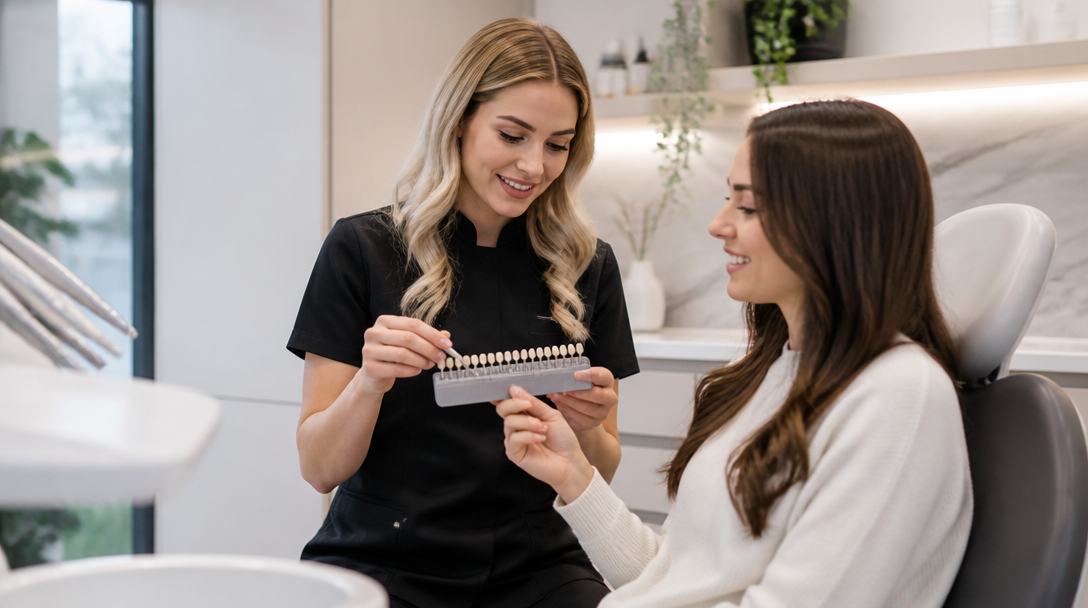
Structure your whitening service menu pricing into three tiers, match product formats, calculate chair margin, and build upsell sequences that convert.
Why Your Whitening Service Menu Pricing Leaves Revenue Behind
Most dental clinics and spas treat teeth whitening as a single line item: one treatment, one price. That structure compresses every patient — from the first-timer wanting a subtle lift to the bride chasing maximum results — into one revenue point, and it eliminates every natural upsell opportunity in the process. A well-designed whitening service menu pricing framework changes that dynamic entirely by giving patients a decision, not a take-it-or-leave-it offer.
The problem is rarely the product. It is the architecture around the product. This article delivers a step-by-step framework to build a tiered whitening menu, match the right product formats to each tier, calculate real margin per chair, and create upsell sequences that feel like clinical guidance — not a sales pitch.
The Three-Tier Model: Entry, Core, and Premium
A tiered menu gives patients agency and gives your team a structured conversation. The goal is not to discount the entry tier — it is to make each higher tier feel earned and clearly differentiated on clinical grounds.
Entry Tier: Access and Screening
This tier serves patients who are new to professional whitening or cautious about cost. It typically includes a consultation, a shade assessment, and a take-home kit dispensed chairside. Chair time is minimal; product margin is solid. It also functions as a clinical screen — you identify sensitivity-prone patients before advancing them to higher-concentration in-office treatments, reducing the risk of adverse effects documented in safety reviews of whitening products.
Core Tier: In-Office Treatment
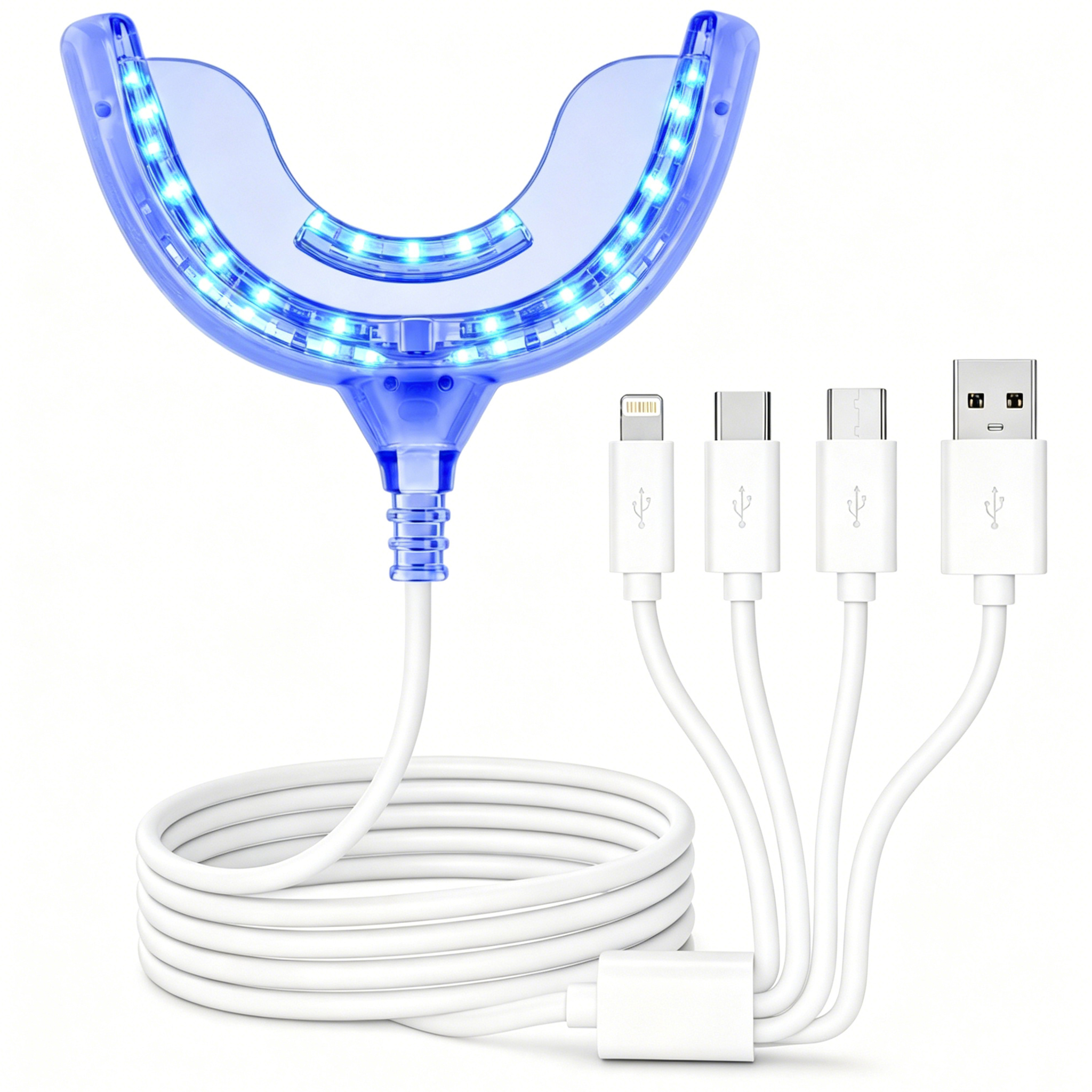
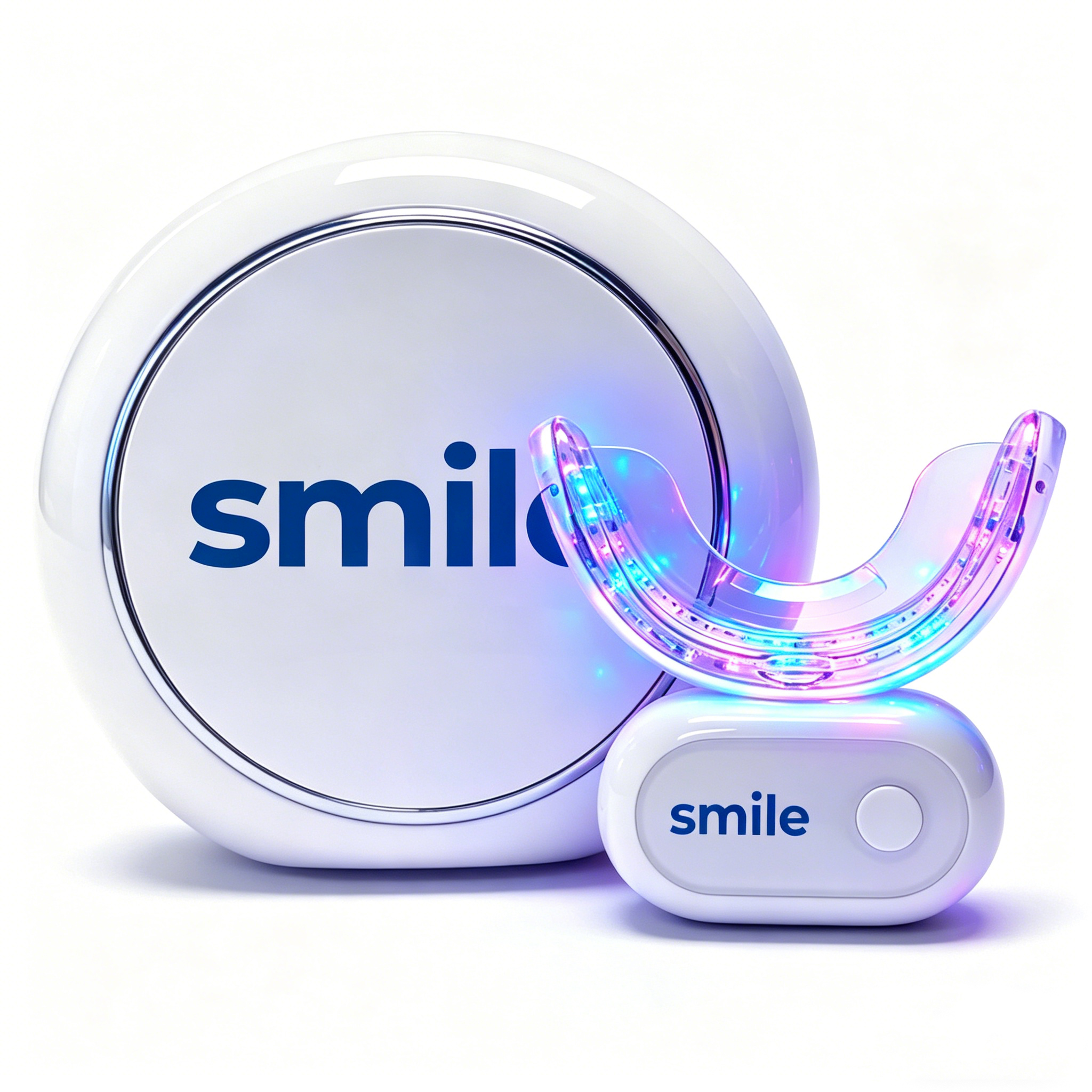
This is your primary revenue driver. An in-office session using a professional-grade gel — hydrogen peroxide or PAP (phthalimidoperoxycaproic acid) — with or without a light activation device. The American Dental Association recognizes in-office treatment as a distinct professional-level modality separate from take-home and OTC options, which gives your team a defensible clinical rationale for the price step-up. This is where chair time, product cost, and session pricing require careful modeling.
Premium Tier: Combined Protocol
The premium tier pairs an in-office session with a customized take-home maintenance kit, a sensitivity management add-on, and a follow-up shade check. A systematic review published in a peer-reviewed journal found that whitening outcomes depend on product type, concentration, and duration of use — which means a combined in-office-plus-take-home protocol carries a defensible clinical rationale, not just a commercial one.
Matching Product Formats to Each Tier
Product format selection is where whitening service menu pricing becomes a sourcing decision. Each tier demands a different format profile, and mismatches between format and tier create friction at the chair.
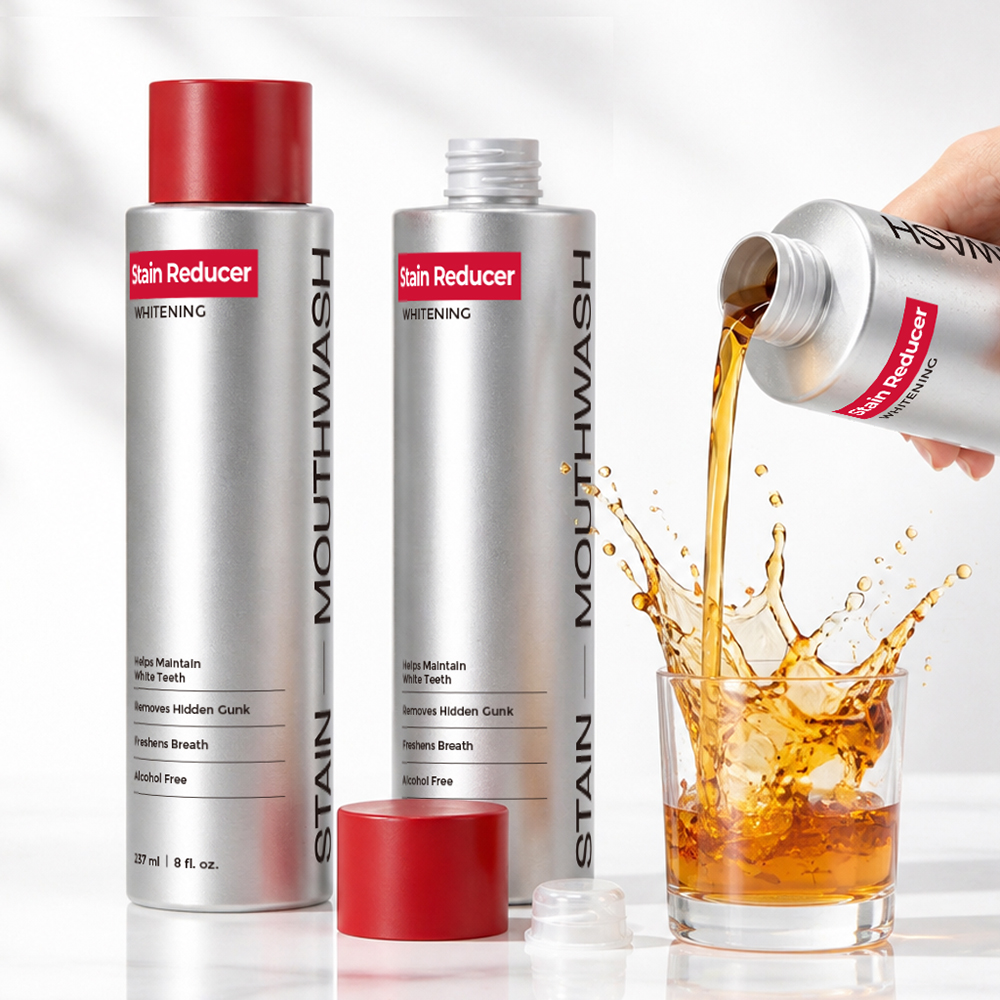
- Entry tier: Pre-filled whitening pens, single-arch strip systems, or low-concentration take-home gels in standard trays. These require minimal chair time to dispense and explain. The FDA distinguishes between cosmetic whitening products and those making drug-level claims — OTC-positioned products in this tier must carry compliant labeling for your market.
- Core tier: Professional-strength in-office gels at concentrations appropriate for supervised clinical use, or PAP formulations for clinics that want a peroxide-free option with a favorable sensitivity profile. Syringe-applied gels with gingival barriers give you application control and reduce soft tissue irritation — an adverse effect confirmed in published safety reviews of whitening products.
- Premium tier: Custom-tray take-home systems paired with the in-office treatment. For sensitivity-prone patient populations, consider formulations that incorporate hydroxyapatite. Clinical evidence — including a systematic review and meta-analysis published on PubMed — supports hydroxyapatite's role in reducing dentin hypersensitivity, making it a meaningful clinical add-on for patients who have previously avoided whitening due to discomfort.
When evaluating private-label-ready product lines for each tier, confirm that formats are co-developed with ISO-compliant manufacturing and carry the regulatory clearances relevant to your market — CE marking for the EU, FDA registration for the US, or equivalent national standards.
Calculating Margin Per Chair Per Session
This is the number most clinic owners skip, and it is the most critical input for any whitening service menu pricing decision. Build your margin model around four variables: product cost per session, consumables (barriers, trays, bibs, PPE), chair time cost, and your retail price.
Chair time cost is calculated by dividing your hourly overhead by the number of billable hours in a day, then multiplying by session duration. Run this calculation for each tier before setting prices.
| Tier | Typical Session Duration | Key Cost Drivers | Primary Margin Lever |
|---|---|---|---|
| Entry | 15–20 min | Take-home product cost, brief consultation | Product retail markup |
| Core | 45–60 min | In-office gel, light device amortization, chair time | Session volume, sensitivity add-on |
| Premium | 60–75 min + follow-up | In-office gel, custom trays, take-home kit | Bundle pricing, repeat visit cadence |
Margin per chair improves most reliably when you reduce product cost through volume purchasing and increase average transaction value through bundling — not by cutting session time. Rushing an in-office treatment increases the risk of sensitivity complaints, which erodes patient retention.
Clinics running a meaningful volume of whitening sessions annually reach order quantities that justify a co-developed private-label program with consistent per-unit economics — rather than ad hoc retail purchasing at unpredictable price points.
Upsell Sequences That Convert Without a Hard Sell
The most effective upsell in a whitening menu is a clinical recommendation, not a sales script. Patients respond to specificity. "Based on your shade assessment, a take-home maintenance kit will extend your result by several weeks" is a clinical statement. "Would you like to add our premium kit?" is a sales prompt. The first converts at a meaningfully higher rate.
Structure your upsell sequence around three natural touchpoints:
- Pre-treatment consultation: Present the full menu at shade assessment. Show the patient where they are on the shade scale and where each tier can realistically take them. The ADA notes that whitening only affects natural tooth structure — not crowns, veneers, or composite restorations — so this is the moment to set accurate expectations and document them in the patient record.
- Mid-treatment: If a patient is tolerating the in-office session well, the clinician or technician can mention the take-home maintenance option as a way to protect the result. This is a clinical handoff, not a pressure point.
- Post-treatment shade check: Compare the post-treatment shade to the documented baseline. A visible, measurable result is the strongest conversion tool available. Offer the maintenance kit at this point as a retention product — framing it as aftercare, not an upsell.
Sensitivity management is a separate upsell category with strong clinical backing. Published safety reviews confirm that tooth sensitivity and gingival irritation are the primary documented adverse effects of whitening treatments. Offering a hydroxyapatite-based desensitizing product or remineralizing gel as a post-treatment add-on is both clinically appropriate and commercially sound.
Bundling Take-Home Products Into the In-Chair Experience
Bundling is the most underused margin tool in whitening service menu pricing. Done well, it raises average transaction value while giving the patient a sense of receiving a complete clinical protocol — not a product push.
The most effective bundle pairs the in-office treatment with a take-home product that addresses a specific clinical need identified during the visit:
- A patient with mild sensitivity during treatment leaves with a hydroxyapatite remineralizing gel — positioned as part of the aftercare protocol, priced into the premium tier.
- A patient on a maintenance schedule receives a whitening pen and a low-concentration take-home gel as a named "between-visit kit" — sold as a single bundle price, not two separate line items.
- A new patient booking the entry tier is offered an upgrade to the core tier at a defined price difference — framed as a clinical recommendation based on their shade goal, not a promotional offer.
When sourcing take-home products for bundling, prioritize formats that are private-label ready and visually consistent in packaging with your in-office line. Brand continuity between in-office and take-home products reinforces the perception of a complete clinical system rather than an assortment of unrelated items.
What to Track in the First 90 Days
A new whitening menu requires a 90-day performance review before you adjust pricing or product mix. These five metrics give you the clearest picture:
- Tier distribution: What percentage of whitening patients book each tier? If fewer than one in five reach the premium tier, the price gap or the clinical rationale for upgrading likely needs adjustment.
- Take-home attachment rate: How many in-office patients leave with a take-home product? A low rate typically signals the recommendation is not being made consistently — a training issue, not a pricing issue.
- Sensitivity complaint rate: Track post-treatment sensitivity reports by tier and product. If complaints cluster around a specific concentration or format, adjust the protocol before the 90-day review — not after.
- Repeat booking rate: Whitening results are not permanent. Patients who understand the maintenance requirement become your most reliable recurring revenue source. Track how many return within 90 days for a maintenance session or product refill.
- Revenue per whitening visit: Total whitening revenue divided by total whitening visits each month. This single number tells you whether your bundle and upsell sequences are working.
At the 90-day mark, compare tier distribution and revenue-per-visit against your original margin model. Most clinics find one tier underperforming — usually because the price point, the clinical rationale, or the product format is misaligned. Adjust one variable at a time and retest over the following 30 days.
A structured whitening service menu pricing system is not a one-time design project. It is an operational framework that sharpens with data. Clinics and spas that generate consistent whitening revenue treat menu design as an ongoing clinical and commercial discipline — not a price list they revisit once a year.
References
- American Dental Association — Whitening (Oral Health Topics)
- U.S. Food and Drug Administration — Is It Really "Whitening"?
- PubMed — Efficacy of Tooth Whitening Products Over Time: A Systematic Review
- PubMed — Clinical Evidence of Hydroxyapatite for Reducing Dentin Hypersensitivity: Systematic Review and Meta-Analysis
Disclaimer
This article is for general informational purposes only and does not constitute sourcing, legal, or regulatory advice. Always conduct your own due diligence and consult qualified legal or compliance professionals before making purchasing or compliance decisions. WhiteningBright makes no warranties as to the completeness or accuracy of the information, and any reliance is at your own risk.