Take-Home Kit Formats Driving B2B Orders Right Now
26. September 2026
A format-level breakdown of take-home whitening kit formats B2B buyers are ordering — tray, strip, LED-bundled, and PAP-only — with compliance and sourcing guidance.
Take-Home Kit Formats Driving B2B Orders Right Now
Why Take-Home Whitening Kit Formats B2B Buyers Specify Have Changed
For dental clinic owners, spa operators, and distributors evaluating take-home whitening kit formats for B2B purchasing, the category has shifted from a post-treatment add-on to a primary revenue line. Clinical research published in Medicina (2023) confirms that take-home whitening systems produce strong outcomes, though they require longer treatment durations than in-office procedures — a characteristic that drives repeat purchasing and sustained patient engagement rather than limiting demand.
That dynamic is precisely what makes the category commercially attractive. A patient who completes an in-office session and leaves with a maintenance kit becomes a recurring revenue source. A distributor who stocks two or three complementary formats can serve clinics, premium pharmacies, and wellness brands from a single whitening line.
The format question — tray, strip, LED-bundled, or PAP-only — is now a sourcing decision with real margin and compliance implications. This breakdown covers what professional buyers are specifying, where each format is gaining traction, and what to resolve with your supplier before committing volume.
Tray-and-Gel Kits: What B2B Buyers Are Specifying in 2026
Custom-fit tray systems remain the most specified format among dental clinic buyers. The mechanics are well understood by practitioners: a thermoplastic or pre-formed tray holds a peroxide or PAP gel against the tooth surface for a defined contact period, delivering consistent coverage across the arch.
What has changed is what buyers are asking for at the specification level. Clinics sourcing private-label tray kits are increasingly requesting:
- Dual-arch tray configurations with universal sizing, reducing the need for chair-side customization
- Gel concentration options — typically a lower-concentration formula for sensitive patients and a standard formula for maintenance protocols
- Syringe-fill formats over pre-loaded trays, allowing practitioners to control dosage and extend kit shelf life
- ISO and CE documentation for markets requiring device classification, particularly in the EU and GCC regions
The ADA's product standards framework identifies safety and efficacy as the baseline for professional-grade oral care products. Buyers sourcing tray kits for clinic resale should confirm that gel formulations align with accepted safety profiles and that whitening claims are evidence-backed. The ADA Seal of Acceptance, where applicable, signals that a product has been evaluated for safety and effectiveness in removing surface stains.
From a reorder standpoint, tray-and-gel kits generate consistent volume because the gel is a consumable. A clinic distributing kits to post-treatment patients will reorder gel refills on a predictable cycle — making this format one of the most reliable structures for building recurring B2B revenue.
LED-Integrated Take-Home Whitening Kit Formats B2B Operators Are Scaling
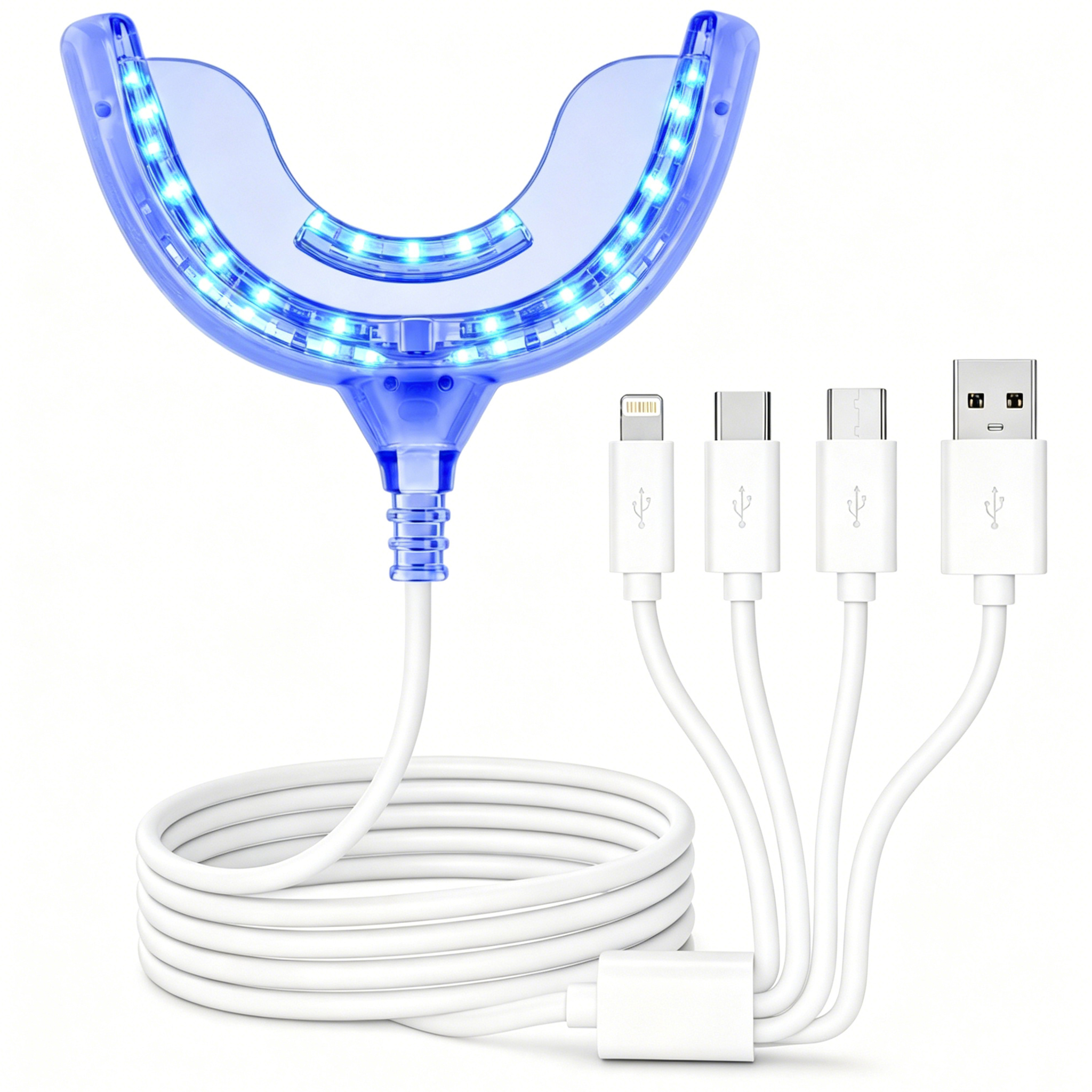
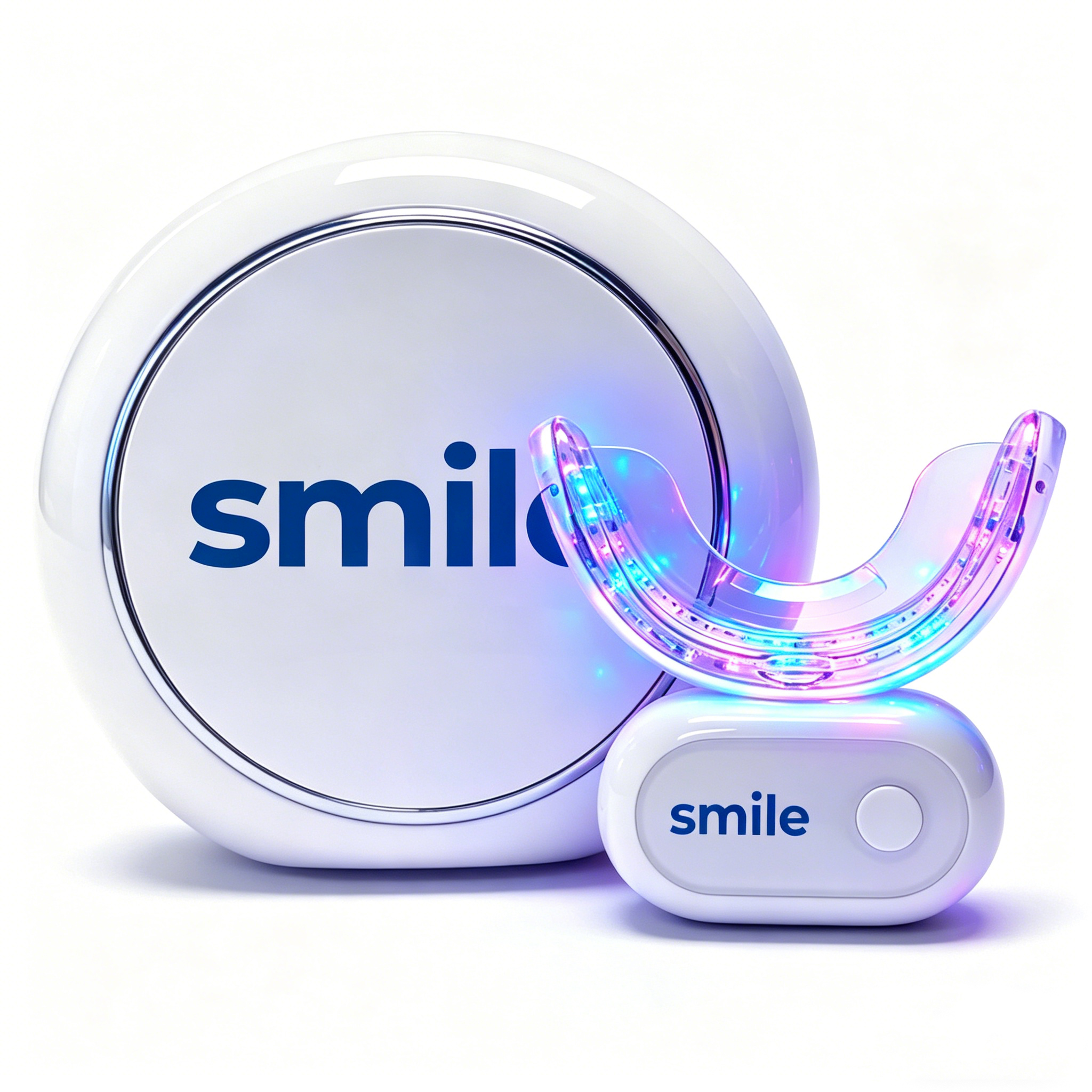
LED-bundled take-home kits generate strong interest from spa operators and DTC wellness brands, but they carry a higher compliance burden than gel-only formats. The LED device component — even a low-power, consumer-grade accelerator light — may be classified as a medical device in certain markets, triggering separate registration requirements from the whitening gel itself.
Before committing to an LED-integrated format, professional buyers should resolve the following with their supplier:
- Device classification: Is the LED light classified as a cosmetic accessory or a medical device in your target market? This determines whether CE marking, FDA 510(k), or equivalent documentation is required.
- Wavelength specification: Blue-light LED accelerators typically operate in the 400–500 nm range. Confirm the wavelength is documented and consistent across production batches.
- Battery and charging compliance: USB-rechargeable devices must meet regional electrical safety standards. For EU distribution, this includes RoHS and WEEE compliance.
- Gel-device compatibility: The LED component adds value only if the gel formulation is engineered to respond to light activation. Confirm this is validated, not assumed.
For spa operators, LED kits offer a strong retail narrative — the device gives the kit perceived premium value and supports a higher retail price point. For distributors building multi-SKU lines, LED kits typically sit at the top of a tiered range, with gel-only or strip formats positioned as entry-level options.
PAP-Only Formulas: Why Enamel-Safe Claims Are Driving New SKUs
Phthalimidoperoxycaproic acid (PAP) has moved from niche ingredient to mainstream specification request. PAP delivers oxidative whitening action without releasing free radicals in the same manner as hydrogen peroxide, which supports enamel-safe positioning and makes it viable for markets where peroxide concentration limits are restrictive.
For B2B buyers, PAP-only formulas are generating new SKU development in three specific scenarios:
- EU and UK distribution: Regulatory limits on hydrogen peroxide in consumer whitening products have made PAP a practical alternative for brands that want to operate across multiple markets without reformulating for each jurisdiction.
- Sensitive-patient protocols: Dental clinics serving patients with dentinal hypersensitivity are specifying PAP formulas as a maintenance option alongside standard peroxide-based professional treatments.
- Premium DTC and pharmacy positioning: Beauty-line founders and premium pharmacy buyers are drawn to the enamel-safe claim as a differentiator in a crowded whitening shelf set.
The ADA's guidance on accepted whitening products focuses on safety and effectiveness for surface stain removal. Buyers sourcing PAP-based private-label kits should ensure that efficacy claims are supported by formulation data, not ingredient marketing alone. PAP concentration, pH stability, and delivery format — gel, strip, or dissolvable — all affect clinical performance.
From a sourcing standpoint, PAP formulas typically require more precise manufacturing controls than standard peroxide gels. When co-developing a PAP-based SKU, confirm that your supplier can provide stability testing data and batch-level quality documentation before production begins.
Strip-Format Take-Home Kits: Where the Format Fits and Where It Stalls
Whitening strips occupy a specific position in the professional take-home category — high consumer familiarity, low barrier to compliance, but limited differentiation at the premium end of the market.
For distributors supplying pharmacy chains or general wellness retailers, strips are a practical entry-level format. The format requires no applicator, no mixing, and minimal patient instruction, which reduces the support burden for non-dental retail channels. Strip kits also pack efficiently, lowering per-unit shipping costs at volume.
Where strips stall is in dental clinic resale and premium spa retail. Clinic buyers tend to view strips as a commodity format — difficult to brand meaningfully and harder to justify at a premium price point relative to tray or LED-bundled alternatives. Spa operators sourcing for retail display often find that strip packaging underperforms on shelf presence compared to boxed tray or device-inclusive kits.
The format holds a defensible role in multi-SKU lines as a maintenance or travel option — positioned below the flagship tray or LED kit and priced accordingly. Distributors building tiered whitening ranges often include a strip SKU to capture the value-segment buyer without discounting their premium formats.
Format Stacking: How Distributors Are Building Multi-SKU Whitening Lines
The most commercially durable approach among distributors right now is format stacking — building a whitening line that covers two or three format tiers rather than committing to a single product type. This mirrors how professional buyers actually purchase: a dental clinic may want a tray-and-gel kit for post-treatment patients, a PAP-formula option for sensitive cases, and a strip or single-use format for travel maintenance.
A functional three-tier structure for a private-label whitening range typically looks like this:
| Tier | Format | Primary Channel | Key Buyer Benefit |
|---|---|---|---|
| Entry | Strip or single-use gel sachet | Pharmacy, wellness retail | Low unit cost, high compliance |
| Mid | Tray-and-gel kit (PAP or peroxide) | Dental clinic, spa retail | Professional positioning, refill revenue |
| Premium | LED-integrated kit | DTC, premium pharmacy, spa | Device value, higher retail margin |
The ADA's home oral care framework supports patient-directed maintenance as a complement to professional treatment — a positioning that distributors can use to justify multi-format lines to dental clinic buyers. Clinics that stock a range of formats can match the right product to the right patient protocol rather than defaulting to a single option.
When co-developing a multi-SKU line, establish shared branding architecture across formats early. Packaging that communicates a coherent product family — consistent design language, formula naming, and compliance documentation — performs better on shelf and simplifies distributor sell-in to retail buyers.
What to Lock In With Your Supplier Before Committing to a Format
Format selection is only the first decision. The sourcing conversation that follows determines whether a take-home kit line is commercially viable or operationally fragile. Before placing volume orders, professional buyers should resolve the following:
- Regulatory documentation by market: Confirm which certifications — ISO 22716, CE marking, FDA compliance, or equivalent — are available for each format, and whether documentation covers both the device and the formulation where applicable.
- Minimum order quantities by SKU: Multi-format lines require MOQ flexibility. A supplier requiring the same volume threshold for a strip SKU as for a tray kit will constrain your ability to test new formats without overcommitting inventory.
- Stability and shelf-life data: Particularly for PAP formulas and LED-integrated kits, request batch stability data. Gel degradation timelines and device battery performance over shelf life affect both product quality and return rates.
- Private-label packaging lead times: Custom packaging adds production time. Establish whether your supplier can deliver consistent print quality across a multi-SKU line and what the revision process looks like before production begins.
- Refill and component reorder structure: For tray-and-gel kits, confirm that gel refills can be ordered independently and that the syringe or tray format is standardized across batches to avoid compatibility issues on reorder.
The take-home whitening category rewards buyers who treat format selection as a strategic decision rather than a product catalog choice. The formats generating the strongest reorder signals share one characteristic: they are engineered for a specific patient use case, documented to the standard their target market requires, and positioned within a line architecture that gives distributors and clinic buyers room to grow.
Buyers ready to evaluate private-label ready formats can explore the WhiteningBright range at whiteningbright.com/products.
References
- Medicina (2023) — Treatment Durations and Whitening Outcomes of Different At-Home and In-Office Dental Whitening Systems. PubMed, National Library of Medicine.
- American Dental Association — Home Oral Care. ADA Library & Archives.
- American Dental Association — ADA Seal of Acceptance Resources. ADA Science & Research Institute.
- American Dental Association — Dental Products Standards. ADA.
Disclaimer
This article is for general informational purposes only and does not constitute sourcing, legal, or regulatory advice. Always conduct your own due diligence and consult qualified legal or compliance professionals before making purchasing or compliance decisions. WhiteningBright makes no warranties as to the completeness or accuracy of the information, and any reliance is at your own risk.