Why Oral pH Matters More Than You Think for Product Development
16. Mai 2026
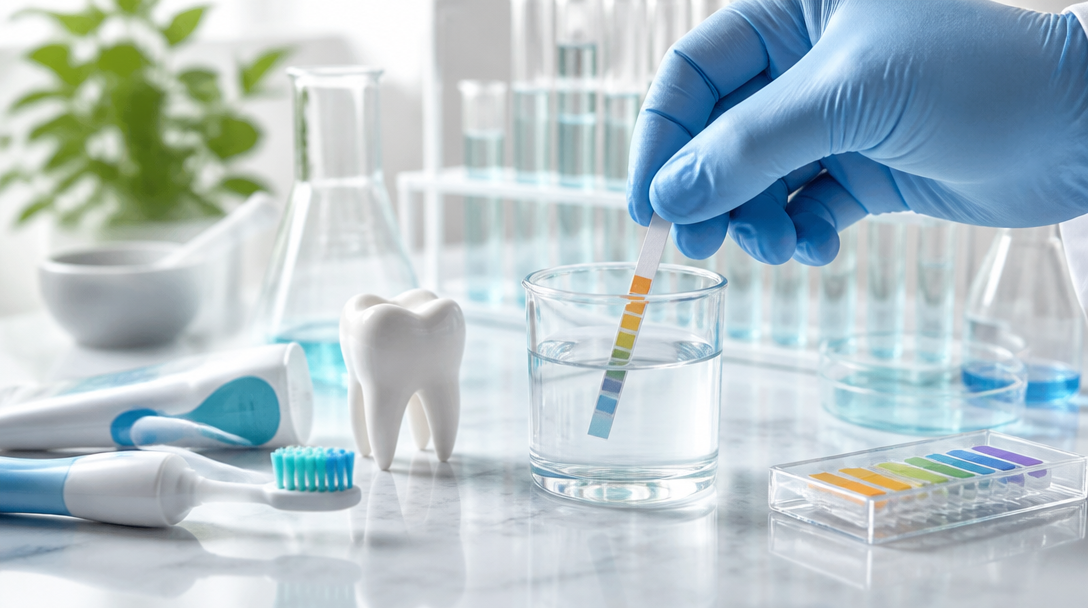
Why Oral pH Balance Determines Whether Your Formulation Succeeds or Fails
Oral pH balance is the single most underestimated variable in oral care product development—and ignoring it costs brands market share, triggers regulatory action, and generates the kind of consumer complaints that compound on review platforms for years. The oral cavity maintains a resting pH between 6.8 and 7.4, but that equilibrium can collapse to 5.5 or below within minutes of contact with an acidic formulation, a whitening gel, or even a flavored rinse. That drop matters because 5.5 is the critical threshold at which enamel begins to demineralize. Dentin becomes vulnerable even earlier, at pH 6.5. Products that hold oral tissues below these thresholds—even briefly, and even unintentionally—create measurable biological harm and substantial commercial liability. This guide is written for professional buyers, R&D teams, and formulation leads who need more than a surface-level overview. It covers the mechanisms, the regulatory landscape, the quality control protocols, and the marketing guardrails that separate products built for long-term market success from those that generate safety signals eighteen months post-launch.The Biology of Oral pH Balance: Why the Mouth Is Not a Stable Environment

How Oral pH Balance Shapes Active Ingredient Performance

Buccal and Sublingual Delivery: Where pH Becomes a Permeation Variable
In buccal and sublingual drug delivery, oral pH balance shifts from a safety parameter to a pharmacokinetic one. Research published in Pharmaceutics establishes that low microenvironmental pH can improve drug permeation across the mucosal barrier—but it does so at the cost of increased epithelial irritation and elevated erosion risk to the underlying tissues. This creates a genuine formulation tension. Acidic microenvironments can enhance absorption of weakly basic drugs by increasing ionization and permeability, but the same conditions that improve permeation also soften mucosal epithelium and, with repeated use, damage the structural integrity of the tissue. pH modifiers must therefore be selected not just for their effect on the target drug, but for their interaction with buccal tissue over cumulative exposure. The ACS journal Molecular Pharmaceutics frames this precisely: pH modifiers can substantially improve dissolution and oral absorption of pH-dependent drugs, but selection must account for GI conditions, transport realism, and the full spectrum of physiological pH variation encountered during actual use. That caveat applies with equal force to sublingual and buccal formulations intended for the oral cavity itself.
Regulatory Requirements for pH Documentation Across Major Markets
Regulatory expectations around pH have tightened as safety substantiation requirements have expanded. In the United States, FDA guidance under 21 CFR 211.194 requires pH documentation for oral drug products, and USP general chapters provide the testing frameworks that support those records. Cosmetic oral care products operate under a lighter regulatory burden, but FDA's increasing emphasis on safety substantiation means that pH data—including worst-case pH under stress conditions—is no longer optional for credible regulatory defense. The European Cosmetics Regulation (EC) No 1223/2009 requires a Product Safety Report that explicitly addresses pH-related risks for products with prolonged oral contact. The Scientific Committee on Consumer Safety has issued negative opinions on products where pH justification was absent or inadequate. That outcome does not simply delay a launch—it can eliminate a product from the EU market entirely. Health Canada's Natural and Non-prescription Health Products Directorate defines acceptable pH ranges for oral natural health products and triggers additional mucosal irritation data requirements for formulations outside those bands. Products below pH 4.5 or above pH 8.5 face a substantially higher documentation burden regardless of their intended mechanism of action. ICH Q6A guidelines on biorelevant dissolution testing extend beyond pharmaceuticals in their practical implications. Any oral care product making therapeutic or structure-function claims must demonstrate consistent performance across the physiological pH range encountered in actual use—from the acidic post-meal oral environment to the neutral resting state. FDA and ICH frameworks now integrate PBPK modeling to evaluate how pH changes affect product exposure and performance, a standard that sophisticated product development teams are applying proactively rather than reactively.The Erosion Dimension: pH and Concentration Are Not the Same Thing
A common formulation assumption is that pH is the primary driver of erosive potential. Peer-reviewed research published in Frontiers in Dental Medicine challenges that assumption directly: acid concentration can become equally or more important than pH in determining erosive impact, depending on exposure duration, tissue type, and the buffering capacity of the surrounding environment. This distinction matters practically. A product formulated at pH 5.0 with low titratable acidity may be less erosive than a product at pH 5.5 with high acid concentration, despite having a lower pH reading. Formulators who rely on pH alone as their erosion proxy are working with an incomplete model. Titratable acidity—the quantity of base required to neutralize the acid load—must be measured alongside pH to generate a defensible erosion risk profile. Understanding this dynamic also clarifies why dental erosion prevention strategies in product development cannot be reduced to a single specification number. The interaction between pH, acid concentration, exposure time, and salivary buffering capacity must all be modeled together to produce predictions that hold in real-world use conditions.Quality Control Protocols That Catch pH Drift Before It Reaches Consumers
Batch-to-batch pH variation exceeding ±0.2 units signals inadequate process control and predicts downstream consumer complaints. Best practice requires pH testing at four distinct production stages: raw material receipt, pre-mixing, post-homogenization, and final fill. Temperature control during testing is non-negotiable—pH readings shift approximately 0.1 units per 5°C change, which means unthermostatted testing introduces systematic error into every measurement. Accelerated stability protocols must include pH monitoring at 40°C and 75% relative humidity for a minimum of six months. Formulations showing pH drift greater than 0.5 units under these conditions consistently fail real-time stability within eighteen months. Arrhenius kinetic modeling applied to pH drift data allows development teams to forecast shelf-life performance before committing to commercial-scale production.- Calibration standard: pH meters accurate to ±0.05 units, calibrated daily against NIST-traceable buffer solutions at two or three points bracketing the expected product pH range.
- Electrode maintenance: Enzymatic cleaning protocols to address protein fouling common in enzyme-containing oral care matrices; rotating electrode schedules to prevent measurement drift from accumulated contamination.
- Statistical process control: Control charts tracking pH trends with investigation triggers set at ±2 standard deviations and action limits at ±3 standard deviations from target pH.
- Capability studies: Monthly Cpk assessments to confirm measurement systems remain adequate for specification width; any Cpk below 1.33 at target pH triggers immediate system review.
Consumer Complaints Tied to Oral pH Balance Failures
Tooth sensitivity complaints track reliably with product pH below 5.0, with complaint frequency rising sharply as pH approaches 4.0. Market surveillance data from major retail channels shows acidic whitening products generating substantially more negative reviews citing pain or sensitivity than pH-neutral equivalents in the same category. The pattern is consistent enough that pH range has predictive power over post-launch sentiment data. Mucosal irritation complaints follow a distinct mechanism. Research on buccal formulations establishes that pH below 4.0 increases epithelial permeability by a substantial margin, producing burning sensations and tissue disruption that consumers describe as chemical or harsh. These complaints are particularly damaging in the sensitive-teeth segment, where the implied product promise is gentleness. Taste failures are frequently misattributed to flavoring quality when the actual driver is pH. Formulations below pH 4.5 trigger excessive sourness perception that overwhelms even well-constructed flavor systems. Alkaline formulations above pH 8.0 generate bitter, metallic taste profiles that consumers associate with poorly made products. Taste panel data consistently places optimal palatability in the pH 6.5–7.5 range across demographic groups—a target that happens to align with both safety and active-ingredient performance requirements.Formulation Strategies by Product Category
Whitening Systems
Whitening formulations require dual-buffer systems to simultaneously stabilize hydrogen peroxide, protect enamel from acid challenge, and maintain consumer comfort. Phosphate-citrate buffer combinations at pH 6.0–6.5 achieve this balance reliably, but phosphate concentration must remain below 0.5% to prevent calcium precipitation that would compromise both stability and efficacy.Fluoride Toothpastes
Fluoride bioavailability peaks at pH 6.8–7.2, where free fluoride ion activity is maximized for remineralization. Sodium bicarbonate functions as both abrasive and pH buffer, but concentrations above 20% push pH into ranges that reduce fluoride availability. The commercial performance of leading cavity-protection lines tracks closely with their precision in holding this pH window across manufacturing batches.Mouthwash Formulations
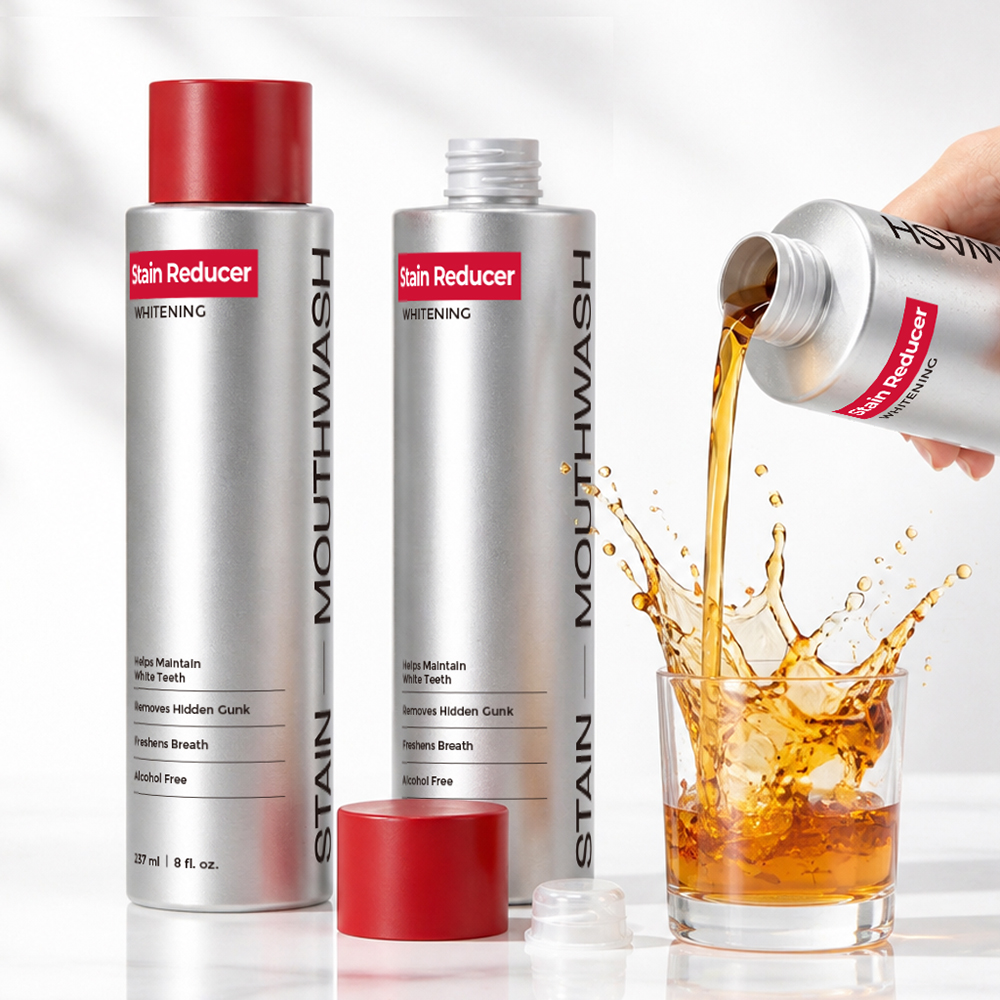
Ethanol above 15% shifts formulation pH by 0.3–0.5 units during storage, requiring predictive modeling and deliberate over-buffering to maintain specification at end of shelf life. Essential oil antimicrobials—eucalyptol, menthol, thymol—show reduced efficacy below pH 6.0, meaning that alcohol-driven pH drift directly undermines the antimicrobial claim these products are typically built around.Dry Mouth Products
Xerostomia formulations must maintain pH above 7.0 to compensate for absent salivary buffering, but alkaline conditions destabilize many flavoring compounds and reduce palatability. Time-release buffering systems that provide immediate pH elevation followed by sustained neutral maintenance represent the current technical best practice for this category, addressing both the clinical need and the consumer experience simultaneously.Marketing pH Claims Without Creating Regulatory Exposure
Permissible pH-related claims center on product attributes rather than health outcomes. "pH-balanced formula" and "gentle pH" communicate formulation quality without triggering FDA drug claim analysis. Claims like "restores oral pH" or "neutralizes acid damage" cross into therapeutic territory requiring clinical substantiation that most oral care products are not positioned to provide. Under the European Cosmetics Regulation, pH-related claims must be substantiated by published literature or controlled studies demonstrating the claimed effect. The Common Criteria document requires claims to be truthful, evidenced, honest, and fair under Article 20. That standard is not onerous for well-characterized products—but it does require maintaining the documentation before making the claim, not after. Educational content framed around oral health science offers an effective, compliant pathway for communicating pH value to consumers. Explaining that enamel begins to soften at pH 5.5 and positioning a product as "formulated above the critical enamel threshold" provides genuine consumer information, supports purchasing decisions, and does not constitute a therapeutic claim. The American Dental Association's Seal of Acceptance program evaluates pH as part of its safety and efficacy review, offering third-party validation that supports marketing while providing independent regulatory credibility.References
- Oral rehydration therapy products – a plaque pH study under normal and low salivary conditions. BMC Oral Health. PubMed Central.
- Microenvironmental pH Modification in Buccal/Sublingual Dosage Forms. Pharmaceutics. PubMed Central.
- Oral hygiene products and acidic medicines. PubMed, National Library of Medicine.
- The Influence of Salivary pH on the Prevalence of Dental Caries. IntechOpen Expert Review Chapter.
- The dynamic interplay of dietary acid pH and concentration during dental erosion. Frontiers in Dental Medicine, 2022.
- Improving Dissolution Behavior and Oral Absorption of Drugs with pH-Dependent Solubility Using pH Modifiers. Molecular Pharmaceutics. ACS Publications.
- Advances in PBPK Modeling and its Regulatory Utility for Oral Drug Product Development. Regulatory/Industry Workshop Summary.