Hydroxyapatite Whitening: Why Brands Are Pivoting Fast
5 juin 2026
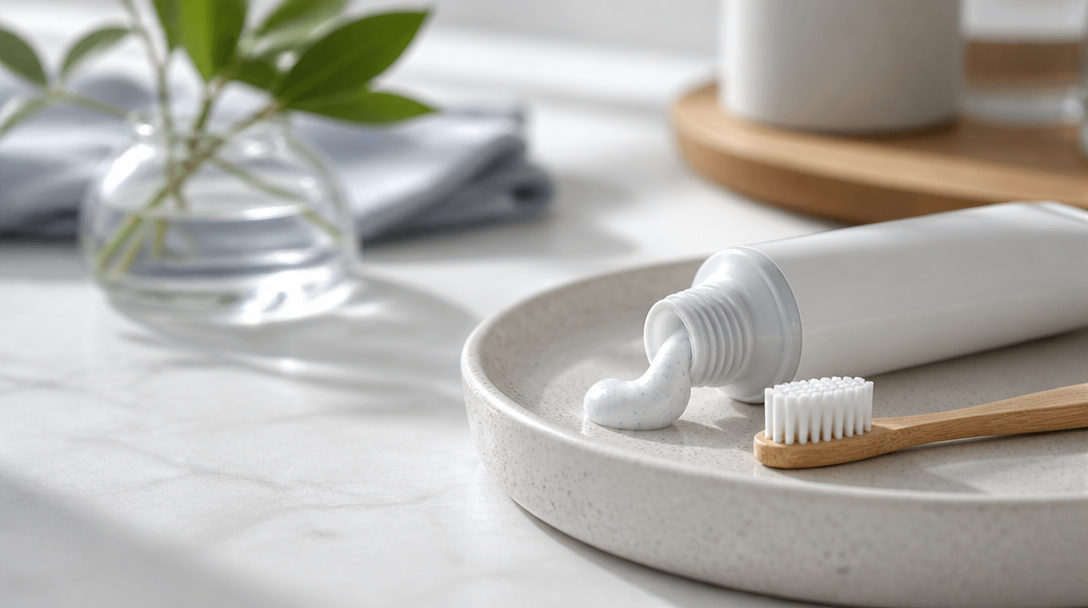
See why brand owners are switching to hydroxyapatite whitening products — formulation options, pricing tiers, regulatory advantages, and private-label timelines.
Why Hydroxyapatite Whitening Products Are Capturing Premium Shelf Space
Brand owners are pivoting to hydroxyapatite whitening products because they solve a positioning problem that peroxide never could. Traditional bleaching formulations face tightening regulatory restrictions across key markets, while hydroxyapatite delivers whitening through remineralization — a mechanism that premium retailers, dental clinics, and health-conscious consumers can all get behind without reservation.
The market data reflects that confidence. The global hydroxyapatite market is estimated at USD 5.9 billion in 2026 and projected to reach USD 12.1 billion by 2036, according to Fact.MR. Within oral care specifically, nano-hydroxyapatite already holds an estimated 38% share of the nanotechnology toothpaste segment, with whitening applications leading adoption across DTC and dental clinic channels.
For brand owners, the window for differentiation is open — but not indefinitely. Shelf space in premium pharmacies and dental-adjacent retail is reallocating now, and the brands establishing hydroxyapatite positioning today are building category authority their competitors will spend years trying to replicate.
The Mechanism Behind the Market Shift
Hydroxyapatite whitening works through surface restoration, not oxidation. Nano-sized hydroxyapatite particles — structurally identical to natural tooth mineral — fill microscopic enamel defects and smooth the surface so it reflects light more uniformly. The result is visible brightening with a simultaneous improvement in tooth integrity.
Peroxide cannot make that claim. Repeated bleaching cycles can increase dentinal sensitivity and, at higher concentrations, risk pulpal irritation. Hydroxyapatite seals exposed dentinal tubules, which is precisely why sensitivity-prone consumers are converting — and why dental professionals are recommending it with fewer reservations.
For brand messaging, this mechanism unlocks claims that resonate across every premium channel:
- Strengthens while whitening — a dual-benefit claim peroxide formulations cannot credibly support
- Rebuilds natural tooth structure — biomimetic positioning that aligns with wellness and clean-beauty trends
- Designed for daily use — unlike high-concentration peroxide treatments that require cycling, hydroxyapatite supports a subscription-friendly repurchase cadence
- Sensitivity reduction — clinically documented tubule occlusion, not just a marketing assertion
Daily-use positioning is a structural advantage for DTC brands building subscription revenue. It also supports consistent reorder patterns at premium pharmacy counters — a material consideration when negotiating shelf placement.
Regulatory Freedom That Translates to Market Access
The regulatory contrast with peroxide is stark, and brand owners targeting multi-market distribution should treat it as a strategic asset.
In the European Union, hydrogen peroxide in over-the-counter oral-care products is capped at 0.1% — a concentration that produces negligible whitening effects. Any formulation above that threshold requires professional dispensing, which eliminates most retail channels immediately. Hydroxyapatite carries no equivalent restriction. Brands can formulate at the clinically effective 5–10% nano-hydroxyapatite range and distribute across EU pharmacy, grocery, and dental clinic channels without reformulation.
In the United States, the FDA classifies hydroxyapatite as Generally Recognized as Safe (GRAS) for oral care. That classification simplifies product registration and reduces the compliance documentation burden compared to peroxide-based formulations, which require specific safety substantiation at elevated concentrations.
Practically, this means a single hydroxyapatite formulation can move across the EU, U.S., and Asia-Pacific markets without region-specific variants. For brand owners managing multi-market SKU portfolios, that alone reduces operational complexity and inventory carrying costs in a measurable way.
Formulation Strategies for Hydroxyapatite Whitening Products
The formulation decision shapes both the efficacy story and the consumer segment the product can credibly address. Two primary approaches dominate private-label development: standalone hydroxyapatite systems and combination formulations pairing hydroxyapatite with a secondary whitening active.
Standalone Hydroxyapatite
Pure hydroxyapatite formulations — typically 5–10% nano-hydroxyapatite supported by gentle abrasives — work best for natural-positioning brands, sensitive-teeth segments, and brands targeting dental clinic recommendation programs. The messaging is clean: biomimetic repair, no harsh chemicals, daily use without cycling.
The trade-off is pace. Visible whitening results typically emerge over two to four weeks of consistent use. For brands where patience is part of the wellness positioning, this is not a liability. For brands competing in fast-results retail environments, it requires managing expectations carefully through packaging and content.
Combination Formulations
Pairing hydroxyapatite with PAP (phthalimidoperoxycaproic acid) or enzymatic actives accelerates cosmetic results while preserving the remineralization narrative. PAP-based combinations produce visible changes in seven to fourteen days without the oxidative sensitivity profile of hydrogen peroxide — a meaningful differentiation from both pure hydroxyapatite and traditional bleaching products.
| Formulation Type | Time to Visible Results | Target Consumer | Retail Price Range |
|---|---|---|---|
| Pure Hydroxyapatite | 2–4 weeks | Sensitivity-prone, natural positioning | $15–$25 |
| Hydroxyapatite + PAP | 7–14 days | Results-focused, premium buyers | $25–$40 |
| Hydroxyapatite + Enzymes | 10–21 days | Daily maintenance, clean-beauty | $18–$30 |
For private-label development, combination formulations support stronger competitive differentiation and higher margin potential through enhanced efficacy claims. They are the preferred route for brands entering premium pharmacy or professional dental channels where visible results are non-negotiable.
Price Architecture Across Distribution Channels
Nano-hydroxyapatite costs three to five times more than conventional whitening actives. That cost structure shapes everything from formulation concentration to package sizing — and it also creates a natural filter that keeps the category premium.
Mass retail ($12–$18): Achievable with basic formulations and streamlined packaging. Requires volume commitments to maintain margins. Suitable for brands with established retail velocity rather than those building category presence.
Premium pharmacy ($20–$35): The highest-volume opportunity for most hydroxyapatite brands. Clinical packaging, evidence-backed messaging, and a professional-adjacent aesthetic justify the premium over mass alternatives while keeping the product accessible. This is where most private-label brands should anchor their launch positioning.
Dental professional and clinic channel ($30–$50): Highest margins, but requires professional education investment and credible clinical documentation. Products in this segment typically feature higher hydroxyapatite concentrations and packaging designed for chairside recommendation.
DTC brands occupy a different calculus. The ingredient cost premium becomes a narrative asset — it enables clear differentiation from commodity whitening strips and gels, supports subscription economics, and justifies a higher average order value through bundling with complementary remineralization products.
Private-Label Development: What the Timeline Actually Looks Like
Co-developed hydroxyapatite whitening products require longer lead times than standard whitening formulations. Hydroxyapatite is sensitive to pH and ionic interactions — formulations require careful buffering to maintain particle stability and prevent aggregation that degrades efficacy. That chemistry demands time that cannot be compressed without risking product performance.
Typical development phases:
- Weeks 1–2: Formulation selection and customization brief
- Weeks 3–6: Stability testing, pH optimization, and compatibility review
- Weeks 7–8: Packaging compatibility testing and artwork finalization
- Weeks 9–12: Production setup and first-batch manufacturing
The practical implication: brands targeting a Q4 retail launch need to begin formulation conversations no later than Q2. Nano-hydroxyapatite supply can tighten during peak demand periods, and ingredient lead times compound quickly when launch windows are fixed.
| Product Type | Typical MOQ | Lead Time | Customization Level |
|---|---|---|---|
| Standard Toothpaste | 5,000 units | 8–10 weeks | Packaging and flavor profile |
| Custom Gel Formula | 3,000 units | 10–12 weeks | Formula modification |
| Professional Strength | 1,500 units | 12–14 weeks | Full custom co-development |
One approach that consistently shortens effective time-to-market: secure formulation samples early and run consumer testing in parallel with production setup. This eliminates the sequential delay between development approval and market feedback — and gives brand owners iteration data before full production commitment.
Where to Start
The brands gaining ground in hydroxyapatite whitening are not waiting for the category to mature. They are entering while professional endorsement is still a differentiator, while premium pharmacy buyers are actively looking for alternatives to peroxide-restricted SKUs, and while DTC positioning around biomimetic oral care is still novel enough to generate organic attention.
With synthetic hydroxyapatite holding 71.85% of the 2025 market mix and nano-sized formats growing fastest across all segments, the formulation infrastructure exists to support private-label brands at meaningful volumes. The category signal is clear. The question is whether your brand is positioned to act on it.
WhiteningBright develops private-label-ready hydroxyapatite whitening formulations for premium pharmacies, dental clinic brands, and DTC wellness labels. View current formulation options or contact the team to discuss a co-development brief tailored to your target channel.
References
- Fact.MR. Hydroxyapatite Market | Global Market Analysis Report – 2036. https://www.factmr.com/report/hydroxyapatite-market
- Future Market Insights. Nanotechnology Toothpaste Formulations Market. https://www.futuremarketinsights.com/reports/nanotechnology-toothpaste-formulations-market
- Mordor Intelligence. Hydroxyapatite Market – Share, Size & Growth Trends. https://www.mordorintelligence.com/industry-reports/hydroxyapatite-market
- Grand View Research. Hydroxyapatite Market Size & Share | Industry Report, 2030. https://www.grandviewresearch.com/industry-analysis/hydroxyapatite-market-report
- SNS Insider. Hydroxyapatite Market Size, Share & Growth Report 2035. https://www.snsinsider.com/reports/hydroxyapatite-market-6301