Which Whitening Format Drives Higher Repeat Orders
6 juin 2026
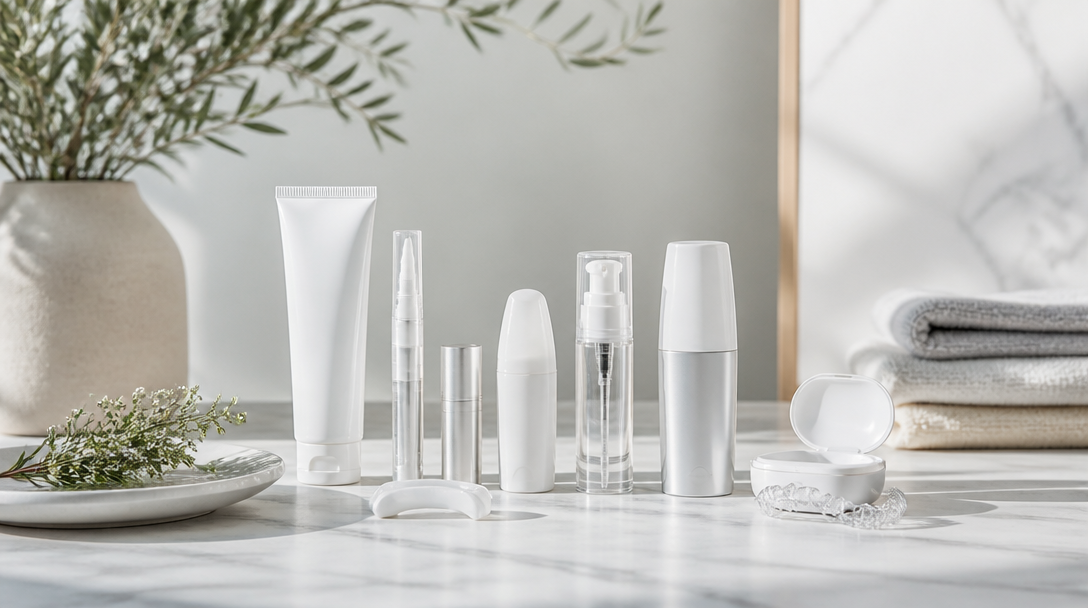
Discover which whitening format repeat sales patterns perform best — kits, strips, pens & powders mapped by channel, pricing and reorder cycle.
Why Your Whitening Format Choice Determines Repeat Sales
Most brand owners focus on formulation and packaging. The variable that actually drives whitening format repeat sales is the format itself — how it fits into a customer's routine, how quickly it runs out, and whether the result creates a reason to reorder. NielsenIQ's 2024 oral care report found that routine-driven purchase behavior accounts for 73% of premium whitening sales globally. Format selection is not an aesthetic decision. It is a revenue architecture decision.
Kits, strips, pens, and powders each generate distinct replenishment patterns. They perform differently across subscription DTC, premium retail, convenience pharmacy, and wellness channels. This guide maps those patterns so brand owners can align format to channel before launch — not after the first subscription churn report.
Kits Generate the Highest Customer Lifetime Value in Premium Retail
Professional-grade whitening kits engineered for at-home use consistently outperform single-format products on customer lifetime value in premium retail environments. Mintel's 2024 oral care analysis shows kit purchasers reorder at 2.3x the frequency of single-format buyers — a gap driven by the multi-component routine kits require.
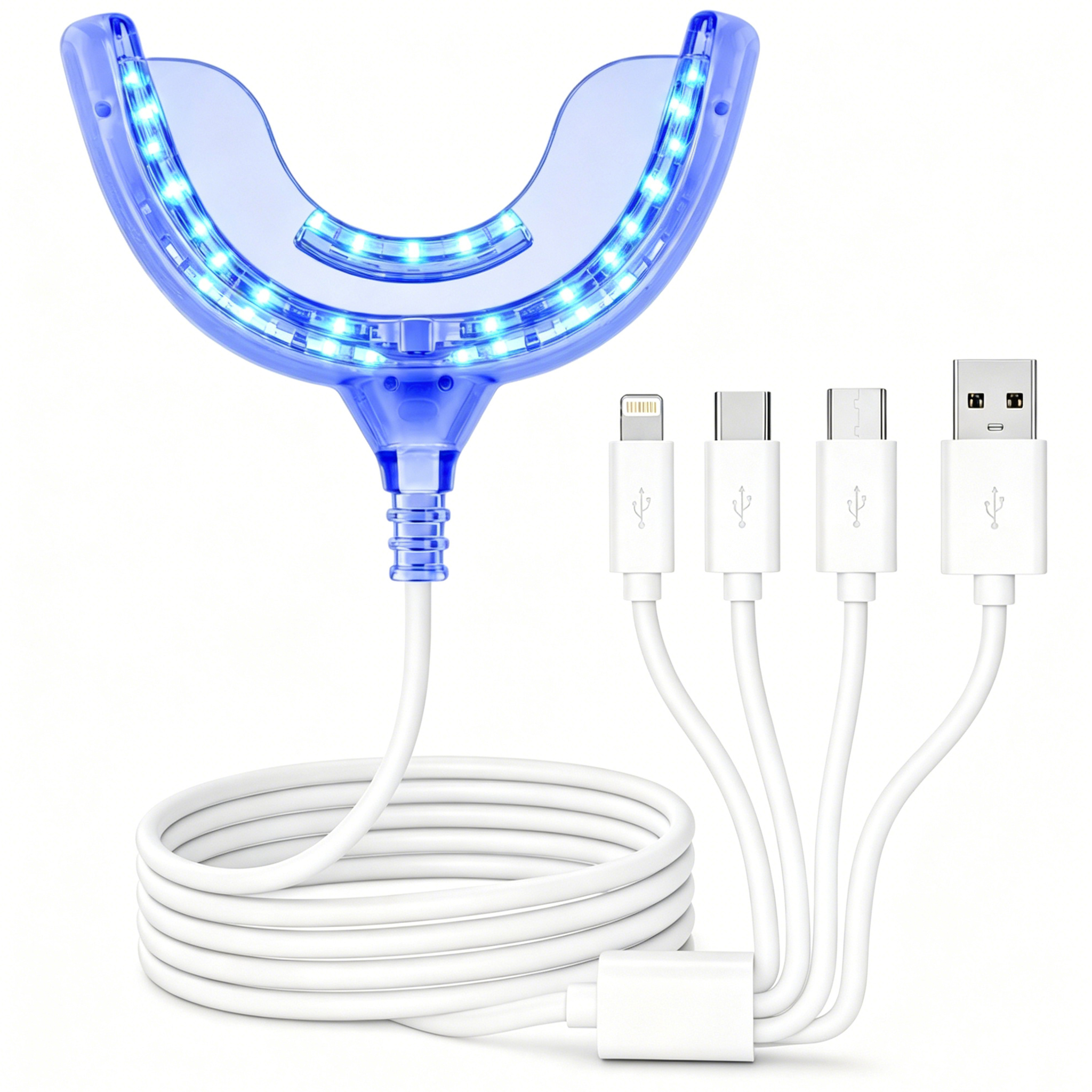
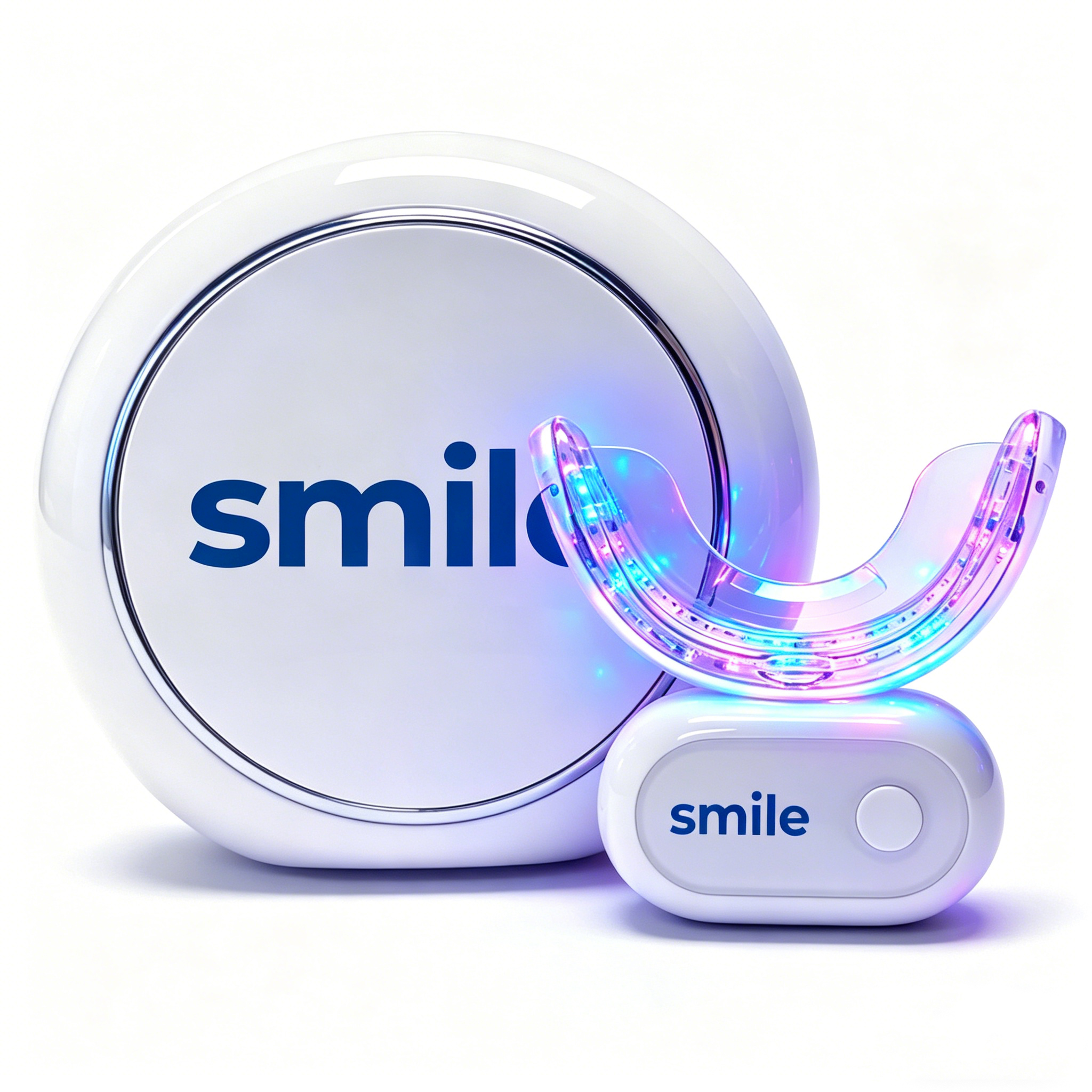
A 14-day LED treatment cycle naturally creates a 30–45 day replenishment window. That window aligns with how premium retailers structure education-led sales conversations. The kit doesn't just deliver results — it teaches the customer that whitening is a regimen, not a one-time event.
Kit advantages in premium retail channels:
- Higher perceived value supports $65–95 retail price points with 60% gross margins
- Multi-step routine increases time-on-brand and customer engagement depth
- LED accelerator components create a physical differentiator that commodity strips cannot replicate
- Clinical positioning supports partnerships with dental clinics and premium pharmacy buyers
For brand owners targeting premium pharmacy chains or specialty beauty retailers, kits formulated with 6% hydrogen peroxide or 10% PAP deliver the visible results that convert first-time buyers into loyal repeat customers. ISO 13485 certification is worth pursuing for any brand entering the dental clinic channel — it materially changes the conversation at the buyer level.
Strips Drive the Most Predictable Whitening Format Repeat Sales in Subscription Channels
Whitening strips are the subscription model's native format. Euromonitor's 2024 oral care data shows strips maintaining 67% customer retention after initial purchase — outperforming other formats by 15–20 percentage points in DTC retention benchmarks.
The mechanic is simple: a 14-strip pack creates a natural two-week usage cycle. That cycle maps cleanly onto monthly subscription billing without requiring the customer to do any mental math about when to reorder. The replenishment trigger is built into the format.
Strip formulation tiers that support repeat order architecture:
- Gentle daily-use formulas — 3% hydrogen peroxide for ongoing maintenance, suited to customers who want to sustain results between intensive cycles
- Intensive treatment cycles — 6% hydrogen peroxide for 14-day programs that create a clear before-and-after result and a strong motivation to reorder
- PAP-based sensitive variants — phthalimidoperoxycaproic acid formulations for the sensitive-teeth segment, which represents a growing share of premium oral care buyers across both North American and European markets
Brand owners building subscription services should evaluate co-developed strip formats with biodegradable backing materials. European Commission cosmetic regulations are tightening around single-use plastics, and sustainability positioning measurably improves retention rates among the wellness-adjacent DTC customer base.
Pens Deliver Trial Volume — Not Subscription Depth
Whitening pens are the most misunderstood format in a brand portfolio. Circana's 2024 U.S. retail scanner data shows pens generating 34% of whitening category impulse sales — but only 23% of repeat purchases within 90 days. That gap is not a failure. It reflects the pen's actual job.
Pens function as acquisition tools, not retention tools. They lower the barrier to trial, deliver a visible-enough result to create brand awareness, and fit into convenience checkout placements where the customer is not in a researching mindset. The mistake is expecting a pen to anchor a subscription.
Strategies that convert pen buyers into repeat customers:
- Position pens explicitly as travel-friendly maintenance between professional treatments or kit cycles
- Bundle pens with kits as value-added components — this introduces the pen's portability benefit to a customer already committed to the brand
- Include QR codes on pen packaging that route directly to strip or kit subscription pages
- Use FDA-compliant on-pack language that sets accurate result expectations — impulse purchase environments offer no staff education, so the label carries the full sales conversation
For convenience store and pharmacy checkout placement, pens designed for at-home use should lead with portability and precision application. The whitening benefit is secondary to the convenience positioning at that price point ($12–25 retail).
Powders Build the Deepest Loyalty in Wellness Channels
Whitening powders show the strongest long-term repeat purchase loyalty in wellness and natural beauty distribution. Kantar Worldpanel purchase behavior data indicates powder users reorder 89% more consistently than pen users. The driver is routine integration — customers add whitening powder to an existing brushing habit rather than adopting a separate treatment protocol.
That distinction matters. A treatment protocol requires decision and effort. A brushing habit requires neither. Powders that slot into daily oral care routines generate predictable reorder cycles without subscription infrastructure.
Powder active ingredient profiles by channel and reorder cycle:
| Active Ingredient | Concentration | Target Channel | Reorder Cycle |
|---|---|---|---|
| Activated charcoal | 15–25% | Natural wellness, indie beauty | 45–60 days |
| PAP (phthalimidoperoxycaproic acid) | 3–5% | Sensitive teeth, premium DTC | 30–45 days |
| Sodium bicarbonate blend | 40–60% | Clean beauty retail, zero-waste brands | 60–90 days |
Brand owners targeting wellness-focused retailers or clean beauty DTC should prioritize powder formats with minimal ingredient lists and verifiable organic certification where possible. European Commission cosmetic regulations favor simple formulations with established safety profiles — a compliance advantage that also doubles as a marketing claim.
Pricing Architecture That Supports Repeat Orders by Format
Format and price point must reinforce the same purchase behavior. A high-priced pen creates friction at impulse checkout. An underpriced kit erodes the clinical authority that justifies its replenishment cycle.
Benchmark pricing by format for premium brand positioning:
- Kits — $45–85 retail, approximately 60% gross margin, 45-day replenishment cycle
- Strips — $25–45 retail, approximately 55% gross margin, 30-day subscription cadence
- Pens — $12–25 retail, approximately 65% gross margin, impulse and trial purchase focus
- Powders — $18–35 retail, approximately 70% gross margin, 60-day reorder pattern
The most effective brand architectures use format progression deliberately. A customer enters the brand through a pen at a pharmacy checkout, converts to a strip subscription through the QR code touchpoint, and eventually upgrades to a quarterly kit purchase. Each format has a defined role. The repeat purchase revenue compounds across all three.
Private-label ready formats support pricing control at the retailer level while protecting the brand owner's margin structure. Co-developed formulations with flexible SKU configurations allow a single core formula to serve both entry-level and premium positioning within the same distribution network.
Matching Format to Distribution Channel
Channel behavior determines which format's repeat-order mechanics actually activate. The same strip formula performs differently on a DTC subscription platform versus a pharmacy shelf — not because the product changes, but because the customer's purchase context does.
Premium Retail — Specialty Beauty and High-End Pharmacy
Professional-grade kits with LED acceleration technology are the right anchor format. Customers in these environments expect comprehensive solutions and are prepared to invest in education-led purchase decisions. The $65–95 price point supports that conversation. Kits formulated with clinically validated peroxide or PAP concentrations, paired with ISO-compliant documentation, satisfy both retailer compliance requirements and customer confidence needs.
Subscription and DTC Brands
Strips with predictable usage cycles are the core format. Monthly shipments of 14–28 strips create consistent revenue with low churn risk. Formulations at 3–6% hydrogen peroxide maintain sensitivity tolerability for daily or near-daily use — a meaningful factor in subscription retention, where a single sensitivity episode drives cancellations.
Convenience Retail — Pharmacy and Grocery Chains
A dual-format strategy works well: pens at checkout for impulse acquisition, strips in the oral care aisle for planned purchase. FDA-compliant labeling with clear usage instructions is not optional in this channel — it is the primary customer service mechanism. Claims must be precise and defensible at the shelf level.
Wellness and Natural Beauty Channels
Powder formats with clean, short ingredient decks align with the purchase values of this customer base. PAP-based and sodium bicarbonate formulations outperform peroxide in channels where "gentle" and "natural" carry more weight than "clinical." Sustainable and minimal packaging strengthens repeat purchase likelihood — Mintel's 2024 data identifies eco-credentials as a retention factor, not just an acquisition factor, in wellness retail.
For brand owners scaling from regional to national distribution, the consistent recommendation from category data is the same: prove repeat purchase performance in one channel with one format before expanding the SKU range. The data that comes back from that first 90-day cohort shapes everything else.
Explore WhiteningBright's private-label ready formats across all four format categories — engineered for the distribution channels and regulatory environments where your brand competes.