How to Price Your Private Label Teeth Whitening Kit in 2026
2026年4月20日
Getting your private label Teeth Whitening pricing wrong in 2026 is one of the fastest ways to sink an otherwise solid brand — and the margin for error is narrower than ever. The at-home whitening segment has matured, competition has intensified, and consumers are comparing ingredient decks and price points with far more scrutiny than they did five years ago. This guide delivers a structured, data-informed framework to help you build a pricing model that generates real profit, survives competitive pressure, and scales with your brand.
Understanding the 2026 Private Label Teeth Whitening Market
The global Teeth Whitening market was valued at approximately $7.4 billion in 2023 and is projected to grow at a compound annual growth rate of roughly 4.8% through 2030, according to data from Grand View Research. Private label products now represent a significant share of that growth, driven by DTC brands capturing margin that traditional retail previously absorbed.
Consumer behavior has shifted decisively toward ingredient transparency. Buyers in 2026 actively research whether a kit contains hydrogen peroxide, carbamide peroxide, or the increasingly preferred PAP+ (phthalimidoperoxycaproic acid), a non-peroxide alternative that minimizes tooth sensitivity. Brands that clearly communicate their formulation science can command a measurable price premium over generic competitors. Regulatory pressure has also increased — the FDA's Center for Drug Evaluation and Research (CDER) classifies OTC whitening products containing hydrogen peroxide as cosmetics or drugs depending on concentration, which affects labeling, testing, and ultimately cost structure.
For a deeper look at how formulation choices affect product positioning, see this overview of oral care research and whitening science from LLRNCARE's professional knowledge library.
Calculating Your True Cost of Goods Sold (COGS)
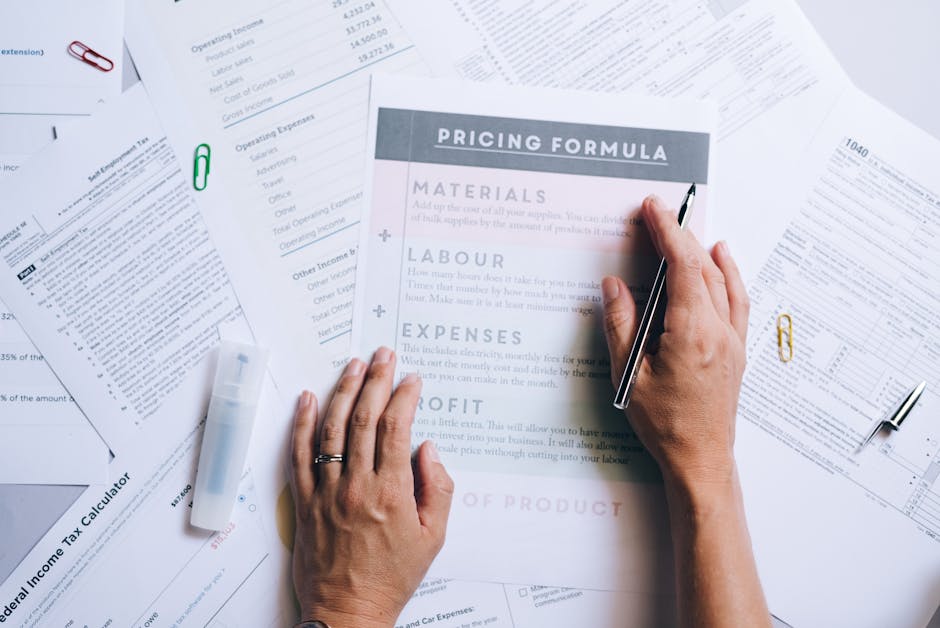
Photo by www.kaboompics.com on Pexels
Every sound private label Teeth Whitening pricing strategy starts with a precise COGS figure — not an estimate, but a fully loaded per-unit cost that accounts for every dollar spent before the kit reaches a customer's door.
Your COGS components typically include:
Whitening formula: Gel syringes, strips, or powder; cost varies by active ingredient concentration and volume per unit.
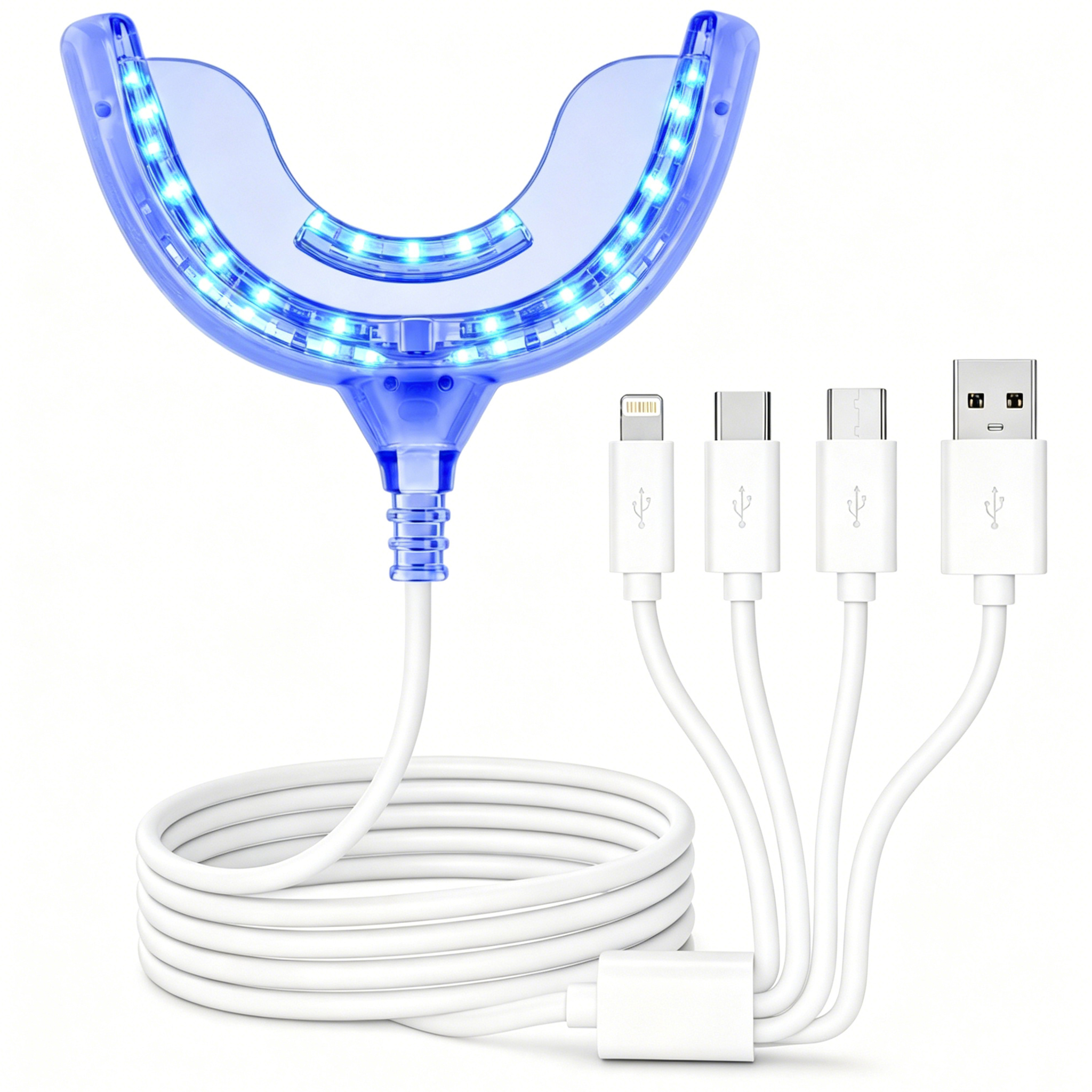
Delivery device: Custom-fit trays, universal trays, or LED accelerator device if bundled.
Private label manufacturing fee: The per-unit charge from your contract manufacturer for assembly, QC inspection, and custom labeling.
Inbound freight and import duties: Sea freight, air freight, customs clearance, and insurance — these vary significantly by origin country and shipping volume.
Third-party logistics (3PL): Receiving, storage, pick-and-pack, and outbound shipping costs if you use a fulfillment partner.
Compliance and testing: Stability testing, safety assessments, and any required third-party lab certifications.
A realistic example: a mid-tier LED whitening kit sourced from a reputable manufacturer might carry a per-unit ex-works cost of $5.50. Add $1.20 for packaging, $0.90 for inbound freight and duties, $0.60 for 3PL, and $0.30 for amortized compliance costs — your true landed COGS lands at approximately $8.50 per unit. Every pricing decision flows from that number.
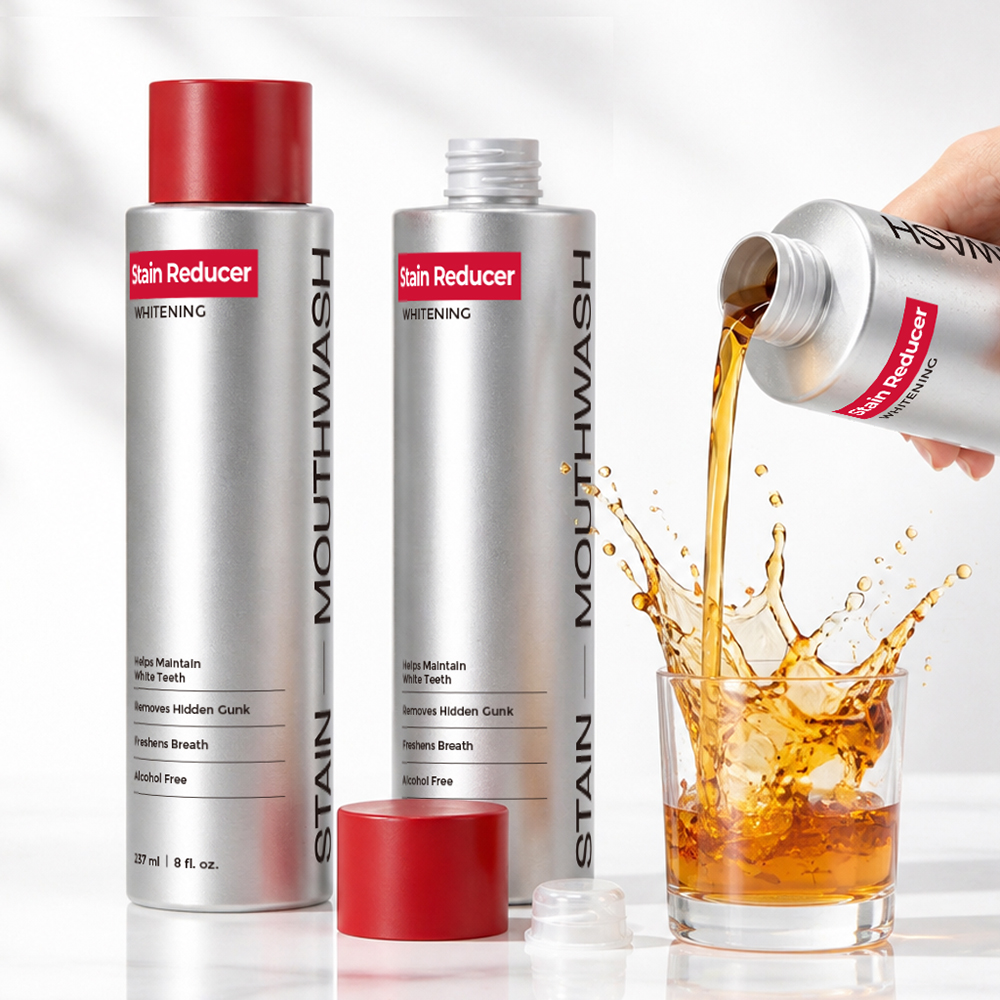
Photo by Leeloo The First on Pexels
Three Pricing Models That Work for Private Label Teeth Whitening Pricing
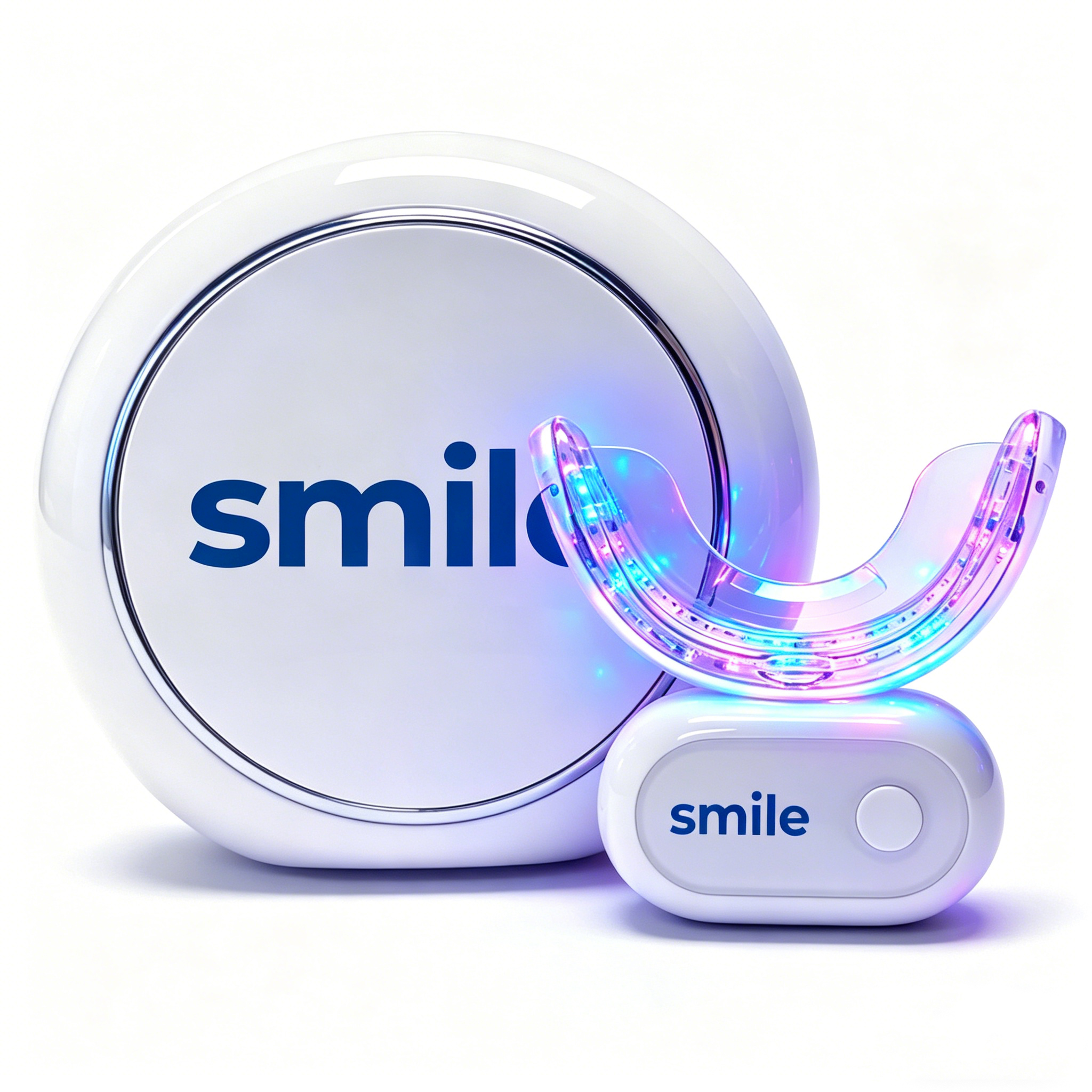
Photo by RDNE Stock project on Pexels
Your route to market shapes your entire pricing architecture. Most successful brands operate across two or three channels simultaneously, each requiring its own margin logic.
Direct-to-Consumer (DTC)
Selling through your own website delivers the highest gross margin and the most pricing control. A standard DTC markup target is 4x to 6x COGS. On a $8.50 COGS, a 5x multiplier produces a $42.50 retail price — but that gross margin must absorb customer acquisition costs (CAC), which in the beauty and personal care DTC space averaged $35–$55 per new customer in paid social channels in 2025. Price too low and your net margin disappears entirely after ad spend.
Wholesale and Retail
Supplying dental offices, salons, or specialty retail requires offering a wholesale price that still leaves you profitable after your retailer applies their markup. The standard keystone model means the retailer doubles your wholesale price. If your target shelf price is $80, your wholesale price is $40 — and your $8.50 COGS must generate sufficient profit at that $40 level after overhead is accounted for.
Subscription and Refill Programs
Subscription revenue stabilizes cash flow and dramatically improves customer lifetime value (LTV). Whitening maintenance products — refill gels, desensitizing serums, whitening pens — are natural subscription candidates. Price subscription units 15–25% below the one-time purchase price to drive enrollment. A refill gel retailing at $28 one-time becomes $22/month on subscription. The LTV gain from a retained subscriber typically outweighs the per-transaction margin reduction within three billing cycles.
Competitive Landscape: Where Do You Fit?
Competitive benchmarking sets the guardrails for your private label Teeth Whitening pricing decisions. The market breaks cleanly into three tiers in 2026.
Budget tier ($20–$50): Basic strip kits, low-concentration gels, and minimal packaging dominate this space. Brands compete on volume and promotional pricing. Margins are thin and customer loyalty is low. This tier is difficult to sustain unless you have exceptional manufacturing scale.
Mid-market tier ($50–$120): This is where most credible private label brands compete. LED accelerator kits, higher-grade whitening gels, and professional-looking packaging anchor this segment. Brands like CINOLL typically position standard LED kits around $70–$90, often supported by frequent promotional discounts on Amazon and their own sites. IVISMILE competes in the $89–$99 range for comparable kits, differentiating on packaging quality and ingredient communication. This tier has the widest customer base and the most room for brand differentiation.
Premium tier ($120+): Brands like Snow and GLO Science hold this space, justifying higher prices through patented delivery technology, clinical study citations, or celebrity-backed brand equity. Entering here as a new private label brand is possible but requires a substantive, defensible point of difference — a proprietary formula, a published efficacy study, or a verifiable dental professional partnership.
For current market movement and emerging brand strategies in this category, LLRNCARE's oral care industry news and market analysis tracks developments across the private label segment.
How to Justify Premium Private Label Teeth Whitening Pricing
Charging more requires giving buyers a concrete reason to pay more. In 2026, the most defensible premium signals are ingredient-level and compliance-level, not just aesthetic.
Formulation upgrades: Incorporating nano-hydroxyapatite (n-HAp) — a bioactive calcium phosphate compound studied extensively in remineralization research — alongside your whitening agent positions the kit as both cosmetic and enamel-supportive. A 2019 study published in the Journal of Dentistry demonstrated that n-HAp significantly reduced whitening-associated sensitivity compared to control groups, a finding that translates directly into marketing copy and justifies a higher price point. PAP+ formulas carry a similar narrative: same whitening efficacy, reduced oxidative stress on enamel, lower sensitivity risk.
Third-party and professional validation: The American Dental Association (ADA) Seal of Acceptance is a recognized quality signal in the OTC oral care space. While the full certification process is resource-intensive, having your formula reviewed by a licensed dentist and making that relationship transparent builds credibility that budget brands cannot easily replicate.
Packaging and experience: Unboxing quality, a shade guide with photographic reference points, and a printed usage protocol communicate professionalism. These cost $0.50–$1.50 per unit to add but can support a $15–$25 price increase by shifting perceived value.
Sustainability: Refillable outer packaging, FSC-certified paper inserts, and recyclable gel syringes are no longer niche differentiators — they are expected at the mid-market and premium tiers. Brands that communicate their sustainability credentials clearly can justify a 10–15% price premium over comparable non-sustainable alternatives, according to consumer research published by Nielsen in recent years.
To understand how manufacturing and quality control decisions affect your ability to make these claims credibly, review LLRNCARE's resources on Teeth Whitening production standards and quality control.
Dynamic Pricing: When and How to Adjust
A price set in January 2026 should not be treated as permanent. Hydrogen peroxide and carbamide peroxide raw material costs are subject to supply chain fluctuations. Packaging material costs responded to significant volatility in the 2022–2024 period and remain sensitive to energy prices and freight rates.
Set a formal pricing review cadence: at minimum twice per year, with an unscheduled review triggered by any raw material cost shift exceeding 8%, a meaningful drop in conversion rate on your primary sales channel, or a significant competitive repricing event. Track your contribution margin per unit — not just gross margin — at every review to catch creeping cost erosion early.
When raising prices, communicate the reason. A price increase framed around a formula upgrade (adding n-HAp, switching to a recyclable syringe design) is absorbed far better by existing customers than a silent price hike. Brands that treat price increases as an opportunity to reinforce their value narrative retain significantly more customers through the transition.
Building Your Final 2026 Pricing Structure
Bringing every component together, your finalized private label Teeth Whitening pricing model should follow this sequence:
Lock in your COGS: Confirm every direct cost component with actual invoices or firm quotes — not estimates.
Set your floor price: The minimum price at which you break even across all channels, factoring in variable costs like payment processing (typically 2.9–3.5%) and platform fees (Amazon takes 8–15% depending on category).
Apply channel-specific markups: DTC at 4x–6x COGS; wholesale at 2x–2.5x COGS; subscription at a 15–25% discount to DTC one-time price.
Validate against competitive tiers: Confirm your price lands in the tier your branding and ingredients justify — not above it without a clear reason, not below it at the cost of perceived quality.
Build in promotional headroom: Structure your base price to absorb a 15–20% promotional discount (seasonal sales, launch offers) without going below your floor price.
Schedule reviews: Calendar your semi-annual pricing audits now, with defined trigger conditions for off-cycle reviews.
Pricing is not a launch task you complete once — it is an ongoing discipline. Brands that treat private label Teeth Whitening pricing as a living strategy, adjusting with market data and customer feedback rather than intuition alone, consistently outperform those that set prices arbitrarily and leave them unchanged.
Frequently Asked Questions
What is a realistic gross margin for a private label Teeth Whitening brand?
On DTC sales, target a gross margin of 70–80%, which corresponds to a 3.3x–5x markup on COGS. Wholesale gross margins run 40–50%. Net margin after marketing, overhead, and fulfillment will be lower — well-run DTC brands in oral care typically achieve net margins of 15–25% at scale.
How often should I review my pricing?
Conduct a formal review at least twice per year. Trigger an unscheduled review if raw material costs shift more than 8%, if your site conversion rate drops significantly, or if a major competitor reprices their core SKU.
Can a new private label brand compete with established players on price?
Competing on price alone against established brands with manufacturing scale is not a viable long-term strategy. Compete instead on a specific value gap: a gentler formula for sensitive teeth, a more transparent ingredient story, or a subscription model that reduces per-unit cost for loyal customers. Matching a competitor's price while communicating a clearer value proposition is more defensible than undercutting.
What hidden costs catch new brands off guard?
The four most commonly underestimated costs are: (1) compliance and stability testing, which can run $2,000–$8,000 per SKU depending on scope; (2) customer acquisition cost in paid social, which can equal or exceed your COGS per kit; (3) returns and damaged inventory, typically 2–5% of units shipped; and (4) payment processing and marketplace fees, which can consume 5–15% of revenue depending on your sales channels.
Is a subscription model worth the complexity for a new brand?
Yes, if your product line includes a consumable refill component. The LTV improvement from even a modest subscriber base stabilizes revenue and reduces dependence on costly new customer acquisition. Start simple — one refill SKU on a 30-day or 60-day cadence — and expand once your fulfillment and customer service operations can support it reliably.
This article is for informational purposes only. The content is based on publicly available information, industry research, and scientific studies. LLRNCARE makes no representations or warranties of any kind, express or implied, about the completeness, accuracy, reliability, suitability or availability of the information contained in this article. Any reliance you place on such information is strictly at your own risk.
For professional dental advice, please consult a qualified dental professional. For regulatory compliance questions, consult with legal experts familiar with dental product regulations in your target markets.