Take-Home Kit Demand Signals: What to Stock Now
2026年9月10日
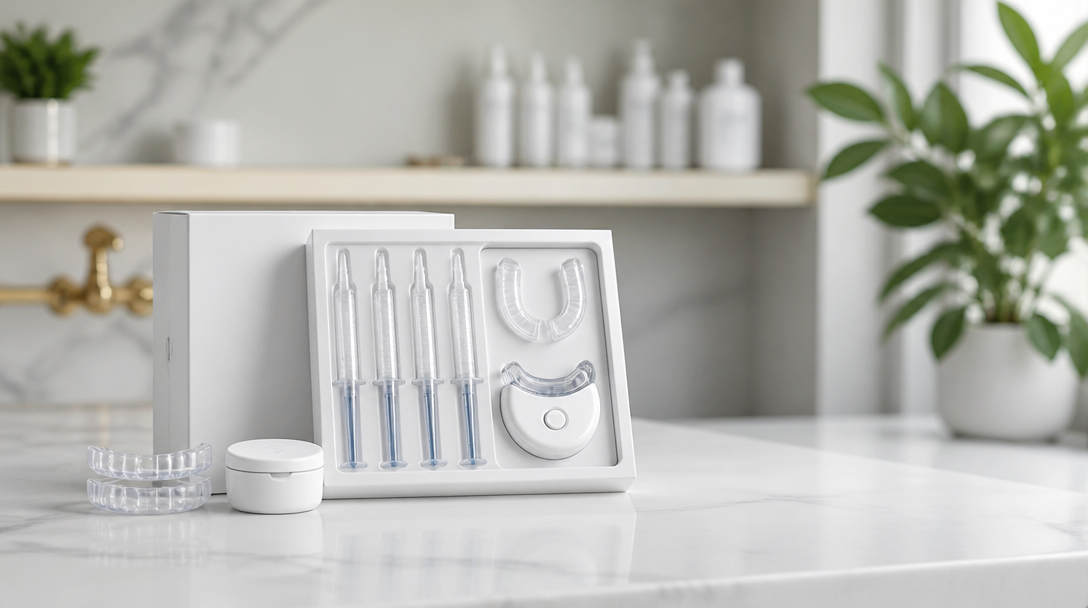
Discover which formats, actives, and compliance standards are driving take-home whitening kit B2B reorders across dental, spa, and DTC channels in 2026.
Why Take-Home Has Overtaken In-Office as the Growth Category for Take-Home Whitening Kit B2B Buyers
If you're allocating shelf space or building a private-label whitening line, the category shift is already settled. Take-home whitening kits are now the primary reorder driver for dental distributors, spa operators, and DTC wellness brands — ahead of in-office treatments. The professional question is no longer whether to stock take-home formats. It is which formats, which actives, and which compliance posture to build around when evaluating take-home whitening kit B2B supply relationships.
The structural logic is straightforward. Patients complete whitening protocols at home regardless of where the clinical relationship starts. A dental clinic that sends a patient home with a co-developed take-home kit retains the revenue cycle and controls the outcome. A retailer stocking a well-formulated, compliantly sourced kit captures repeat purchase behavior that in-office treatments cannot generate on their own.
Regulatory recognition has followed market behavior. FDA device listings confirm that oral care kits distributed commercially — including supplies for oral hygiene used in home care settings — are categorized medical products with defined listing and labeling requirements, not informal product bundles. That classification carries direct implications for supplier qualification and retail channel eligibility.
The Three Formats Driving the Most Reorders in Current Take-Home Whitening Kit B2B Purchase Cycles
Buyer order patterns across dental distributors and premium retailers currently concentrate in three formats. Understanding the channel logic behind each helps you decide which to anchor your line around.
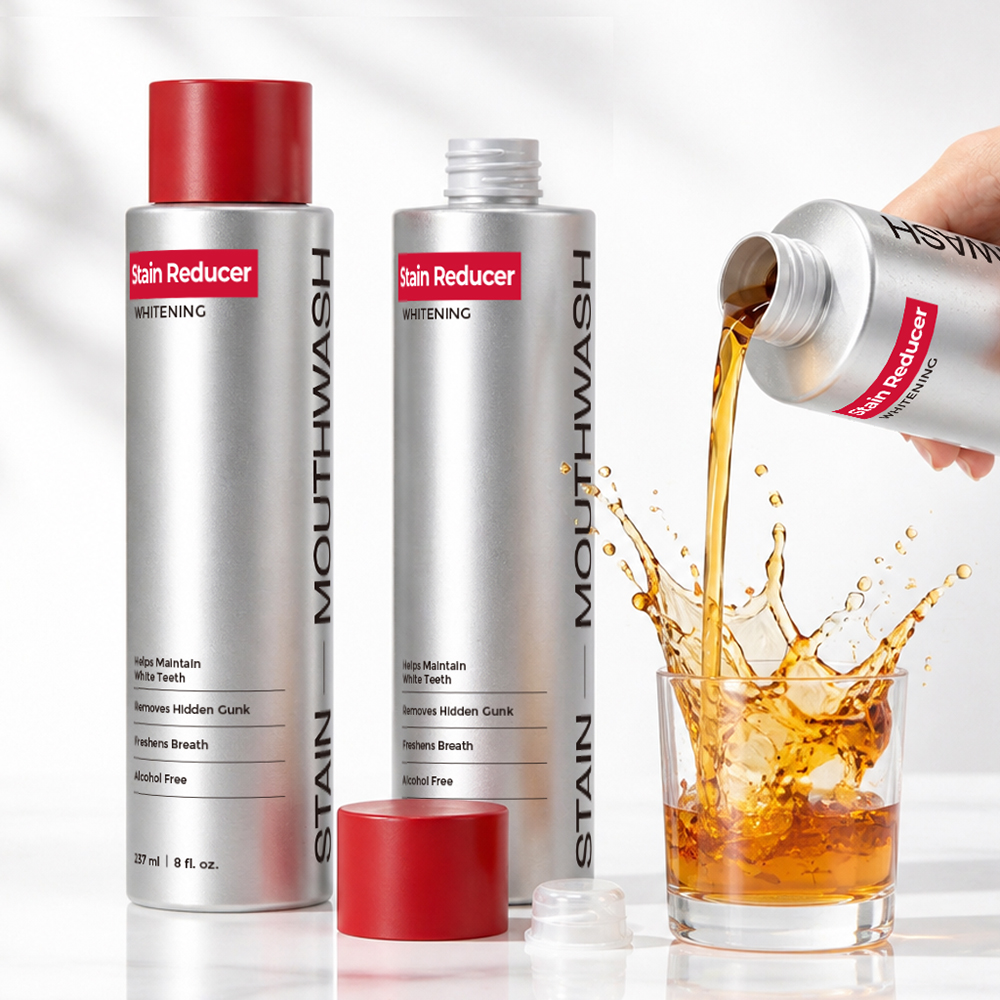
- Whitening gel syringes with custom trays. The professional standard for dental clinic take-home programs. Clinics order these at volume because they extend the in-office relationship, allow concentration tiering between peroxide and PAP systems, and carry a defensible clinical rationale. Buyers sourcing for clinic distribution should prioritize syringe formats with precise volume control and tamper-evident packaging.
- Whitening strip systems. The highest-velocity format in retail and DTC channels. Strip systems are cost-efficient to ship, straightforward to private-label, and respond well to bundling with ancillary products. The sourcing challenge is ingredient consistency across production runs — buyers ordering at scale need certificate-of-analysis documentation per batch, not per SKU.
- Gel pen applicators. Growing in spa and beauty-line distribution because of their precision positioning and premium shelf presence. Pen formats support higher retail price points and suit gift-set or travel-kit bundling. Minimum order quantities are typically lower than syringe programs, making them accessible for brands in early scaling phases.
Each format carries distinct regulatory documentation requirements, shelf-life considerations, and channel fit. Map format choice to channel first, then work backward to formulation and compliance requirements.
PAP Formulas: Why Enamel-Safe Claims Are Reshaping Buyer Specs
Phthalimidoperoxy caproic acid — PAP — has moved from a niche alternative to a primary specification request in current purchase cycles. The driver is not marketing preference. It is a combination of clinical practice guideline priorities, regulatory pressure on peroxide concentrations in key markets, and documented consumer sensitivity concerns associated with peroxide-based systems.
Peer-reviewed clinical practice guidelines consistently emphasize preventive oral care and enamel integrity as core treatment priorities. When buyers are specifying whitening products for dental clinic distribution, enamel-safe positioning is no longer a differentiator — it is a baseline expectation that the clinic buyer's own patient-facing obligations demand.
PAP formulas offer a specific technical advantage: they oxidize chromogens on the tooth surface without releasing free radicals at the concentration levels associated with peroxide sensitivity. For buyers sourcing for markets where peroxide concentration limits are actively enforced — the EU cap on consumer-grade peroxide products is the most cited regulatory constraint — PAP is often the only compliant path to an effective whitening claim.
What this means for your purchasing spec:
- Request stability data for PAP concentration across the product's stated shelf life. PAP degrades under certain pH and temperature conditions. A supplier unable to provide this data is a sourcing risk, not a cost-saving option.
- Confirm that enamel-safe claims are supported by in-vitro or clinical testing documentation — not ingredient selection alone. Health Canada's published standards for oral health products, including gels and rinses, specify that directions of use, timing guidance, and contraindications must be substantiated at the claim level. Regulatory bodies in the EU hold the same expectation.
- Evaluate whether your supplier can produce both PAP and peroxide variants from the same facility if you're serving multiple markets with different regulatory thresholds.
LED Device Bundling: How Hardware Anchors a Defensible Kit
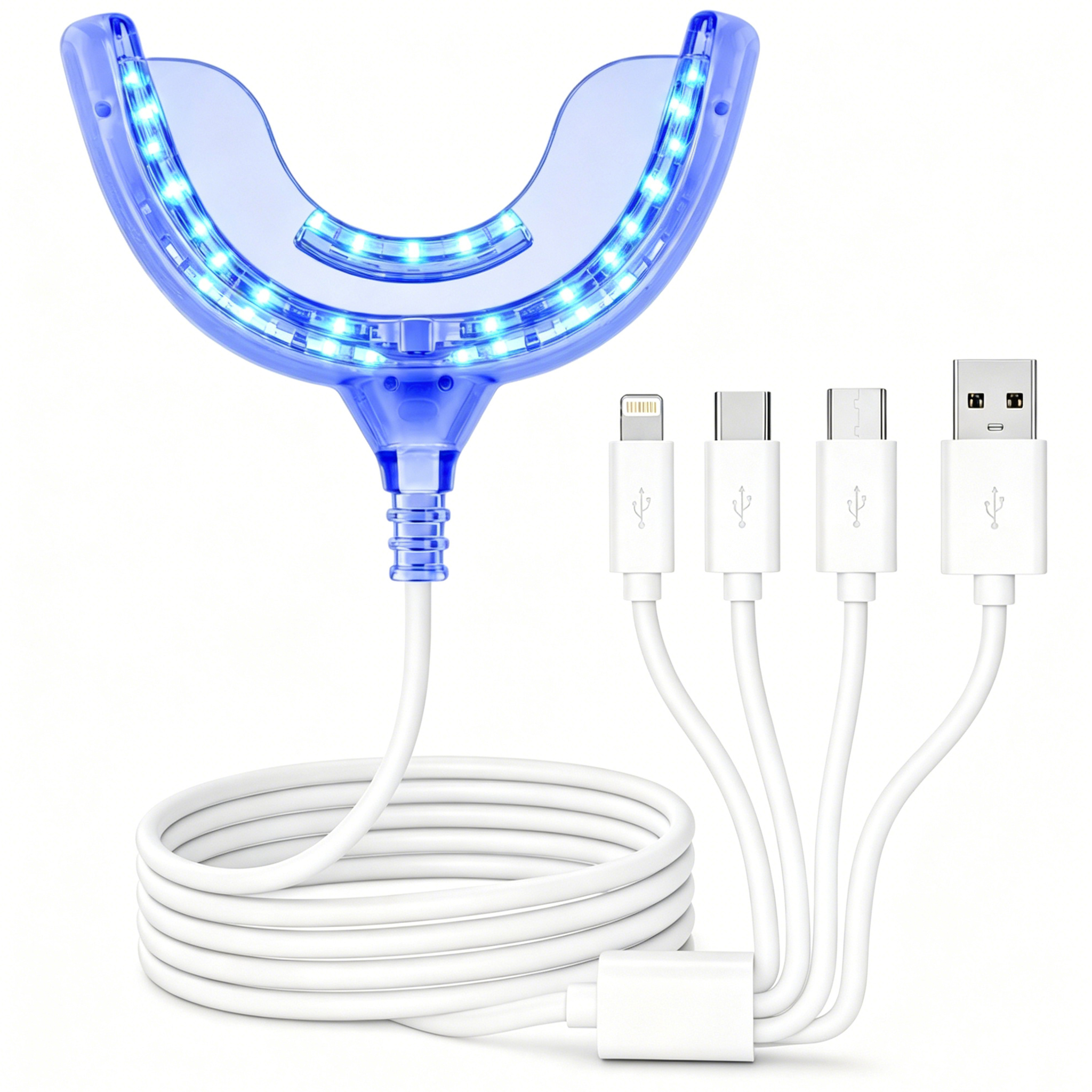
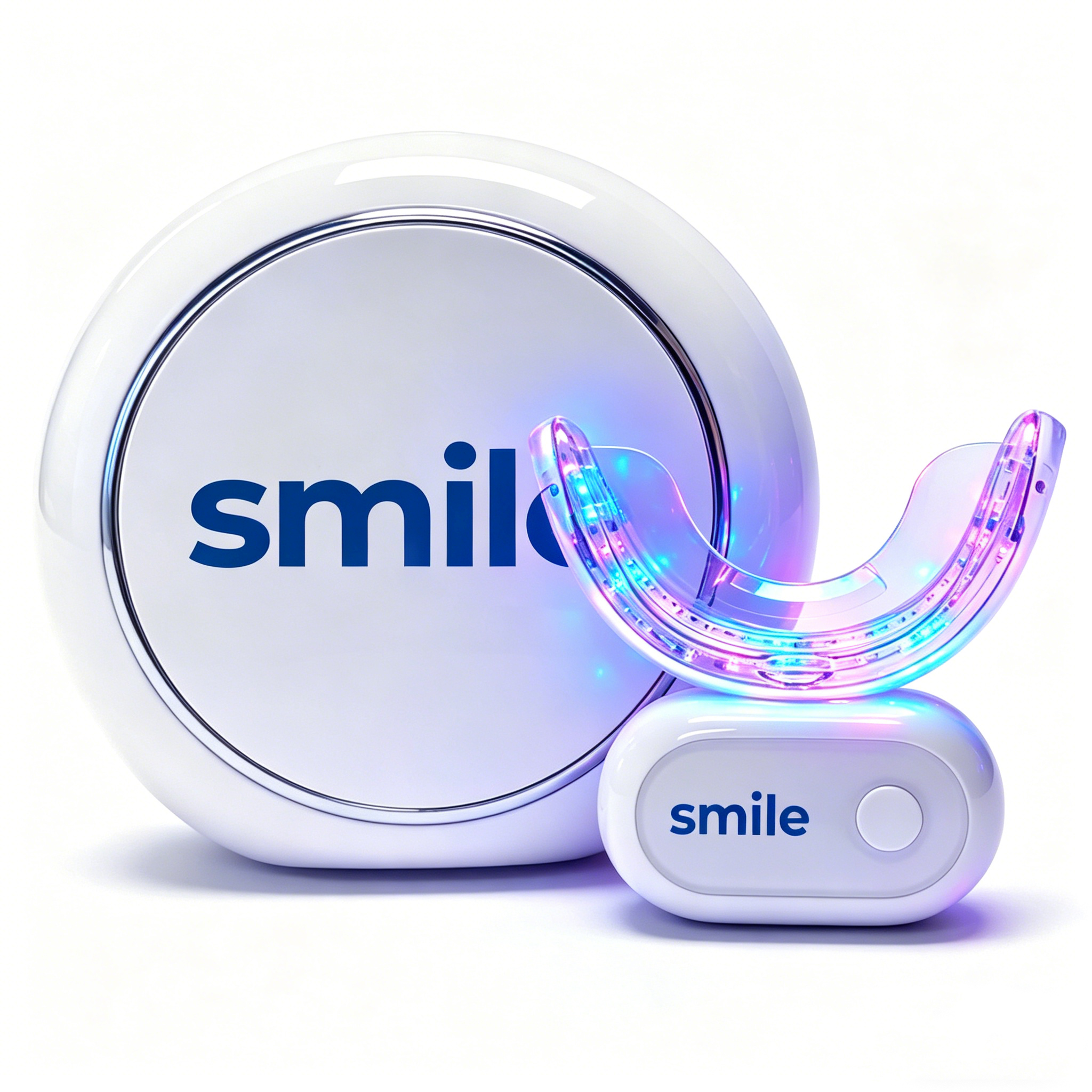
LED accelerator devices have become the structural element that separates a commodity whitening kit from a defensible product line. Buyers across dental, spa, and DTC channels use LED device inclusion to justify higher retail price points, reduce direct price-comparison exposure, and increase perceived protocol completeness.
A whitening gel strip on its own competes on price. The same gel paired with a private-labeled LED mouthpiece competes on system value. For a dental clinic distributing take-home kits, the LED component reinforces clinical credibility — patients associate the hardware with professional-grade treatment even when used at home.
Hardware sourcing for LED devices requires a separate compliance evaluation from the gel or strip component. Confirm the following before committing to a supplier:
- CE marking for EU distribution and FDA 510(k) clearance or equivalent for US channels, plus relevant national certifications for additional target markets.
- Battery and electrical safety certifications — typically IEC 62133 for lithium cells — if the device is rechargeable.
- Wavelength specification. Most whitening-application LEDs operate in the 400–500nm blue-light range. Confirm the device specification matches the activation requirements of your gel formula.
When evaluating a supplier's ability to deliver a co-developed LED kit, request production samples across at least three batches. LED output consistency is a known quality-control variable, and batch-to-batch variance in light intensity affects both efficacy claims and consumer experience at the point of use.
Compliance Pressures Quietly Filtering the Supplier Field
Regulatory requirements for take-home whitening kit B2B sourcing have tightened across most major markets, and the effect has been a gradual consolidation of viable, fully qualified suppliers. Buyers who have not updated their supplier qualification criteria recently are likely carrying more regulatory exposure than their current audit posture reflects.
The FDA's AccessGUDID database confirms that commercially distributed oral care kits require device listing and compliant labeling as medical products in applicable categories. Health Canada's published oral health product standards specify labeling requirements for directions of use, timing after brushing, and contraindications — all of which must be reflected in kit instructions for Canadian market eligibility. A supplier who cannot provide compliant labeling templates for your target market is not a viable long-term partner, regardless of unit price.
Three compliance signals currently filtering the supplier field:
- GMP certification. ISO 22716 (cosmetics GMP) is the minimum standard for whitening gel manufacturers. Buyers sourcing for dental clinic distribution should additionally confirm whether the facility holds ISO 13485 if any kit component is classified as a medical device.
- Ingredient transparency. Full INCI disclosure and access to safety data sheets per batch. This is non-negotiable for EU Cosmetic Product Notification Portal (CPNP) submission and increasingly expected by US retail buyers conducting vendor audits.
- Market-specific registration support. A supplier who delivers the documentation package required for your target market — not just the product — materially reduces your regulatory burden. Ask specifically what they provide for EU, US, and Canadian registration pathways before contracting.
What a Well-Structured Take-Home Line Looks Like in Practice
A professional take-home whitening line built for multi-channel distribution typically spans three tiers, each with distinct formulation, packaging, and compliance requirements.
| Tier | Format | Active System | Primary Channel |
|---|---|---|---|
| Entry | Whitening strips or pen | PAP or low-concentration peroxide | Retail, pharmacy, DTC |
| Mid | Gel syringe kit | PAP+ or peroxide (market-dependent) | Dental clinic distribution |
| Premium | LED bundle with gel | PAP or dual-active system | Spa, premium retail, DTC wellness |
This structure allows a brand owner to serve multiple buyer types from a single supplier relationship while maintaining distinct positioning at each price point. The critical sourcing requirement: all three tiers must share a consistent compliance posture — the same GMP documentation standard, the same labeling framework, the same ingredient disclosure protocol.
Research on oral care kit distribution in preventive and behavioral health contexts confirms that kit-based interventions improve protocol adherence when paired with clear, structured instructions. For professional buyers, the instruction insert inside a take-home kit is not a packaging afterthought. It functions as a compliance document and a clinical support tool. Suppliers who design it as such are worth prioritizing.
How to Evaluate Whether Your Current Supplier Can Scale With Take-Home Whitening Kit B2B Demand
Demand for take-home formats is accelerating. The supplier qualification question is not whether your current partner can fill your next order — it is whether they can scale with your volume trajectory without degrading quality, compliance posture, or lead time.
Run your current supplier against these four criteria:
- Formulation flexibility. Can they produce PAP, peroxide, and PAP+ variants from the same facility? A supplier locked into a single active system creates a sourcing bottleneck as your market mix expands.
- Private-label readiness. Can they deliver finished, labeled, shelf-ready product — not bulk fill requiring external secondary packaging? Managing secondary packaging externally adds cost and introduces compliance risk at scale.
- Documentation cadence. Do they issue certificates of analysis, stability reports, and safety data sheets per batch without being prompted? At meaningful order volumes, documentation gaps become audit liabilities that your quality team will absorb.
- Regulatory update response. When a target market revises its labeling or concentration requirements, how quickly does your supplier update formulation or documentation? This is the most revealing test of operational maturity in a take-home whitening kit B2B supplier relationship.
The take-home whitening category rewards buyers who treat supplier qualification as a strategic decision, not a procurement checkbox. Format selection, active ingredient positioning, compliance documentation, and scalability are all interconnected. Buyers who align those variables early build lines that hold up under channel expansion and regulatory scrutiny alike.
References
- Effectiveness of personalized oral health education with behavioural modification using HAPA-MI constructs and oral care kit in residents of informal settlements — PubMed
- Oral Health Care: A Systematic Review of Clinical Practice Guidelines — PubMed Central
- FDA AccessGUDID — Oral Care Kit Device Listing (D89260705400011)
- FDA AccessGUDID — Oral Care Kit Device Record (00618029870049)
- Oral Health Products — Government of Canada, Health Canada Natural Health Products Ingredients Database
Disclaimer
This article is for general informational purposes only and does not constitute sourcing, legal, or regulatory advice. Always conduct your own due diligence and consult qualified legal or compliance professionals before making purchasing or compliance decisions. WhiteningBright makes no warranties as to the completeness or accuracy of the information, and any reliance is at your own risk.