TikTok Beauty Hauls Drive 73% of Whitening Kit Sales
2026年5月31日
Learn which TikTok whitening trends convert — content formats, influencer tiers, compliance frameworks, and metrics for brand owners scaling distribution.
TikTok Whitening Trends: Which Content Formats Actually Move Inventory
TikTok whitening trends have restructured how brand owners and distributors think about product launches. Social-led discovery now shapes purchase decisions faster than traditional retail placement — and for teeth whitening specifically, the content format matters as much as the formulation. This guide breaks down which video structures convert, how to structure influencer partnerships that protect your brand, and what metrics signal real sales velocity versus vanity engagement.
Why Beauty Haul Videos Outperform Before-and-After Content
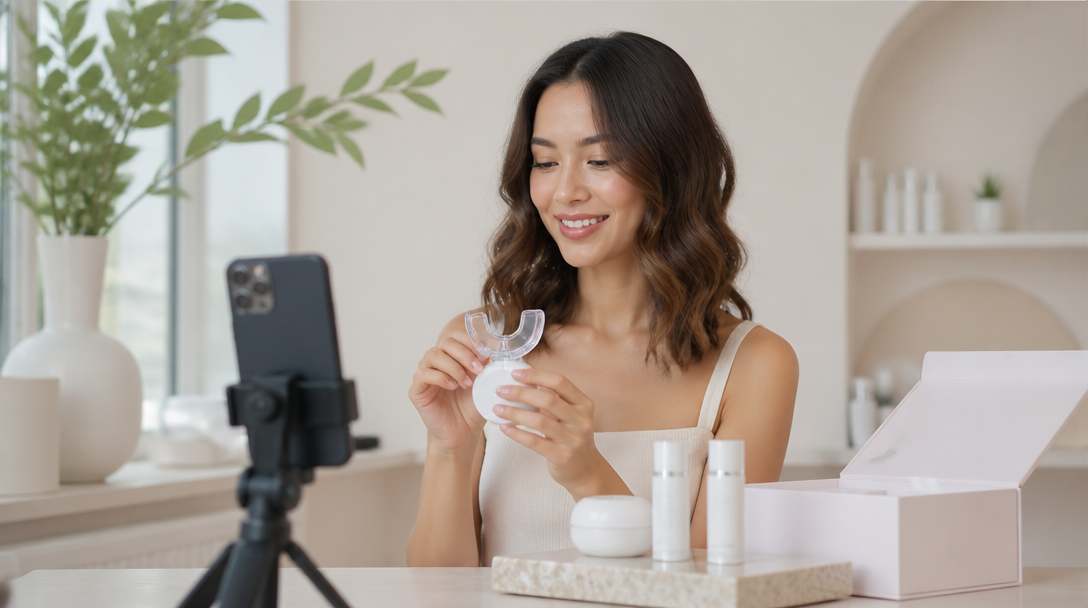
Haul-style content consistently converts at higher rates than before-and-after videos for whitening products. The reason is straightforward: hauls position whitening kits as lifestyle accessories rather than clinical treatments. When a creator pulls six products from a bag, your kit shares frame space with serums, lip glosses, and supplements — a context that lowers purchase hesitation.
Before-and-after content, by contrast, forces the viewer to evaluate a results promise. That raises the bar for believability and creates regulatory friction. Creators discussing "trying new products" sidestep specific efficacy claims that invite FDA cosmetic compliance scrutiny. For brand owners supplying premium pharmacies or DTC wellness platforms, haul content reduces legal exposure while sustaining engagement.
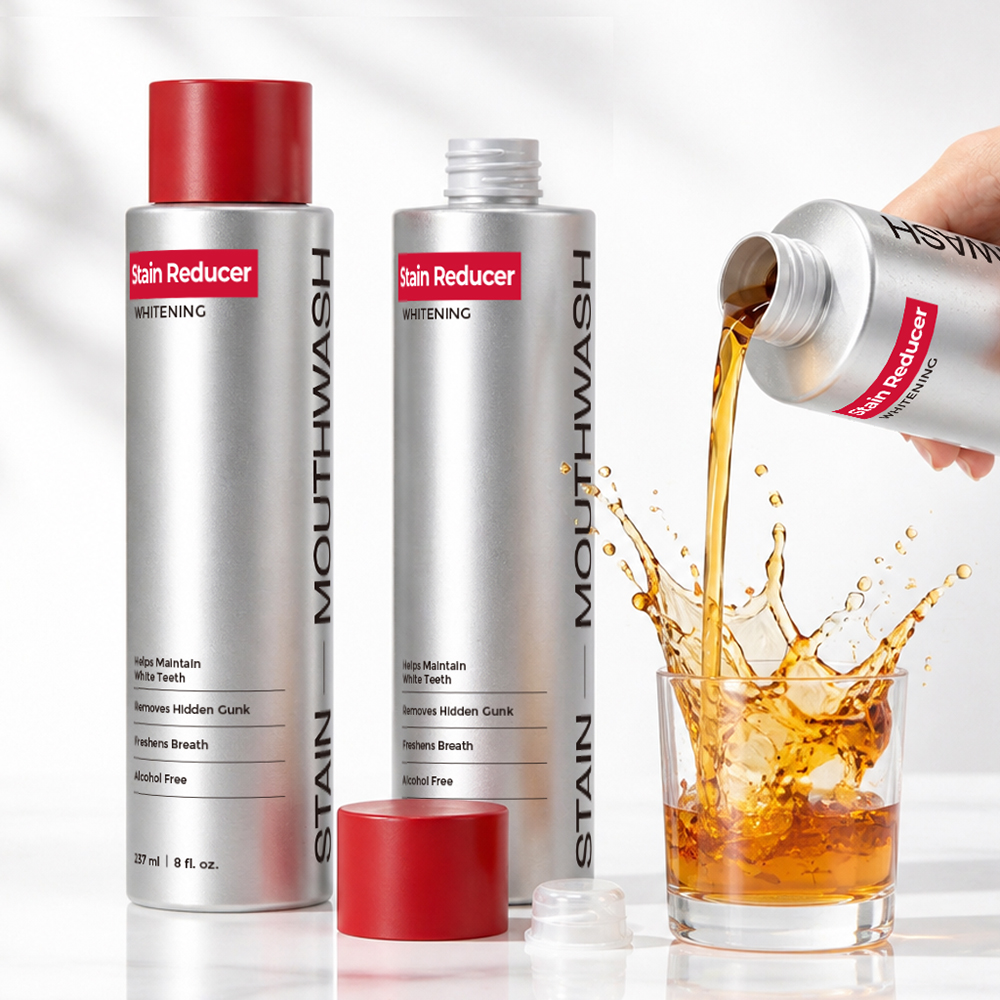
The practical implication: your co-developed packaging becomes the hero, not the active ingredient. Brands building private-label-ready whitening lines should engineer outer packaging for on-camera impact — matte finishes, clean typography, and applicator silhouettes that read well in a 9:16 frame. Formulation excellence still matters, but the first barrier to conversion is visual.
The 15-Second Demo Structure That Drives Conversion
Top-performing TikTok whitening trends follow a precise short-form structure. Analysis of high-converting whitening content points to a repeatable 15-second framework:
| Timestamp | Content Beat | Brand Consideration |
|---|---|---|
| Seconds 1–3 | Product reveal, brand clearly visible | Logo placement on primary face of packaging |
| Seconds 4–8 | Application demonstration, no results shown | Gel consistency and applicator ergonomics on camera |
| Seconds 9–12 | Texture and sensory commentary | Flavor profile and immediate mouthfeel differentiate here |
| Seconds 13–15 | Call-to-action with discount code | Code tracking links content to actual sales data |
PAP-based formulas tend to outperform peroxide options in this context. The immediate, gentle sensation reads well on camera — creators can describe the experience authentically without invoking sensitivity warnings. For a brand targeting the 18–34 demographic through DTC wellness platforms, a PAP formula engineered for at-home use offers both content compatibility and a cleaner regulatory narrative.
Scaling from 500 to 5,000 units requires formulations that perform consistently across every unit a creator opens on camera. Batch uniformity in gel viscosity and color is not a secondary concern — it is a content risk management issue.
Micro vs. Macro Influencers: Where the ROI Actually Sits
Micro-influencers in the 10,000–100,000 follower range generate meaningfully higher conversion rates for whitening products than macro-influencers. Engagement rates for micro-influencers typically run 8–12%, compared to 2–4% for accounts above 500,000 followers. For a product category where trust drives purchase intent, that gap is significant.
Micro-influencer advantages for whitening brands specifically:
- Lower per-post cost allows parallel testing across multiple demographics and geographies
- Audience relationships feel personal — product integration reads as a genuine recommendation
- Underperforming partnerships carry limited financial exposure
- Niche fitness, dental health, and wellness micro-accounts deliver pre-qualified audiences
Macro-influencers serve a different function. They build category-level awareness and signal brand legitimacy to retail buyers, but they rarely drive direct sales for oral care products. A practical budget allocation: 70% to micro-influencers for conversion activity, 30% to macro-influencers for market entry and brand positioning.
One structural note for brand owners entering new markets: TikTok's algorithm-driven discovery behaves differently by region. A creator partnership effective in the US may generate negligible traction in Germany or Australia. Build geographic segmentation into your partnership strategy before allocating inventory.
Co-Development Partnerships: What Creators Actually Want
The most durable TikTok whitening trends in 2025–2026 have involved creators in product decisions before launch, not after. When a creator contributes to flavor selection or packaging color, the content they produce is structurally different — it is a product story, not a sponsored post.
Co-development touch points that generate authentic social content:
- Flavor development: Limited-edition SKUs co-created with a creator's input. Mint variants, fruit-forward profiles, and charcoal-adjacent aesthetics each appeal to different audience segments.
- Packaging customization: Creator-specific colorways or applicator designs, particularly effective for mid-tier influencers building personal brands.
- Formulation feedback: Sensitivity thresholds, texture preferences, and wear-time input from creators who use whitening products regularly.
- Application protocols: Creator-developed usage routines that become branded content series rather than one-off posts.
For private-label brand owners, this approach creates a defensible product position. A competing brand can replicate a formula — it cannot replicate a creator's documented involvement in developing it. Identify three to five micro-influencers in your target segment before locking final product specifications. Their feedback on gel feel and packaging usability costs little at the sampling stage and materially reduces post-launch content risk.
WhiteningBright's private-label-ready whitening formats are structured to accommodate this kind of iterative co-development. Learn more about available configurations at whiteningbright.com/products.
Metrics That Connect TikTok Content to Inventory Movement
View counts measure reach. Brand owners need metrics that connect content performance to actual purchase behavior and repeat demand. The following benchmarks reflect realistic targets for well-structured whitening campaigns:
| Metric | Target Range | What It Signals |
|---|---|---|
| Click-through rate | 3–7% | Immediate purchase intent from content |
| Conversion rate | 8–15% | Product-market fit and content quality |
| Average order value | $35–65 | Bundle effectiveness and pricing position |
| Repeat purchase rate | 25–40% | Formulation satisfaction and brand retention |
UTM parameters are non-negotiable. Tag every creator link with parameters that distinguish content type — haul video, application demo, review post — so you can isolate which format drives which behavior. This data directly informs your next partnership round and your inventory planning cycle.
Repeat purchase rate deserves particular attention. A whitening kit that converts well on TikTok but generates low repurchase signals a formulation or expectation gap. For retailers managing shelf space in premium pharmacies, that pattern is a structural problem — social velocity alone does not justify a permanent SKU position.
TikTok Whitening Trends and Regulatory Compliance
The regulatory environment for whitening claims is not uniform, and TikTok content crosses borders faster than compliance teams typically anticipate. Brand owners structuring creator partnerships need a compliance framework that travels with the content.
Core requirements for US-market creator agreements:
- Provide pre-approved language templates — creators should not write their own product descriptions for regulated categories
- Prohibit specific claims: shade-improvement numbers, timeline promises, and comparisons to professional treatments
- Require #ad disclosure in both video description and verbal mention within the first 30 seconds
- Document all creator agreements for potential regulatory audit
EU cosmetic regulations require distinct compliance structures — particularly around active ingredient disclosure and permissible peroxide concentrations in consumer products. If a campaign launches simultaneously across US and EU markets, default to the more restrictive standard across all creator content.
CE marking requirements and ISO 22716 Good Manufacturing Practice certification signal formulation credibility to premium retail partners. Brand owners presenting to pharmacy chains or clinic distributors in European markets should confirm their private-label supplier carries these credentials before finalizing sourcing agreements.
Partnership Structures That Protect Both Sides
A creator agreement that protects your brand without killing creative output requires specificity. Vague contracts generate vague content — and compliance gaps that surface at the worst possible moment.
Recommended partnership tiers by follower range:
| Tier | Follower Range | Compensation Structure | Content Requirements |
|---|---|---|---|
| Micro | 10K–50K | Product + $200–500 per cycle | 2–3 posts over 30 days |
| Mid-tier | 50K–200K | Product + $500–1,500 | 3–4 posts plus Stories or Lives |
| Macro | 200K+ | $1,500–5,000 per campaign | Full campaign integration with brand review |
Contract terms that matter for whitening specifically: usage rights (minimum 12 months on high-performing content), oral care category exclusivity for 90 days, engagement rate minimums, and explicit claim restrictions aligned with applicable regulations. Require content approval before posting — not as a creative veto, but as a compliance checkpoint.
Performance bonuses tied to measurable outcomes — link clicks, tracked conversions, engagement benchmarks — align creator incentives with distribution goals. Flat-fee arrangements with no performance component reduce creator motivation to optimize content after posting.