When to Pause Whitening If Your Teeth Are Sensitive
14. Juli 2026
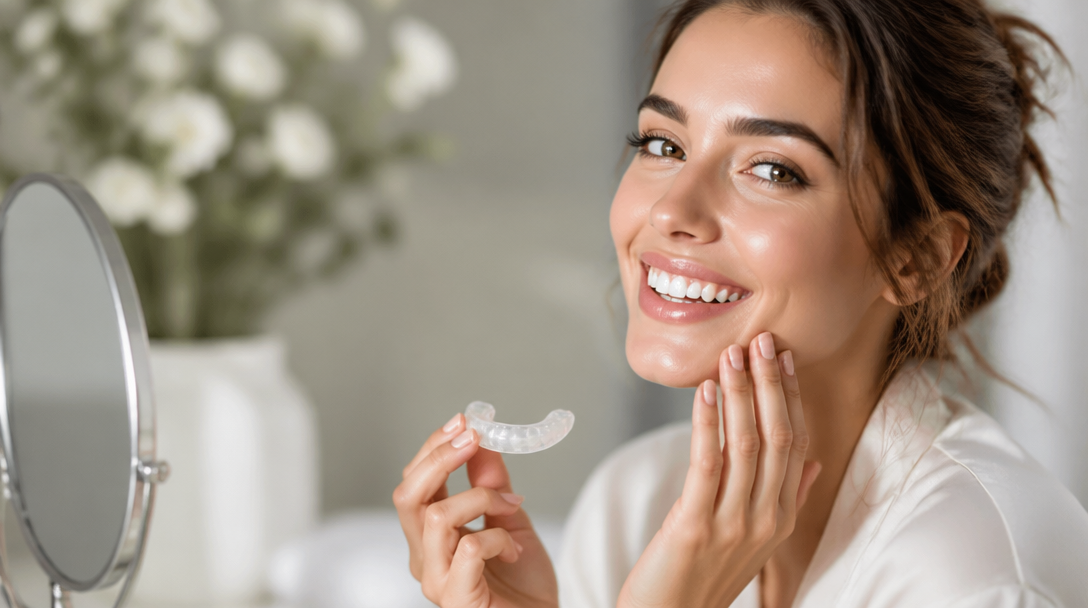
Discover when to pause teeth whitening if you're sensitive, which formulas reduce discomfort, and how to build a routine for whitening sensitive teeth safely.
What Tooth Sensitivity Actually Means Before You Start Whitening
That sharp ache from cold water or ice cream is your teeth telling you something. Before you start whitening sensitive teeth safely, you need to understand what that signal means — and whether it changes what products you should use. For most people with sensitivity, whitening is still possible. The details determine whether you come out comfortable or worse off.
Sensitivity is a symptom, not a diagnosis. It means stimuli — temperature, pressure, sweet or acidic food — are reaching the nerve inside your tooth more easily than they should. The most common cause is exposed dentin, the softer tissue beneath your enamel. When enamel thins or gum tissue recedes, tiny channels called dentinal tubules become exposed, and signals travel toward the pulp faster and with greater intensity.
Knowing whether your sensitivity is mild and occasional or frequent and sharp will shape every decision you make: which formula to use, how long to wear it, and exactly when to stop.
How Whitening Agents Trigger Sensitivity in Reactive Teeth
Most whitening products work through oxidation. Hydrogen peroxide or carbamide peroxide releases oxygen molecules that break apart the compounds causing staining. The same permeability that allows whitening to reach deep stains also allows peroxide to penetrate enamel and contact the dentin beneath it.
When peroxide reaches dentin, it can temporarily irritate the pulp — the living tissue at the tooth's center. This causes the sharp, shooting sensations sometimes called "zingers." They are not a sign of permanent damage. According to the American Dental Association, sensitivity from whitening is typically mild and transient, resolving without intervention in most cases.
For people with already-reactive teeth, this process starts from a lower baseline. Dentinal tubules may already be partially exposed, so peroxide travels a shorter distance. Sensitivity tends to feel more pronounced and arrive more quickly than it would for someone with intact enamel.
A 2023 peer-reviewed study confirmed that sensitivity from whitening — at both lower and higher peroxide concentrations — is typically mild and resolves within about one day for most users. That is reassuring, but individual experience varies, and the baseline you start from matters.
PAP vs. Peroxide: What Sensitive Users Need to Know
Not all whitening formulas use peroxide. Phthalimidoperoxycaproic acid — PAP — is a non-peroxide oxidizing agent used in a growing number of at-home products. It operates through oxidation but does not release free radicals the way hydrogen peroxide does, which is thought to reduce irritation to the pulp.
For people with sensitive teeth, PAP-based formulas offer a practical alternative. They are formulated to deliver visible results with a lower likelihood of triggering sensitivity. They may work more gradually than high-concentration peroxide products, but for users who have struggled with discomfort, that trade-off is often worth making.
Within peroxide-based products, concentration is the key variable. A 2024 umbrella review found that low-to-medium hydrogen peroxide concentrations produce whitening results comparable to higher concentrations while generating less tooth sensitivity. Desensitizing agents added to the formula — particularly potassium nitrate and sodium fluoride — reduced sensitivity further without compromising efficacy.
If you have baseline sensitivity and plan to use a peroxide product, look for:
- Hydrogen peroxide at lower rather than maximum concentrations
- Carbamide peroxide at 10%, a well-researched starting point for users with pre-existing sensitivity
- Formulas that include potassium nitrate or sodium fluoride as active desensitizing ingredients
- Shorter recommended wear times, which reduce cumulative peroxide exposure per session
Whitening Sensitive Teeth Safely: When to Stop Immediately
Some sensitivity during or after whitening is expected. Other signals mean you should remove the product now and pause before continuing. Knowing the difference protects both your comfort and your long-term dental health.
Stop the treatment immediately if you experience:
- Sharp, severe pain during the session that does not ease when you remove the product
- Pain that persists well beyond 24 hours after treatment ends
- Gum irritation, blanching, or visible tissue changes around the treatment area
- Sensitivity that escalates with each successive session rather than staying stable or improving
Clinical research tracking home whitening users found that sensitivity tends to decrease as treatment progresses, not increase. If your sensitivity is getting worse session by session, that pattern warrants pausing and consulting a dentist — it is the reverse of what the evidence shows for typical users.
Post-treatment sensitivity that is noticeable but fades within one day does not, on its own, require stopping your routine. It is a signal to adjust: reduce wear time, extend the gap between sessions, or switch to a lower-concentration or PAP-based formula.
Managing Sensitivity Before, During, and After Each Session
Sensitivity management is not limited to what happens during treatment. What you do in the hours before and after a session has a real effect on how your teeth respond.
Before Your Session
Use a desensitizing toothpaste containing potassium nitrate for one to two weeks before starting whitening. Potassium nitrate calms nerve activity inside the tooth — it does not block dentinal tubules but reduces the nerve's response to stimuli. This preparation step can meaningfully lower your starting sensitivity level.
Avoid whitening immediately after a professional dental cleaning. Cleaning can temporarily increase enamel permeability. Give your mouth 24 to 48 hours to settle first.
During Treatment
Do not exceed the recommended wear time. More time does not reliably produce better results — it increases peroxide exposure without proportional whitening benefit and raises the likelihood of sensitivity. If you are using a tray system, confirm the tray fits correctly so gel does not contact your gum tissue.
After Treatment
Avoid very cold, very hot, or acidic foods and drinks for several hours after a whitening session. Enamel is temporarily more permeable following treatment, and those stimuli reach the dentin more easily than usual.
Apply a fluoride gel or desensitizing gel directly after removing the whitening product. Sodium fluoride supports enamel remineralization and can reduce post-treatment sensitivity — a strategy supported by clinical evidence as an effective management tool.
Who Should Wait Before Whitening Sensitive Teeth Safely
For some users, the right answer is not a gentler formula — it is addressing an underlying issue first. Whitening over an unresolved dental problem can cause significant discomfort and may worsen the condition.
Consult a dentist before starting whitening if you have any of the following:
- Active decay or cavities: Peroxide can penetrate compromised enamel directly to the pulp, causing serious pain and potentially accelerating damage.
- Cracked teeth or failing restorations: Cracks and degraded fillings create direct pathways for peroxide to reach sensitive internal structures.
- Significant gum recession: Research confirms that patients with gingival recession experience greater sensitivity during whitening. Exposed root surfaces also do not respond to whitening agents the same way enamel does.
- Recent dental work: Newly placed fillings, crowns, or bonding may respond unpredictably to whitening agents. New restorations will not change color along with natural enamel.
- Diagnosed dentin hypersensitivity: A supervised approach — starting with the lowest available concentration or a PAP-based formula — is the appropriate entry point when a dentist has confirmed clinical hypersensitivity.
Whitening is also generally deferred during pregnancy, not because confirmed harm has been established, but because the evidence base for safety in that context is limited and the benefit does not outweigh the uncertainty.
Building a Whitening Routine That Works for Sensitive Teeth
A gradual approach consistently produces better outcomes for sensitive users than aggressive, high-concentration treatments applied too frequently. The goal is sustainable progress, not the fastest possible result.
- Prepare for two weeks: Use a potassium nitrate desensitizing toothpaste twice daily before you begin whitening.
- Choose the right formula: Start with a PAP-based product or a low-concentration peroxide formula. Carbamide peroxide at 10% is a well-researched starting point for users with pre-existing sensitivity. Avoid maximum-strength products as your entry point.
- Start with shorter sessions: Use the product for less than the maximum recommended time in your first several sessions. Assess your response before extending wear time.
- Space your sessions: Every other day, or every two to three days, is a reasonable cadence for sensitive users. Daily peroxide use is rarely necessary and increases cumulative exposure.
- Follow up with fluoride: Apply a fluoride or desensitizing gel after each session.
- Monitor the pattern: Mild next-day sensitivity that fades within 24 hours is manageable. Escalating pain, or sensitivity that extends beyond two to three days, means pause and reassess with a dental professional.
One additional consideration worth noting: in-office whitening treatments tend to generate greater sensitivity than supervised home whitening — a finding confirmed in the clinical literature. If you have reactive teeth, consistent at-home use of a lower-concentration formula over a longer period is often the more comfortable path to a comparable result.
Whitening sensitive teeth safely is not about tolerating pain. It is about finding the approach where your teeth respond, stay comfortable, and continue improving. For most people with sensitivity, that approach exists — it just requires a more deliberate start and a willingness to adjust when your teeth signal that something needs to change.
References
- In-office tooth bleaching protocols: an umbrella review — PMC (2024)
- Dental sensitivity in tooth whitening and its relationship to peroxides — Frontiers of Oral and Maxillofacial Medicine (2023)
- Whitening — American Dental Association (ADA)
- Incidence of tooth sensitivity after home whitening treatment — Research, Society and Development (2025)
Disclaimer
This article is for general informational purposes only and is not a substitute for professional dental or medical advice. Always consult a qualified dental professional before starting any teeth-whitening or oral-care regimen. WhiteningBright makes no warranties as to the completeness or accuracy of the information, and any reliance is at your own risk.