Market Shifts Driving Take-Home Kit B2B Orders
2026年10月20日
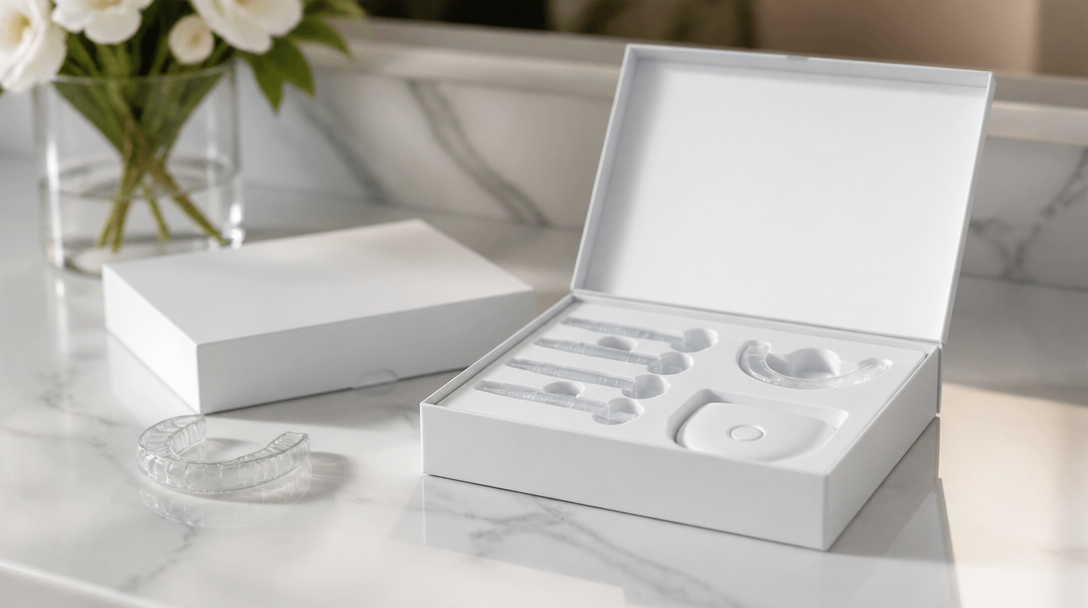
Explore the market forces behind take-home whitening kit demand — LED bundles, PAP formulas, compliance requirements, and what professional buyers should secure now.
Take-Home Whitening Kit Demand Is Reshaping B2B Sourcing Decisions
If you track your whitening category by revenue channel, the shift is already visible. Take-home whitening kit demand has accelerated across dental, spa, and retail distribution — not because in-office treatment has lost clinical relevance, but because the repeat-revenue economics have changed how professional buyers build their product mix. Understanding the specific forces driving that shift is what separates a reactive reorder from a deliberate sourcing strategy.
Repeat Revenue, Not Single Appointments, Is the Core Driver
In-office whitening closes one appointment. A professionally dispensed take-home kit opens a recurring purchase relationship. A systematic review published in Clinical Oral Investigations (2023) found that whitening results from at-home bleaching remain stable for one to two and a half years — which means patients predictably return for maintenance within a defined window.
For clinic owners, that stability window is a planning asset. A defined active patient base, combined with known treatment cycle data, makes reorder volume forecastable rather than reactive. Distributors supplying multiple clinic accounts can apply the same logic at scale: aggregate the cycle data across accounts, and a standing replenishment cadence becomes the logical structure rather than spot purchasing.
Buyers who stock take-home kits are not managing a one-time consumable. They are building a recurring revenue line with a predictable replenishment interval.
What LED Device Orders Are Signaling to Distributors
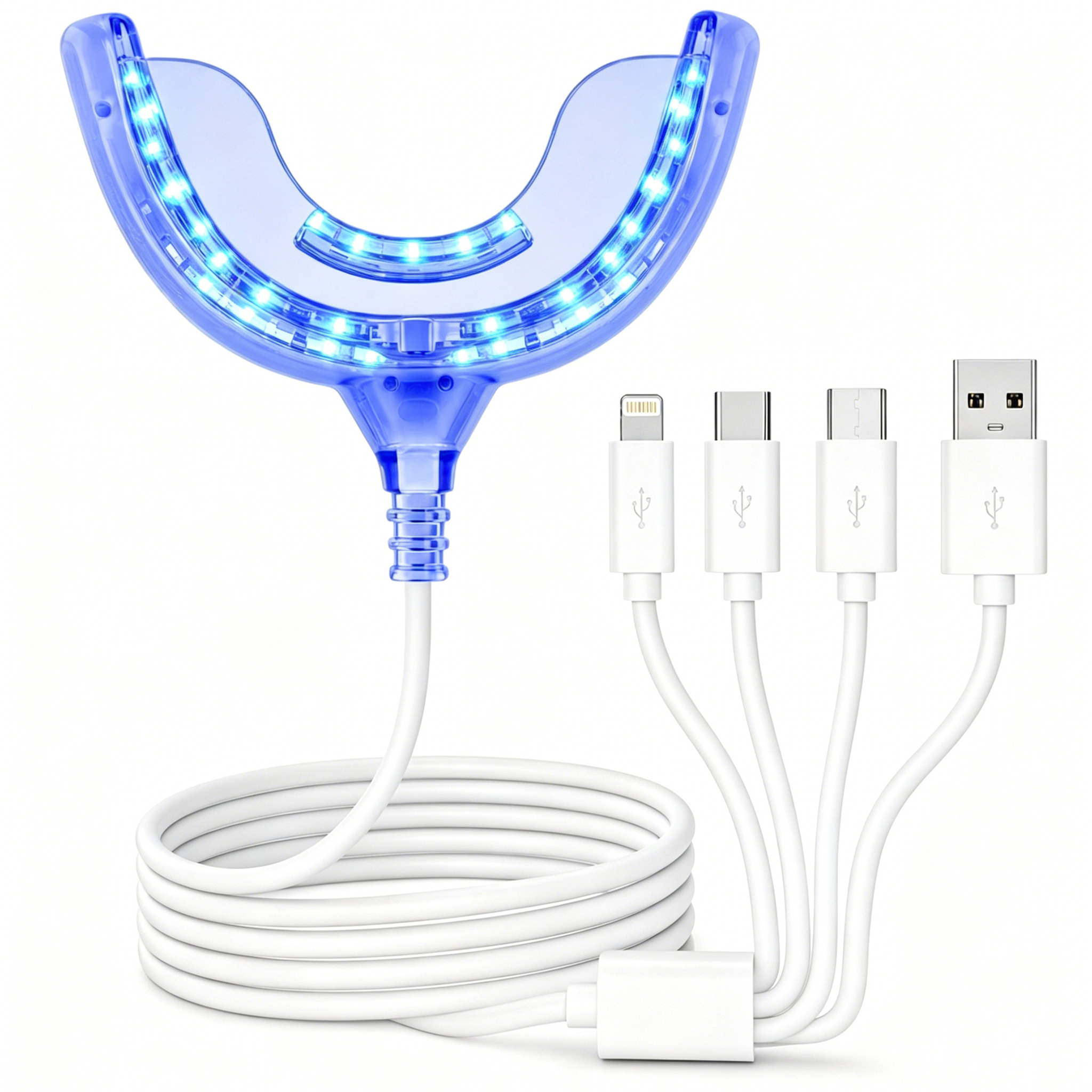
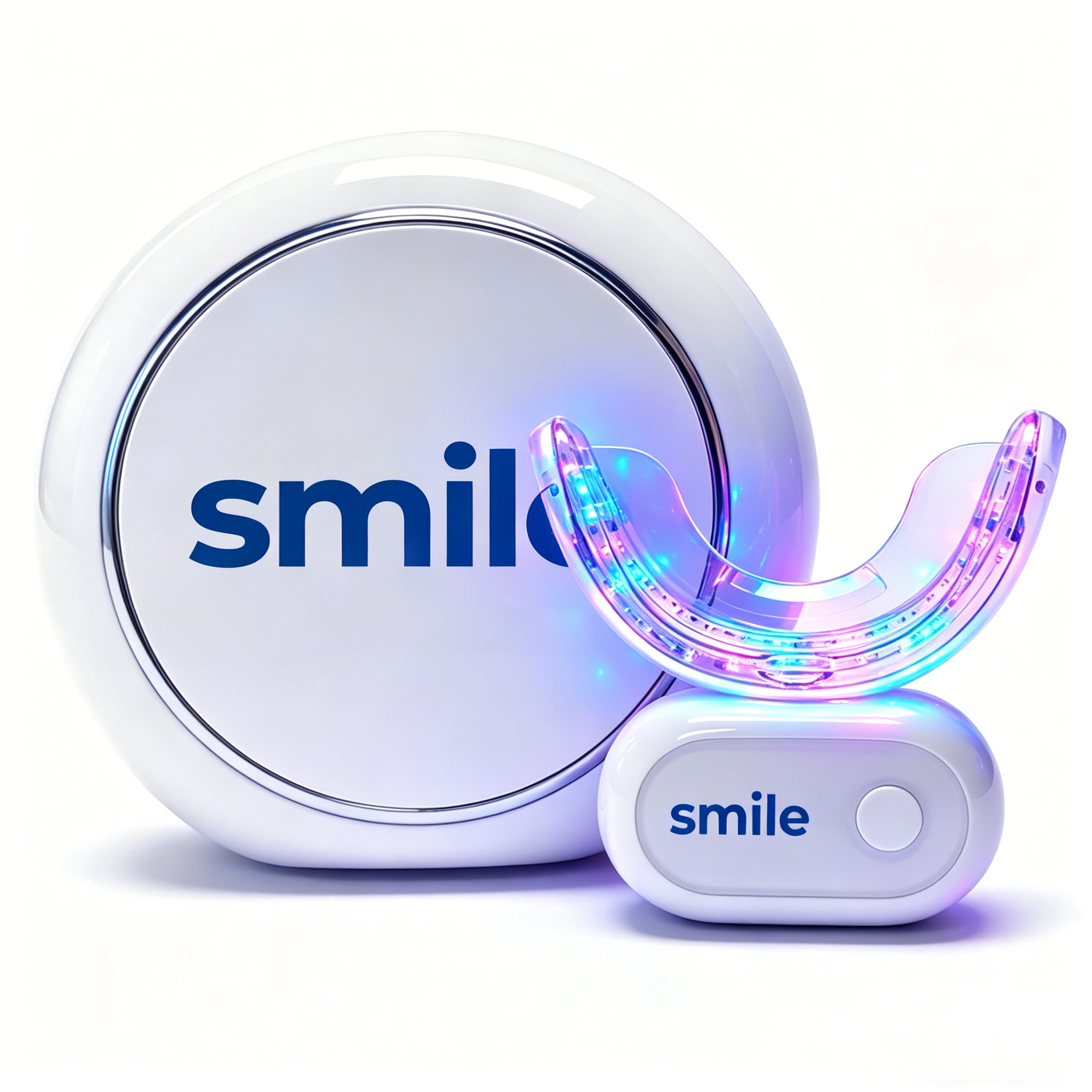
LED accelerator devices have moved from novelty to category anchor in professional take-home configurations. The signal this sends to distributors is not primarily about the device — it is about perceived treatment completeness.
Patients who receive a device alongside their gel or strips are more likely to complete the full protocol. Completed protocols produce visible results. Visible results drive repeat purchases and referrals. Spa operators and pharmacy buyers are requesting LED-inclusive SKUs rather than gel-only configurations precisely because bundled kits support that completion behavior.
LED devices also introduce a compliance layer that gel-only kits do not. Depending on the market, a mouthpiece LED device may be classified as a low-risk Class I device under FDA frameworks — which affects labeling, documentation, and how the product can be represented to end customers. Buyers should confirm device classification with their supplier before placing volume orders, particularly when private-labeling the device alongside the gel as a unified kit.
PAP Formulas Have Become a Procurement Filter, Not a Premium Option
Phthalimidoperoxycaproic acid — PAP — has crossed from niche formulation choice to active procurement requirement for a growing segment of professional buyers. The underlying reason is clinical: sensitivity complaints associated with peroxide-based formulas create documented barriers to repeat use.
A 2023 randomized controlled trial confirmed that hydrogen peroxide whitening strips produced statistically significant whitening, while minor oral irritation and tooth sensitivity were the most commonly reported adverse effects. For clinic owners, sensitivity complaints translate into patient attrition. For spa operators and direct-to-consumer brands, they translate into returns and negative reviews.
PAP-based formulas deliver oxidative whitening activity without the free-radical mechanism linked to peroxide sensitivity. For buyers, that distinction produces specific commercial outcomes:
- Lower sensitivity complaint rates across the patient or customer base
- Broader eligibility — patients with existing sensitivity can use PAP formulas where peroxide may be contraindicated
- Credible enamel-safe positioning for premium retail and wellness channels
- Reduced liability exposure for clinic operators dispensing products for unsupervised home use
Buyers sourcing for premium pharmacy shelves or branded wellness lines should treat PAP availability as a baseline formulation requirement. The category has moved past treating it as optional.
Regulatory Classification Is Now a Front-End Sourcing Decision
Compliance is no longer an afterthought handled after a shipment is flagged. For take-home whitening kits combining LED devices, gel syringes, or prefilled trays, the compliance picture spans multiple product categories simultaneously — and the decisions made at sourcing directly affect what can be stocked, labeled, and distributed in each target market.
The ADA reports that at-home systems commonly use carbamide peroxide concentrations ranging from approximately 10% to 38%, with treatment duration varying by concentration and formulation. Concentration thresholds directly affect regulatory classification. A kit formulated at one concentration may clear OTC distribution channels; the same kit at a higher concentration may require professional dispensing documentation or face import restrictions in specific regions.
For distributors operating across North America, the EU, and Southeast Asia, this creates a tiered sourcing requirement. Market-specific compliance documentation should be a standard line item in every purchase order process. Key documents to request from any supplier before committing to volume:
- FDA registration or exemption classification for the device component
- CE marking documentation for EU distribution
- ISO manufacturing certification relevant to the product category
- Ingredient disclosure and concentration verification for gel formulas
- ADA Seal of Acceptance status, where applicable, for peroxide-based products
Take-Home Whitening Kit Demand Expressed Through Three Bundling Patterns
The configurations distributors are actually ordering reveal where the market is moving. Three bundle structures are dominant across professional channels right now.
The Clinical Dispensing Bundle
Dental clinics are ordering kits that combine prefilled at-home trays with a short-course gel supply, structured to bridge between in-office appointments. A 2023 randomized controlled trial found that adding prefilled at-home trays between in-office sessions improved overall whitening outcomes compared with in-office treatment alone, while sensitivity risk remained comparable. Clinics sourcing this configuration are extending chair-side revenue, not replacing it.
The Retail-Ready Wellness Bundle
Pharmacy buyers and wellness retailers are ordering LED device plus PAP gel configurations with consumer-facing packaging engineered for shelf appeal and repeat purchase. The LED device functions as a one-time acquisition; the gel is the recurring consumable. Buyers in this segment place high emphasis on private-label packaging flexibility and accessible minimum order quantities for initial ranging decisions.
The Subscription-Ready DTC Bundle
Direct-to-consumer wellness brands are sourcing kits designed around a subscription replenishment model — device ships once, gel refills ship on a recurring cadence. Research published in Medicina (2023) noted that take-home whitening systems require substantially longer treatment periods than in-office procedures. For subscription brands, that characteristic is a commercial advantage: longer treatment duration supports longer subscription retention.
Structuring Supplier Agreements Around Demand You Can Forecast
Sophisticated buyers are no longer setting minimum order quantities based on storage capacity alone. Treatment duration data and patient retention patterns give professional buyers the inputs to model reorder cadence with precision — and that model should shape the supplier agreement, not just the initial purchase order.
Practical parameters to build into supplier agreements before scaling volume:
- Defined reorder lead time commitments, in writing
- Batch consistency guarantees for gel formulations — concentration must remain within specification across production runs
- Volume flexibility within a defined range without renegotiating pricing tiers
- Private-label turnaround time for seasonal or promotional SKU variations
Buyers who run out of stock mid-treatment cycle are the ones who treated supplier relationships as transactional. A standing replenishment agreement, calibrated to actual treatment cycle data, removes that exposure.
What to Lock In Before Take-Home Whitening Kit Demand Outpaces Supply
The window to negotiate favorable terms is narrowing as more buyers enter the take-home category. The following commitments should be secured before scaling order volume:
- Formulation differentiation: If you are building a private-label line around a PAP formula, confirm your supplier is not offering the identical formulation to direct competitors in your market. Co-developed formulations with differentiated concentration, flavor, or delivery format provide meaningful brand separation.
- Compliance documentation update commitments: Regulatory frameworks change. Suppliers should commit to notifying buyers of any formulation or labeling changes affecting compliance status in target markets — with adequate lead time to adjust inventory before a shipment is affected.
- Component supply chain transparency: LED device components, tray materials, and gel packaging are subject to supply chain pressure. Understand where critical components are sourced and whether alternative suppliers exist within the production chain.
- Volume pricing tiers with defined thresholds: Lock in the pricing structure that applies as your order volume grows, not just the rate for your current minimum. This protects margin as you scale and removes renegotiation friction at each reorder milestone.
The buyers best positioned in the coming cycle are those who have already moved from spot purchasing to structured supply agreements. Take-home whitening kit demand reflects a durable shift in how whitening revenue is generated across dental, retail, and wellness channels — not a temporary spike driven by a single trend. The sourcing decisions made now will determine which buyers capture that revenue and which ones are managing backorders.
References
- Prognosis in home dental bleaching: A systematic review — Clinical Oral Investigations, PubMed (2023)
- Treatment Durations and Whitening Outcomes of Different Tooth Whitening Systems — Medicina, PubMed (2023)
- Whitening Efficacy and Tooth Sensitivity in a Combined In-Office and At-Home Whitening Protocol — PubMed (2023)
- Tooth Color Change and Tolerability Evaluation of a Hydrogen Peroxide Whitening Strip — PubMed (2023)
- Whitening — American Dental Association Oral Health Topics
Disclaimer
This article is for general informational purposes only and does not constitute sourcing, legal, or regulatory advice. Always conduct your own due diligence and consult qualified legal or compliance professionals before making purchasing or compliance decisions. WhiteningBright makes no warranties as to the completeness or accuracy of the information, and any reliance is at your own risk.