Cosmetic vs Medical Device: Which Filing Path Fits Your Whitening Product
2026年9月14日

Understand whitening product regulatory classification across the US, EU, UK, Australia, and Canada — and which documentation pathway your product requires.
Whitening Product Regulatory Classification: The Decision That Drives Every Filing
Most distributors and private-label brand owners enter a new market asking the same first question: what peroxide concentration is allowed here? That question matters — but it is the second question. The first, and the one that determines your entire documentation burden, is whitening product regulatory classification. Classification dictates which agency reviews your product, which dossier you build, and which claims you are legally permitted to make on pack and in marketing. Getting the sequence wrong means building the wrong file before a single unit crosses a border.
This article addresses that decision sequence by jurisdiction, identifies the triggers that move a whitening product from one pathway to another, and maps the documentation each pathway requires.
How the US FDA Draws the Line Between Cosmetic and OTC Drug
In the United States, a whitening product does not become an OTC drug because it contains hydrogen peroxide. The FDA draws the line on intended use and the claims made. A product marketed to whiten or brighten teeth — without claims of treating a condition — is regulated as a cosmetic under the Federal Food, Drug, and Cosmetic Act. The moment your label or promotional material asserts that the product removes stains caused by disease, treats sensitivity, or strengthens enamel, you have introduced drug claims. That shift changes your entire regulatory pathway.
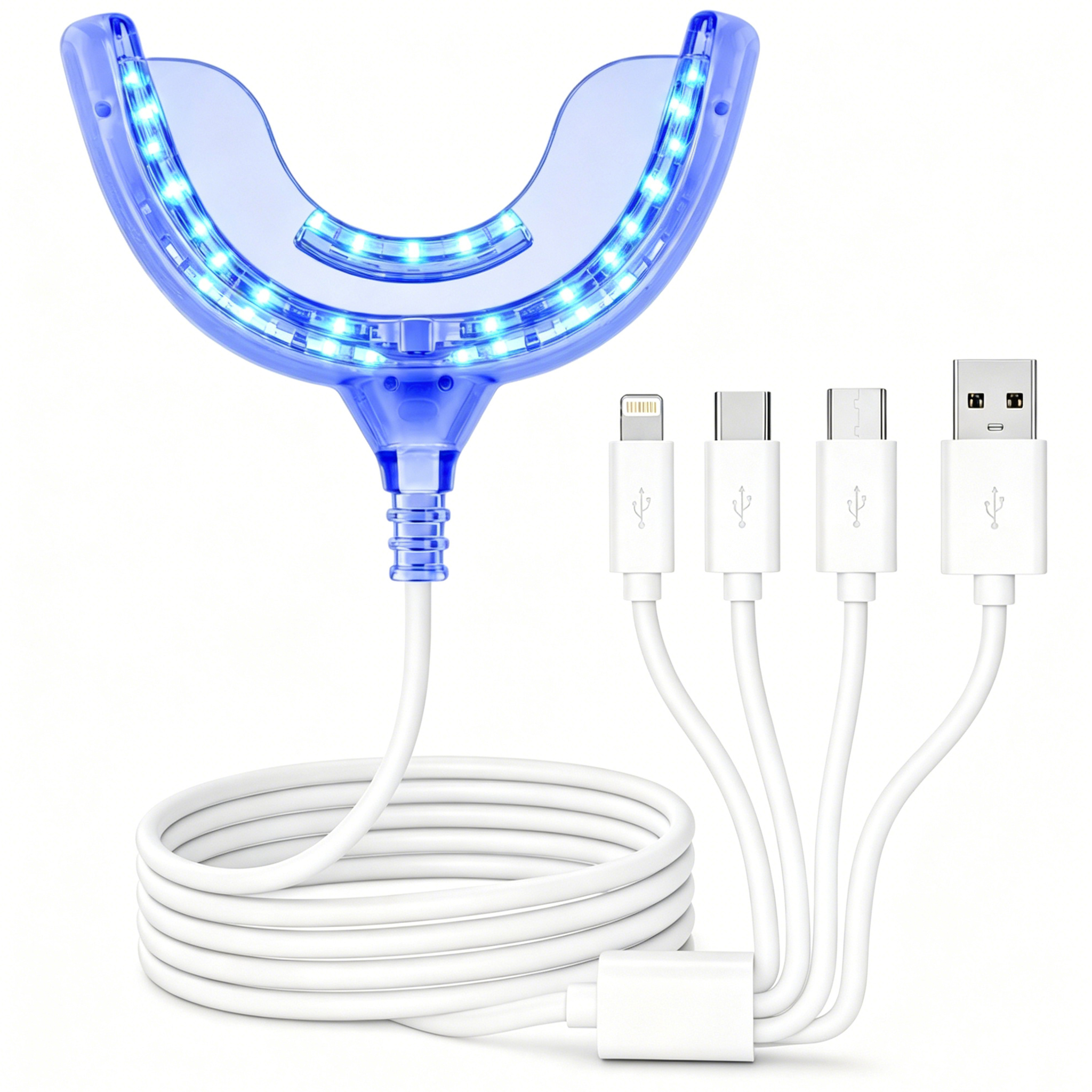
For whitening gels, strips, and trays sold through retail or professional dental channels, the practical implication is direct: cosmetic brightening claims stay on the cosmetic pathway. Clinical or therapeutic claims move the product into OTC drug territory. The same logic applies to device components. The FDA classifies teeth-bleaching light sources as medical devices under 21 CFR 872.6475, which means a 510(k) premarket notification may be required before a light-based system can be legally marketed in the US.
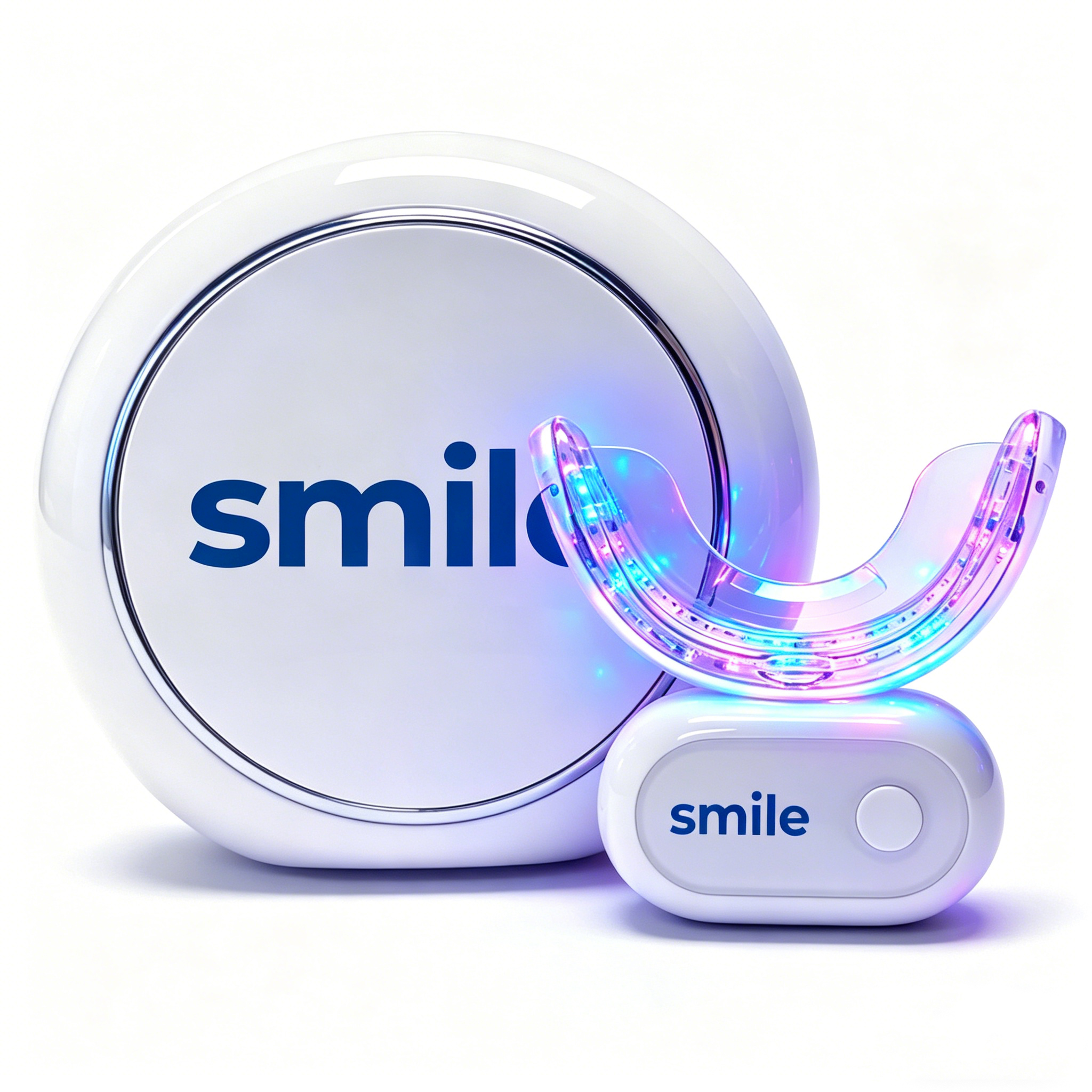
Distributors sourcing LED-accelerated whitening systems for dental clinic resale need to confirm whether the light component carries its own device classification — independent of the gel. A gel formulation alone may qualify as a cosmetic. That same gel sold as a kit with a light making device-type efficacy claims may trigger a separate device filing for the light. The system, not just the ingredient, determines the classification outcome.
Under the Modernization of Cosmetics Regulation Act (MoCRA), which came into full effect in 2024, cosmetic product facility registration and product listing are now mandatory requirements in the US. This is a new compliance layer that did not exist under the previous framework — one that catches distributors who built their processes before MoCRA took effect.
EU and UK Whitening Product Regulatory Classification: When the Device Route Applies
The European Union applies a dual-framework approach. Whitening products are primarily regulated under EU Cosmetics Regulation (EC) No 1223/2009. Products containing hydrogen peroxide above 0.1% and up to 6% are permitted for consumer use, with the restriction that first use must be by or under supervision of a dental professional. Products above 6% are restricted to dental professionals only.
The classification question sharpens when a whitening product incorporates a device component — a light-emitting handpiece, a tray with embedded sensors, or a system marketed with clinical efficacy claims that go beyond cosmetic brightening. Under the EU Medical Device Regulation (EU MDR 2017/745), such products may require a CE mark under the device pathway, not the cosmetic notification route. That is a materially different compliance burden: it involves a Notified Body, a technical file, a clinical evaluation report, and a post-market surveillance plan.
The UK, post-Brexit, mirrors EU concentration thresholds under its own cosmetics regulation framework but operates its own conformity assessment requirements for medical devices under the MHRA. A CE-marked device does not automatically satisfy UK Conformity Assessed (UKCA) requirements. Distributors entering both markets should treat these as two separate processes from the outset.
Claims Language Is the Classification Trigger
In both the EU and UK, the pivot is often the claim, not just the ingredient. A whitening strip described as "brightening" stays on the cosmetic pathway. The same strip described as "treating tooth discoloration caused by tetracycline" has moved into a different regulatory category. Your label copy, your instructions for use, and your marketing assets all feed into how regulators assess intended use. Drafting those assets without a classification rationale in place is a common and expensive mistake.
Australia and Canada: Two Frameworks Distributors Frequently Misjudge
Australia's Therapeutic Goods Administration applies a risk-based scheduling system. Hydrogen peroxide in whitening products is scheduled under the Poisons Standard, and products above specific concentration thresholds require inclusion in the Australian Register of Therapeutic Goods (ARTG) as a listed or registered therapeutic good — not a cosmetic. A product that qualifies as a cosmetic under EU Cosmetics Regulation may require a therapeutic goods listing in Australia before it can be legally supplied. This is one of the most common classification misjudgments WhiteningBright encounters among distributors entering the Australian market.
Canada applies a similarly distinct framework. Health Canada classifies teeth whitening products containing hydrogen peroxide as natural health products (NHPs) or drugs, depending on concentration and intended use — not as cosmetics. A product license is required before sale, and the documentation must include evidence of safety, efficacy, and quality. Distributors who have successfully filed a cosmetic notification in the EU often discover that the same product requires a substantively different dossier for Canada.
The Practical Risk Is a Supply Chain Risk
Both Australia and Canada have enforcement mechanisms that include border holds and product recalls. A distributor importing whitening gel into Australia without the appropriate ARTG listing is not in a gray area — the product is non-compliant. Building your classification rationale before you place your first purchase order is not a legal formality. It is a supply chain risk management decision that belongs in your sourcing process.
Documentation Requirements by Classification Pathway
The documentation burden differs significantly depending on the classification outcome. The table below summarizes core requirements by pathway and market.
| Market | Cosmetic / OTC Pathway | Drug / Device Pathway |
|---|---|---|
| USA | MoCRA facility registration, product listing, safety substantiation, ingredient labeling compliance | OTC drug monograph compliance or NDA; device: 510(k) or De Novo for novel devices |
| EU | CPNP notification, product information file (PIF), safety assessment by qualified assessor | CE mark under EU MDR, Notified Body review, clinical evaluation report, PMS plan |
| UK | SCPN notification, UK-equivalent PIF, responsible person based in UK | UKCA mark, MHRA registration — separate from CE process post-Brexit |
| Australia | ARTG listing (if below scheduling threshold and meets cosmetic definition) | ARTG listing or registration as therapeutic good; evidence dossier required |
| Canada | Cosmetic notification (low-concentration, no therapeutic claims) | NHP product license or drug DIN; safety and efficacy evidence required |
Classification may differ by market for the same physical product. A whitening gel classified as a cosmetic in the EU may be an NHP in Canada. Each market requires its own classification conclusion — treating them as interchangeable is where multi-market launches fail.
How Formulation Choices Lock In Your Whitening Product Regulatory Classification
The classification decision is not made at the filing stage. It is made at the formulation stage. The active ingredient, its concentration, the delivery format, and the claims architecture you build around the product collectively determine which pathway you are on. Reformulating after development is expensive: new stability data, revised safety assessments, and potentially an entirely new product information file.
PAP (phthalimidoperoxycaproic acid) formulations are increasingly used because they do not carry the same concentration-based scheduling triggers as hydrogen peroxide in several markets. PAP is not automatically exempt from device or drug classification, however, if the product makes therapeutic claims or is sold as part of a system with a light component. The active ingredient is one variable. The claim architecture is another. Both must be resolved before development is finalized.
The ADA's Seal of Acceptance program for home-use tooth bleaching products requires safety and efficacy evidence, including clinical studies and documentation of adverse effects. For private-label brand owners targeting the professional dental channel, building toward ADA Seal eligibility at the development stage — rather than retrofitting it later — strengthens your safety substantiation file and serves as a credible differentiator in the professional market. The ADA has also noted that whitening products can cause temporary sensitivity and gingival irritation, which means adverse effect documentation belongs in your safety file regardless of which regulatory pathway you are on.
Building a Classification Rationale Your Legal Counsel Can Use
A classification rationale is a written document — typically one to three pages — that records the basis for your product's regulatory category in each target market. It references the applicable regulation, the active ingredient and concentration, the intended use as stated on label and in marketing materials, and the market-specific classification conclusion. It is not a legal opinion, but it provides the foundation your legal counsel needs to confirm the filing pathway and your customs broker needs to assign the correct HS code.
Without this document, classification decisions get made informally — by whoever is processing the import paperwork at the time. That creates inconsistency across shipments and liability if a regulator determines the product was misclassified.
What the Rationale Should Address
- Intended use statement: The exact claim language from your label and instructions for use, mapped against the regulatory definition of cosmetic, drug, or device in each target market.
- Active ingredient and concentration: Documented against the applicable thresholds for each jurisdiction, including scheduling and permit requirements.
- Delivery system: Whether the product includes any component — light source, tray, sensor — that could independently trigger a device classification.
- Market-specific conclusion: Each market documented separately. Do not assume one classification transfers across borders.
- Review date: Regulatory thresholds and classification rules change. The rationale should be revisited whenever concentration limits, claim language, or target markets change.
Classification is the structural decision that determines every document, every filing, and every claim your product is legally permitted to carry. Resolving it early — at the formulation and claims-drafting stage — is the most cost-effective compliance decision a distributor or private-label brand owner can make.
If you are evaluating a private-label whitening range and need to understand how formulation and claims decisions interact with regulatory pathways, WhiteningBright's product range is built with classification considerations integrated from the development stage.
References
- FDA 510(k) Classification: Light Source for Bleaching Teeth (21 CFR 872.6475)
- FDA Recognized Consensus Standards: Medical Devices — Whitening Device Filing Basis
- American Dental Association: Whitening — Oral Health Topics
- ADA Seal of Acceptance: Home-Use Tooth Bleaching Products — Category Requirements (2026)
Disclaimer
This article is for general informational purposes only and does not constitute sourcing, legal, or regulatory advice. Always conduct your own due diligence and consult qualified legal or compliance professionals before making purchasing or compliance decisions. WhiteningBright makes no warranties as to the completeness or accuracy of the information, and any reliance is at your own risk.