Packaging Minimums That Actually Protect Your Brand
2026年9月12日

Understand how private label whitening kit packaging MOQs, component sourcing timelines, and branding specs interact to determine launch viability.
Private Label Whitening Kit Packaging: What Your MOQ Structure Is Actually Telling You
Most private-label buyers lock in a formula first — peroxide concentration, PAP alternative, gel viscosity — and treat packaging as a downstream detail. That sequencing is operationally backwards. The component count of your kit, the material specifications of each container, and your branding execution method collectively determine your minimum order commitment, your unit cost floor, and your realistic lead time before a single syringe is filled. For any brand owner building a private label whitening kit packaging program, packaging decisions are the opening move, not the closing one.
For a dental clinic owner launching a take-home line or a wellness brand building a DTC whitening SKU, getting this sequence wrong means either over-committing capital to inventory that doesn't move, or under-ordering and running out of stock before you've validated the market. Both outcomes are avoidable with the right pre-launch structure.
Why Component Count Sets Your Real Minimum Order
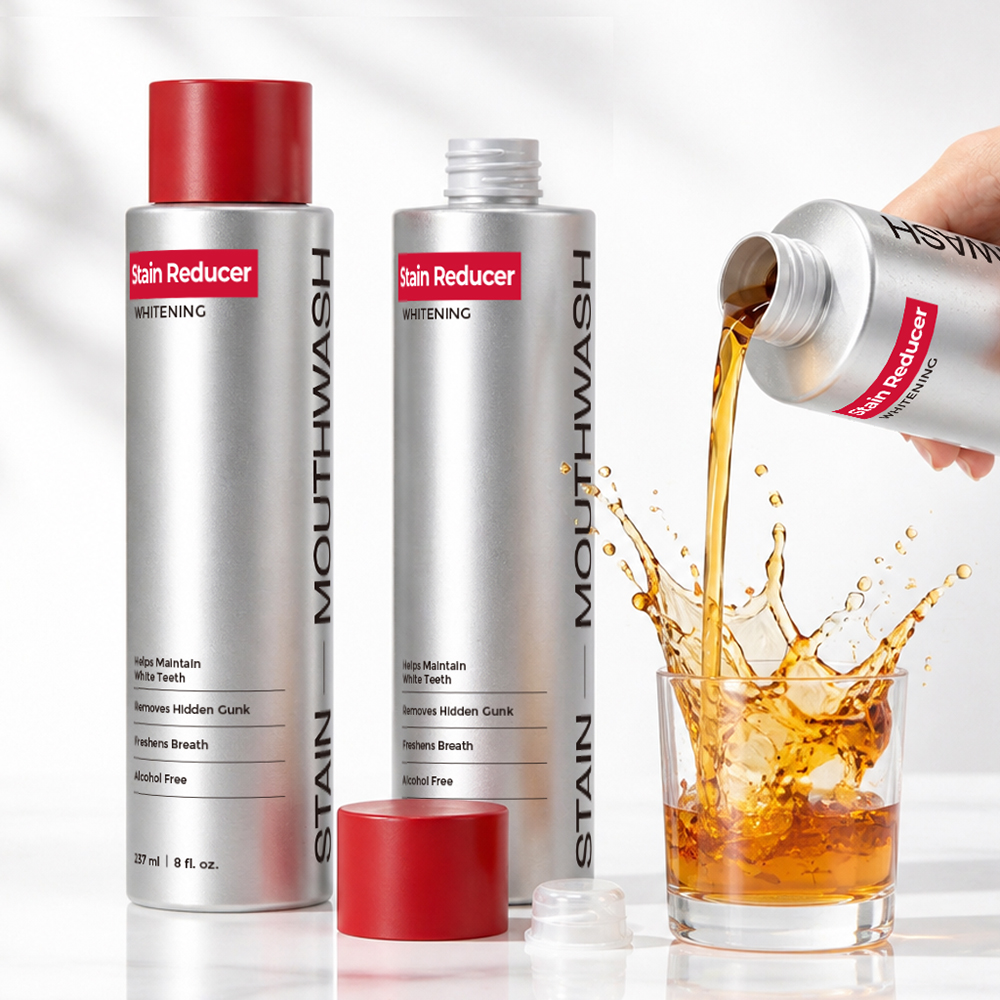
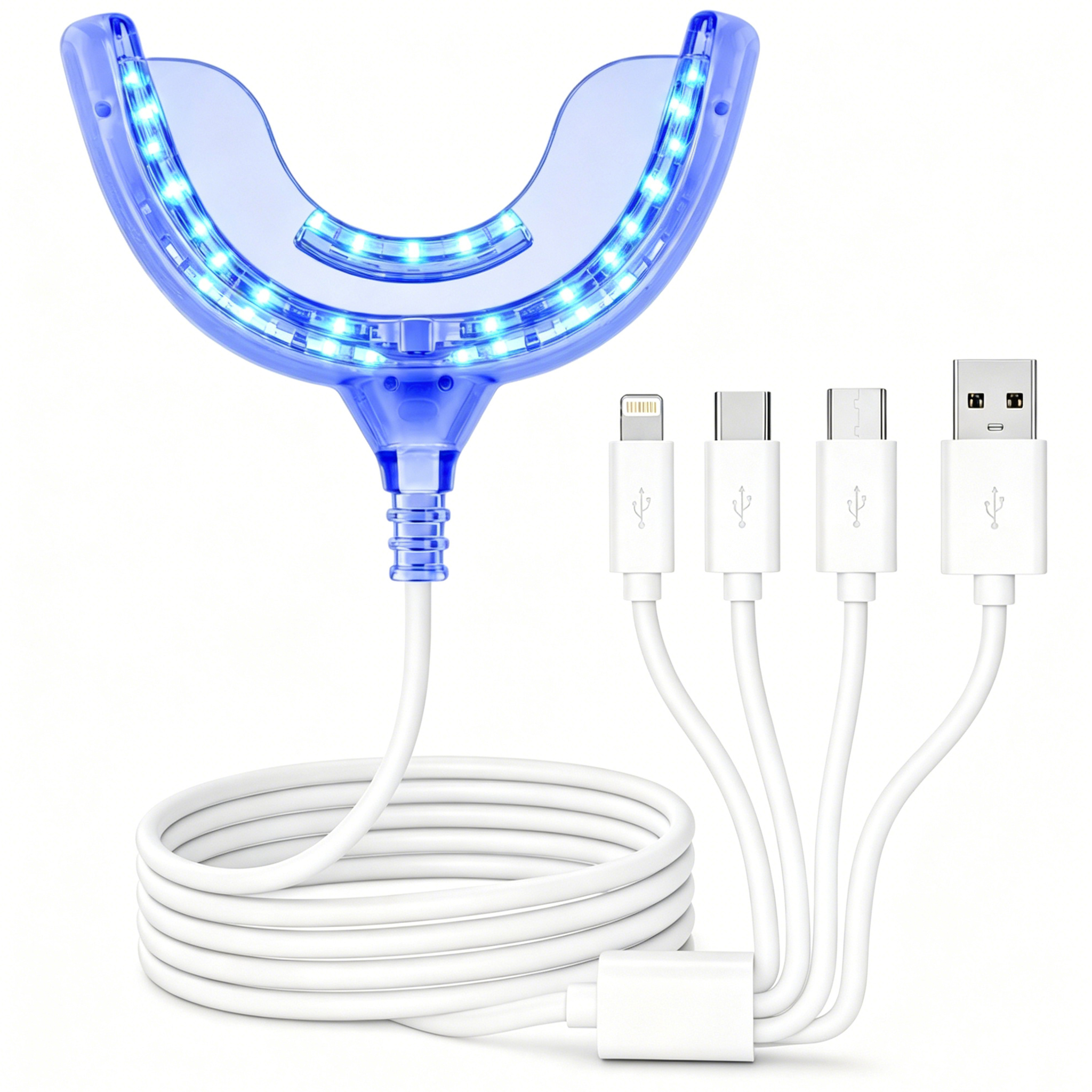
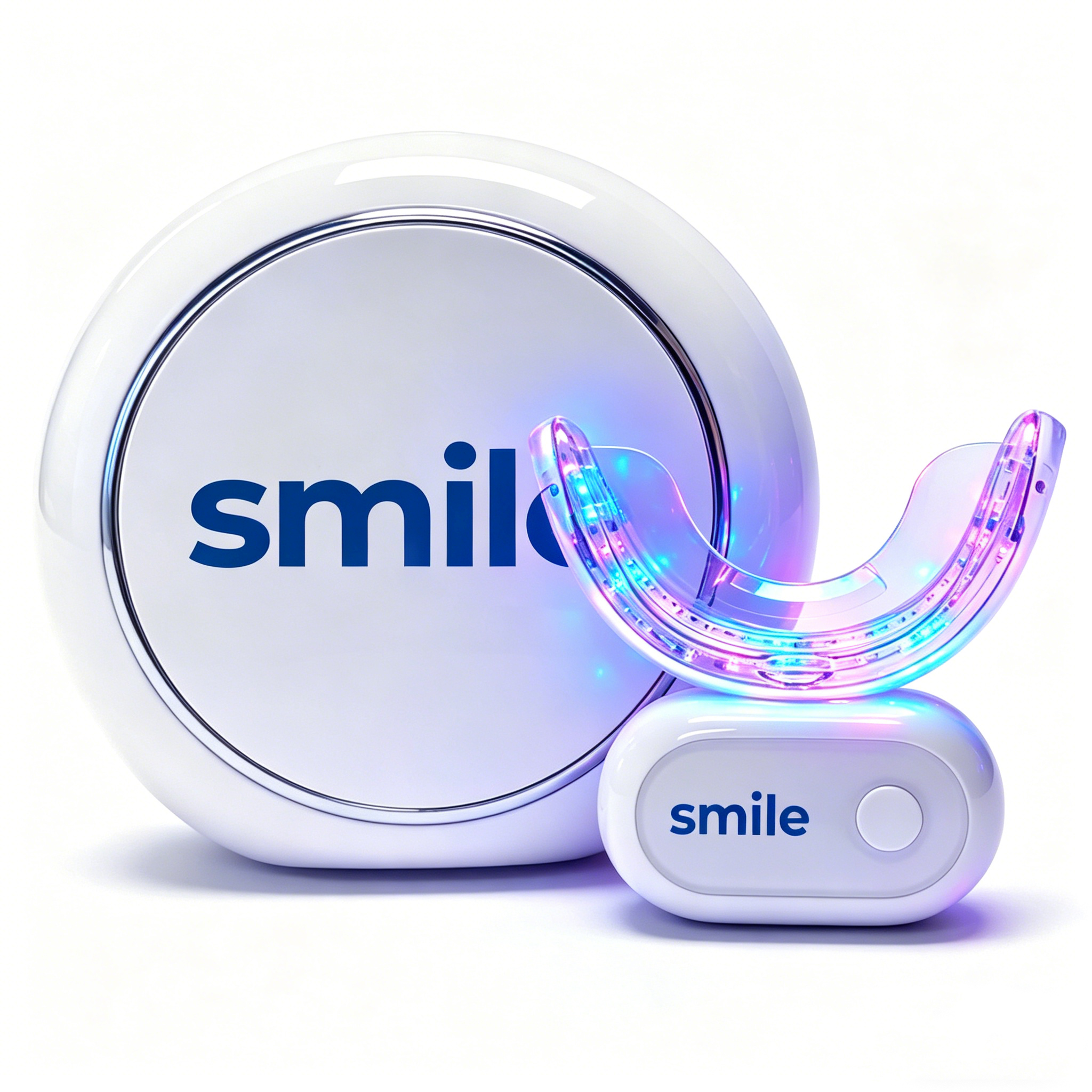
A private label whitening kit packaging configuration is rarely a single SKU. A standard professional take-home kit might include a gel syringe or pen, a mouth tray, an LED accelerator device, a shade guide card, an instruction leaflet, and an outer box. Each component carries its own minimum order quantity from its own supplier or production line.
The practical consequence: your effective kit MOQ is the highest MOQ among all components — because you cannot ship an incomplete kit. If your outer carton supplier requires 3,000 units and your LED device supplier requires 5,000 units, your launch minimum is 5,000 units, regardless of what your gel manufacturer can produce.
Component categories that most commonly drive MOQ upward include:
- Rigid outer packaging (folding cartons, rigid boxes): tooling or plate setup costs only amortize at higher volumes
- Custom-molded trays or device housings: injection mold tooling is a fixed cost, pushing per-unit economics toward larger runs
- Printed inserts and shade guides: offset printing setups favor volume; short digital print runs cost significantly more per unit
- Branded gel syringes or pens: custom barrel printing or labeling typically requires minimum batch commitments from the filling line
Before you negotiate formulation pricing, map every component in your intended kit and request individual MOQs for each. That single exercise reveals the true floor of your launch investment.
Lead Time Realities in Private Label Whitening Kit Packaging Production
A common assumption is that lead time is primarily a formulation issue — that once the gel is approved, the kit ships. Packaging procurement is the more frequent source of delays, and it operates on longer cycles than most buyers anticipate.
Custom-printed outer cartons require artwork approval, color proof sign-off, and print run scheduling — a sequence that can extend several weeks before production begins. Buyers who submit final, press-ready files on day one consistently receive product faster than those who treat artwork as a post-contract task.
Additional lead time variables within your control:
- Regulatory documentation readiness: If your target market requires specific label claims, ingredient disclosure formats, or compliance markings — CE, FDA registration documentation, ISO-aligned quality records — having those finalized before production begins eliminates a common hold point.
- Material specification sign-off: Delays occur when buyers request material changes — switching from a standard plastic syringe barrel to a bio-based or reduced-plastic alternative — after production scheduling has started.
- Component synchronization: When packaging components are sourced from multiple vendors, assembly cannot begin until all components are on-hand. A delay in one component delays the entire kit.
Build realistic lead time into your launch calendar, not your contingency plan. Treating packaging timelines as flexible is one of the most consistent errors first-time private-label buyers make.
Branding Specifications That Move Unit Cost
The branding execution method you choose has a direct and often underestimated effect on per-unit cost, particularly at volumes below 5,000 units. Three decisions carry the most financial weight.
Print Method on Outer Packaging
Offset lithography produces the highest-quality color output and the lowest per-unit cost at volume, but requires fixed plate setup costs regardless of run size. Digital printing eliminates setup costs but carries a higher per-unit price. For a buyer ordering 1,000 outer cartons, digital print may be the only financially rational option — but that premium needs to be factored into your retail margin calculation from day one, not discovered after the first invoice.
Decoration Method on Primary Containers
Gel syringes, pens, and trays can be branded via heat-shrink sleeve, direct pad printing, or adhesive label. Each method carries different MOQ thresholds and different durability profiles. A heat-shrink sleeve on a gel pen looks premium but requires a minimum sleeve order that may exceed your kit volume. An adhesive label offers more flexibility at low volumes but may not deliver the shelf presence a premium dental clinic brand requires.
Finish and Material Upgrades on Outer Cartons
Soft-touch lamination, foil stamping, and spot UV add cost per unit and often require minimum run sizes to be economically viable. If your launch volume sits below the threshold where these finishes amortize reasonably, launch with a clean, unembellished design that can be upgraded at scale — rather than absorbing a disproportionate cost per unit at low volume. Premium finishes applied at the wrong volume hurt margin without meaningfully improving sell-through.
Material Safety Is a Packaging Specification
Packaging material selection for oral care products carries regulatory and safety implications that go beyond aesthetics. The FDA has stated that packaging which does not adequately protect a cosmetic product can contribute to microbial contamination — a direct product safety concern, not merely a quality consideration. For whitening gels applied in or near the oral cavity, barrier integrity is a functional specification.
Peer-reviewed research reinforces this. A study published in PubMed identified microplastics in commercially available oral healthcare products and highlighted potential health risks, underscoring the relevance of material selection in oral care packaging. Separately, published research has described how plastic packaging can release microplastics and potentially harmful monomers into product contents — a finding directly relevant to brands specifying primary packaging that contacts gel formulations.
A 2025 review examining micro- and nanoplastics in dental materials and oral care products linked these materials to oral and systemic health concerns, signaling that regulatory and scientific scrutiny of oral care packaging materials is increasing, not stabilizing.
For private-label buyers, this translates into concrete specification questions:
- What plastic grade is used in gel syringes or pen barrels, and is it rated for food-contact or oral-contact use?
- Does your supplier hold documentation confirming that primary packaging materials meet applicable FDA or EU cosmetics regulation requirements?
- Has migration testing been conducted on filled product, or is the supplier relying solely on material data sheets?
A supplier who cannot answer these questions with documentation — not verbal assurance — represents a compliance risk that sits on your brand, not theirs.
How to Audit a Supplier's Packaging Capability Before Signing
Evaluating a co-development partner's packaging capability requires a structured review, not a catalog browse. This audit framework applies whether you are evaluating a first-time partner or reviewing an existing supplier for a new kit configuration.
| Audit Area | What to Request | Red Flag |
|---|---|---|
| Component sourcing | List of packaging component suppliers with lead time ranges | Single-source dependency with no backup supplier named |
| Material compliance | Material safety data sheets for primary packaging in contact with gel | No documentation available; verbal assurance only |
| Branding execution | Physical samples of branded components at your intended volume | Only digital renders or mockups provided |
| Assembly and QC | Description of kit assembly process and inspection checkpoints | No documented QC protocol; process described informally |
| Regulatory records | ISO certification scope, FDA cosmetic facility registration, CE documentation where applicable | Certificates provided without scope details or expiry dates |
Questions to Ask Before Locking In a Kit Configuration
Before committing to a specific private label whitening kit packaging configuration, these questions should have clear, documented answers from your supplier:
- What is the individual MOQ for each packaging component in this kit, and which component sets the effective kit minimum?
- What is the total lead time from artwork approval to finished goods ready to ship — broken down by stage?
- Which branding elements are included in the quoted unit price, and which carry additional setup or tooling fees?
- What material grade is used for primary packaging in contact with the gel, and what documentation confirms its suitability for oral care use?
- Can the kit configuration be modified — components added or removed — without triggering a full re-tooling cost?
- What happens to remaining packaging components if you discontinue or reformulate — is there a buyback or destruction protocol?
When Phasing Your Launch Protects Margin
A phased launch is a legitimate risk management tool for private label whitening kit packaging programs — not a sign of under-commitment. For brands entering a new channel — a dental clinic adding a retail line, a spa operator launching a branded take-home product — starting with a simplified kit configuration at a lower MOQ allows you to validate demand before committing to the full component and branding investment.
A practical phase structure might look like this: Phase one uses a standardized primary container — a gel pen or syringe in a stock format — with a custom label, paired with a digitally printed outer carton. This configuration minimizes tooling costs and keeps MOQ manageable. Phase two, triggered by confirmed reorder velocity, introduces custom-molded components, premium print finishes, and a more complex kit architecture — now amortized across a volume that justifies the investment.
The financial logic is direct. A higher per-unit cost at phase one is preferable to a large inventory commitment in a kit configuration the market hasn't validated. Packaging decisions made at launch are difficult and expensive to reverse mid-cycle. Decisions made at scale, with real sales data, are defensible.
Private label whitening kit packaging is where brand strategy and operational reality intersect. Getting the structure right before production begins separates a profitable launch from an expensive lesson in component-level planning.
References
- FDA — Microbiological Safety and Cosmetics
- FDA — Potential Contaminants in Cosmetics
- PubMed — Microplastics in oral healthcare products (2023–2024)
- PubMed — Migration of microplastics from plastic packaging into foods
- PubMed — Micro/nanoplastics in dental materials and oral care products (2025)
Disclaimer
This article is for general informational purposes only and does not constitute sourcing, legal, or regulatory advice. Always conduct your own due diligence and consult qualified legal or compliance professionals before making purchasing or compliance decisions. WhiteningBright makes no warranties as to the completeness or accuracy of the information, and any reliance is at your own risk.